Reasons to Switch to Natural Sea Salt
Most of us enjoy a little salt on our food, and in Italy, if you don’t salt your pasta water, it’s known as ‘silly pasta! Obviously some people have to reduce salt for medical reasons (and salt is toxic to pets, birds and wildlife). But for humans, a little natural sea salt makes life tastier.
Keep salt away from pets (and don’t feed leftovers to birds). Salt is toxic to most creatures, apart from us.
Before cooking, read up on food safety for people and pets. It’s best to just bin allium scraps (onion, leeks, garlic, shallots, chives) along with rhubarb, tomato and citrus scraps, as acids may harm compost creatures.
Who Should Be Cautious with Salt?
Salt is good, but only in small amounts. Too much can harm people with certain medical conditions, it can cause swelling of the legs, and even heart failure, high blood pressure, liver and kidney disease. Like alcohol, keep things to the occasional treat.
Tips for moderate use while enjoying sea salt
Try these simple tactics to season your food the smart way:
- Measure with care: Use measuring spoons to serve out salt if you’re following recipes. This takes the guesswork out and avoids heavy-handed pours.
- Finish, don’t flood: Use sea salt as a finishing touch. Sprinkle flakes over cooked dishes, salads or fresh bread at the table, rather than stirring it in while cooking.
- Taste before topping: Many dishes need less salt than you think. Taste first, then add a pinch only if it needs that extra lift.
- Choose bold, natural flavours: Boost dishes with herbs, spices, citrus, or vinegar. These add bright notes so you need less salt overall.
Health Benefits of Natural Sea Salt
Natural sea salt contains natural minerals, unlike cakey table salt. Our body needs these trace minerals, so a little sea salt on your food can help supply them:
- Magnesium: This helps muscles, nerves and heart health.
- Calcium: Good for strong bones and teeth, muscles and nerves.
- Potassium: This balances fluids, and helps healthy nerves, muscles and blood pressure.
Electrolyte support for active lifestyles
Ever notice how salty sweat tastes after a long workout or during a heatwave? That’s your body losing important electrolytes like sodium, potassium, and magnesium. Natural sea salt provides all three, helping you recover quicker after exercise or long days outdoors.
Here’s how to top up your electrolytes the easy way:
- Add a pinch to water: Stir a small amount (about a pinch per glass) into your water bottle after exercise.
- Sprinkle on fresh food: Boost your salads and cooked veg with a dash of sea salt for extra minerals.
- DIY sports drink: Mix water, a squeeze of citrus, agave nectar and a pinch of sea salt for a simple, homemade recovery drink.
Taste and Culinary Advantages
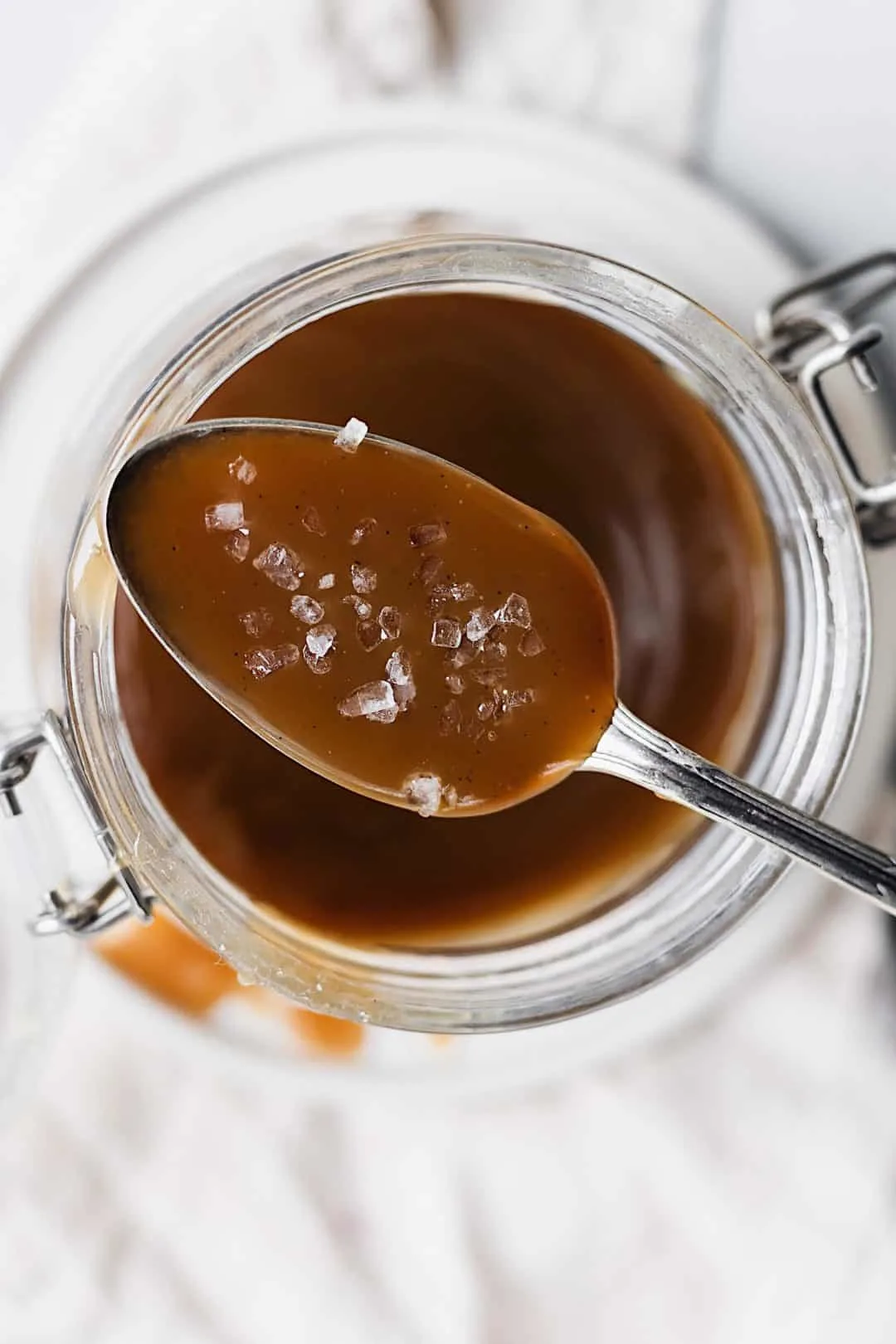
The coarse flaky texture of sea salt changes how meals feel and taste. Unlike regular table salt, sea salt flakes are larger with rougher edges, and dissolve slowly over food.
- Try this vegan salted caramel recipe (Cupful of Kale).
- Smashed Peas on Toast: Mash smashed peas onto toast, add a few flakes of sea salt, and see how it sharpens the creamy richness.
- Roasted vegetables: Toss hot carrots, parsnips, or potatoes straight from the oven with a pinch of flakes. The salt draws out their natural sweetness and adds a gentle crunch.
- Popcorn: Swap out table salt for a generous sprinkle of sea salt on your bowl of popcorn. The uneven grains cling to the kernels and give a tasty, satisfying finish. Popcorn is a choking hazard for children and swallowing difficulties.
Regional varieties and their unique profiles
England has some of the world’s best sea salts, each one with its own story and taste. Local seas, weather and old harvesting methods all play a part. Look in shops for:
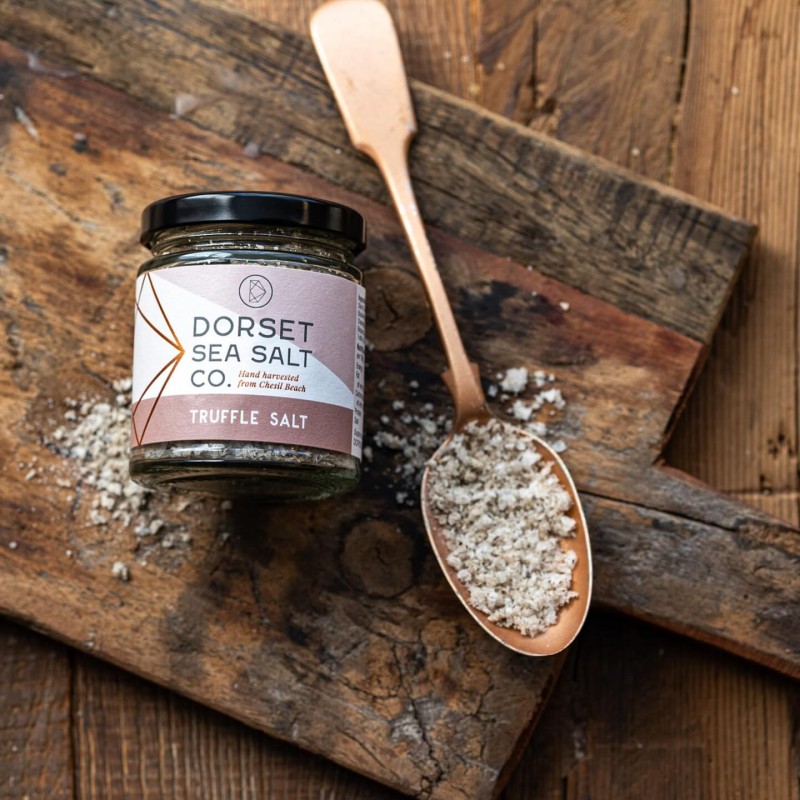
- Dorset Sea Salt (hand-harvested using slow evaporation – fine flaky texture)
- Cornish Sea Salt (drawn from Grade A coastal waters using sustainable methods)
- Droitwich Sea Salt (from a river whose name means ‘a river that throws up salt!)
- Maldon Sea Salt (an Essex baked-by-hand salt, raked by hand with natural pans)
Traditional sun‑evaporation methods
Natural sea salt stands apart because of how it’s made. Makers pump clean sea water into shallow lagoons or pans, where it is left to dry under the open sky. Sun and wind do most of the work, gently turning salty water into glistening white crystals. This old method is almost silent, barely touching the environment compared to most industrial processes.
There’s no need for burning fuel or heavy machinery here. The only energy used is from the sun and the breeze. Workers use wooden tools to guide the salt, often by hand, in a cycle that lines up with the seasons. They only take what the sea gives, moving with the tide and weather.
- Low energy use: No big machines, burners or chemicals.
- Less pollution: Sun evaporation keeps carbon emissions to a minimum.
- Gentle on wildlife: Hand-harvesting helps protect birds, fish and plants
Large-scale salt mining can alter natural water flows and destroy natural ecosystems, affecting feeding grounds and breeding areas for various species. Concentrated liquid waste, known as bitterns, which remain after the salt evaporation process, can be harmful to fish and other aquatic organisms.
Like everything, use in moderation. A little hand-harvested sea salt is better than buying huge salt quantities, from large-scale mining corporations.
Annie’s Salt Seasonings (in zero waste tins)
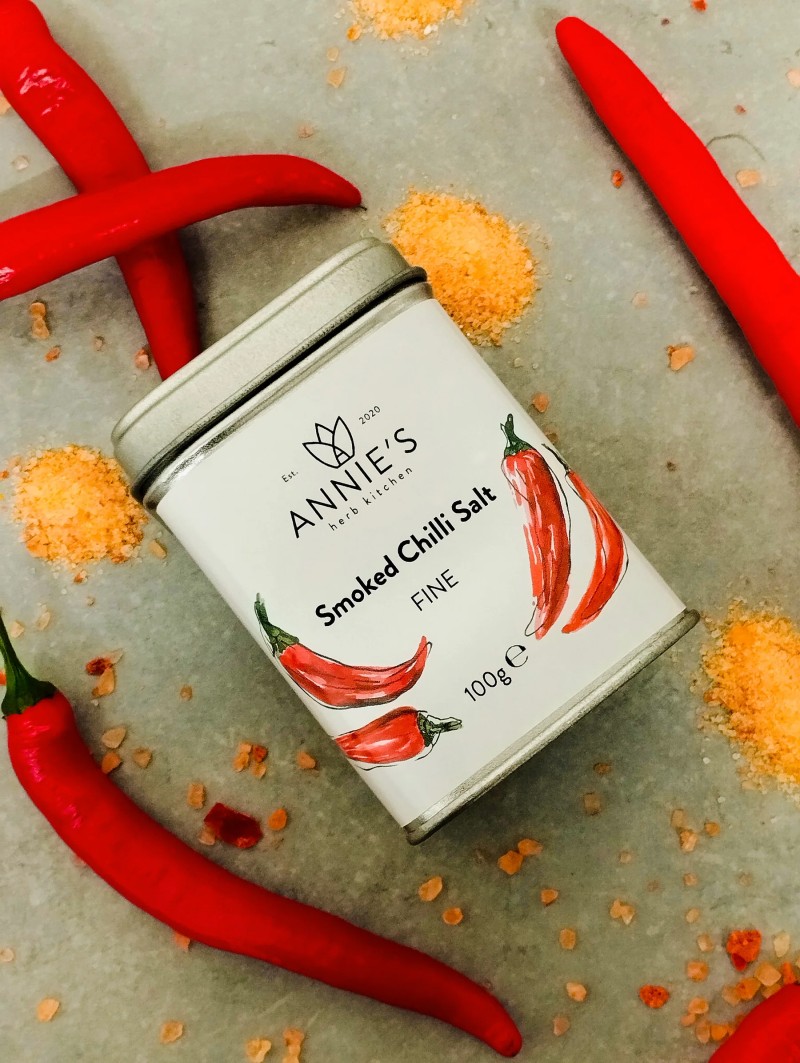
Annie’s Salt Seasonings are sold in zero waste tins, prepared from beautiful Scotland, in rural Argyllshire. They are packed with locally-sourced fresh herbs and spices, to preserve aroma and flavour. Any inner bags are compostable.
Smoked Chilli Salt gives a kick to vegan chilli or marinade. It combines sea salt and smoked fresh chillies, in coarse or grind versions.
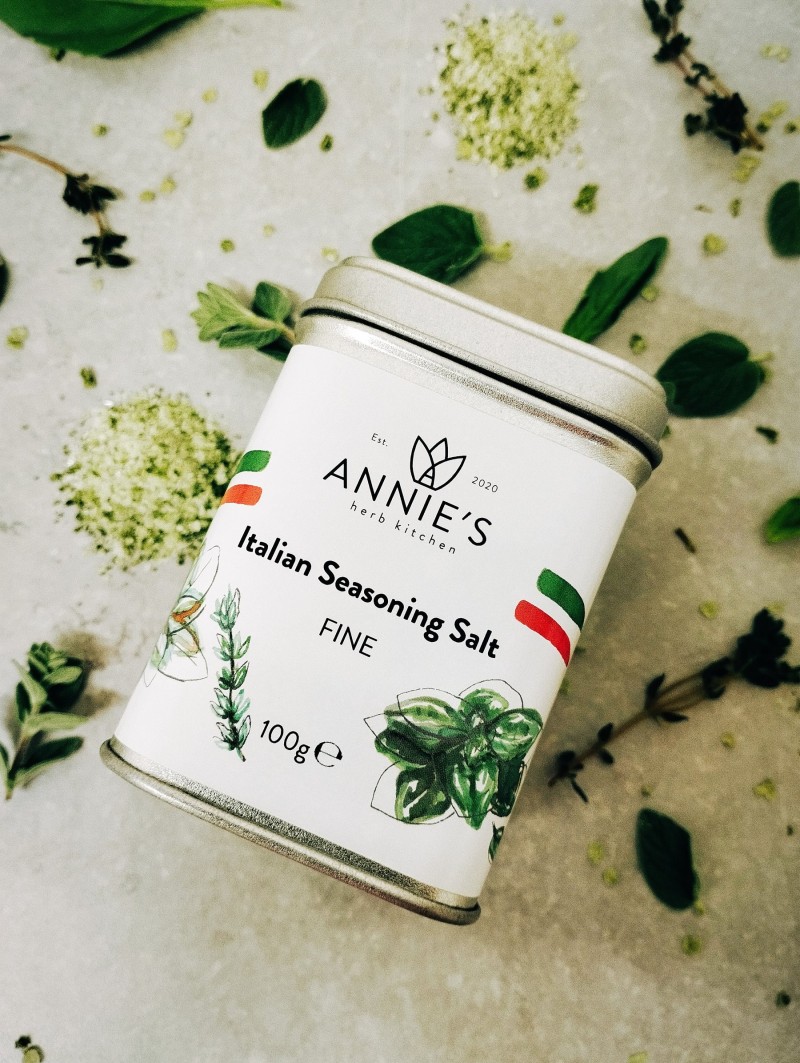
Italian Seasoning Salt is ideal for pasta, pizza or sauces. It blends sea salt with basil, oregano and thyme, in coarse or fine versions.
Wild Garlic Salt blends salt with fresh wild garlic (milder in flavour than traditional garlic). Perfect to create homemade vegan garlic butter, or add to pasta dishes. Also available as a fine garlic salt.
Campaign Against Over-Salty Foods
There is nothing wrong with eating a little sea salt, or the odd bag of crisps. But high salt in UK diets is causing havoc with public health and NHS costs. And usually due to people unwittingly eating brands that are packed with salt that go over recommended levels.
How do brands do this? Usually by listing by portion size, to qualify for the traffic light system (green is okay, red is not etc). For example, a tiny bag of crisps is okay, but a big bag is not. So if you buy a big bag of crisps, you’re ‘green’ if you have a few crisps, and put them away for another day.
Of course, this is not what happens! If you live or eat alone, you’re likely going to eat the whole pack. If you didn’t, the rest of the crisps would go off.
Other high-salt foods are anything meaty (esp. pepperoni and processed meats like bacon and ham), along with many popular brand-named foods. Action on Salt says the highest salty foods on sale include:
- Some ready-made pork pies and egg sandwiches
- Some organic vegetable soups, even
- Pizzas
- Sausages
- Crisps and nuts (obviously!)
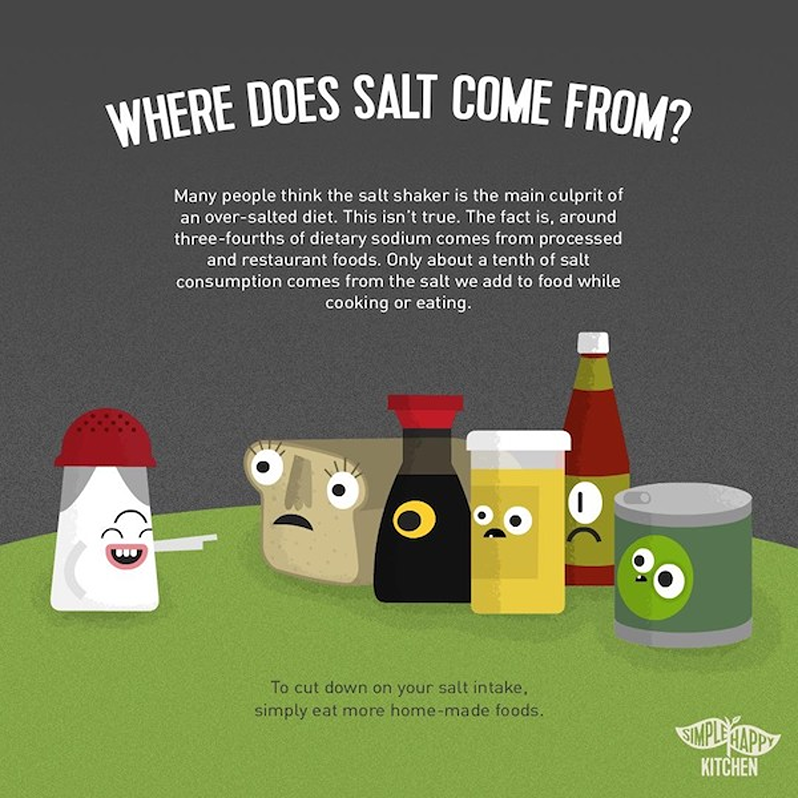
It’s interesting that nearly all salt intake in the UK is from processed foods. So whatever your diet, if you just mostly stuck to homemade fresh ingredients, your salt level would plummet.
Recently, Walkers Crisps has halved its salt content, following concerns from health bodies. But they are still junk food in plastic packaging, high in salt and some flavours include meat from factory farms. The factory in Leicester (the biggest crisp production place on earth) makes over 11 million bags in a year, no surprise in a country of crisp-munchers.
The environmental charity Keep Britain Tidy says that Walkers crisp packets, Cadbury chocolate wrappers and Coca-Cola cans are now the three top brands of rubbish found on our streets. A few packs are recycled, but most aren’t, which led to a campaign by 38 Degrees to send packs back to the company. It is transitioning some of its brands over to paper packaging, but not fast enough.
Read our post on where to buy a better bag of crisps.