Enid Blyton: Imagination That Changed Childhoods

Enid Blyton was one of England’s best-selling children’s writers, her extraordinary imagination producing much-loved books like The Folk of the Faraway Tree.
The daughter of a Sheffield cutlery salesman, he was also a keen naturalist who knew everything about birds, animals and flowers. After training as a teacher, Enid married a former soldier turned publisher, then focused on her writing, before sadly developing dementia.
There are varying accounts of Enid’s life, with different stories by each daughter. Gyles Brandreth has written a good post, when he went to visit them both. He credits some of his own writing down to reading her books, as a child.
Whatever you think of his political views (he used to be a Conservative MP), he is a very good writer and storyteller, and one of England’s most popular after-dinner speakers. You only get that with a good imagination, likely fostered by books in childhood.
What is certain is that those of us who love to write (and can’t stop!), is often down to being encouraged to read good books as a child. Not just for education, but to foster imagination. And Enid’s extraordinary Folk of the Faraway Books likely has turned many children into adult writers.
‘Come back and have tea with us’ said Moon-Face. ‘Silky’s got some Pop Biscuits, and I’ve made some Google Buns. I don’t often make them – and I tell you there’s a treat!’
A Prolific Body of Work
Blyton’s writing career is a study in sheer productivity. Over four decades, she published more than 700 books and penned thousands of short stories. On some days, she could write as many as 10,000 words, spinning out tales that captured children’s hearts.
Her stories weren’t confined to single books. Series like The Famous Five and Secret Seven offered a steady stream of adventures, letting readers grow up alongside their favourite characters.
Blyton’s imagination moved quickly, filling pages with hidden caves, talking trees, and secret societies. Her worlds encourage children to stretch their own imaginations just as far.
Controversies and Criticism
Blyton’s legacy has faced plenty of scrutiny. Critics point out outdated views, with some stories carrying attitudes on race, gender, and class that feel uncomfortable today. Libraries and readers have debated how her books should be presented, or whether they belong on modern shelves.
Yet her stories keep their fans. Many argue that her work reflects the time in which she wrote, and updates or introductions help new readers navigate tricky aspects.
It’s tricky. But times change. For instance, most of us abhor fox-hunting, but the lauded writer Beatrix Potter had her wishes reversed that her land gift to the National Trust, was only on the condition that foxhunting (now banned by law) continue for the rest of time.
So does that mean no child should ever read about the Adventures of Peter Rabbit?
Who matters more? Snobby literary types, or the hundreds of millions who have lovingly consumed her work, without any idea of Blyton’s personal views? Dan Wooton (journalist and broadcaster)
Obviously we can choose to no longer support books about golliwogs. But most of Enid’s books would never cause offence, and give rise to fostering tremendous imagination in children.
The Folk of the Faraway Tree
Perhaps nothing shows Blyton’s creative energy better than the wildly inventive Faraway Tree series, a set of books that invites readers into a place where nothing is quite as it seems.
The Faraway Tree itself stands tall in the Enchanted Wood, a tree so enormous that worlds visit its top. Every time someone climbs up, they discover a new land – upside-down towns, talking birds, and moon-faced characters who break every rule of the real world.
The heroes, children travel alongside characters like Moon-Face, Silky the fairy, and Saucepan Man. The lands they visit are as random as a child’s daydream. Sometimes it’s the Land of Toys, other times the Land of Take-What-You-Want or the bizarre Land of Dame Slap (later changed to Dame Snap).
This tree isn’t just a setting. It gives children and readers a kind of passport to anywhere – from cloud-capped mountains to slapstick lands of sweets and silly rules. Imagination runs loose, turning the familiar woods into a portal for endless creativity.
The Faraway Tree books have stood the test of time, their pages worn thin in bedrooms and schools since the 1940s. Part of their strength lies in the books’ joyful unpredictability. No two chapters look the same, and children sense that anything can happen next.
Jacqueline’s Update on the Faraway Tree
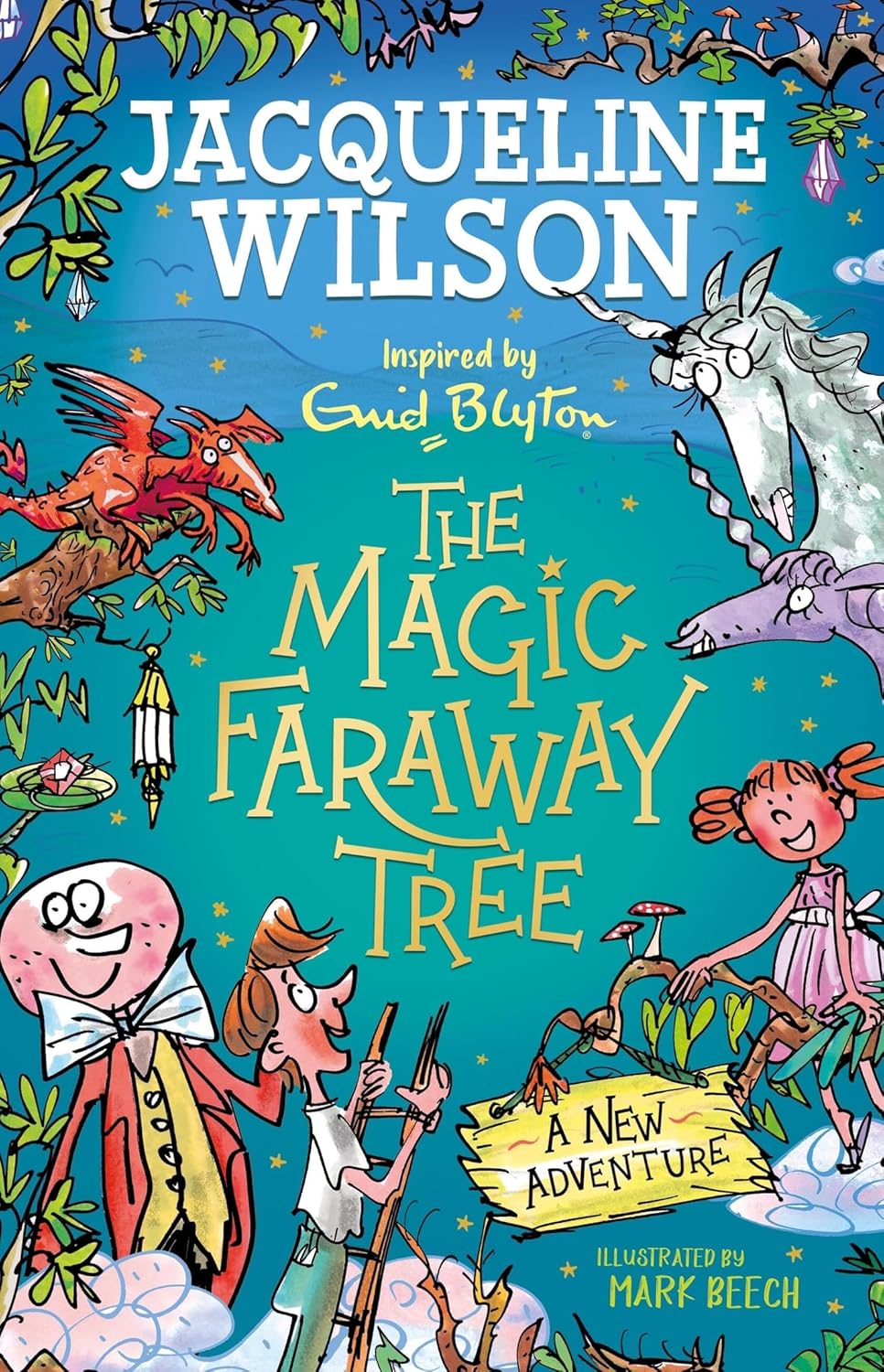
Something you should not update things (The Day The Earth Stood Still, The Ladykillers etc). But (very good) writer Jacqueline Wilson was asked to write a new faraway story, and The Magic Faraway Tree has had rave reviews.
Milo, Mia and Birdy are keen to return to the cottage by the Enchanted Wood for Christmas to visit their friends. Which amazing worlds will arrive at the top of the Faraway Tree at this time of year?
The children are hoping for a trip to the Land of Presents or perhaps the Land of Snow. But before they can celebrate, there is a chilling visit to the Land of the Frozen North . . .