Sustainable Sunglasses: A Simple Guide

Sunglasses should offer offer 100% protection against UVA and UVB rays (tinted and polarised lenses may protect against glare). Wraparound styles are better to protect skin at the sides of your eyes (don’t wear sunglasses on your head as it stretches the frames, as your head is wider than your temples).
Never use tanning beds (UV levels are up to 100 times more powerful than the sun, and they can damage your eyes and eyelids, even with goggles).
If you’re a sustainable sailor, choose wooden sunglasses, in case they got lost in a way or dropped off your boat (recycled plastic still breaks down into microplastics).
Also read our post on sustainable spectacle frames.
Waterhaul (sunglasses from fishing waste)
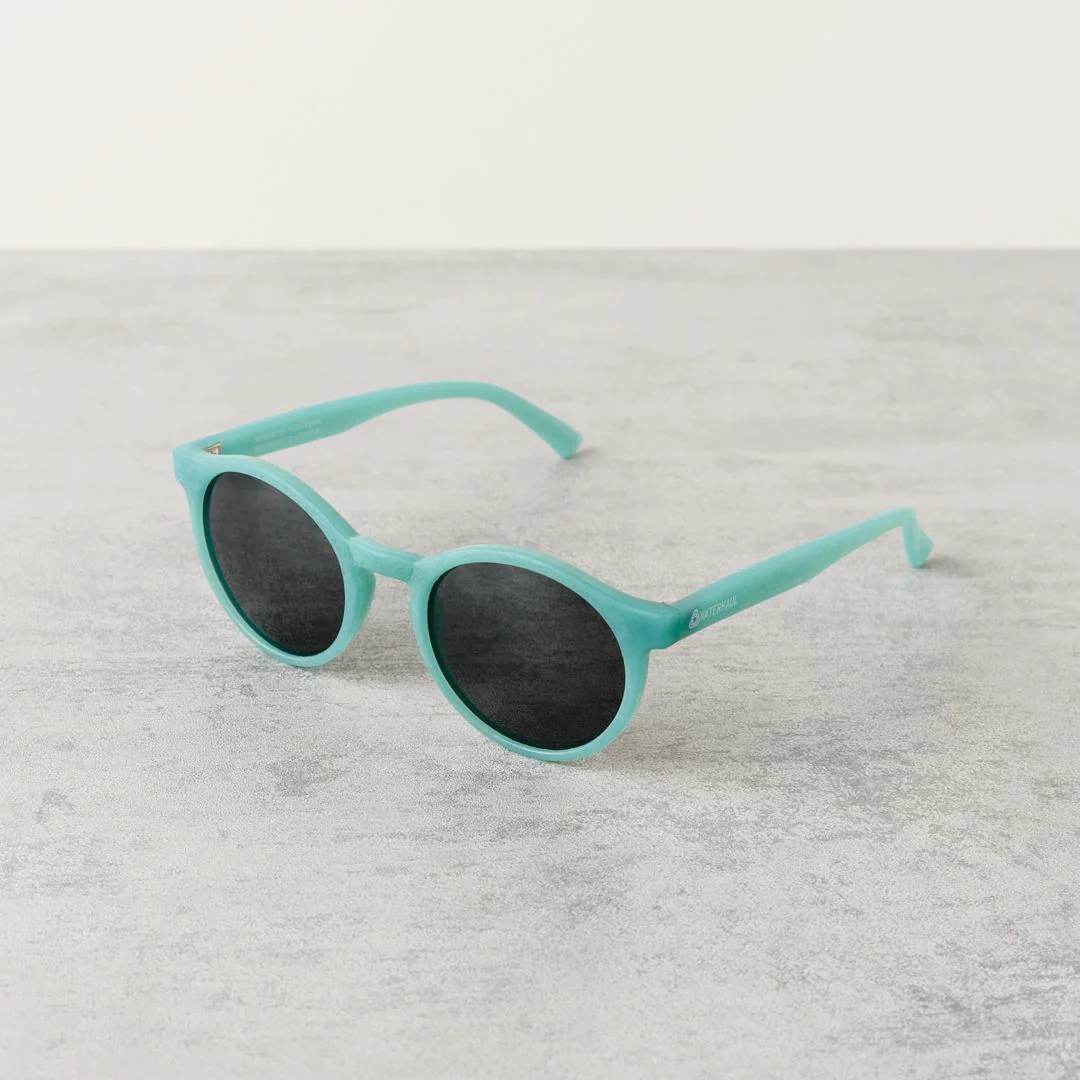
For garden pottering, Waterhaul is a good Cornish brand, which uses collected fishing waste to offer naturally-coloured sunglasses. You can send them back for recycling (although they are sold with lifetime guarantees).
For children, Nomad Eyewear and BioSunnies offer more sustainable brands.
Terracycle Eyewear Zero Waste Box is for communities or offices. Available in small or large sizes, send off full boxes using prepaid labels, and the plastic is recycled into industrial items. The box accepts spectacle frame, sunglasses, safety glasses, swim and ski goggles.
Why Choose Sustainable Sunglasses?
Most sunglasses are made with plastics (oil) or metal that requires mining (although lenses are nearly all made with plastic). And many are sold in plastic packaging. It’s estimated that CO2 emissions for the eyewear industry are around 3.7 million tonnes, mostly due to using high-energy materials and production methods.
And unless the company offers an in-house recycling scheme (like above), most end up landfills, where they take hundreds of years to break down on landfills. The small size and complex build-up of eyewear makes them difficult to recycle locally.
Are Sunglasses Really Necessary?
Of course, animals don’t wear sunglasses, so do we need them? If you don’t go out and stare at the sun much, maybe not. But holes in the ozone layer and higher temperatures, means that cataracts (a top reason for vision loss) is common in countries where people don’t wear sunglasses.
Other risks include increased chance of macular degeneration, photokeratitis (sunburned eyes) and even eye cancers. Those who work outdoors and people who live near the equator are at greatest risk.
How to Choose Sustainable Sunglasses
Good sunglasses should stay firm on the head, and have metal hinges and scratch-resistant coatings. For longer-lasting pairs, choose ones with replaceable nose pads, screws and lenses. Some shops now sell DIY repair kits, and opticians often offer hinge adjustments and lens swaps.
Most good brands include a microfibre cloth to clean the lenses. If laundered, use a microfibre filter (to avoid microplastics leaching from washing machines into the sea).