How to Choose (slightly) Greener Hosiery
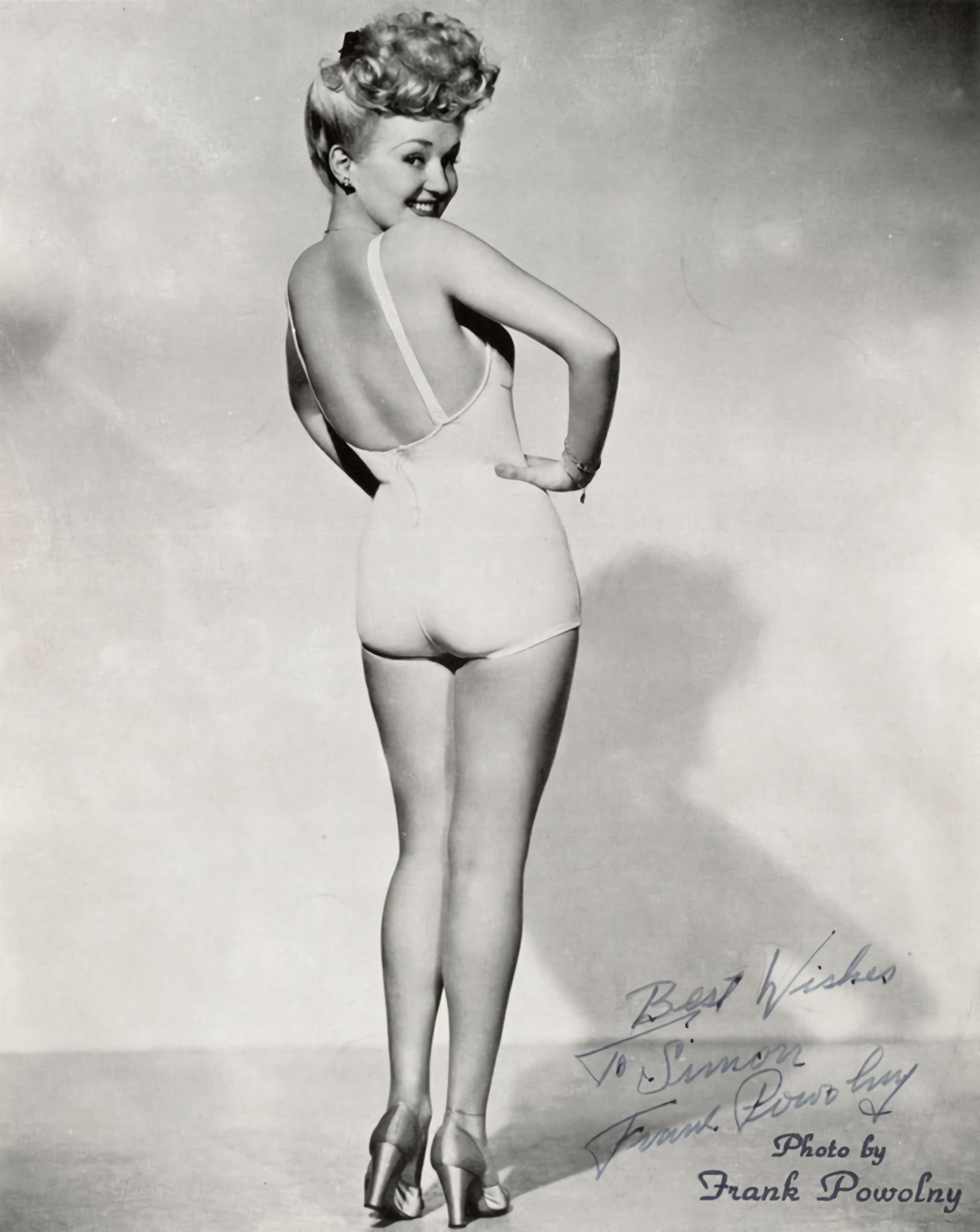
Most tights and stockings (and pop-socks for sailors and majorettes!) are made from nylon, which stretches well but tears easily and ends up in the trash. Created over 5000 years ago as ‘knitted socks’, today there are billions of pairs sold, which usually end up on landfills.
In the 40s stockings were so popular, that women who could not afford them, would draw a black line on the back of their legs, to make it look like they were wearing them!
Avoid silk stockings (made by boiling silkworms – even ‘peace silk’ can leave tired silkworms to starve on the floor, as they are too tired after chewing their way out of cocoons).
Tights and stockings are sold in denier. Low-denier (5 to 30) are lightweight but tear easily. High-denier (40 and above) are thicker and more resistant to snags.
The Most Sustainable Hosiery Brands
As you won’t find 100% cotton tights or stockings, launder them in a microfibre filter, to stop synthetic fibres breaking off in the washing machine, and going out to sea.
Hēdoïne offers (partly) biodegradable tights, which it says will break down in around 5 years. These cost a little more, but are designed not to ladder so easily. Made in Italy, they may tear with ‘dog handshakes!
But what’s great about this company is that you can send (any brand) of old tights to them for recycling, to receive £10 credit on your next pair.
EcoOutfitters (which makes Teflon-free organic school uniforms) offers knitted tights for children (or small people!) These are soft with flat seams, so good for people with eczema. Sold in several colours (black, white, brown, grey, navy and bottle green).
How to Make Hosiery Last Longer
- Remove jewellery before putting tights on.
- Keep nails smooth, to avoid snags.
- Don’t ‘pull on’ tights (like socks). Just roll up moisturised legs.
- If wearing shoes with zips, wear socks on top of your tights.
- Wash hosiery by hand (and not alongside other clothes, or zips).
- Do not use fabric conditioner (nor tumble dry).
After washing, pre-stretch your hosiery: Place one hand on the foot, and the other on the top. Then gently pull. For snags, gently pull on both sides to make it disappear (or reduce).
Do You Always Need Support Hosiery?
GPs sometimes prescribe support stockings (but most people don’t need them, and some people say with artery disease should not wear them).
Support stockings work by ‘squeezing your legs’ slightly, to encourage good blood flow to the heart. But in most cases, you can do this naturally:
- Regularly raise legs above your heart. This could be as simple as placing legs on a pouffe (higher than the sofa) while watching TV.
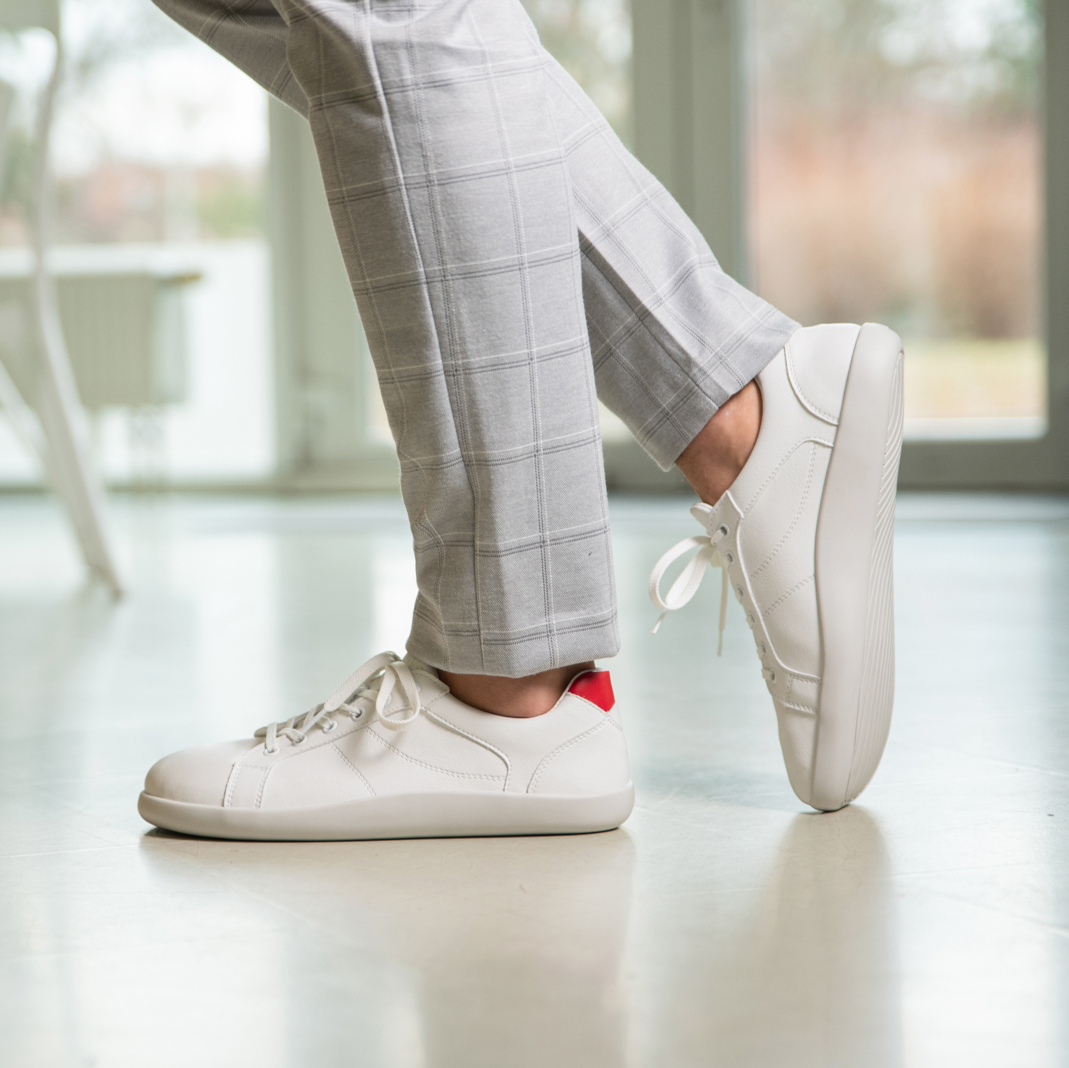
- Wear comfortable (vegan) shoes that exercise your calf muscles. Ahinsa Shoes (above) are super-comfy, made by physiotherapists.
- Walking causes calf muscles, to squeeze blood to your heart. Regular exercise also reduces weight, which is good for circulation.
- Drink water, eat well, avoid alcohol and give up smoking.
- A handful of Epsom salts in the bath (sold in indie chemists) can help achy legs. Not for inflamed/infected skin, open wounds or burns. Check with GP for medical contraindications.
- People who stand all day (like hairdressers), fly regularly or are confined to bed/wheelchairs benefit from foot/leg exercises to get blood pumping from the legs to the heart. Talk to your GP if if you see brown areas (or ulcers) on your feet or legs.