Let’s Meet England’s Lovely Lighthouses!
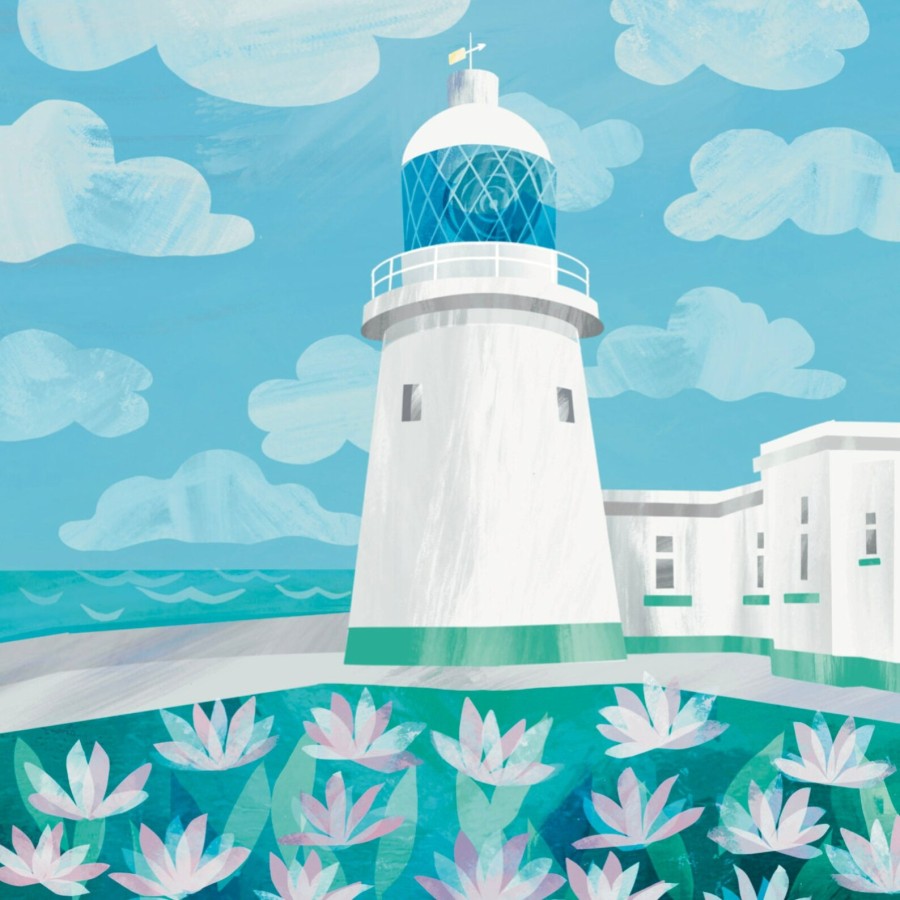
Due to being a coastal nation (with lots of changeable weather and hazards like rocks and cliffs), England has many lighthouses. Some are no longer in use (used for tourist information or even holiday homes).
But many are still working lighthouses, although most now operate automatically from Trinity House, rather than by a lighthouse keeper.
Not all lighthouses have red and white stripes (this is done to make them stand out against white cliffs, which is why say Beachy Head lighthouse is this blend of colours). Other lighthouses are white, and some are tall and others short and fat!
Black Nore Lighthouse in Portishead (Somerset) is currently now in jeopardy from ending up as a holiday home (or being knocked down) due to lack of funds (it’s not covered by Trinity House, instead a local community looks after it).
The unique latticework frame was specially designed to reduce wind resistance. If no-one is found to care for it, it will revert to being owned by the Crown (King Charles III).
A Brief History of English Lighthouses

Lighthouses in England date back to Roman times, when fire (before lamps) was used to guide seafarers. Later came lighthouse keepers whose job would be to keep the lamps burning, though of course it was a solitary job.
The ‘Scottish lighthouse mystery’ that has puzzled people for years, was recently probably solved. Three men working in the Highlands mysteriously disappeared, while keeping watch in a lighthouse. It’s now believed that one was swept to sea, and the other drowned, trying to save him.
In 1514, Henry VIII (not a very nice man who kept beheading wives and did awful things to the Catholic Church) did do one good thing, and that was to create Trinity House. Which today is still in charge of maintaining and protecting England’s lighthouses.
Noteworthy Lighthouses and Their Stories
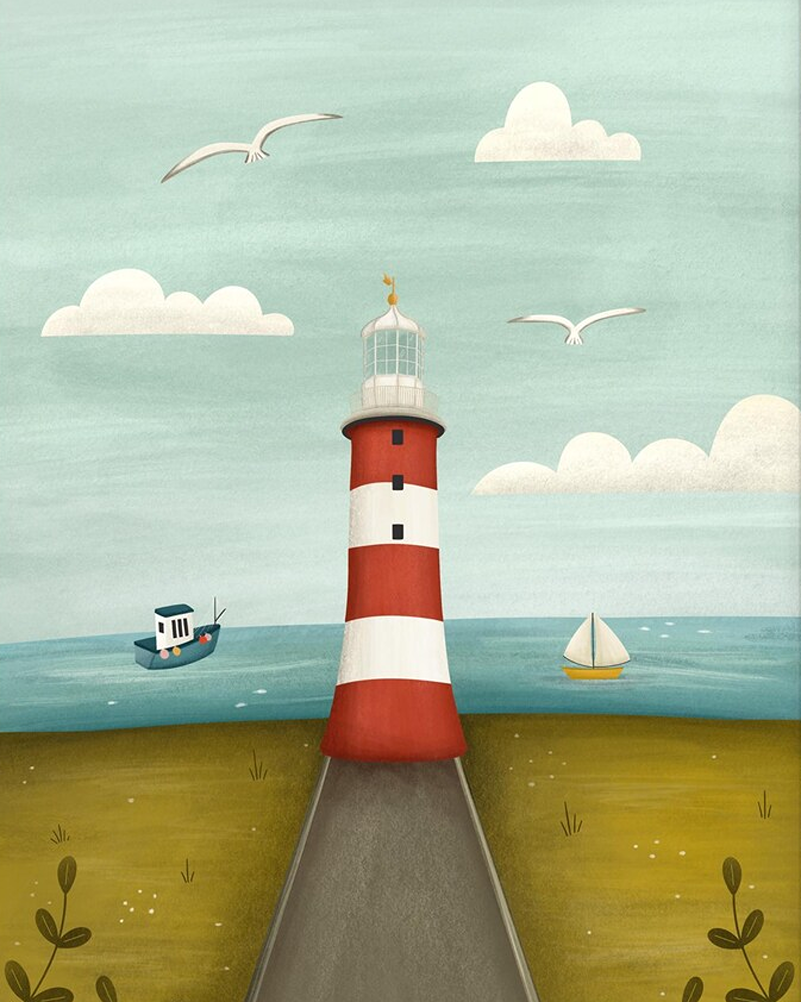
Smeaton’s Tower (Plymouth) is one of England’s best-loved lighthouses, named after John Smeaton, who used interlocking stones to build it, to withstand strong waves.
Burnham-on-Sea (Somerset) is a curious ‘lighthouse on legs’ that is raised on nine wooden stilts. It was built to warn ships to keep away from dangerous sands (you may know that Weston-super-Mare and other areas are home to dangerous sinking mud).
Start Point Lighthouse (Devon) sits on one of the most exposed areas of the English coast. Built in 1836, the fog signal building collapsed in 1989, due to coastal erosion. A free-standing alternative now stands in its place, protected by a retaining wall.
Greenwich Lightvessel is England’s moving lighthouse, a ship fitted with lamps and fog horns. This striking red ship once guarded the busy Thames approach. Now retired, it’s a reminder of the genius of lighthouses.
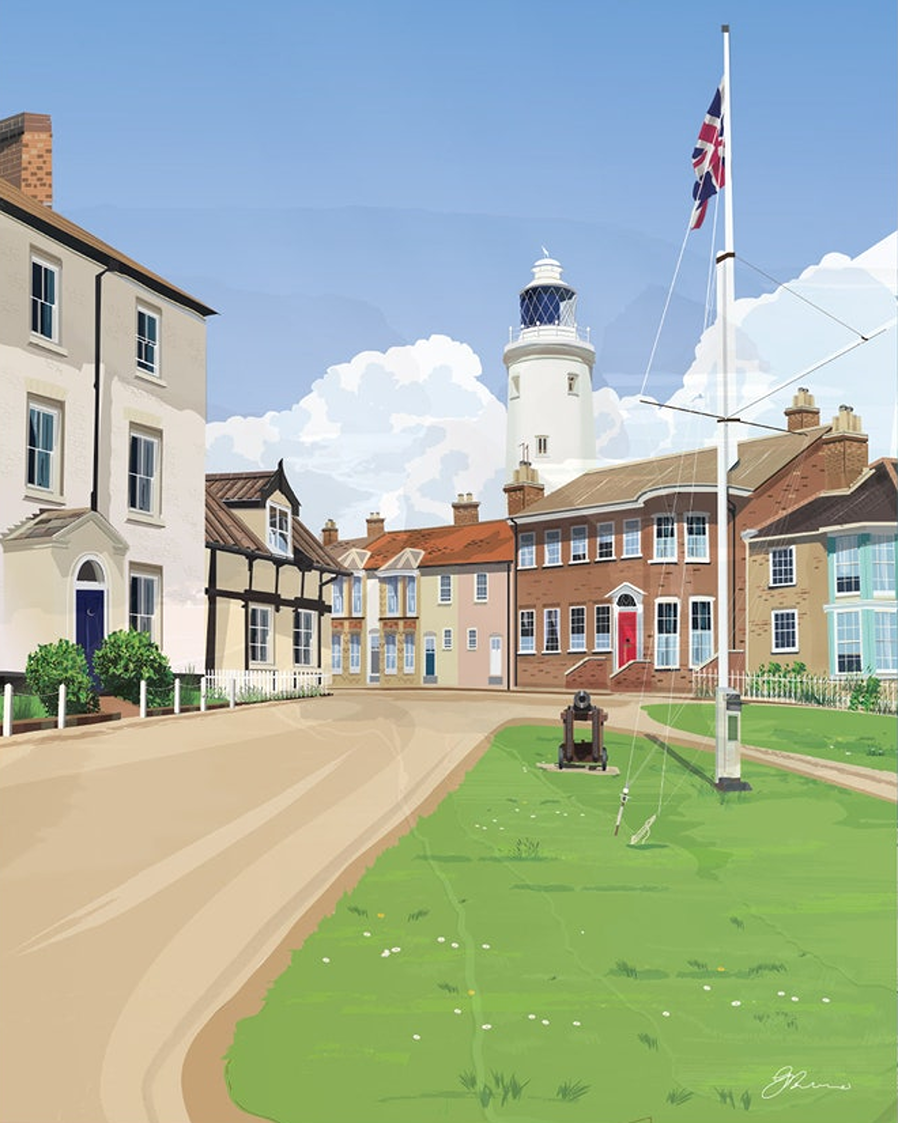
Southwold Lighthouse is unusual, in that it stands within the town, near high street homes and shops.
Recently, a rare job came up as a lighthouse keeper, asking for someone with a good head for heights, happy to work alone, able to change lightbulbs and must like seagulls!