Good Reasons Never to Set Off Fireworks

Fireworks may seem like fun, but they cause immense harm to birds, pets, horses and livestock (70% of people in the UK want them banned for anything other than official events).
Blue Cross has tips to keep animals safe if you use them, from ‘low-bang’ fireworks to preventing lost pets. Also read up on helping hedgehogs (many hibernate in bonfire piles).
If you have a fireworks display, keep them away from flammables (trees, farms, stables) and let everyone know beforehand, so pet parents can prepare.
Many birds die of fright, and sometimes crash to the ground in their thousands, during firework displays. They cause a huge amount of pollution too, including acid rain.
Around 2,000 people attend A&E with fireworks injuries in the UK each year, according to NHS and fire service messaging. Bonfire Night and New Year’s Eve are peak periods, and at-home displays are a growing share of the problem.
Keep Everyone Safe from Fireworks Dangers
Burns are the most common injury with fireworks (sparklers burn at around 2,000°C, hot enough to melt some metals). Eye trauma, corneal abrasions and ruptured eyeballs are other risks.
Dry grass make things worse, wildfires often started by fireworks and lanterns. Other risks are misjudging distances, not following instructions and cold weather (hands are numb, reactions slow).
Skipping home fireworks protects your family, just visit official gatherings, if you do (but never take pets, leave them with someone to look after them at home).
Shield Animals from Fireworks Terror
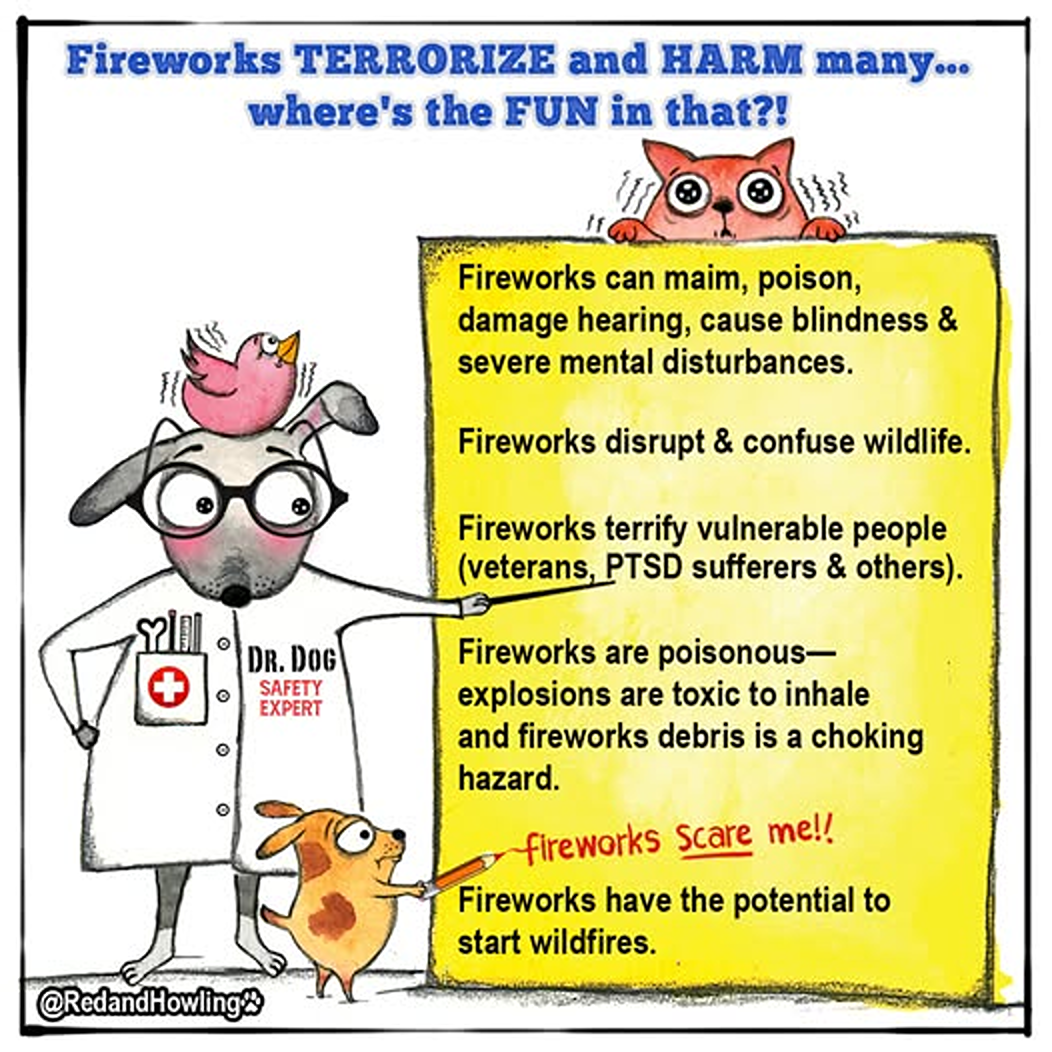
Pets don’t understand what fireworks are, so most are terrified when they hear them (some even bolt through doors and windows, and birds can abandon nests and fly into hazards.
Try to take dogs for a walk first, then create a calm space (with a place to shelter) and stay nearby, playing low music or put the TV on, and speak with a calming voice.
Make sure horses and livestock are secured. Blue Cross and RSPCA have good tips.