Better Choices for Natural Contraception

Millions of men and women use some form of contraception to delay or avoid pregnancy. But the contraceptive pill has many health issues, plus it pollutes the environment (changing the sex of some fish when oestrogen-rich urine is flushed away) and as a medical product, is tested on animals.
Is the world overpopulated? Yes, but it’s over-consumption that is more of an issue. One large family living on a remote Pacific island, is likely consuming less resources than the average UK or American teenager.
Many faiths (not just the Roman Catholic church) do not agree with abortion (and some contraception). So hopefully one or more of these methods will suit everyone of any belief.
Also read our post on plastic-free pregnancy tests. If you do fall pregnant, read our posts on pregnancy and childbirth.
No contraception is 100% effective against pregnancy or sexually-transmitted diseases (only abstinence).
Despite our sex-obsessed society, it’s quite a healthy alternative as there are lots of other interesting ways to enjoy life too!
Stats show that actually those who ‘wait until the right person comes along’ tend to have happier relationships and less chance of divorce (and better sex lives) than those who don’t wait. And also don’t suffer the emotional consequences of feeling hurt or angry, when relationships don’t work out.
Women who abstain from sex until post-teen years also have less chance of sexually-transmitted diseases, that can lead to cervical cancer and infertility. Nuns for instance, have a hugely reduced risk of cervical cancer, compared to the general female population.
For those that do use contraception, here is a quick lowdown of the natural methods available.
It is very important to follow the methods correctly. Those who criticise say apps for becoming pregnant, is often due to simply not following the methods – court cases have proved this.
NHS has a suite of information on natural family planning, which should be done alongside a trained practitioner, for accuracy.
CycleBeads were created by reproductive researchers at Georgetown University in Washington, USA. Available as beads or app-form, these tell you the days you are more likely to get pregnant. The beads are used in Africa, as they are cheap and respect religious beliefs.
Natural Cycles (created in Sweden) has over 3 million users and FDA approval, but some have criticised its subscription-based model. Like most apps, it measures basal temperature to determine ‘green and red days’ (abstain or use alternative methods when fertile). Read the FAQ for more info.
Not suitable for people already on hormonal contraception (it could affect results). A similar app is Daysy.
Lady-Comp is a German-invented fertility tracker, which again measures basal temperature. It may not work for some hormone-related medical conditions.
Period tracker apps are not ‘to prevent pregnancy’ but can help you get to know your cycle. Flo.Health is used by 77 million women, and has a team of over 100 doctors, scientists and medical experts who review all information. Clue is cleared by the FDA.
FemCap is a reusable hormone-free alternative to the cervical cap. This has FDA approval and is available on prescription, with around 92% effectiveness.
If you need lubricants, YES! offers an organic brand free from usual nasties. Sorry if this is a bit rude, but it’s important to list the ethical alternative, to save marine creatures – yes!
We Need to Talk is an empowering book for girls and teens, for them to get to know their body. This is not some narcissistic book by a celebrity influencer, instead by a qualified doctor from Chicago, without media or religion (it covers same-sex relationships).
Eco-Friendly Vegan Condoms
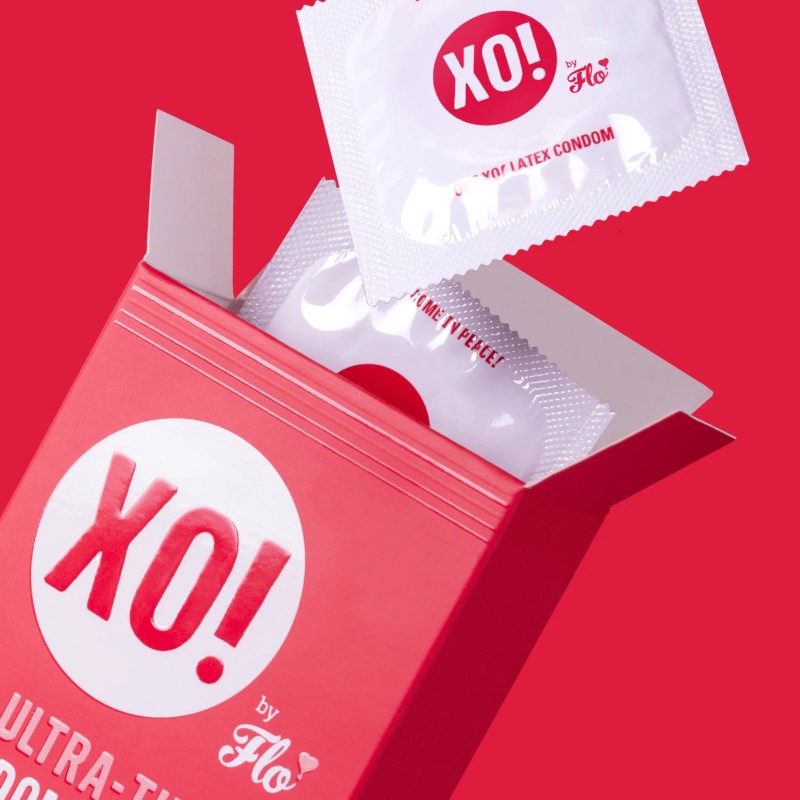
Never flush condoms down the loo, they are a common form of beach litter that also leads to blocked drains and garden floods.
Never leave condoms lying around near pets, as most contain pet-toxic zinc oxide. Also found in natural cosmetics and sunscreens (so wash off skin, before letting pets kiss you).
XO! is a vegan-friendly brand of condoms (most contain casein from milk) that are free from fragrance, and made from Regenerative Rubber Initiative, a co-operative of small agro-foresters). This brand was founded by two women of colour, who donate 5% of profits to people and planet.
Two other brands are Hanx (co-founded by a gynaecology doctor and investment banker – these are CE certified and sold in discreet letterbox friendly packaging) and Fair Squared.