Sleep Pod (an insulated tent for homeless people)
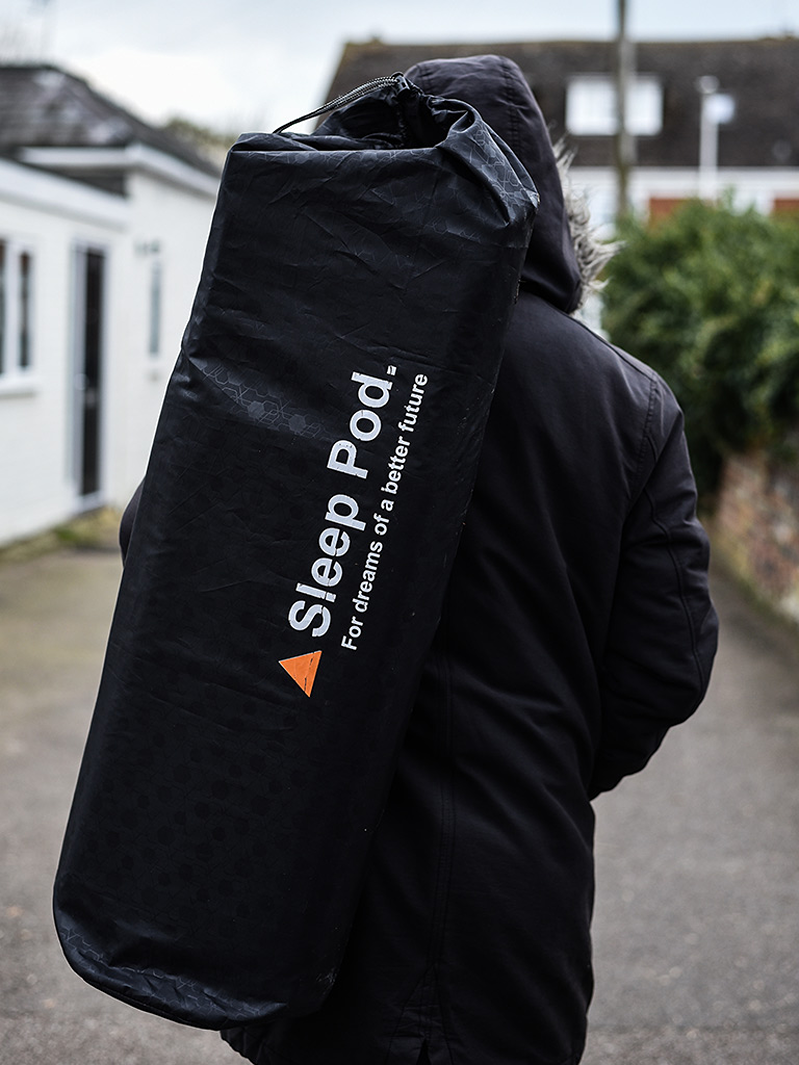
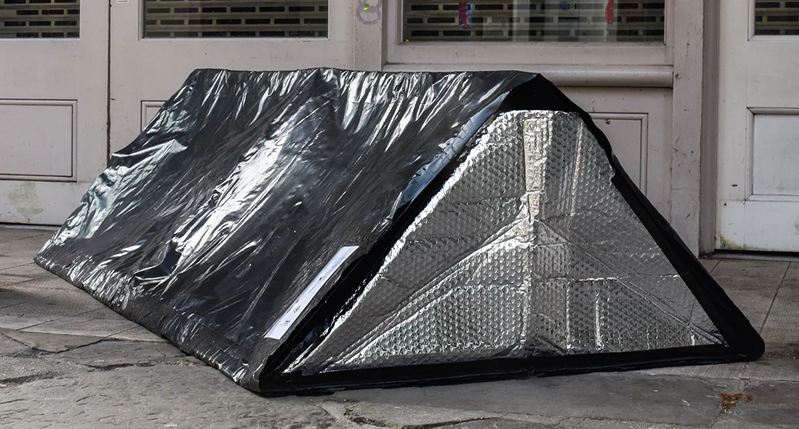
Sleep Pod is a £30 ‘sleeping tent’ that is resistant to rain and wind – it’s also insulated to protect against the elements, but lightweight & easy to carry.
People who use these tents say that they get the best night’s sleep they have had since living on the streets. They are designed especially for severe weather conditions, and far easy to carry around thank blankets, which can get wet and heavy, in poor weather.
General Advice to Help Homeless People
England presently has around 250,000 homeless people (including rough sleepers, sofa-surfers and people living in bed-and-breakfasts). Also read how to help dogs that live with homeless people.
Homeless people can claim benefits (usually Universal Credit), giving the address of a family member or friend, local hostel or job centre. This helps to pay for food (and pet food), job interview clothes and accommodation deposits.
People without bank accounts can use the government’s Payment Exception Service to collect benefits from a local post office or PayPoint outlet.
If you see someone sleeping rough, send a report to StreetLink, whose outreach teams visit rough sleepers at night, to alert them of support to find benefits and accommodation (if the person is under 18, call 999).
Sheltersuit (a wind-waterproof jacket)

Sheltersuit is a wind-waterproof jacket with a large hood to shield the face from rain and streetlights, with a built-in mattress & pillow.
It was invented in The Netherlands, by the designer who had heard that the (homeless) father of a friend had died of hypothermia. Made from upcycled materials, it’s given out free to homeless people across the world.
Common risks to homeless people include:
- Exposure and hypothermia: Prolonged cold can drop body temperature dangerously low.
- Trench foot and frostbite: Wet or frozen feet cause pain, infections, and even permanent injury.
- Heatstroke: In summer, concrete gets blisteringly hot, adding sunburn and dehydration to daily threats.
- Chronic illness: Cold nights and wet clothes weaken the immune system, inviting respiratory problems.