Dorset (the Jurassic coast and tiny islands)
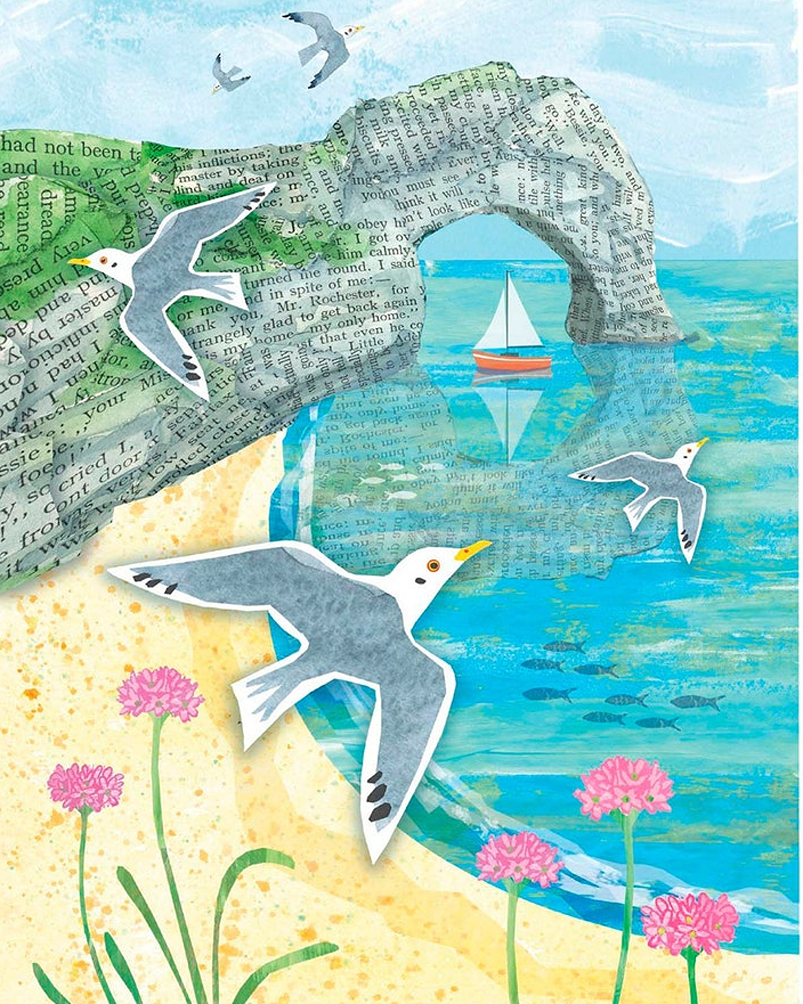
Durdle Door is a world-renowned limestone arch, which rises from the sea near Lulworth, on the Jurassic Coast, a World Heritage Site known for its geological wonders and dinosaur fossils. There are walking trails from here to nearby Lulworth Cove, where photographers often flock to see the sunrise.
If walking in nature, always follow the Countryside Code, to keep all creatures safe. For coastal areas, check tide times and warning flags, and read how to keep dogs safe by the seaside.
Believed to be 140 million years old, the name is Olde English for ‘pierced hole’, and was formed by wave erosion of Portland limestone, (just like waterfalls). On a fold in the rocks created when African and European tectonic plates collided.
The walking path from Lulworth Cove to Durdle Door is one of the busiest footpaths in south west England (over 200,000 annual visitors). So if you don’t like crowds, visit out-of-season!
Durdle Door is home to five different types of rock, and considered a place to study geology at its finest. The local Lulworth Estate is home to various landscapes and rock types, which offer habitats to plants, insects and wildlife.
The entire estate (including Durdle Door) has been privately owned by one family for hundreds of years. Around 30% of the estate is given over to wildlife protection (for not profit) which means it homes 60% of British rare butterflies including the Lulworth Skipper. Other land is used for dairy farming, supplying M & S with fresh milk.
Litter Issues at Durdle Door
Local litter-picking groups have been appalled at the amount of litter dropped at Durdle Door in recent years. Volunteers report ‘horrendous’ amounts of plastic and glass bottles, cans and other items, along with people ‘wild toileting’ and illegally parking nearby.
One volunteer said ‘we can pick up 100g of litter off the beach at Durdle Door in a single summer’s day’.
Dorset Tiny Islands and Resorts
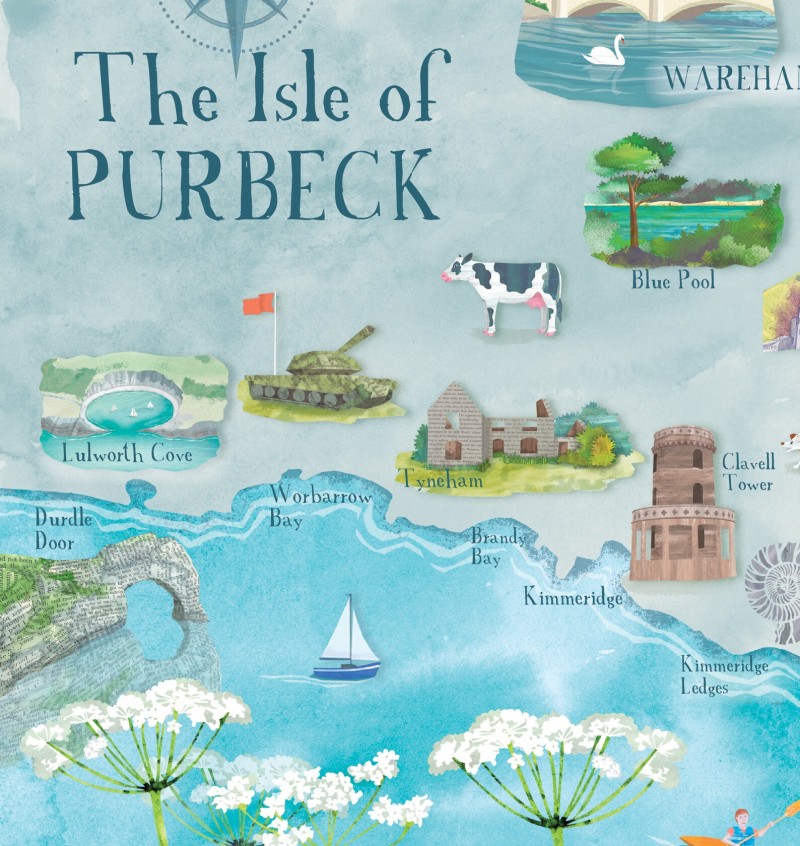
Isle of Purbeck, Maria Burns
Situated on and near the Jurassic Coast, Dorset is a large county that’s home to many well-known seaside resorts (like Bournemouth, which despite its income, has a big issue with homelessness). Next door is the pretty but less touristy town of Christchurch.
There are also a few little gems of tiny resorts and islands:
Isle of Purbeck is not a true island, but a peninsula (and home to Jurassic coast landmarks like Lulworth Cove and Old Harry Rocks). Its key feature is Purbeck limestone, along with Corfe Castle and a major nature reserve.
Nearby Poole Harbour (one of the world’s largest natural harbours) forms the boundary. This is also the end point of the South West Coastal Path.
Brownsea is a charming little island near Poole is home to wildflowers and seabirds. And due to being an island with the right kind of trees, it’s a good spot for red squirrels. Learn how to protect both red and grey squirrels.
Arne Nature Reserve is great for birdwatching, with heathland, woodland and saltmarsh all in one place. Head out early or at sunset for your best chance to see wildlife.
Studland Bay (home to unique dunes and heathland) is a national nature reserve, home to many native reptiles (including sand lizards) and endangered seahorses. Owned by the National Trust, the beach was used to train for the D-Day landings in World War II. Live ammunition is still occasionally found, so report it to National Trust immediately.
Never walk on sand dunes, to protect nesting birds and endangered wildlife.
Sandbanks is one of England’s most expensive places to live, it’s apparently the fourth most expensive place to live in the world (John Lennon bought a bungalow here for his Aunt Mimi in 1965). It used to be wild sand dunes, before turning into a mecca for millionaire shorefront homes.
There have been recent problems after a wooden fence was put up, which blocks off parts of the sandy beaches that run from some of the homes ‘back gardens’. Locals are saying ‘nobody owns the sand’ as they are having to walk different routes, sometimes with their dogs.
This is similar to Windsor (Berkshire) where locals are having to find different dog walks, after William and Kate put up a large perimeter around their new home. One local said ‘there are so many houses they could have chosen, why choose one where the public has to lose such a big chunk of the park, for their private benefit. It’s a selfish act’.
Back in Sandbanks, one resident (almost 80 years old) was walking her dog at night near the sand, then the security lights went on, CCTV started to film her, and a voice boomed out telling her to ‘go away’.
The best-known residents of Sandbanks for many years were Harry Redknapp and his wife, though they no longer live here (he is building a new mansion that will be more private, after becoming bothered by tourists).
The cheapest home on Right Move at Sandbanks is a 2-bedroom flat for £425,000. The most expensive property was is almost £6 million (a 5-bedroom house with 5 bathrooms, a pool, sauna, large lawn and a guest suite).
American writer Zoe Strimpel is mystified by the high prices in Sandbanks:
Sandbanks has none of what I would look for in a seaside home: no wildness, no seclusion, no sense of exposure to the full roar of the elements. Its naturalness has been manicured out of it, in accordance with the architectural and landscaping tastes of the football and entertainment elite who have carved it up.