Manchester (birthplace of England’s industrial revolution)
Manchester carries the Industrial Revolution lightly and loudly at the same time. You can feel it in the street plan, the brickwork, the water lines, and the old names that won’t go away. Yet it’s also a living city, busy, musical, and practical, with everyday places that sit right beside the big history.
Manchester is a city that was built from water and cotton, through labour and transport. The result is a Manchester that feels less like a museum label, and more like a place you can walk through.
If out walking, follow the Countryside Code to keep all creatures safe. Keep dogs on leads near steep banks (and away from toxic spring bulbs).
Manchester’s cotton industry roots
Manchester’s cotton industry didn’t just grow, it reshaped work, time, and the city’s pace. Mills and warehouses rose fast because cotton could move, sell, and scale. As a result, the city became a place where production felt constant, and where new ways of organising labour took hold.
Even now, the cotton story sits in the background of many streets. Look up and you’ll spot old loading bays, tall windows, and sturdy brickwork built for storage and sorting. This matters because cotton wasn’t only a product, it was a system, and Manchester became its working capital.
Castlefield (where canals & industry meet)
Castlefield makes the Industrial Revolution feel physical. The area holds canals, viaducts, warehouses, and open spaces where you can see how the city stacked transport on top of itself. It’s calm today, yet the layout still points to a time when water and rail carried everything.
Besides the big structures, Castlefield also shows the ordinary details that made industry work. Towpaths, basins, and tight corners hint at how goods shifted from boat to cart, then onwards to mills and markets.
Canals (the quiet infrastructure in Manchester)
Canals sound gentle, yet they changed trade with blunt force. They cut costs, sped up supply, and linked Manchester to wider networks. Therefore, raw cotton, coal, and finished cloth could move in larger volumes, with fewer delays.
What stands out is how the canals still sit within daily life. People walk them, cycle them, pause by locks, then pass under old bridges that once carried heavy loads. That mix, leisure beside labour history, tells you how deep the Industrial Revolution ran into the city’s bones.
Warehouses and “Cottonopolis” streets
Manchester once earned the nickname “Cottonopolis” because trade shaped everything, from skyline to street names. Warehouses weren’t minor buildings, they were the city’s engine rooms for buying, selling, and shipping. So you get long façades, repetitive windows, and interiors designed for bales and books.
In addition, the commercial heart of Manchester grew around routines that still feel familiar. Meetings, contracts, and deadlines took place in rooms above busy streets. The products have changed, yet the idea of Manchester as a working city, always making and moving, remains close to the surface.
Birth of the union movement (shaped by mills)
Industrial growth brought jobs, yet it also brought danger, low pay, and long hours. Workers organised because they had to, and Manchester became central to the birth of the union movement. That history isn’t abstract, it links to real streets and real families, and it still colours how the city talks about fairness.
Even when you can’t see it on the walls, you can sense the legacy in local pride. Manchester often respects plain speaking and collective effort. In other words, it’s a city that remembers who built it, and who pushed back when the cost got too high.
Political reform and public meetings
Manchester has a long habit of assembly, protest, and debate. Industrial crowds didn’t only fill factories, they filled public spaces as well. So reform became part of the city’s story, shaped by workers, writers, organisers, and ordinary people who wanted a say.
Meanwhile, those traditions helped form a civic identity that still shows up today. Big topics often meet practical local action here. You see it in campaigns, community groups, and the way people treat public space as something shared.
Trams and the push to connect neighbourhoods
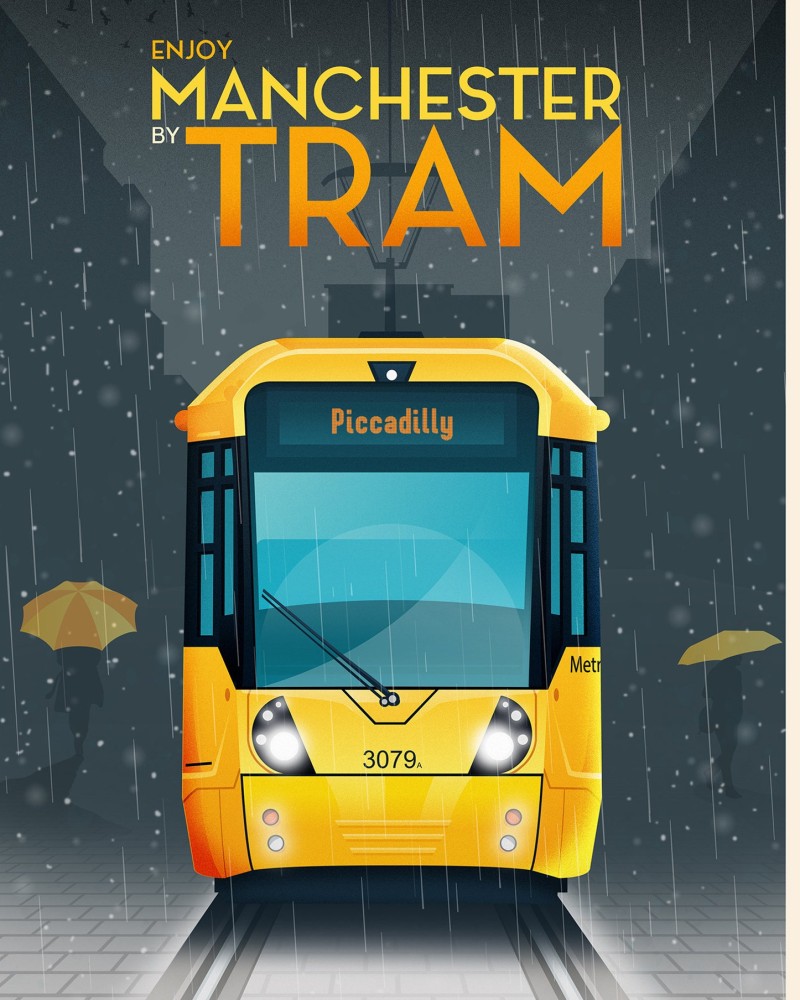
Trams made movement simpler and more regular. They helped workers travel across the city, and they pulled districts closer together. As a result, Manchester didn’t stay compact, it stretched, and daily life became more patterned, with timetables, stops, and predictable routes.
Modern Metrolink lines keep that idea going. The vehicles look different, yet the logic stays the same, move people quickly, link work and home, keep the city connected.
Railways and viaducts (built by local people)
If canals set the first rhythm, railways turned the volume up. Manchester’s rail lines and viaducts carried goods and people at a pace earlier generations couldn’t match. Therefore, the city plugged into national and global trade in a direct, muscular way.
Walk near the bigger rail corridors and you can still read the engineering choices. Arches, brick spans, and heavy supports sit close to modern offices and flats.
Working-class housing and daily life
The Industrial Revolution didn’t only create factories, it created a new kind of urban crowding. Workers needed homes close to work, so terraces and dense streets spread quickly. As a result, whole communities formed around shifts, wages, and local shops.
Even when areas change, the older street patterns remain. Short blocks, back alleys, and tight rows tell a story about speed and necessity. It’s a reminder that industry wasn’t distant, it sat right inside domestic life.
David Neilson (who plays Roy Cropper) in Coronation Street owns the shopping bag that is as famous as he is – his late mother took the bag to Loughborough market for years. He now uses it carry scripts around!
Manchester music (the city’s other power)
Manchester is known for its music. It’s the city that birthed The Smiths and folk singer Ewan MacColl (who wrote Dirty Old Town and was father to Kirsty MacColl).
Another local was Letter from America’s Alistair Cooke, who presented on BBC Radio 4 for decades. A tragedy after his death is that illegal gangs sold his bones to the medical industry (he died from bone cancer, so the tissue was not even healthy). All in a country that Alistair spent his life endearing us to.