The Science of Raindrops (not shaped like tears!)

Raindrops are something we are used to in England, as it rains quite a lot! The north west of England by far has most rain (you’ll get soaked to your skin if caught in a downpour). While in the east it rains less. And in the southeast it rains more, but the sun tends to dry up pavements within hours.
If when out walking you see a sheep on its back (due to rain-soaked wool or pregnancy), just firmly right it back (or it will die) then stay with it, until the rain has drained off.
Contrary to myth, raindrops are not shaped like tears, they just appear that way when they land on a window. They are actually small and flat (like a bun) or the shape of a jellybean. You can also get ‘phantom rain’ that evaporates before hitting the ground.
Caught in a downpour? Invest in a windproof umbrella that won’t blow inside out and lasts for years (as long as you don’t leave it on a bus).
Some raindrops are actually snowflakes, that melt as they fall into warmer air. They also leave a lovely scent (petrichor) caused by oils released from plaints and soil-dwelling bacterial. That’s why you get that lovely earthly smell from after rainfall.
How much rain does England get?
Not nearly as much as you’d think (around 135 days on average, so a third or so?) This is nothing like say some places in India (in 1861, Cherrapunji had the heaviest on record, 905 inches in one year).
January is England’s wettest month, followed by February and late autumn. And while the northwest is the rainiest, again we don’t get nearly as much rain as Scotland, by far the wettest part of the UK.
The Waterlands (follow a raindrop from source to sea)
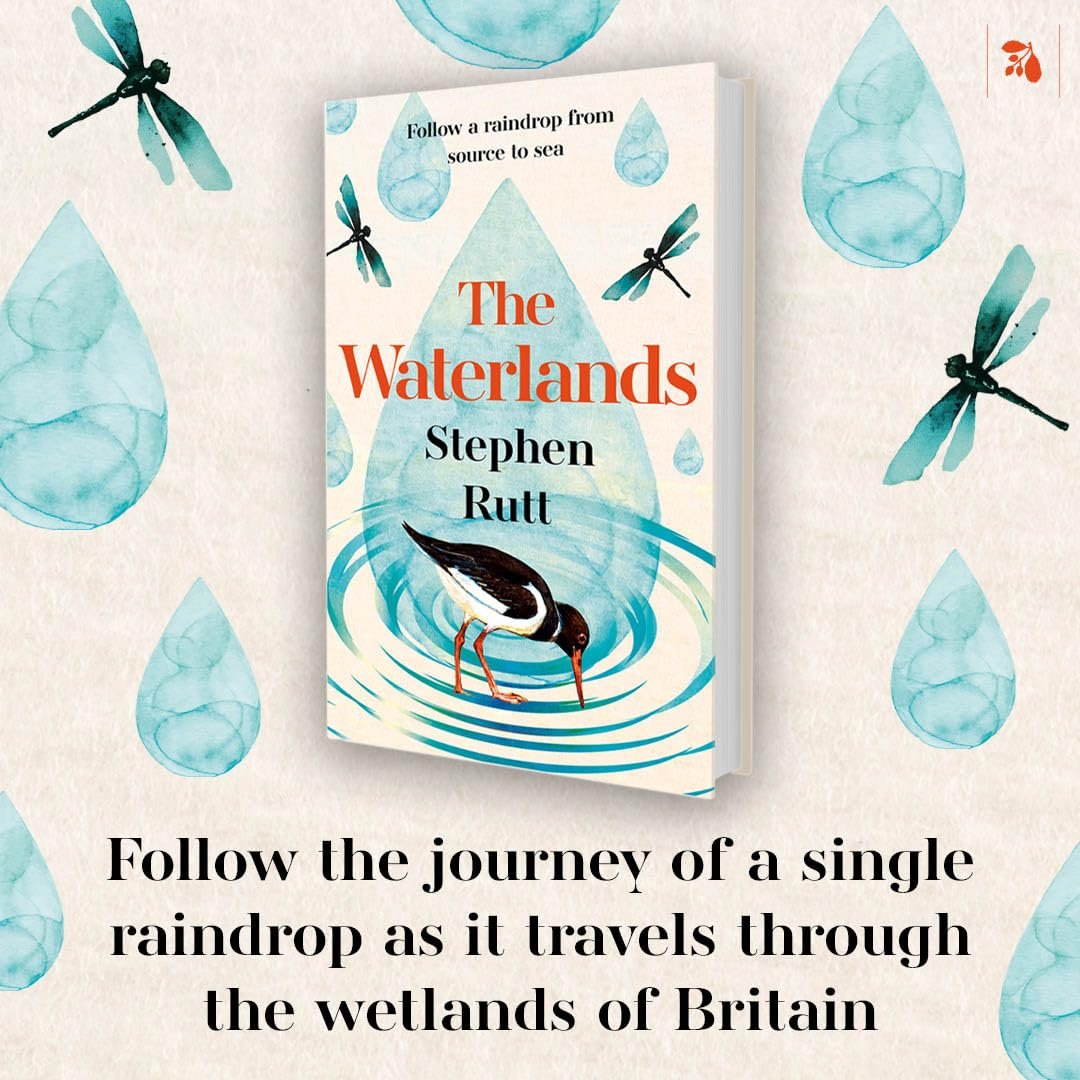
The Waterlands has been described as ‘a masterpiece’, as the author explores how water falls to the earth from the sky as raindrops, and splashes into hillsides to merge with rivers, to reach the sea.
This is the story of one of the world’s most miraculous substances: water. Follow a raindrop as it flows through diverse landscapes:
- River sources in the upland moors
- Saltmarsh-flanked firths and estuaries
- Serene and spectacular lochs
- Crystal-clear chalk streams
- Blanket bogs and peat
On this epic journey, you’ll join the raindrop to discover how water shapes the land and shapes our lives – and how we shape it in return. Beautifully blending geography, ecology, climate writing and social history, this is an urgent call to protect our planet’s most essential resource.
You’ll never look at a raindrop the same way again!
This is a book that leaves you looking at rain, rivers and land itself with fresh wonder and responsibility. Ruby Free (conservation biologist)
In an age of floods, droughts, polluted rivers and shrinking lakes, this imaginative retelling of the water cycle beautifully illuminates the vital importance of water and wetlands to all life on earth. Julian Hoffman
Heartening evidence of how quickly our wetlands can start to bounce back, once left to their own devices. Birds and insects return, grass grows longer and trees take root. Financial Times
Stephen Rutt is a writer and book reviewer, who lives in Scotland.