The Farne Islands (Northumberland’s wildlife haven)
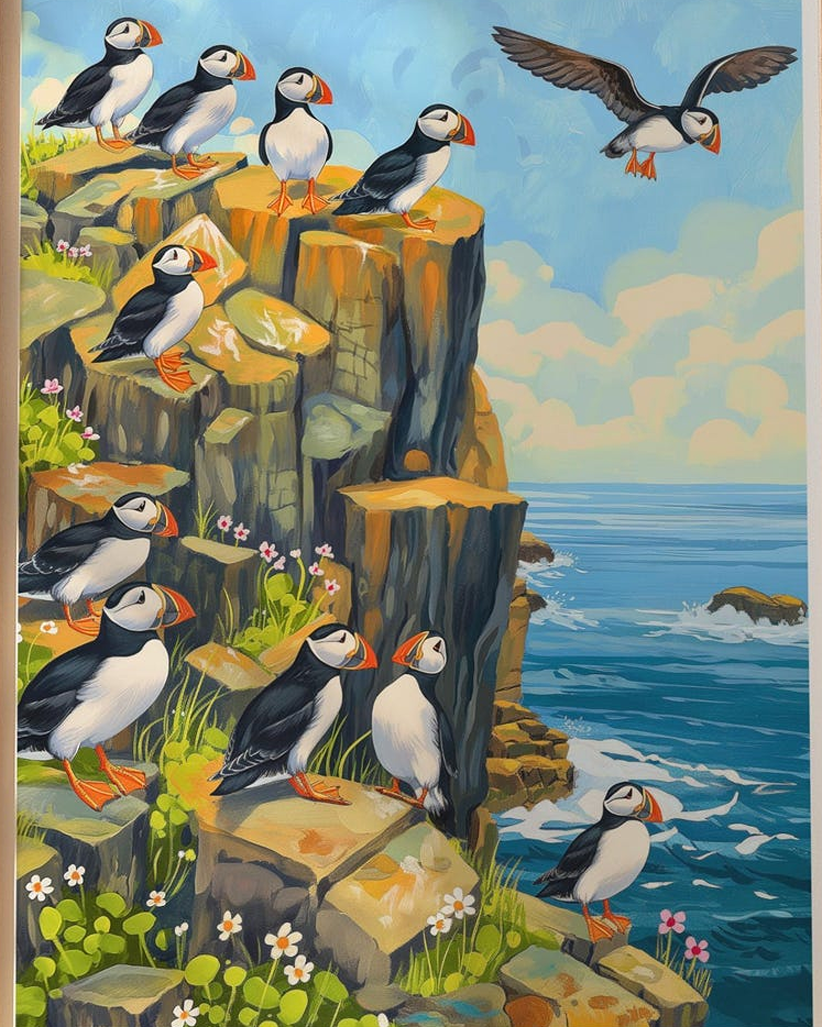
The Farne Islands are a set of 28 islands a few miles off the Northumberland coast, home to much of England’s bird and marine wildlife. Each year around 40,000 puffins breed here (raising pufflings in little burrows), and it’s one of the best breeding sites for Atlantic grey seals.
Other birds here are razorbills, guillemots, eider ducks and kittiwakes (three-toed gulls). And migrating Arctic terns also breed here, raising their chicks in ground nests.
So you can imagine, there are very strict rules for visiting:
Bring binoculars, to view creatures from afar (to avoid disturbance).
- Great care is taken to avoid Avian flu on the island.
- No dogs (not even assistance dogs) are allowed on the islands.
- All bags and rucksacks must be close and sealed (to prevent rodents hitching a ride).
- Pot plants and compost are not allowed.
- Hard hats are not allowed (Arctic terns may divebomb to protect their chicks, and hard hats could damage their beaks).
- You must follow strict rules on where to walk, to avoid disturbing nests.
There are two types of tours: you can visit one of the islands (which also lets you visit St Cuthbert’s Chapel (home to the 7th century hermit saint). Or just take a boat trip, to observe seals and cliff-nesting birds from the water.
The boat tours operate daily from late March to October. However these are sometimes cancelled due to bad weather. Decisions are made by 9am each morning, depending on weather forecasts.
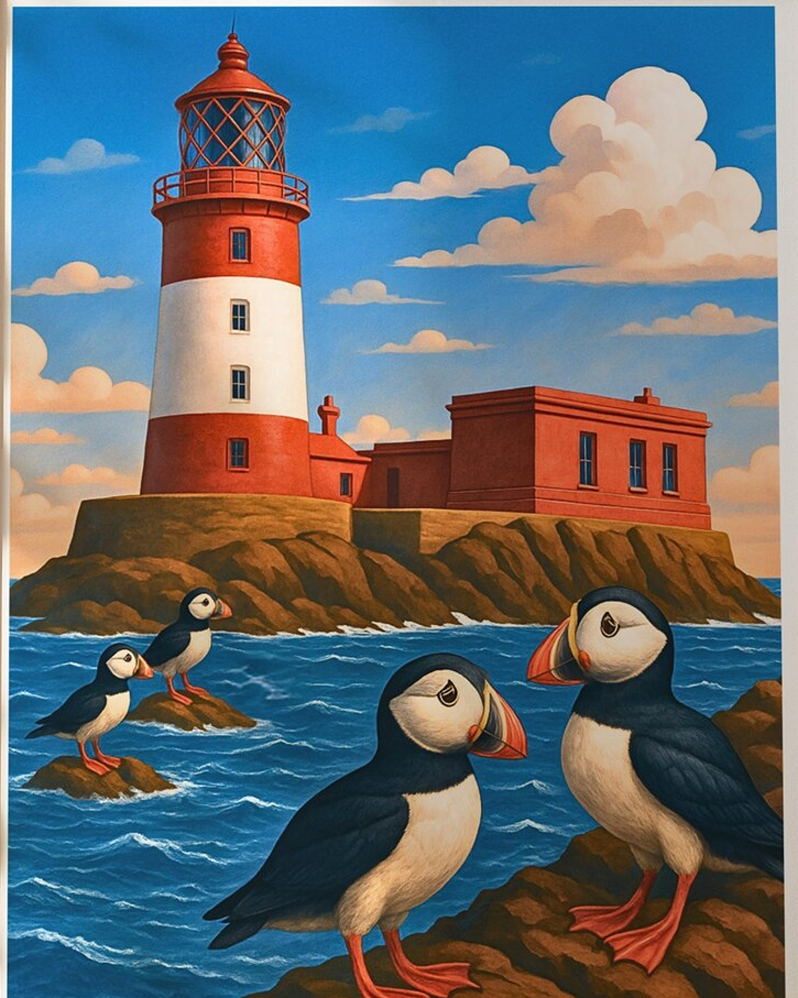
There are three lighthouses on the Farne Islands. Longstone Lighthouse is linked to the rescue by Grace Darling and her father Robert in 1838 (who rowed out in rough seas, to save shipwreck survivors).
Staple Island (another wildlife haven)
Less well-known is nearby Staple Island, a small rocky skerry on Outer Farne, also an important wildlife haven (not visited by humans, due to Gun Reef – a dangerous ridge of rocks).
Coquet Island (a haven for rare birds)
Coquet Island, is a haven for rare birds like roseate terns, sandwich terns, puffins and eiders. Again this is a nature reserve to keep birds safe, so no humans are allowed to visit.