The Floral Spa Town of Cheltenham (Gloucestershire)
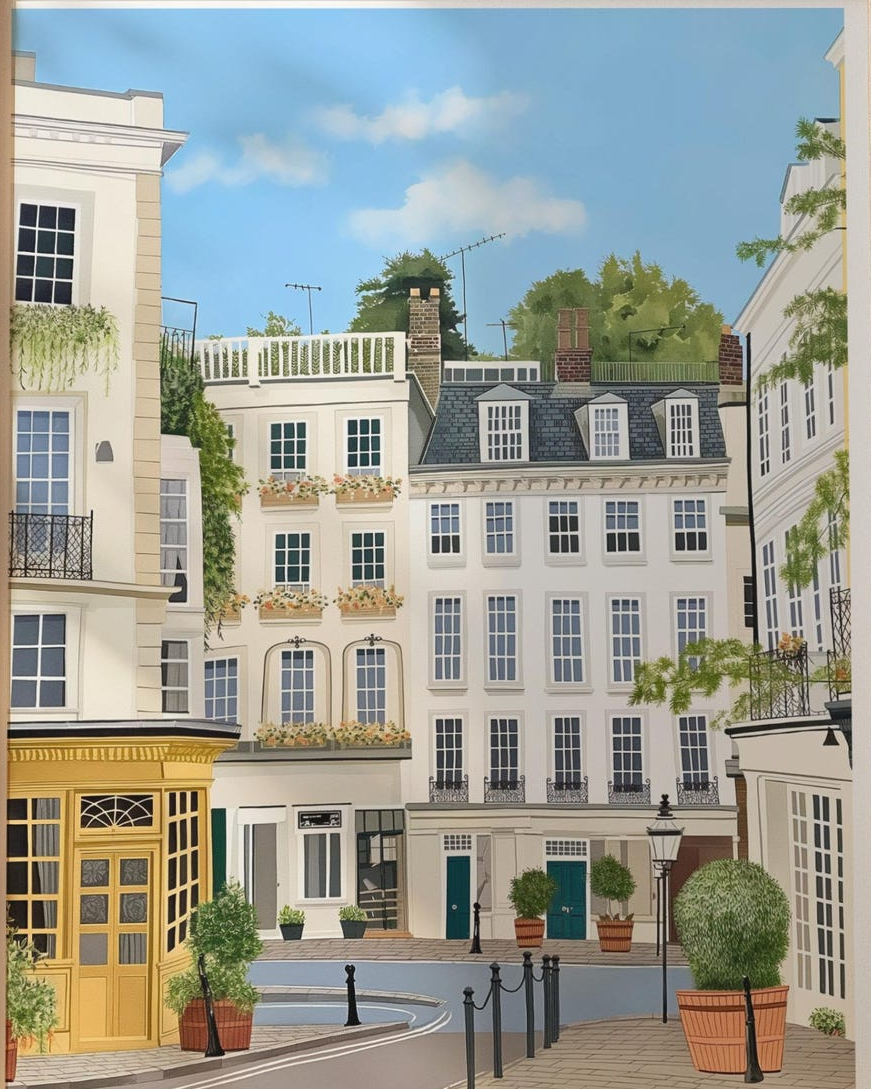
Cheltenham is an affluent town, known for its Regency architecture and historic spa roots, blending elegance with a warm welcome. The buildings are often painted in soft shades, and decked with wrought iron balconies. This is town architecture at its best.
If planning floral cities, plant pet-safe public gardens.
Many of the buildings date back over 200 years, with the Montpellier and Pittville areas showing off the finest examples. The stunning Neptune Fountain on the Promenade adds a touch of classic style.
Pittville Park stands out with its boating lake, adventure playground, and sprawling lawns. The Pump Room, a beautiful historic building, sits on the edge of the park.
Historic Gloucester (fine medieval buildings)
Gloucester is a city stretching back over 1000 years. It’s not as pretty as Cheltenham, but its cathedral is one of England’s finest medieval buildings, with stunning stained glass, a 15th-century tower, and fan-vaulted cloisters.
The city’s historic docks hold old warehouses that are now museums, shops or cafés by the water.
Birth of the Sunday School Movement
In the late 1700s, life in Gloucester looked very different. Most working-class children spent their days in factories or workshops, with little or no chance to learn to read or write.
Robert Raikes (a newspaper owner whose granddaughter married the composer Edward Elgar) noticed the struggles of young people growing up in poverty.
Wanting to help, he started what seemed at first like a small idea: teach children to read and write on Sundays, their one day off work.
Although there had been a few Sunday schools before (in High Wycombe and Nottingham), this movement really began to take off in Gloucester. Robert opened his first Sunday school in 1780, close to the city’s centre.
Issues with Disrespectful ‘Dark Tourism’
Alas in the modern age, this has become a thing: people visiting places of death and tragedy (like Grenfell Tower and in this case, 25 Cromwell Street) to take selfies outside the house where Fred and Rose West murdered so many innocent women, including some of their own children.
The media has a part to play here too, not sensationalising such tragedies. Media is a powerful form. If you have never visited Gloucester, what is the first thing you think of? Likely this pair of serial killers.
In fact, Gloucester is a historic riverside city of ancient buildings, wonderful people and beautiful surrounding Cotswolds countryside. More focus should be on this.