Why are so many Cornish places named after saints?
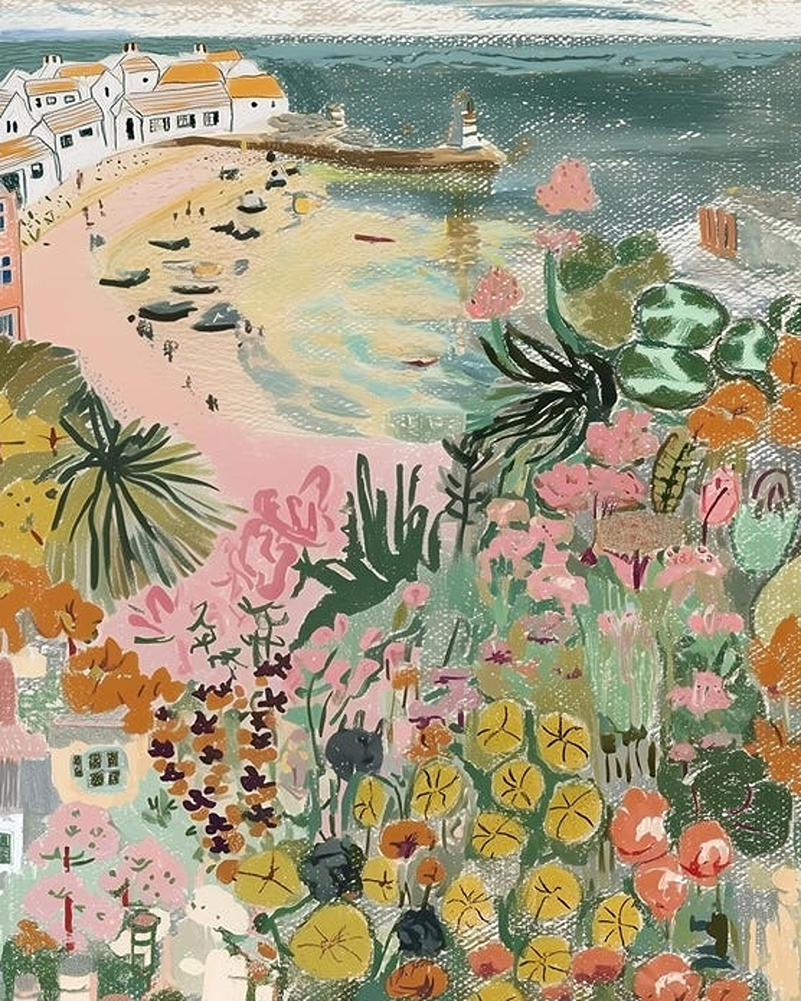
If you have ever travelled to Cornwall, you will notice that a lot of places are named after saints. From St Ives (named after an Irish princess who travelled across the water on a leaf) to St Agnes to St Austell.
Why? Simply because it has a very rich religious history. And after Northumberland, probably has the most saintly history of all English counties.
After the Romans left, travelling holy men and women arrived from Ireland, Wales and Brittany, to spread Christianity. Many lived like hermits in tiny religious churches that you can still find, often dating back to the 5th and 8th centuries.
Three Cornish good guys (southwest saints)
Saint Austell took its name from a 6th-century Cornish saint, Austol, who was a disciple of the Welsh Celtic Saint Mewan, who lived in the 6th century.
He travelled to Cornwall and Brittany with St Austell to spread the word of Christianity, before moving to France, where he established monasteries. The two saints remained good friends, and died within a week of each other.
Saint Blaise, an Armenian bishop from the fourth century, became a local hero. Legend says he healed those with throat problems and even animal diseases, often with miraculous results. People travelled far, hoping for cures or blessings.
Over time, St Blazey adopted his name and a unique tradition: every February, locals would visit church to have their throats blessed, a ritual that still lingers in village memory.
Saint Blaise also served as the protector of animals, which fit the rural life in Cornwall. Stories say livestock owners would bring sick animals to the parish seeking protection and healing.
St Piran (patron saint of tin miners) is also the patron saint of the whole of Cornwall. The story goes that he arrived in Perranporth on a millstone and discovered tin.
St Petroc founded a monastery in Padstow, and is a well-known Cornish saint.