The Mysterious Life of Cuckoo Birds
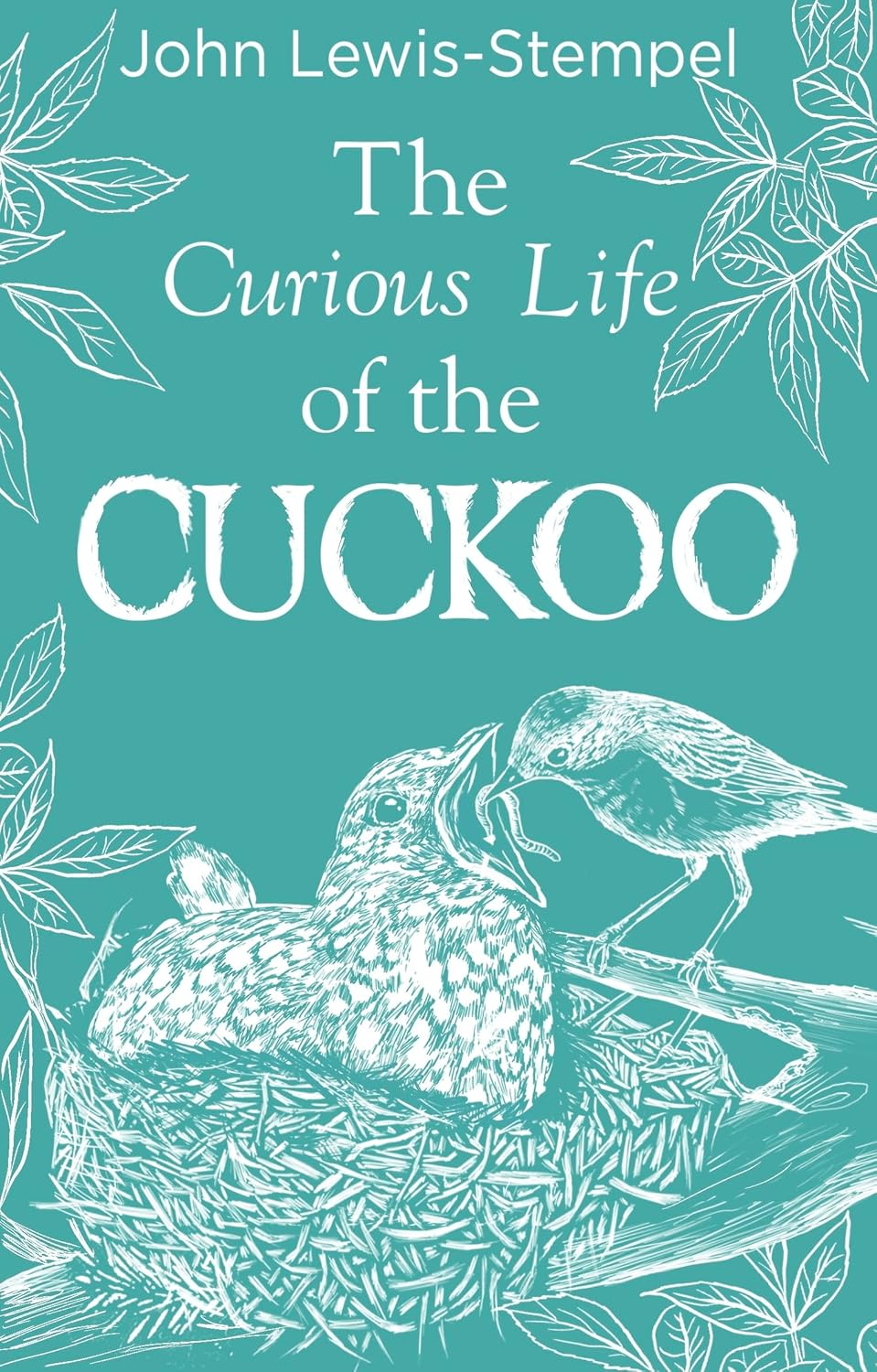
The Curious Life of the Cuckoo Bird is a book about one of our most secretive birds. Is there any creature more mysterious? Often heard but rarely seen, it’s gentle call heralds the birth of sprint, and uplifts our wintered hearts, with the two-note ‘cuk-koo’ as it sounds in the country.
Often mistaken for a sharp-winged hawk, John Lewis-Stempel explains one of nature’s greatest enigmas in vivid and lyrical prose.
The common cuckoo is a slim, grey bird with a long tail and a restless look. People often hear it long before they see it, because it keeps to woodland edges, scrub, heath, and farmland with trees. It doesn’t usually sit out in the open like a crow. It slips between branches, then calls again from a different perch.
The classic two-note cuckoo song is mostly the male’s call. He uses it to claim space and to attract a mate. It’s bold, repetitive, and carries well over open farmland and across woodland rides, because the notes are clear and spaced.
Females sound different. Instead of “cuck-oo”, they give a bubbling, chuckling call, often described as a “kwik-kwik-kwik”. If you only listen for the two-note phrase, you’ll miss half the story.
In colour, a cuckoo looks grey above and pale below, with fine dark barring. It’s about the size of a pigeon, but slimmer. That shape can trick you at first glance. Many people confuse a flying cuckoo with a sparrowhawk, because both have long tails and barred underparts.
The difference is in the details: a sparrowhawk has shorter wings and a more punchy, hunting flight. A cuckoo looks lighter and more even in its wingbeats.
Where cuckoos spend the rest of the year
Cuckoos are summer visitors in the UK and much of Europe. They arrive in spring after travelling from wintering grounds in sub-Saharan Africa. When they first return, males call often, because they’re setting up territories and seeking mates.
Then something surprises many walkers: the sound drops away. By early summer, cuckoos can go quiet, and adults may leave earlier than you’d expect. You might still hear one later on, but the loud, regular calling is mostly a spring feature.
Timing also shifts. A warm spell can bring earlier arrivals. A cold snap can delay them, or keep birds quiet for days. That changeability matters, because it reminds us the cuckoo’s calendar is tied to weather, insects, and the wider health of the countryside.
Cuckoos let other birds raise their chicks!
Uniquely, cuckoos don’t build nests. They don’t sit for weeks feeding a brood of their own. They lay eggs in another bird’s nest, and leave the hard work to strangers!
First, a female cuckoo watches. She scouts likely host nests, often in scrub, reeds, or rough grass. In the UK, hosts can include reed warblers, meadow pipits, and dunnocks, depending on habitat. She needs the timing to be right, because an egg laid too early or too late stands out.
Next comes the quick move. When the host parents are away, the cuckoo drops into the nest, lays an egg fast, and often removes one host egg. The whole visit can take seconds. Speed matters, because longer visits raise the risk of being caught.
Then there’s disguise. Many cuckoo eggs mimic the host’s eggs in colour and pattern. Different female cuckoos tend to specialise in different host species, so their eggs match that host more closely. It’s a quiet arms race, played out in speckles and shades.
What happens after the chick hatches?
The cuckoo chick often hatches early. That head start is everything. In the first days, the chick may push other eggs, or even young chicks, out of the nest. The action looks brutal, yet it’s not a tantrum. It’s instinct, and it secures the only resource that matters: food.
After that, the foster parents keep feeding it. Why? Because the chick’s begging is overwhelming. It opens a wide mouth, calls insistently, and triggers the parents’ strongest feeding rules. The signals are hard to ignore, even when the chick grows far larger than the adults bringing food.
This has a cost. Host birds can lose their own brood for that season. Some fight back by rejecting odd-looking eggs, deserting suspect nests, or mobbing adult cuckoos nearby. The struggle goes both ways, and that balance is part of what keeps the system from collapsing.
Cuckoos eat large insects, including hairy caterpillars that many birds avoid. That diet links them to rough edges, mixed woodland, heath, and places where insects thrive. They also depend on healthy numbers of host species. No hosts, no cuckoo chicks.
When land use strips out hedgerows, drains wetlands, or turns varied ground into a single crop, insect life can fall. When insect life falls, birds feel it. As a result, hearing cuckoos is not just pleasant, it hints at a countryside with working parts.
In some areas, cuckoo numbers have fallen. Pressures include loss of wetlands and rough grassland, fewer insect-rich edges, pesticide impacts on large insects (including caterpillars), and climate shifts that can upset timing between cuckoos, hosts, and peak insect food.
The helpful part is that small actions add up:
- Plant native hedges and wildflowers to boost insects.
- Leave some grass long, and cut on rotation where you can.
- Reduce pesticide use, especially in spring and early summer.
- Support local wetland and grassland projects.
- Record sightings with local bird groups or citizen science apps.
Although cuckoos are more likely to visit woodlands, keep cats indoors at dawn and dusk (when birds are likely feeding) and avoid wooden bird feeders (cats can claw up them).
Read more on creating safe havens for birds, and how to stop birds flying into windows.