Petal Power: Simple Tips for Growing Organic Flowers
Most store-bought flowers are grown with chemicals, and shipped from across the world, feeling and looking like you would, if you’ve just arrived off a long-haul flight. Most have no scent, are packed in plastic and often don’t last. Growing your own organic flowers is a nod to the local flower miles movement.
Read more on no-dig gardening and humane slug/snail deterrents. If you live with animal friends, read up on pet-friendly gardens (many bulbs and wildflowers are not safe). Avoid facing indoor foliage to outdoor gardens, to help stop birds flying into windows.
Grow your own cheeful organic sunflowers!
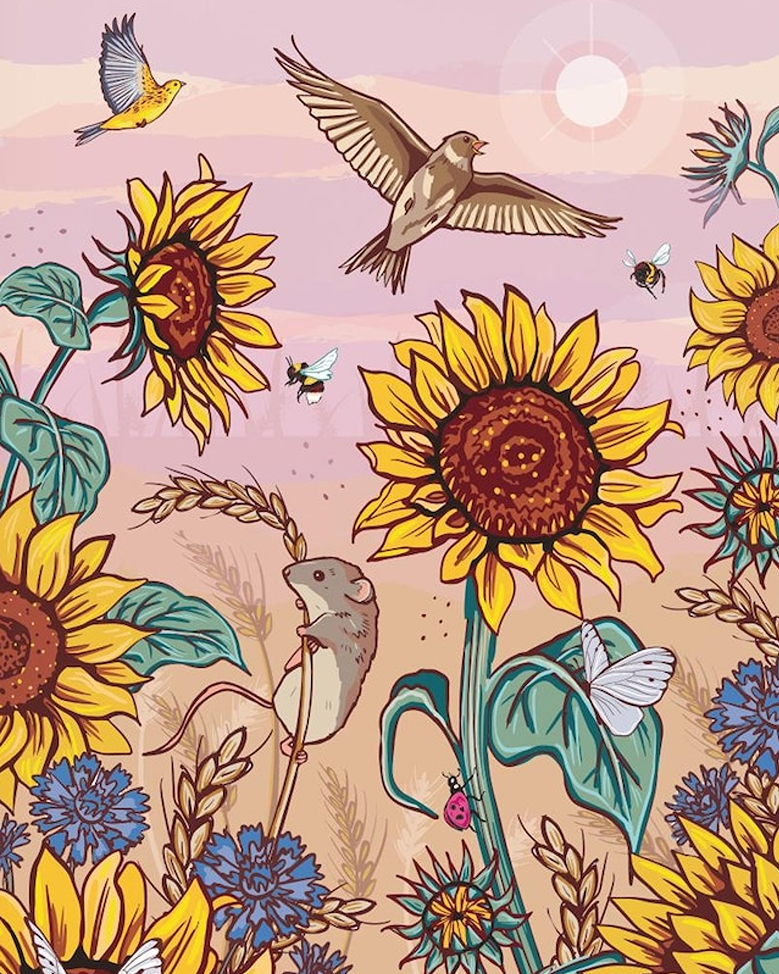
Sunflowers are many people’s favourite flower. Who could not love them? These very-easy-to-grow flowers are tall and bright, and give off beautiful yellow blooms loved by humans and all other creatures. The seeds are adored by birds (finches and woodpeckers) and mammals of all types. Bees and butterflies also love them, as a source of pollen in wildlife-friendly-gardens.
Don’t give sunflower seeds to rabbits and guinea pigs (choking hazards).
How sunflowers follow the sun
What’s amazing about sunflowers is that they can track the sun through the day, almost telling the time! They face east in the morning, then turn to follow the sun as it sets in the west. Then it rests overnight, and does the same the next day. This daily dance is called heliotropism.
How does it do this? Its stem grows quicker on one side, causing the sunflower head to bend, in search of light. The reason it does this, is to help the plant soak up energy, needed for strong growth. Clever sunflower!
As sunflowers get older, they stop moving (like we all do!) So they stay facing east, to help them warm up quickly (and attracting pollinators first thing in the morning). It’s like they know at the end of their life, they still want to do everything they can, to help the bees and butterflies.
Growing Sunflowers is Simple
If you gardened with your parents, you’ll know that sunflowers are a great starter flower. Not only are they super-easy to grow and super-positive, but they grow quickly, so even an uninterested child will soon be outside watching the flowers bloom.
Start with good seeds and good soil. And remember that if using for cut flowers, leave some seeds for the birds! Giant Yellow variety produces enormous blooms, to grow your own ‘nature’s anti-depressants’.
The large flower heads are filled with edible black seeds, and the plants reach an impressive 2 metres. Loved by bees and butterflies (and other beneficial insects), they make beautiful flowers for the vase too.
Sow outdoors from April or May, and keep soil moist for healthy germination. They bloom from July to September, adding charm and colour to your garden all through summer.
If you spot aphids (tiny green insects) on new growth, use wildlife-friendly gardening tips to encourage ladybirds, which eat them up like nobody’s business. If slugs or snails are nibbling lower leaves, use humane non-toxic slug/snail deterrents.
If displaying sunflowers, cut them in the morning, just as petals are opening. Use sharp shears, and place stems in cool water. Sunflowers are annuals, so finish their life cycle each year. You can collect and store dropped seeds, to replant next spring.
How to grow your own organic roses
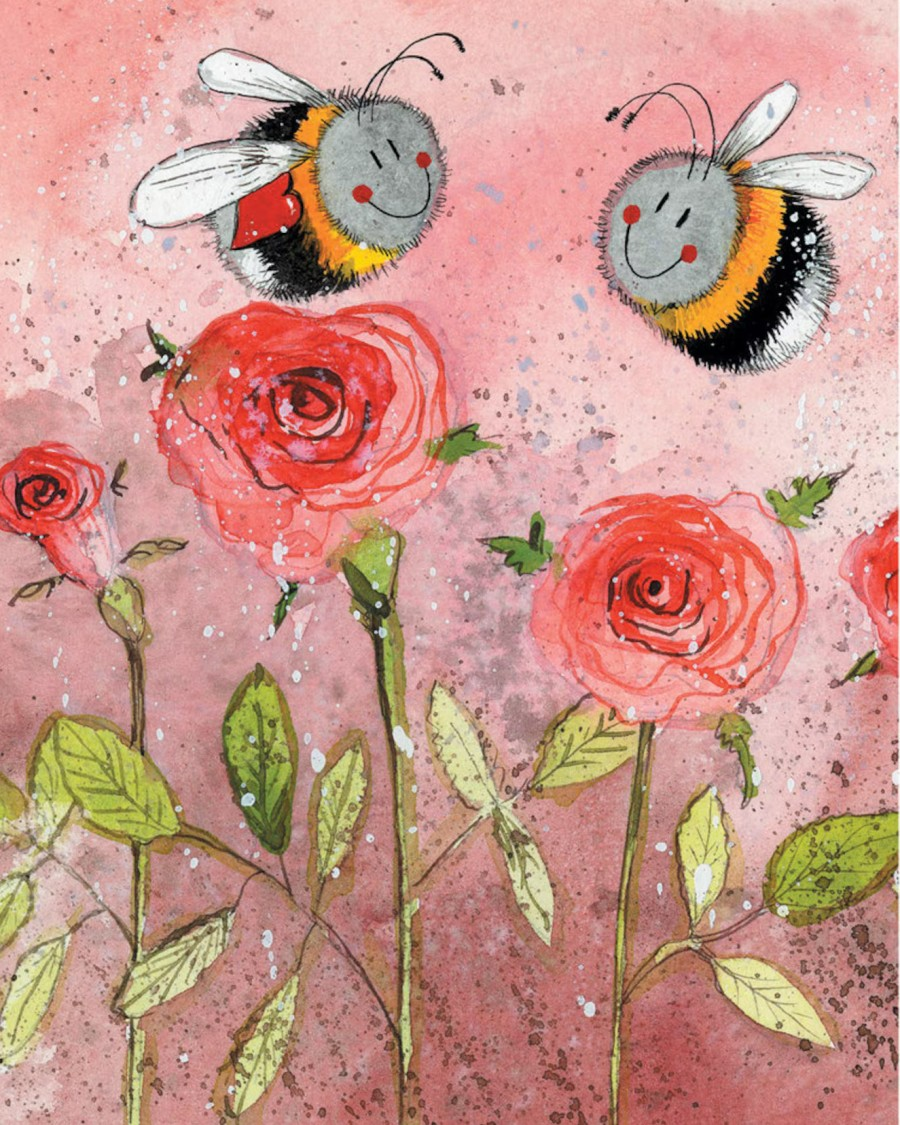
There’s nothing more local than an organic English rose, with beautiful scent. They are not the easiest flowers to grow, but worth the effort!
Some roses flourish when left to fend for themselves with little extra attention. Choose types bred for disease resistance and strong growth. These stand up well to organic care and reward you with reliable flowers.
Recommended Varieties for Organic Growing:
- Rugosa (shrub) is scented and disease-resistant
- Bourbon (old garden) for a classic look, with repeat blooms
- ‘Geranium’ (ground cover) has bright petals, spreads well
- ‘New Dawn’ (climber) is hardy, with soft pink flowers
Roses demand sunlight for most of the day. Six hours or more keeps them blooming and wards off mould. Check that the space drains well after very wet spells. Roses dislike soggy roots.
Soil pH should fall between 6.0 and 7.0, just a touch acidic to neutral. If you are unsure, a cheap test kit gives instant answers. Space your plants well apart (about 60cm for most bushes) so air can flow around each one. Good air flow keeps fungal problems, such as black spot, in check.
Set up no-dig beds
Level off grass or weeds by mowing the proposed site as short as possible. Lay down sheets of plain cardboard or a thick layer of newspaper to block out light and slow weed regrowth. Wet these layers to help them settle and start breaking down.
Add a 10 to 15cm layer of rich compost or well-rotted manure on top. If you can, use organic material from your own compost heap. Finally, cover the bed with a mulch of wood chips, straw, or grass clippings. This friendly base supports worms and fungi while smothering hardy weeds without any need for heavy digging.
Roses appreciate deep, regular watering, especially during dry spells. One good soak each week, about 2.5cm deep, lets roots grow strong. Always water early in the day to let leaves dry and cut disease risk.
Prune in late winter. Remove any weak or dead branches first. Then, cut back the main stems by about one third, shaping the bush so air flows through. This stops disease getting a hold and helps new shoots form. Always use clean, sharp pruning shears to prevent the spread of infections.
If aphids gather on young shoots, encourage ladybirds (natural predators). For fungal issues like black spot or powdery mildew, spray affected leaves with a diluted baking soda solution (one teaspoon per litre of water, a drop of soap to help it stick).
Books to help you grow organic flowers
Flower Philosophy is a book of seasonal flower projects to inspire. Find 25 combinations of stems and foliage, with tips for budget-conscious choices (buds, weeds, foliage, fruits and vegetables). Includes an index of often-forgotten blooms.
Floramama is an inspiring and practical guide to running a successful cut-flower business, from an author who makes a six-figure income on just 1.5 acres of land. Ideal for those who wish to provide their communities with affordable and seasonal organic blooms.
In this book, the author merges marketing gardening principles with her experience of the ecological flower-growing movement, inspired by the ‘slow flower’ philosophy. it covers:
- An overview of flowers: annuals, biennials, perennials, bulbs and wildflowers
- Cultivation techniques for healthy blooms, including site selection, soil, seed-starting and harvesting
- Planting schedules and business tips (including in challenging climates)
- Crafting visually stunning boutiques
This book is ideal for market gardeners or aspiring flower farmers (or simply those who are interested in growing sustainable blooms). Chloé Roy is an ecological flower grower and flower farm instructor, who runs a thriving flower business in Quebec.
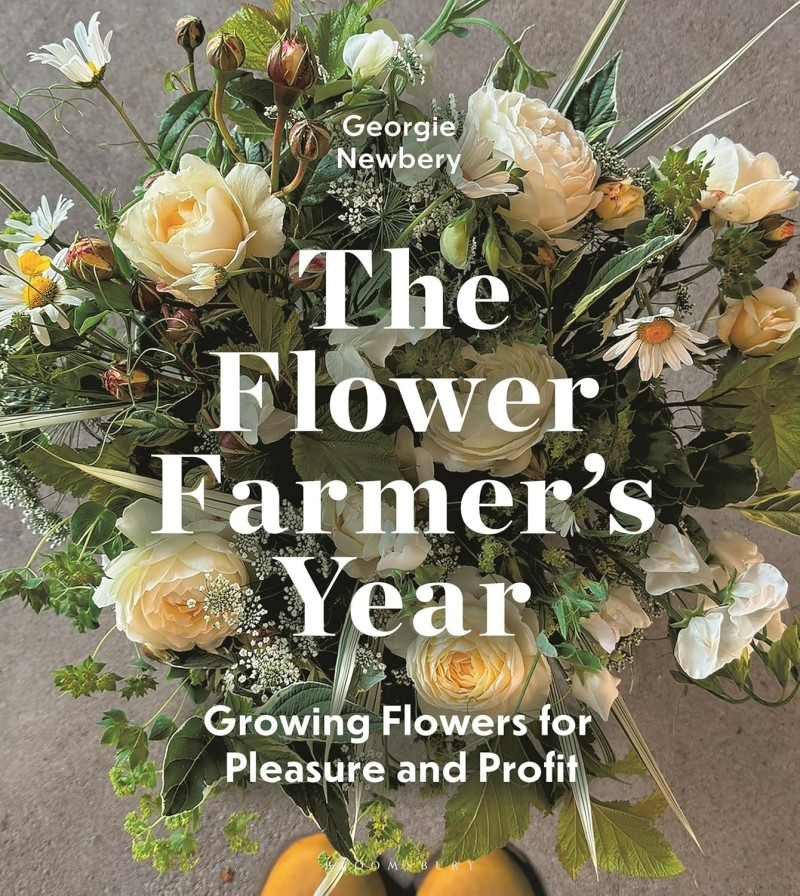
The Flower Farmer’s Year is a beautiful book, to switch from that boring job to the career of your dreams – growing organic flowers and then selling them for profit. Scented local and seasonal flowers are adored by everyone, and you can help your community, and work outdoors.
In this book, an artisan flower farmer and teacher shares how to start a cut-flower patch, optimise the bed layout and choose what to grow. Then how to cut, condition and arrange your flowers. The book includes a year planner, to keep your land productive all year.
You can of course use this book simply as education. But if you find your garden overflowing with organic flowers, you may see it as a good opportunity to make some income. The book includes down-to-earth business advice on how to make a profit from cut flowers and market your business.
Whether you dream of armfuls of sustainable homegrown flowers for your home or a family wedding, or your objective is to earn a living doing something you love, this is the book for you.
Where to buy seasonal organic flowers
- If you don’t want or can’t grow your own flowers, choose sustainable independent florists (find them at Flowers From the Farm).
- One member is Bristol’s Organic Blooms, a social enterprise that also provides jobs for people with disabilities. Their bouquets are good for wildlife, and sold in compostable packaging. Somerset’s Common Farm Flowers also sells local flowers (collection only, and not available in winter!)
- Store your flowers in a cool, dark place. Change the water regularly and keep trimming the stems.
- You can donate used bouquets to Floral Angels, where volunteers re-gift them, to people who need cheering up!
Zero waste alternatives to floral foam
If you regularly arrange flowers (or work in a florist or undertaker home), know that conventional plastic floral foam is a no-no for the environment. Not only is it made from oil, but it degrades into microplastics. Sustainable Floristry Network has a detailed article on the reasons to avoid it.
The network says that most ‘biodegradable floral foam’ is anything but, and could release more chemicals than plastic, to cause more harm. It says to never ‘crumble such products into the soil’, as the companies advertise.
The best way to keep flowers fresh for longer, is simply to change the water regularly, which also helps to prevent bacteria. Prune leaves below the water-line, and keep the vase away from strong heat and light.
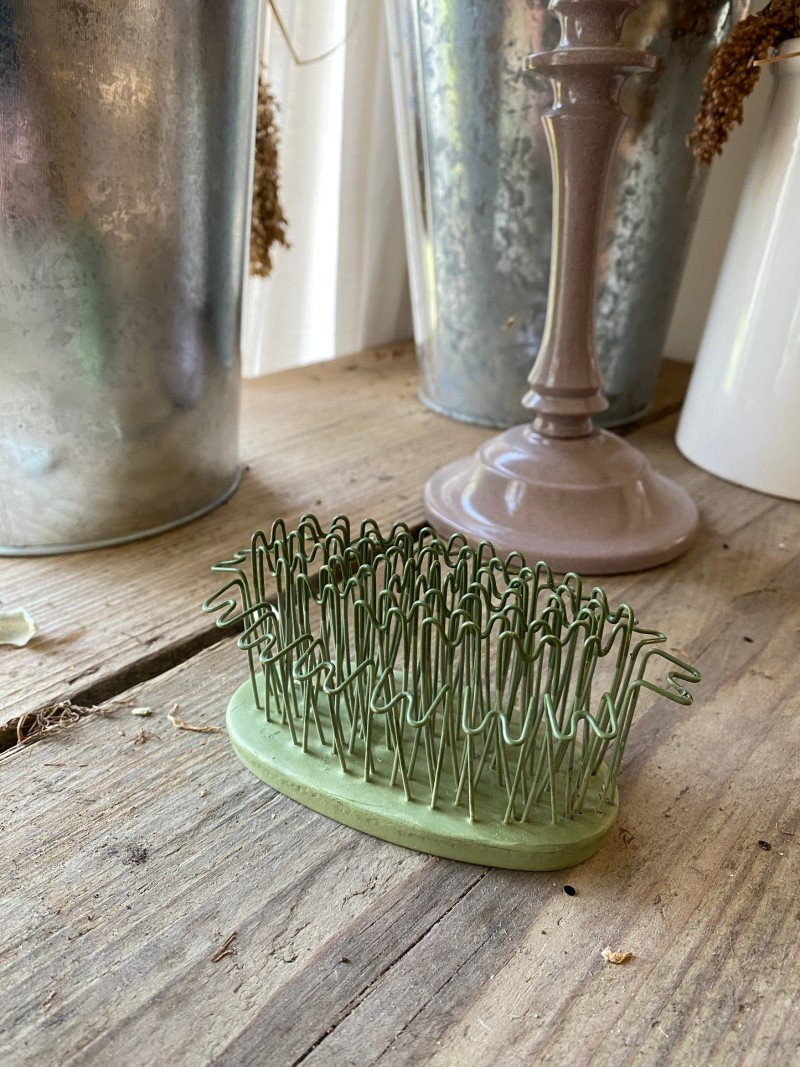
Hair pin flower frogs have been around since 1936, and still are popular today. Invented in the USA, these are flexible enough to bend with stems, but strong enough for woody sticker stems. Fix in place with florist’s clay.
Flower foam is used simply to become an ‘extension of the stem’, once flowers are cut, and placed into water. Flower foam also holds the stems in place, yet there is no proof that such foam extends the life of cut flowers.
OshunPouch® is one sustainable alternative. These flat pouches (which expand in water) are biodegradable and compostable (made from bioplastic external membrane filled with coconut coir and plant-based gelling agent to absorb water).
To use, just puncture small holes with a skewer on both sides, then submerge in water for a few minutes. Insert your flowers and stems into the holes, to hydrate, checking and replenishing water regularly.
Agra-Wool (not wool from sheep!) is made from rockwool, a mineral fibre made from mostly powdered basalt rock that is spun with sugar to provide a nontoxic alternative to plastic floral foam.
It takes just 15 seconds to saturate a brick. It’s a mineral (so not compostable) but will biodegrade into rock dust. An American company also has invented compostable eco flower wrap (why not here?)