Listen to Weather Forecasters (not right-wing media)
It is true that UK weather forecasts can sometimes go on longer than most people need or like. Most people simply want to know the weather!
But for the most part, most of the weather presenters on TV are qualified meteorologists, and know their onions, when it comes to both weather and climate science. Most trained at the Met Office.
After President Trump said that ‘climate change is a con’, ITV Morning’s presenter Laura Tobin has publicly offered to discuss climate science with him, saying she is available to go through the data with his administration.
She obviously frequently reports on human-caused climate change weather events, like floods, rising sea levels and melting glaciers. So far she has not received a response.
How much of climate change is caused by humans? Nearly all of it. Dr John Tobin (climate scientist)
Recently on GB News, one presenter (unbelievably the previous wonderful Coast presenter Neil Oliver who should know his nature) asked people to persuade him that ‘climate change wasn’t a scam’.
He said that the media and MPs were scaremongering people to be ‘‘frightened of summer’ predictions of at least 40 degrees.
Corrected by Tomasz (the science)
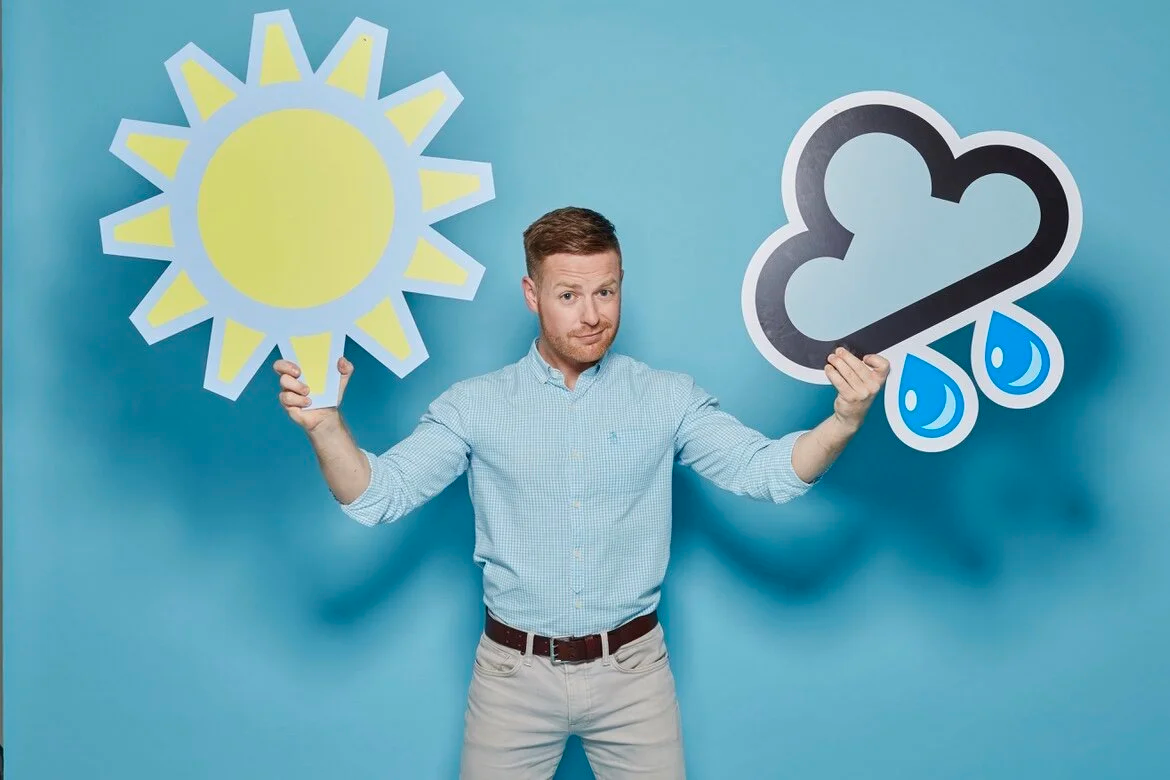
But BBC meteorologist Tomasz Schafermaker says this was air temperature (above 1 metre). Not ground temperatures, which will have been higher (sometimes in excess of 50 C). This is the problem when we have MPs and media pundits deciding how serious climate change is, rather than listening to scientists.
Tomasz is often called ‘the nation’s favourite weather forecaster’, using his highly trained mind to give easy forecasts. He even sometimes presents Radio’s 4’s Shipping Forecast (the nation’s lullaby). Born in Poland, he has a BSc (Hons) in Meteorology, so likely knows more about extreme weather and climate change than scaremongers and politicians who deny the facts.
Recently, when a GB News presenter called out wildfires in Greece as ‘scaremongering’ about higher temperatures and making people ‘terrified of the weather’, Tomasz gently corrected him:
This is absolutely not true. The temperature being reported is AIR temperature above ground (over 1 metre) not the GROUND temperature. Ground temperature. This will have been even higher in many of those locations, well in excess of 50 C.
Here’s another statement from Bob Ward (policy and communications director at Grantham Research Institute on Climate Change and the Environment at London School of Economics:
GB News is letting down its audience, by giving platforms to individuals who have strong opinions about climate change, but are unable or unwilling to tell the truth about it. Robust debate about climate policies is good. But needs to be focused on facts and evidence, rather than ideology and propaganda.
What weather forecasters do
A meteorologist isn’t just “someone who talks about rain”. They train to read atmospheric data, understand how weather systems behave, and communicate uncertainty without guessing. They also work to a standard, because bad calls can cost money, safety, and sometimes lives.
It also helps to separate two words that get mixed up on talk shows.
Weather is what happens over days, like a wet weekend or a windy Tuesday. Climate is the pattern over decades, like how winters change over 30 years. A single cold snap doesn’t “disprove” a warming trend, just like one hot day doesn’t prove it either.
Then there’s probability, which gets misused all the time. When a forecast says a 60% chance of rain, it doesn’t mean it will rain for 60% of the day. It means that, given the data and past cases like this, rain is more likely than not in that area during that time window. In practice, you plan for it. You might still get lucky and stay dry, but you don’t bet your safety on luck.
Forecasting is built on data and results
Forecasters start with observations, not opinions. They use satellite images to track cloud and moisture, radar to see rainfall and storm structure, and weather stations to measure wind, temperature, and pressure. Over the sea, ocean buoys and ships fill gaps. All of that feeds computer models that simulate how the atmosphere may evolve.
No single model gets the final word. Forecasters compare several models, look for agreement, and watch for outliers. When conditions change fast, they use nowcasting, which is short-range forecasting based on the newest radar and satellite data. That’s why warnings can tighten up quickly before a thunderstorm line or a squall.
How political media can twist climate stories
- Weather vs climate confusion: swapping the words as if they mean the same thing, then arguing from that mistake.
- Name-calling over evidence: branding scientists as “alarmist” while offering no data, no method, and no track record.
A qualified weather communicator usually has a background in meteorology or atmospheric science, or they work with official agencies. For the UK, the Met Office is the key reference for warnings. Local councils and emergency services also share impact guidance. For climate, look for climate scientists and research groups that summarise peer-reviewed work in plain language.