The North York Moors (heather and ancient trees)
The North York Moors are wild and open, stretching from Thirsk and Helmsley to the Yorkshire coast at Whitby. Some valleys are dense with pine forest, while late summer bring purple heather that rolls over high moorland. This historic natural haven is a haven for walkers.
Covering 44,000 hectares, the North York Moors features on of England’s largest expanses of heather moorland, plus is home to many ground-nesting birds like golden plovers and merlins. It also has one of northern England’s largest concentrations of ancient trees.
Always follow the Countryside Code to keep all creatures safe. Keep dogs away from steep banks, mushrooms (and toxic plants/trees) and on leads near birds, barnyard friends and wild ponies.
If at the coast, keep away from nesting birds and never walk on sand dunes. Learn how to keep dogs safe by the seaside (check beach bans before travel).
How to upright an overturned sheep
Pregnant sheep (and sometimes due to wool waterlogged from rain) can sometimes roll over onto their backs, and can’t get back upright, due to having four stomach chambers (so will die if not turned back upright).
If you see a sheep on its back, just firmly right it back, then stay with it, until rain has drained off, so it won’t happen again. Then inform your local farmer.
Stretching to the Yorkshire coast
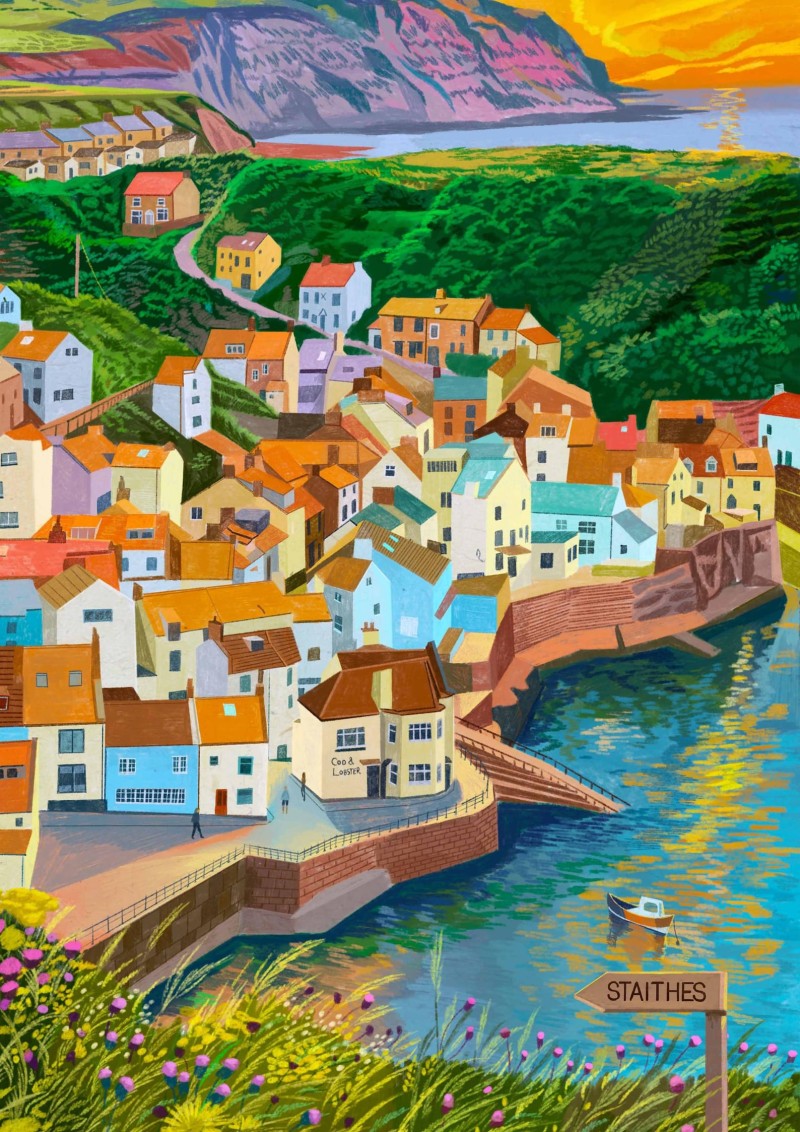
Not just inland, this National Park stretches to the Jurassic cliffs of the Yorkshire coast, with ancient villages like Staithes and Robin Hood’s Bay (where you paddle your toes, at then of Wainwright’s Coast-to-Coast Walk, which begins in St Bees in Cumbria.
Hikers can follow the horseshoe-shaped Cleveland Way, which winds around the park for 109 miles. You can also take in plenty of star-gazing, as the Moors are a designated International Dark Sky Reserve.
In late summer, the open tops of the North York Moors turn purple, while the valleys below stay green and shaded. Heather runs over the high ground in broad sheets. Then, almost without warning, old woods gather in the folds of the land, with ash, oak, birch and twisted trunks catching the light.
This national park sits in North Yorkshire, between inland hills and the coast. What makes it feel so special is the contrast. You get wide, wind-brushed moorland, then deep dales and hidden trees. Heather and ancient woodland shape the look of the place, but they also shape its wildlife and history.