The Ancient University City of Oxford
Oxfordshire is a large county in southeast England, which sits not too far from London, on the Thames river. Away from the main city, there is beautiful countryside for walking.
If out walking, follow the Countryside Code to keep all creatures safe.
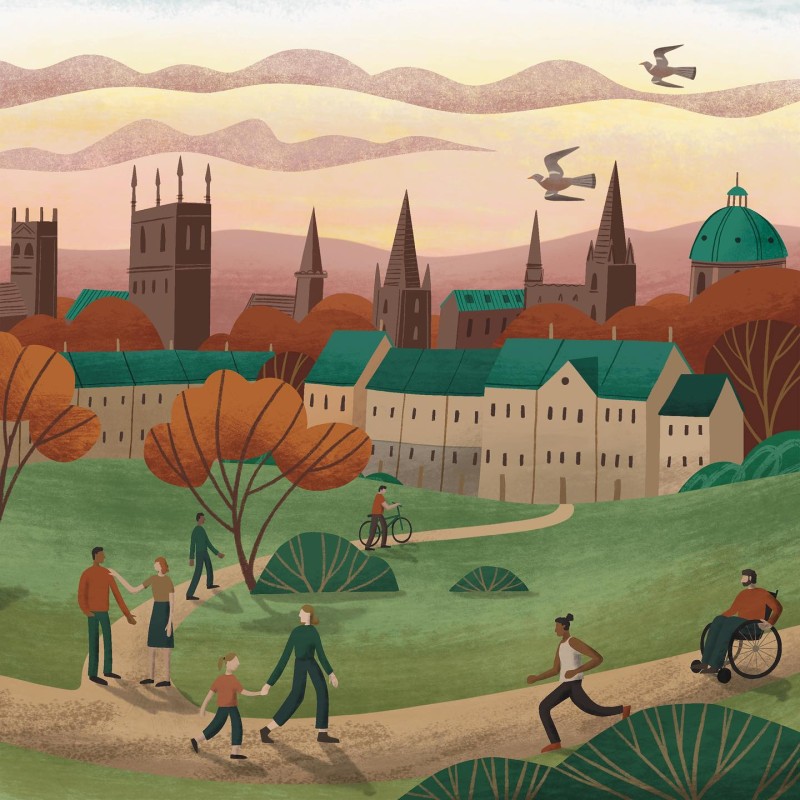
Founded in the 12 century, Oxford is the oldest university in the English-speaking world (a few worldwide are older, including Bologna and one in Morocco). The skyline of this city is known for its honey-coloured spires and domes, with the Radcliffe Camera (a library) one of the most photographed and painted buildings.
We also have to be careful here to avoid ‘education snobbery’. A well-qualified plumber who goes to a technical college, it could be argued is more useful than someone studying media studies at a top university!
There is controversy over animal testing at the university. VERO is made up of Oxford boffins, who give the scientific arguments to switch to humane medical research.
The Oxford-Cambridge Boat Race
The Oxford and Cambridge Boat Race began in 1829, covering a 4.2 mile stretch of the Thames, from Putney and Mortlake in London. Each boat has 8 rowers and a coxswain, who steers the boat and sets the race plan.
Over the years, there have been dead heats. In 1912, both boats sank as they filled with water during poor weather. One former rower was Hugh Laurie, in the race when his team (Cambridge) lost, after clashing oars!
Henley-on-Thames (and the royal regatta)
A well-known sailing regatta in England is in Henley-on-Thames in Oxfordshire. Around since 1839, this time competitors row boats, rather than sail yachts.
It’s a highlight of the English social season, with a strict dress code. Men must wear a lounge suit or jacket (with trousers and tie) and women must wear dresses or skirts below the knees (or trouser suits) and are encouraged to wear hats.
Former MP Boris Johnson of course caused disgrace, by partying while people were not allowed to hold the hands of their dying relatives during the pandemic.
When he was considering standing again in this safe Tory seat to return to politics, one local member of the Conservative Association said the former Prime Minister would only take up his old seat ‘over my dead body’.