Rethinking the Weekly Shop: Alternatives to Big Supermarkets
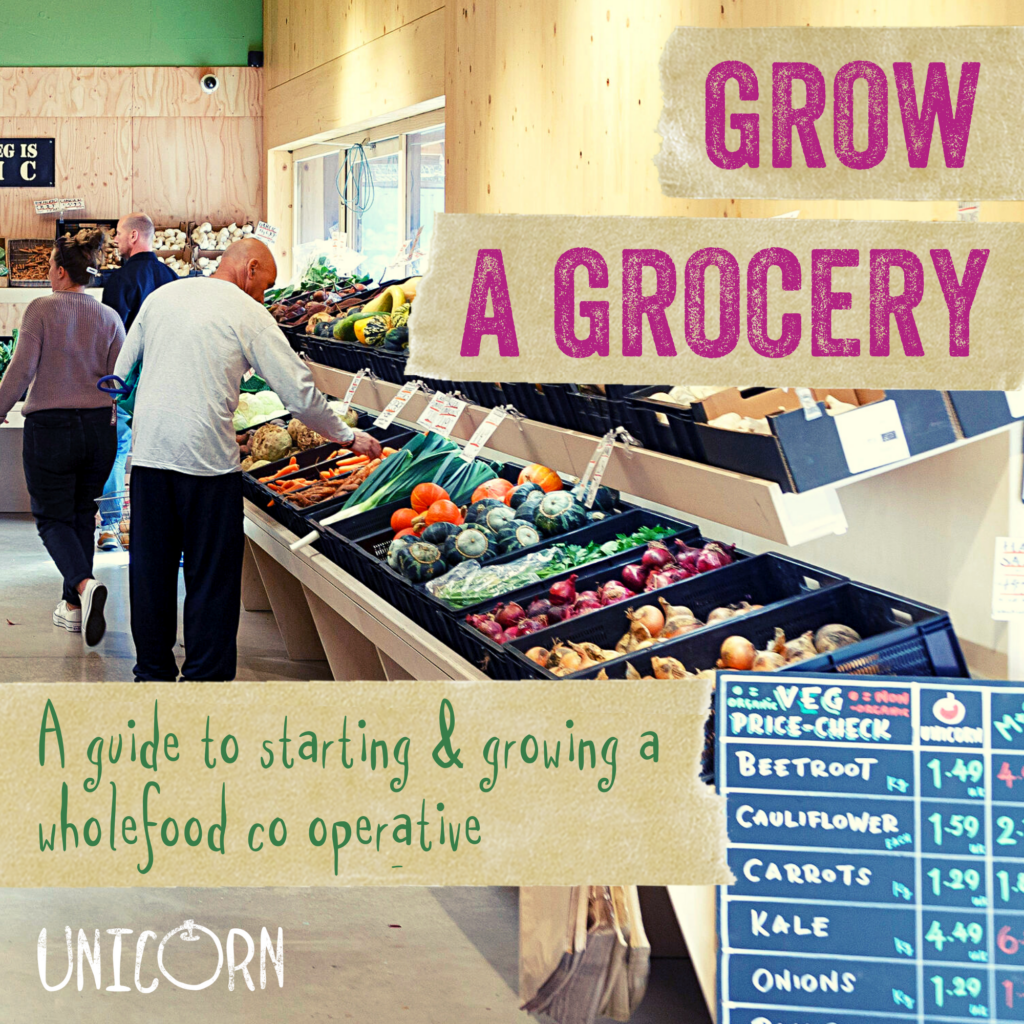
Unicorn Grocery is a thriving Manchester food co-operative that is owned by its staff (who get paid a real living wage). All items are vegan (2500 foods) and fresh produce is from its own farm.
It also offers organic beers and eco-refillable beauty and household items, sold in plastic-free packaging. Salads and olives are sold in reusable tubs, and there’s even a soup cup deposit scheme.
With no plans to expand, you can download Unicorn Grocery’s free Grow a Grocery guide to bring the same to your town.
Get discounts with the loyalty card. Prices are very good (due to no shareholders and most produce is local). A few items cost more (like homemade organic flapjack). The ‘Good Stuff’ apple logo indicates favourite companies.
If buying plants or flowers, read up on pet-friendly gardens to know what to avoid.
ReUp is a successful zero waste shop, that offers a series of blog posts for other shops, to distil their green wisdom! From how to start one, how to launch a rewards system and which systems to choose.
Infinity Foods (a thriving Brighton co-operative)
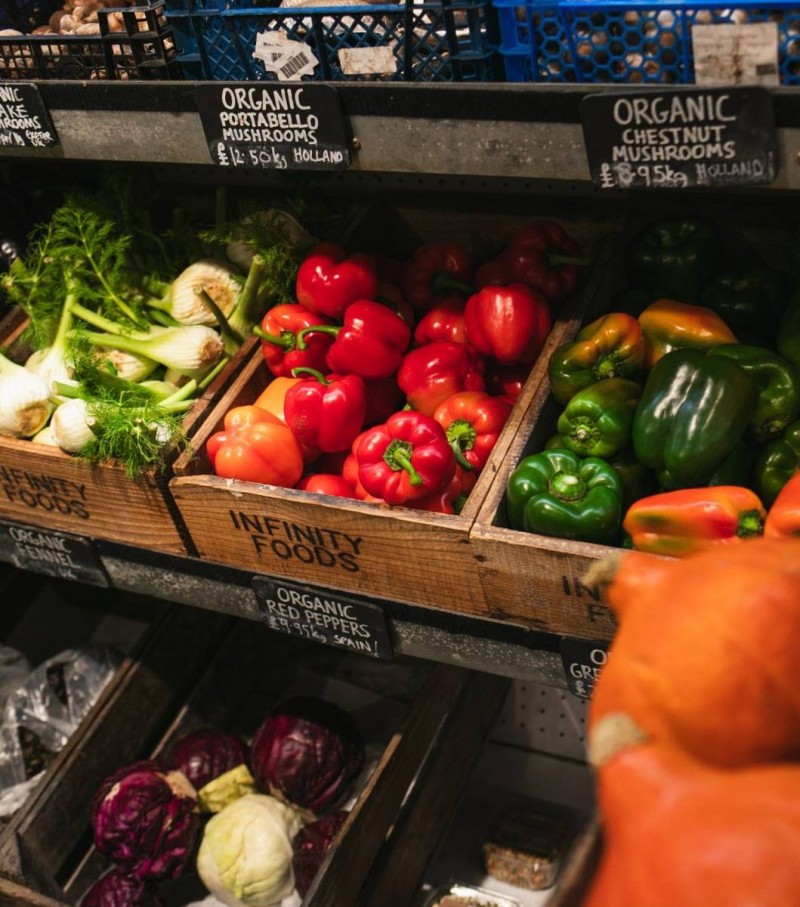
Infinity Foodsin the city of Brighton has been around since the 1970s. Democratically run by its workers, it offers a huge range of organic fresh produce, in-store baked bread, vegan groceries and natural beauty and cleaning products, along with a wholesale division.
Many items are sold in refill containers, so bring along clean dry containers to fill up, saving you money as well as packaging. The shop also avoids selling items made with palm oil.
There is also a Community Card, which gives discounts to regular customers. A portion of profits are donated to local charities, usually ones to protect Sussex wildlife or to help poverty and homelessness in Brighton.
Only assistance dogs permitted (due to food being at nose level!)
Kindly (Brighton) is a busy independent vegan supermarket that was founded by an Internet techy wizard, who got bored and decided he wished to do something with his money, to do good.
His aim is to ‘flip the supermarket model on its head’ and put planet before profits. His supermarket even offers vegan sandwiches in compostable packaging (handmade in Brighton).
Locals in Brighton can also order online, or just pop in the store to shop in person. It supports local artisan brands including local beers, to keep money circulating within communities.
The good news is that as a former techy entrepreneur, the founder has plans to take this model nationwide, to rival the big bad supermarket chains! But this time it will be business doing good, not harming animals or the planet.
People want to do good, but they don’t want to do it at the cost of either convenience or choice. We’re trying to bring in a food revolution, where we change the way we consume things. Shiv Misra (founder, Kindly Supermarket)
Who founded Kindly of Brighton?
Shiv Misra (read an interview with him here). Isn’t it refreshing with a successful entrepreneur decides to use his success to do something good, rather than the other way around?
He even has designed the store with natural colours and recycled materials, so people feel relaxed while they shop, instead of stressed out by brighton colours and noisy tannoys.
In late 2025, it opened a second store (on the site of the old community grocery HISBE), and things are progressing nicely. And what’s really nice is that the co-founder of HISBE (and the co-owner of Harriet’s of Hove (a local zero waste shop) both attended the opening, to show support.
When asked why she was supporting the store, the ‘rival next door’ answered that ‘the competition is more huge and naughty supermarkets, certainly not other independently owned, mission-based, eco businesses. Support of one another is absolutely essential, for us smallies’.
Why are there so many vegans & vegetarians in Brighton?
Brighton has one of England’s highest percentage of vegans and vegetarians. And so obviously it has more vegan eateries to health shops. There is a vegan shoe shop!
The culture likely stems from the fact that it is a very liberal-minded place – very friendly to artists, musicians, gay people and anyone who doesn’t follow the set pattern of ‘get married, have two children and eat meat’). It elected England’s first-ever Green MP (and still has one) and the two major universities nearby means it has a young population. And we know that the new generation is a lot healthier and greener than the last one.
Do big supermarkets really care for communities?
Most of us have no choice sometimes to pop into a larger supermarket chain, because most of the independent food shops have gone. Unless you live somewhere with farm shops, you likely have to shop at them.
So then after you’ve bought things (that after staff are paid, the rest of the profits will zoom up to head office and out to shareholders), you are asked to put a blue token or whatever in a choice of your favourite local charities. Because that way the big supermarkets can say they are helping.
In fact, that’s not really the case. When someone buys from local independent shops, that money stays in the community (salaries, staff who buy sandwiches and beer at local pubs and outlets, even the signwriters benefit).
With big supermarkets, there are ‘local jobs’ (usually at minimum wage working for companies that earn billions). The rest of the money then goes to the manager, top manager and super-top manager. Then out to shareholders, and on big TV and newspaper ads, and ‘free magazines’.
Most big supermarkets are out-of-town (so local ‘communities’ can’t shop at them, having to make do with smaller express stores). Which are marked up in price in high touristy areas for more profits.
And most big supermarkets will fine you if you park longer than you should (so there’s no time to go and support an independent coffee or gift shop – by the time you’ve done your weekly shop, it’s time to drive home again).
This is profiteering pure and simple. Tesco made £3.1bn profit last year, and its dominance means it can squeeze suppliers, while boosting its own profits.
This then feeds into more food inflation and worsens the cost of living crisis, for workers and communities. It is obscene. Where is the off button? Sharon Graham (Unite)
Supermarkets often differ in what they sell, depending on where you live. For example, Budgens in the affluent town of Holt (Norfolk) offers organic produce in plastic-free packaging, no canned music and strawberries from 4 miles away. There is also a post office, same-day home delivery, electric car charging points and an upcoming solar panel on the roof.
Yet in Clacton-on-Sea (one of England’s least affluent areas – Nigel Farage’s constituency), the website for Budgens offers no local food, instead boasting of national lottery tickets, and special offers on toilet roll and giant bottles of Pepsi cola.
Big supermarkets don’t offer ‘choice’. Try looking for a natural toothpaste, a hair dye without chemicals or a vegan cake without palm oil. Despite all products with long shelf lives (so they can’t say ‘we won’t stock them in case they go off’) you won’t find any.
Posher and Expensive (not necessarily better)
Some bigger supermarkets are independent, but don’t really fare much better. In East Sussex, local bakery chain Jempson’s has a supermarket in a local village, but you have to drive there (it even has its own petrol station).
And Booths (often called ‘the Waitrose of the North’) is too expensive for most people (the ‘ready meals’ are tremendously expensive, as is orange juice from a machine you use to make yourself).
Good food should be affordable to everyone, not just those who can pay for organic sourdough bread. Booths website boasts that it has ‘removed all plastic cutlery’. That’s because there’s now a single-use plastic ban, so giving it out would be illegal anyway.
A few years back, a truck of pigs destined for the abattoir crashed, leaving many dead and more severely injured. But despite animal welfare campaigners offering to take the recoverable ones to a sanctuary, the (posh) supermarket refused, and had them put back on the truck to be slaughtered, already injured and traumatised.
- Waitrose only stopped selling ‘dredged’ scallops due to protests.
- M & S has faced controversy over selling farmed salmon.
- Harrods sells foie gras, so cruel it’s banned to make here.
- All the big supermarkets only drop certain unethical suppliers, when horrible stories come out in the press, forcing them to act. If they were really ethical, they would have dropped these suppliers already.
Organic growers Riverford report that the big supermarkets are importing green beans from Kenya, asparagus from Mexico and tenderstem broccoli (about as English a crop as you can get) from Spain, all while they are in season in the UK.
A quick look online today (April 2026) found that:
- (the same one) cabbage from Tesco was from ‘Spain, UK, Ireland and Portugal’
- One pack of plastic-wrapped apples (many are in season in April) from Sainsbury’s are from ‘Chile, France, Germany, Italy, Portugal, South Africa, Spain and UK’
- Strawberries (not in season) from Morrisons had no country of origin listed and a ‘do not recycle film’. The few reviews ranged from ‘mouldy’ to ‘the yoghurt tastes sweeter’ to ‘I had to throw them in the bin’.
- Pears (not in season) from ASDA were from Belgium and The Netherlands. Which is a bit confusing as pears are not in season during this time there either?
80% of England’s orchards have been lost in recent decades, yet still supermarkets sell imported fruits (rock-hard pears and non-organic apples coated in shellac – dead insects – to make them look shiny). Buying local also helps support our smaller farmers.
Join the fair farming campaign to help groceries pay proper prices.
A sad story of late is in Worcestershire. Where England’s second-oldest pear tree was felled, to make way for the unnecessary HS2 high-speed rail project (the money would be better spent on upgrading rolling stock and providing better rural public transport.
Critics say HS2 won’t prevent climate change. And based on accidents with high-speed rail abroad, it will kill around 22,000 wildlife once built. Barn Owl Trust says that HS2 is a ‘very expensive way of killing owls’.
Supermarkets import over 80% of our fruits
Most supermarkets sell local vegetables (like carrots and root veggies) but tend to import fruits. Obviously you can’t buy local lemons, oranges or bananas. But they can support local apple and pear farmers, but instead buy more often from Spain, Morocco, Kenya or even New Zealand.
Why? Cost. It’s basically cheaper for them to buy in bulk. So when you see the big supermarkets promoting signs that they are ‘helping local communities’, write to Head Office and ask why they are not supporting local organic fruit growers instead, which bring money into local areas.
An organic fruit farmer in England is going to be either doing the harvest himself/herself, or hiring people to help, likely with good money (it’s hard work). But often the companies that supermarkets buy from are hiring people on cheap labour. And that means more profits for supermarkets.
This is even more so in recent years, as cheaper supermarkets like ALDI and LIDL (who as German companies actually pay their staff far more than most UK ones) mean they need to find ways to compete.
And beware, as sometimes fruit packs have ‘union jack flags’ on them, to fool people into thinking they are locally grown.
We can help by choosing seasonal fruits (or freezing fresh produce). So we are not demanding apples in mid-summer, or strawberries in December. And when supermarkets offer cheap strawberries from abroad for Wimbledon fortnight, the local organic strawberry grower sees profits dip.
Which supermarkets buy what from where?
Aha – this is when you thought AI was evil! It is – for poetry. But here is some good accurate latest information from our friendly robots, to empower you to know who is buying what from where:
It’s all very well to say ‘don’t cheat’. But a journalist at Sustainable Food Trust tried to investigate, and did not get very far, as the information is not really made public. She found:
- Tesco’s bananas were from Guatemala (acceptable, as you can’t grow them in London!)
- LIDL pink lady apples were from New Zealand
- Morrisons’ figs were from Turkey (figs can grow in southern England)
Loose citrus fruits and apples in Tesco had no country of origin printed. And The National Farmers’ Union lodged a complaint after finding that one big supermarket was listing blueberries from ‘Rosedene Farm’ that it turned out didn’t exist.
Just like Mr Kipling. This was an accusation of ‘farmwashing’.
Look up the PLU code (how food is grown)
It’s far easier to just visit a farmer’s market or farm shop, as the produce is more likely to be naturally grown and plastic-free. PLU stands for ‘price look-up’. So if you want to do some label-reading, this is where it’s at.
You’ll find the plastic stickers on fruit (which should be binned as they won’t compost – nor will plastic netting around onions or citrus fruits – cut up and bin securely at supermarket bag bins inside another secure bag) has numbers:
- A 4 digit code (like 4011 – apple) means the fruit is conventionally grown (usually with pesticides).
- A 5 digital code starting with 9 means the fruit is organic.