Where History Meets the Sea: Sandy Shores of the North Coast
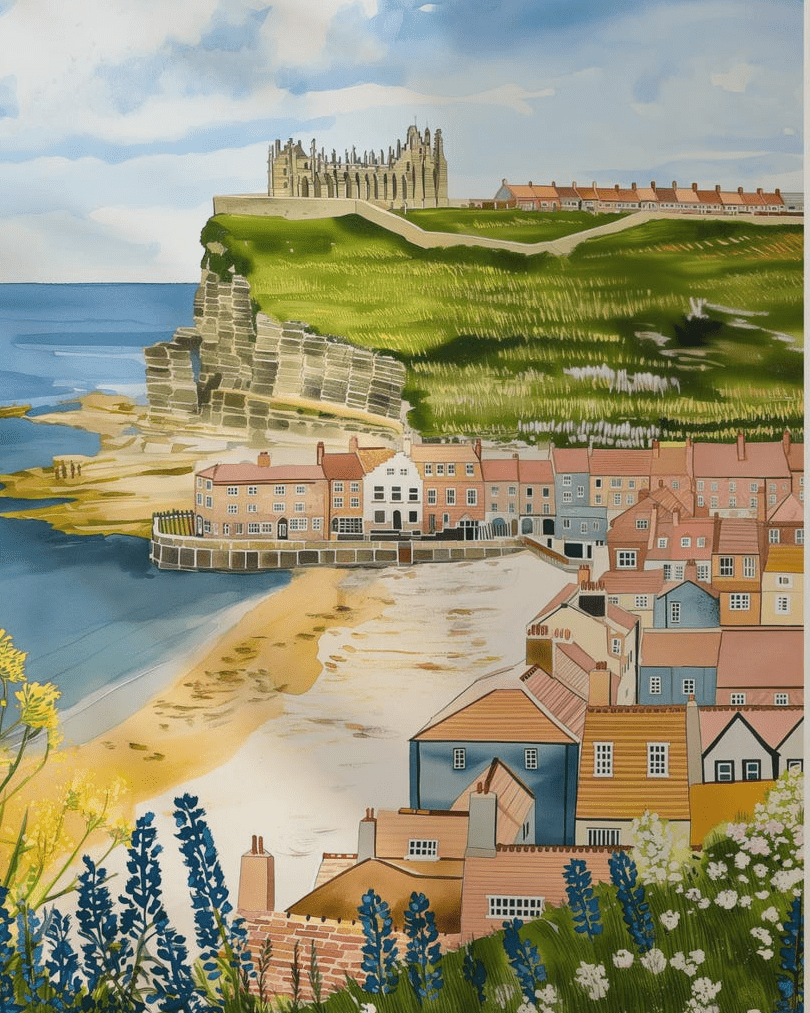
Whitby is a historic port on the North Yorkshire coast, split ito two by the River Esk. It features Gothic ruins and a well-known abbey. You can climb the stone steps from the old town for panoramic views of the harbour, or stroll across the swing bridge, to watch harbour boats. West Cliff Beach has sandy shores, lined with colourful beach huts.
Sadly the council has not dismantled the huge whale bone at the foot of the harbour, as if to celebrate a sad history of whaling (even polar bears were hunted and brought back here). We’ve dismantled statues of slave traders, so why not this?
At the coast, keep away from nesting birds and never walk on sand dunes. Learn how to keep dogs safe by the seaside (check beach bans before travel).
There is rare jet fossilised gemstone here, from the Jurassic period. Dinosaurs did not just live on the Isle of Wight! In Victorian times, this jet was popularised by Queen Victoria to be used as ‘mourning jewellery’.
It’s formed from fossilised Aracuaria pine wood (simple to the monkey puzzle tree) and is deep black, but unlike stone is not cold to the touch. Today in the sustainable age, it’s left where it is under the sand.
The eerie architecture here also inspired Bram Stoker (a mathematics professor at Dublin’s Trinity College) to write his book Dracula. While bedridden with a mystery illness until age 7, he would listen to his mother’s supernatural tales, which stemmed his imagination for his future novel. He never actually visited Transylvania!
It’s not really a book for those of who who prefer Maeve Binchy novels. But despite the book’s success, Bram died almost penniless, his grandnephew writing that he was ‘one the least known authors of one of the best known books ever written’. His death was hardly mentioned in the press, as he died just five days after the Titanic sank in 1912.
Scarborough: England’s first seaside resort
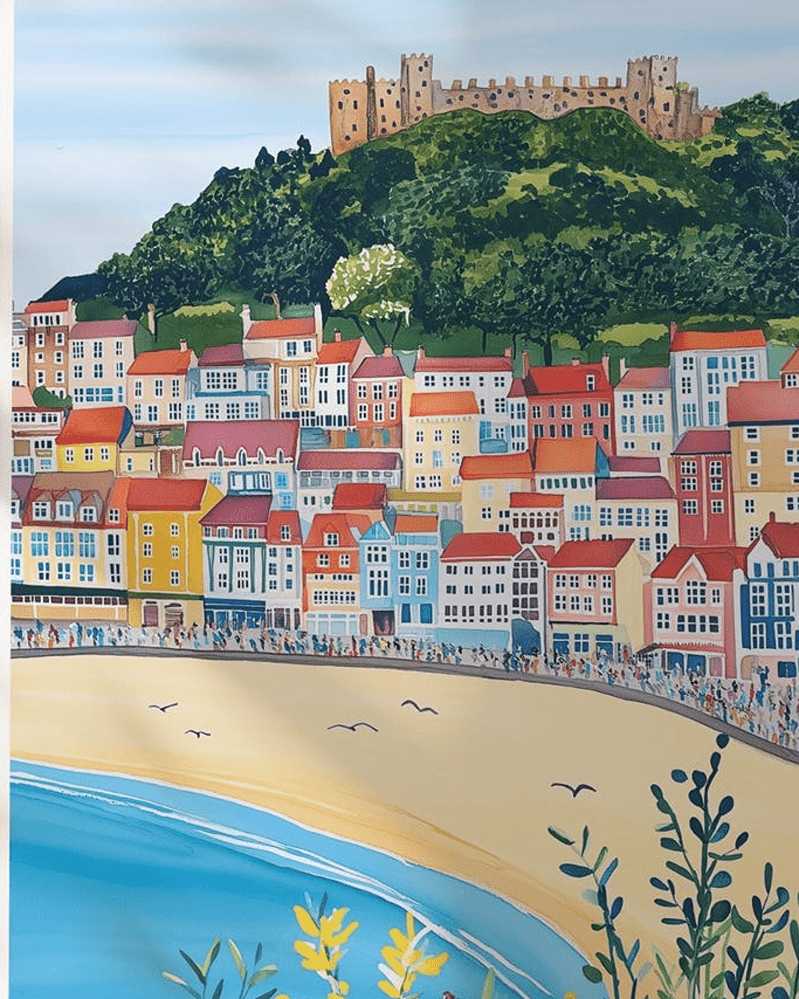
Scarborough was England’s first-ever seaside holiday resort, made popular when local resident Elizabeth Farrow stumbled upon the healing waters of a local stream in 1626. This North Yorkshire town has two bays (north which is quieter and south) separated by a dramatic rocky headline, that features the ruins of the ancient castle.
Scarborough remains one of the few resorts that still offers donkey rides (most parents now don’t see this as a form of ‘entertainment’ for children). The Donkey Sanctuary oversees welfare (including weight limits for children, and ensuring creatures have adequate shade, rest, food and water. Read more helping donkey friends (both here and abroad).
Other seaside towns in Yorkshire
Filey is the ‘quiet alternative’ if you find Scarborough too busy. Known for its five-mile stretch of golden sand, it’s located between Scarborough and Bridlington, and has a quaint promenade and historic church. One fan was the writer Charlotte Brontë.
Saltburn-by-the-Sea is home to England’s oldest funicular railway, and the last remaining pleasure pier in Yorkshire. Founded as a resort by Quaker Henry Pease (a local pacifist Liberal MP) in 1861, it is home to many colourful beach huts.
Bridlington is popular with wild swimmers, split into an historic Old Town and a Quay area. It’s also home to Gypsey Race, the most easterly chalk stream in England. Bempton Cliffs just north of the town is home to one of England’s largest seabird colonies.
Whitley Bay (just outside Newcastle and Gateshead)
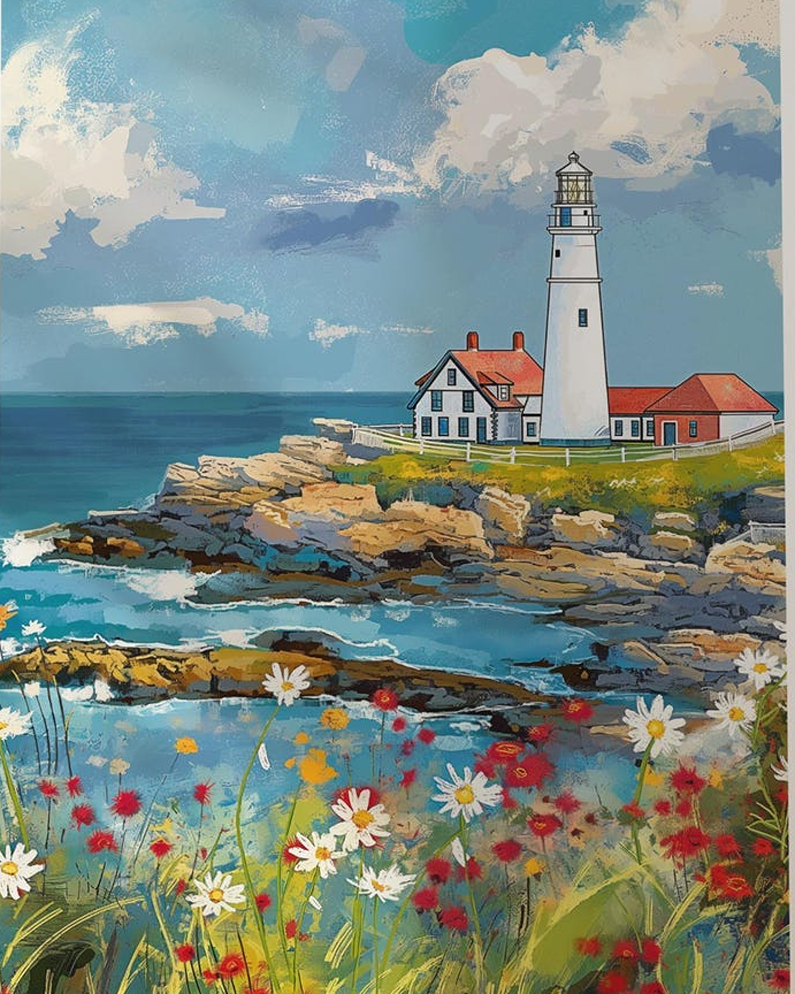
You may not equate Tyne and Wear with sandy beaches, but there are quite a few. The main one is Whitley Bay, which has a long beach with views to St Mary’s Lighthouse.
- The beaches of Roker and Seaburn are split by a headland, each has its own charm. Roker Pier lighthouse offers great views, as does Marine Walk at sunset.
- Painter LS Lowry spent his holidays at Seaburn. He holds the record for rejecting honours (five times, including a knighthood). Devoted to his mum, he explained ‘There seemed little point, once Mother was dead’.
- Longsands has a long open curved beach with a wide sand run at low tide. On windy days, it can feel exposed, so bring an extra layer and a hat that stays put!
- Cullercoats Bay is a small curved bay with a built-up edge, with local shops and places to grab something warm to drink, after a short walk.
- King Edward’s Bay (a sheltered sandy cove) sits below Tynemouth Priory. Due to steep steps, it’s not accessible for limited mobility, and dog bans are place much of the year (and may not be safe at other times).
At high tide, this beach narrows fast, and the rocks take over. So be sure to check tide times before travel, to avoid getting stranded.
Geordie accents (voted the friendliest in England!)
Although a strong Geordie accent may be one of the most difficult to understand, a recent survey found it’s the one we like most, to put a smile on our faces!
Like Brummies, Geordies are known for being welcoming to strangers, and like to have a chat! So here’s a quick guide so you know what they are talking about, if you visit!
- ‘Pet’ or ‘hinny’ (terms of endearment like ‘dear’ or ‘love’)
- ‘Canny’ (nice and good)
- ‘Marra’ (a warm term for a friend)
- ‘Howay man!’ (hurry up!)
- And the one we all know:
- ‘Wey aye! (yes, of course!)