Southend-on-Sea (home to the world’s longest pleasure pier)
Southend-on-Sea is one of England’s newest cities, given the status in order of murdered MP David Amess, a local animal welfare campaigner whose death inspired the Children’s parliament.
Most of us know it’s home to the world’s longest pleasure pier. But what else do you know about this historic seaside resort? Let’s find out more!
Always follow the Countryside Code to keep all creatures safe. Keep dogs away from steep banks, mushrooms (and toxic plants/trees) and on leads near birds, barnyard friends and wild ponies.
At the coast, keep away from nesting birds and never walk on sand dunes. Learn how to keep dogs safe by the seaside (check beach bans before travel).
The world’s longest pleasure pier
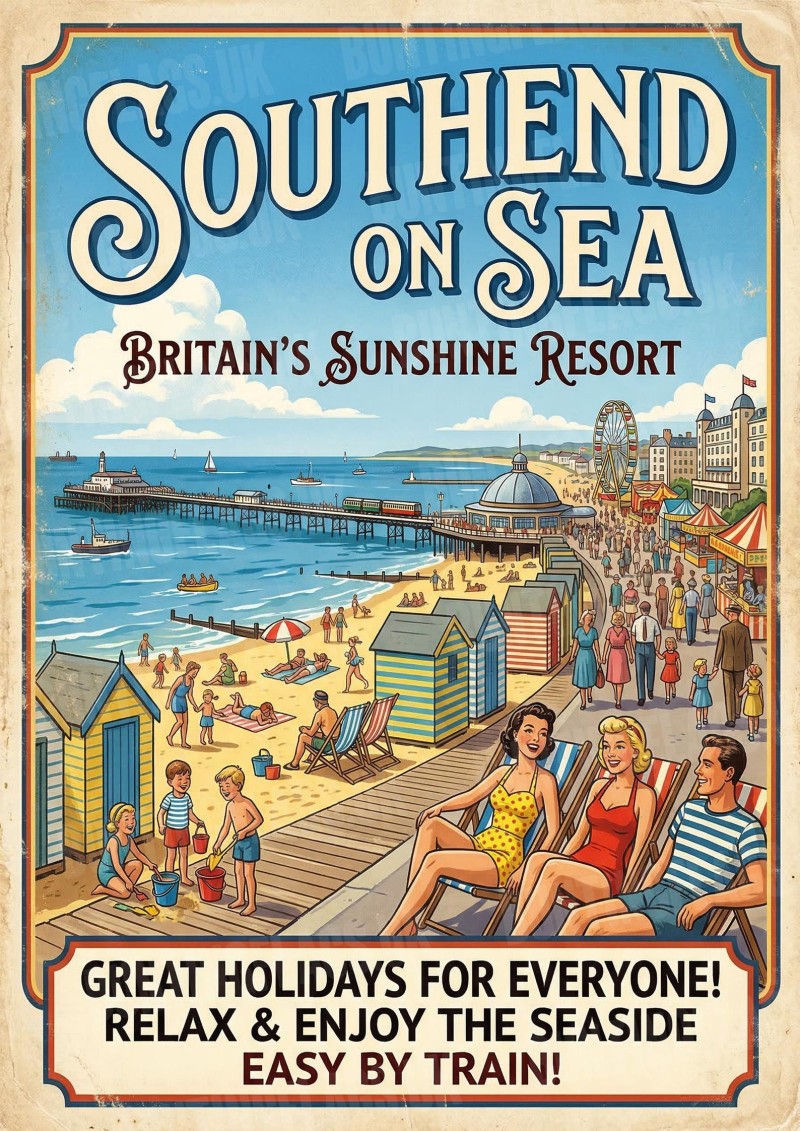
Southend pier has a pier that is 1.33 miles that sits on top of the 7 miles of coast, in one of the driest places in England. It’s so long it even has its own railway. However like most piers, it has been damaged by fire and boats many times, and rebuilt again. Originally constructed from 90 oak trees, walking the entire pier takes up to 40 minutes, if not taking the train.
However an electric train has been on the pier since 1890. Even back then, a million people or so would pay to visit the pier. Today it’s a Grade II listed building.
History of Southend holidays
People have been flocking to Southend-on-Sea for holidays, for many years. Being so close to London, it was soon transformed from a quiet village to a fashionable Georgian resort, and today it’s more a bucket-and-spade destination for mass tourists in summer.
Back in the day, it competed with Brighton as an upmarket resort for royalty, with steamboats arriving from London on the wooden pier. Many people would also visit from London for sun and sea, from the train.
Today the town has a huge litter problem, yet a report in The Guardian found that 70 councils had not issued one litter fine in the previous year (even though littering is illegal) and that included Southend-on-Sea.
But now volunteers have gone to work to clean up some of the worst beaches, with one even being called ‘California-on-Sea’ and being compared to Venice Beach!
More Essex seaside resorts
Essex has (after Cornwall), England’s longest coastline at over 350 miles, with a diverse mix of sandy beaches and even a few islands. The mudflats and saltmarshes are a haven for wading birds, who use their long beaks to dredge up tasty nibbles, before flying off with their extra long legs!
The Broomway is England’s most dangerous stretch of sinking mud on Maplin Sands. Many people have drowned in fast-rising tides and/or quicksand, so keep well away. The area also contains unexploded military debris, due being used by the Ministry of Defence.
Clacton-on-Sea is another large seaside holiday resort, again with a large pleasure pier and sandy beaches. It’s known for its pretty seafront rose gardens. The town was only created in 1871, making it one of England’s newest towns. It’s now known for being the constituency of Reform UK MP Nigel Farage.
Harwich is an historic port town, located at the mouth of the Stour and Orwell estuaries, on the North Sea. It still features an 18th century lighthouse, a 17th century wheel crane, and a Napoleonic fort. The old buildings house a wealth of maritime history.
Brightlingsea is another town with a rich seafaring history, featuring a sandy beach, pretty beach huts and an outdoor swimming lido. Originally an island, today it’s a peninsula surrounded by the River Colne and Brightlingsea Creek.
Frinton-on-Sea is a quiet little seaside town, with sandy beaches and Victorian beach huts. Back in the day, it was known as the ‘Bond Street of East Anglia’, due to being a popular resort for wealthy aristocrats, which led to many fashionable high-end boutiques (it also housed a tennis tournament only second to Wimbledon).
And until recently, due to an old ‘dry law’ banning public houses, it had no pubs!
Walton-on-the-Naze is another quieter resort, home to unique cliffs and a nature reserve for birds and seals. Again populated with pretty beach huts, coastal erosion sometimes reveals everything from fossils to wartime pillboxes.