People Power! Give Your Town a Beauty Makeover
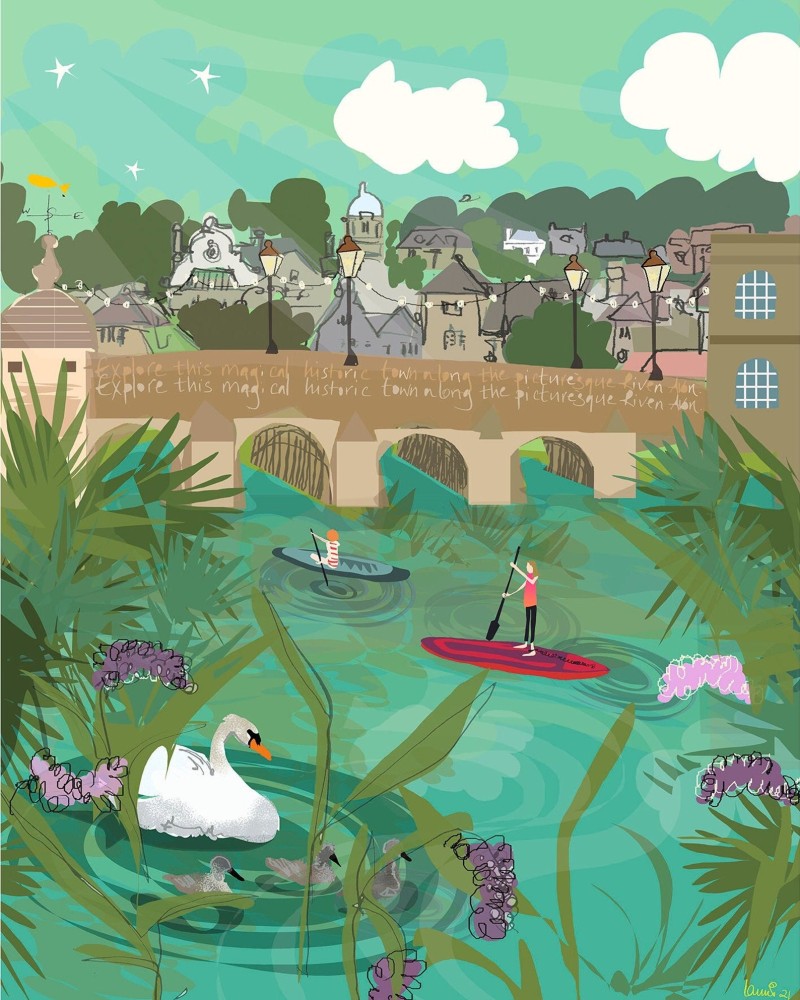
The historic town of Bradford-on-Avon in Wiltshire is just 12 minutes by train from the beautiful city of Bath, the town sits on the Bristol Avon River (a 75-mile river which begins in the hills near Acton Turville in southwest England. Before flowing to Bristol, and out to the sea at the Severn Estuary.
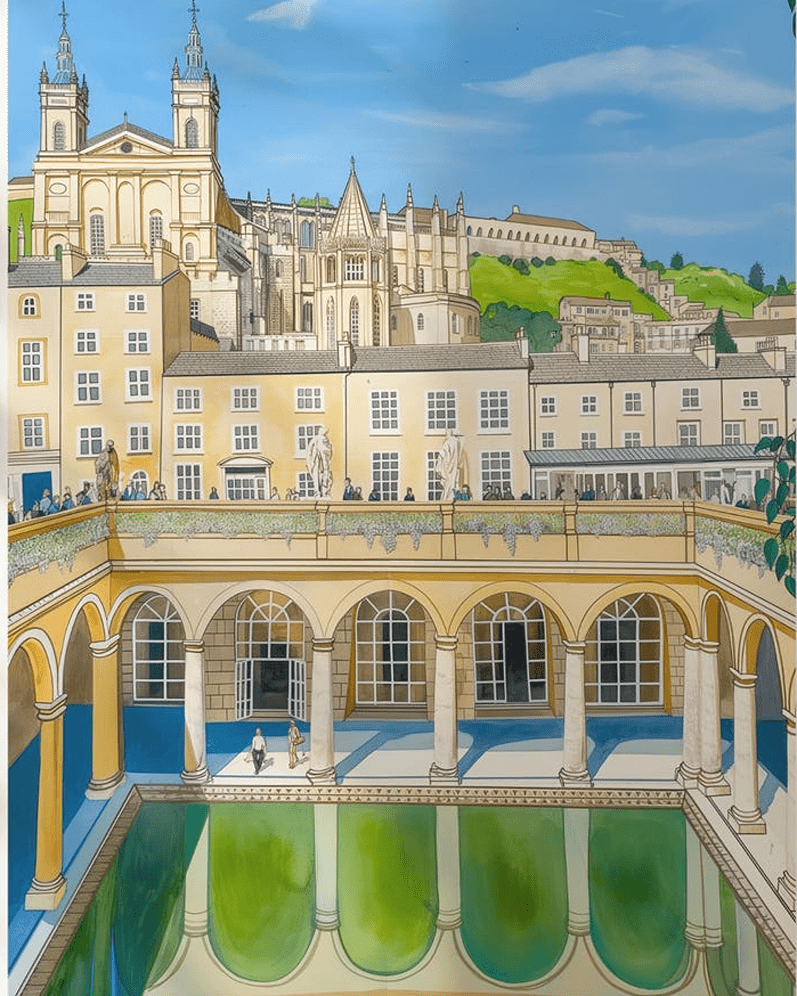
The town is known as ‘mini Bath’, as it’s built from the same gold-coloured limestone that is responsible for the beautiful architecture of the nearby city. The Sunday Times once even called this place ‘the best town in Britain’.
The small building on the bridge was a chapel, that also used to lock up prisoners, in the 17th century. And it is home to one of the largest tithe barns in England, at over 50 metres long.
Although councils and businesses have a role to play, local people can do a lot to transform their town or village into a community paradise.
Giving your town or village a beauty makeover not only makes it a nicer place to live and work, but encourages (the right kind of) tourists, and also helps to do everything from improve mental health to reduce crime (which tends to reduce, in areas full of community spirit).
Often councils may mean well, but have not read the right kind of town planning books to know that it’s more lack of vision than lack of money, which is why towns are often ugly. But they can easily be transformed, quickly, with little legal hoops.
Read more on no-dig gardening and humane slug/snail deterrents. If you live with animal friends, read up on pet-friendly gardens (some recommended flowers and fruit trees are not safe). Also avoid netting to protect food (just leave some for wildlife!)
Avoid facing indoor plants to outside gardens, to help stop birds flying into windows.
Conduct a Community Survey
The best way to start, is to gather feedback from residents. This lets people voice their opinions. Ask them about their town. Create a simple questionnaire (both online and on paper) to reach everyone locally.
Do they want more walkable places, and more parks? Are they concerned about litter or chain stores destroying local independent shops? Do they want more places for older people and young parents to gather? Are there eyesore buildings that need addressing?
Create a Vision – and a Plan!
Once you know want needs to be done, make a big plan with lots of to-do points to check off. You can do of these alone, some with volunteers, some with skilled volunteers (say giving local animal shelters and homeless shelters a makeover to improve the lives of those within them).
Other solutions may need help from businesses and councils. All are sure to get on board, for the end result benefits.
Be sure to make this inclusive. For instance, if local people want a quiet park over noisy skateboard parks, don’t just ignore the fact that local teenagers may want the opposite. Either place a skateboard park in another area.
Or better yet – ask locals what they would wish for. Perhaps they don’t want a skateboard park – maybe they would prefer a local community centre with free facilities? Listen to everyone, and changes will be quicker and more lasting.
Identifying Key Areas for Improvement
Get out and walk around. Notice cracked pavements, rundown shopfronts, or forgotten corners. Take photos or jot down what stands out, good or bad. Work with the local council to mark public spaces that need extra care.
- Shortlist target spots: Parks, playgrounds, high street areas, bus stops, and public squares.
- Check amenities: Broken benches, faded signs, patchy grass, or overflowing bins.
- Think accessibility: Steep kerbs or blocked footpaths tell you where upgrades are needed.
Revitalising Streets and Signage
Tackle worn-out details for instant impact.
- Repaint street lamps, benches, and railings.
- Replace dated or damaged signs, with modern ones.
- Fix broken paving and tidy up shopfronts, with planters and new paint.
Improving Accessibility and Safety
A beautiful town also needs to be safe and easy for everyone to use.
- Add ramps, tactile crossings, and dropped kerbs for pushchairs and wheelchairs.
- Brighten dark pathways, with good wildlife-friendly lighting (avoid light pollution).
- Trim hedges, and remove trip hazards on busy walkways.
Makeover Your Town in 7 Weeks!
David Engwicht (a former window washer and son of a gospel singer) is known worldwide for his inspiring ideas to re-imagine towns and reduce traffic (he helped to create the ‘walking shool bus’, and now has created a new website with a book to help makeover your town in 7 weeks. The book has 140 diagrams and 36 steps to work through, most are free or low-cost.
Creative Communities also offers a program where you download materials and support to makeover your community in just one week. You can also download a free sponsor’s guide to help you find funding for materials. Join up and ‘launch your town’ in just 12 weeks from visiting the website, to when you cut the ribbon!
This will benefit not just local people, but also pets (more walkable communities and parks) and native birds and wildlife. And also help to support local independent shops, as people tend to get behind local people, when they take pride in a community (it’s called ‘placemaking’).
Making over your town or village also will make the place more pleasant to visit, so will help to bring in extra income from tourism. The process involves:
- Deciding an action plan (and seeking funding)
- Creating an information meeting (in a local community centre)
- Recruiting volunteers and experts
- Having media interviews
- Creating a safety plan (sharps boxes, safety vests etc)
- Getting to work!
- Balancing the books
- Launch party!
There was a time when people could build a building wherever they liked, which resulted in classic French villages and Italian hill towns, whose streets have an organic feel. Now we rely on one or two planners.
Cities define residents as ‘customers’ so the resident says ‘You provide the roads, remove the rubbish and fix the conflicts I have with my neighbours. I pay the money, you give me the product’.
At the same time, residents are saying ‘I no longer belong to a vibrant community, I no longer have a connection to my neighbours’. Cities need to hand back that responsibility to residents. David Engwicht
One fan of this inspiring man is US organisation Project for Public Spaces, where you can find lots more help and ideas.
Get the Council Involved
Things like wildlife-friendly lighting and providing sharps boxes and hi-vis jackets for litter clean-ups, will need council involvement. So will improving public transport, like offering community buses or designing more walking/cycling paths.
Send them copies of your detailed plan to makeover your town. Most councillors are interested in helping communities (that’s why they do what they do). So will love to get on board, to help out.
Start with a quick town beauty check
Before anyone buys paint or plants, take a breath and look properly. Most towns don’t need “everything”. They need a handful of fixes in the places people actually see and use.
Start by gathering input in the simplest way possible. A clipboard at the market works. So does a short post on a local Facebook group. Keep the question tight: Which three spots make the town look scruffy or feel unsafe? Ask for locations, not opinions.
Next, pick a small area to focus on first. Think of it like cleaning one room, not the whole house. A high street entrance, a route from the station, the outside of the library, or the square near the bus stops are strong choices. These are the places that shape first impressions.
Permissions matter, too. A makeover that gets removed a week later drains morale. Spend a little time finding who owns what. Pavements often sit with highways, planters might need council approval, and shopfronts belong to landlords as much as tenants. When in doubt, ask early and keep a record of names and dates.
Do a 60-minute walkabout to spot what looks tired, messy, or unsafe
Set a timer for an hour. Walk the same route a visitor would take. Bring a phone for photos and a notebook for exact locations (outside number 14, next to the post box, by the zebra crossing).
Use a simple checklist, then rate each issue for impact (how visible it is) and risk (how unsafe it feels):
- Litter hotspots and corners where rubbish gathers
- Overflowing bins or bins placed far from takeaways
- Broken paving, loose slabs, cracked kerbs
- Weeds in gutters, around signs, along walls
- Faded signs and peeling noticeboards
- Poor lighting on key routes
- Graffiti and sticker build-up on poles and shutters
- Shabby shopfronts (chipped paint, cluttered windows)
- Empty planters or dead hanging baskets
- Cluttered posters taped to windows and railings