Kent (fruit orchards, oast houses and white cliffs)
Along with the city of Canterbury, the county of Kent has three historic leafy towns, all very close to each other. Let’s meet them!
Royal Tonbridge Wells is one of only three towns in England with the prefix ‘Royal’. Can you guess the other two? They are Royal Leamington Spa (Warwickshire) and Royal Wootton Bassett (Wiltshire).
Like the city of Bath, this is a spa town with natural spring, where people would come to ‘take the waters’ for their health, back in the day.
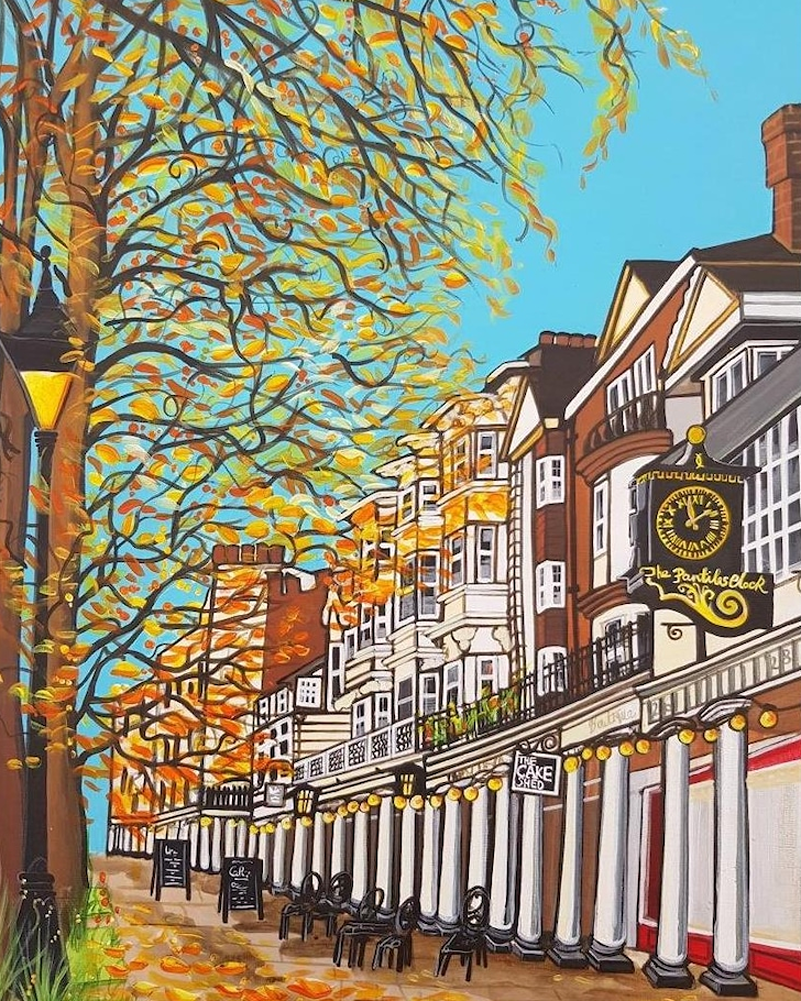
Today the town is known mostly for The Pantiles, a 17th century parade of independent shops. The goods are likely too pricey for most of us, but the beautiful architecture is free to admire.
This town began back in 1606, when Dudley Lord North discovered a mineral spring, with iron-rich water. It became ‘royal’ after Queens Anne and Victoria became frequent visitors.
Tonbridge (not to be confused with Royal Tunbridge Wells) is home to an 11th century castle that sits on the River Medway. It was originally called Tunbridge, but changed its name, as people kept getting the two mixed up.
This is a commuter gateway to London, with one of the busiest train stations in Kent. England. And unlike most town that have statues of ancient historical figures, here the one outside the church is of local girl Kelly Holmes, who became one of England’s greatest Olympic gold winners, a few years back.
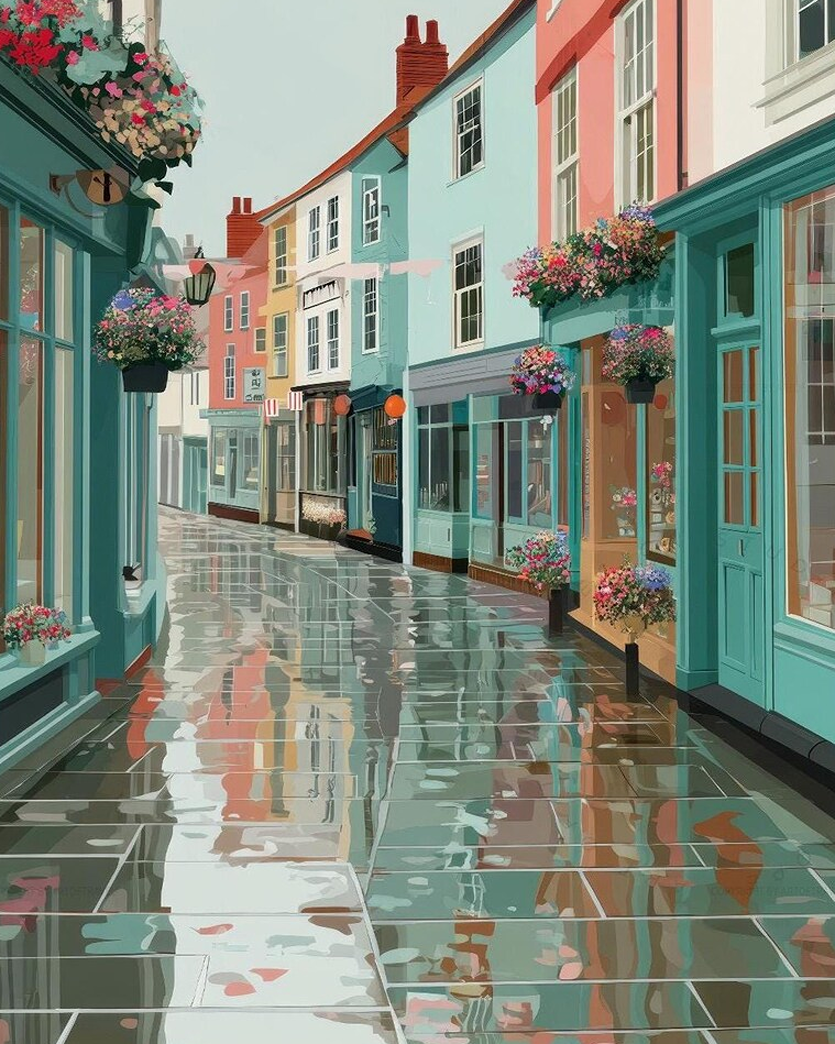
Sevenoaks is indeed named after a group of ancient oak trees (which came from an ancient chapel in Knole Park).
Did you know that oak trees (despite their beauty) are toxic to horses and livestock, due to acorns (also keep dogs away from conkers from horse chestnut trees).
This town again is a main hub for commuters to London. An affluent place, it has weekly farmers’ markets and many top independent schools (one former student was Princess Diana).
The History and Purpose of Kent’s Oast Houses

Aren’t oast houses lovely? Today alas most are holiday homes. These unique Kentish buildings were originally used to dry hops to brew beer, their conical roofs designed to help create a draught for the fire, the white cowls on top pivoted to control airflow.
Originally, oast houses were square in shape, and it was only around 1800 that the designed became more circular, as it was believed to be more efficient. Most had two or three drying floors, and one or more kilns.
Today you can see oast houses dotted across Kent (and Sussex) landscapes, and it is paramount that we save them. How tragic would it be, if they disappeared to be replaced by some ugly monstrosity buildings? Fortunately, most are now Grade II listed, so can’t be demolished.
So why don’t oast houses dry hops any more? Mostly due to technology. When hop-drying machines were invented, the lowly oast houses had no purpose. A few do remain as museums, if you fancy a visit.
A few people have even bought old oast houses as homes, and converted them into unique properties. But unless you have around £500K or more spare, it’s unlikely you are going to be able to afford one!
Whitstable, Kent (England’s least-cloned town!)
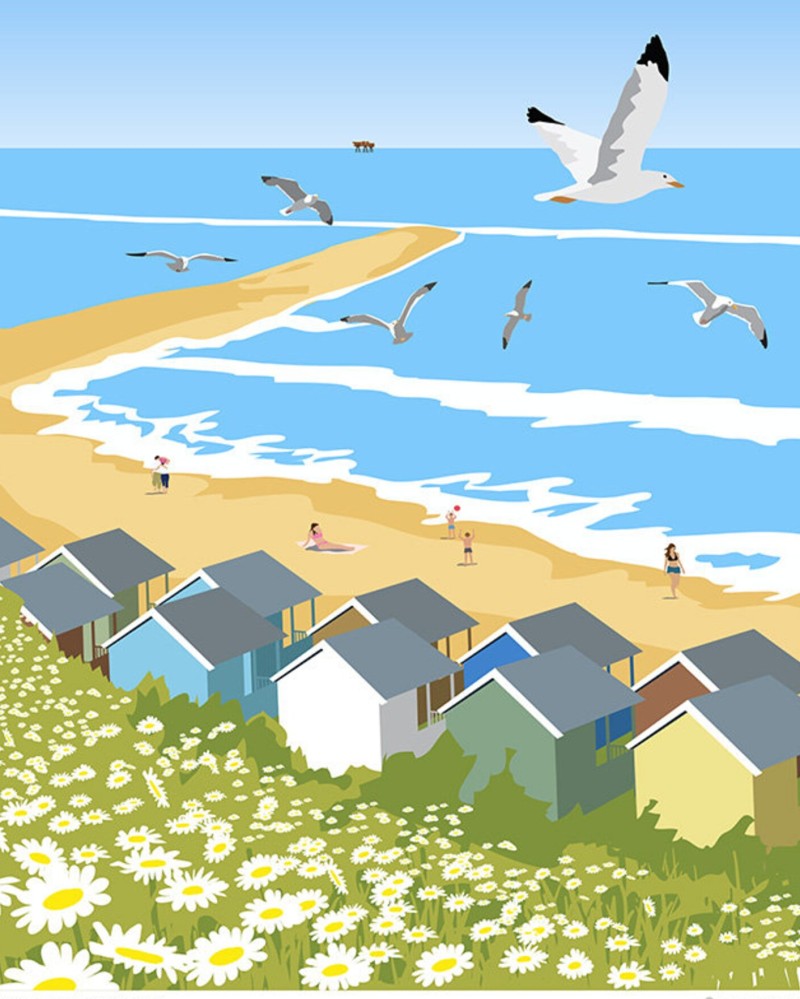
Whitstable is a small seaside town on the Kent coast, which was the location of one of England’s first passenger railways. Today it’s more known for its historic harbour and artistic community.
If visiting the beach, read our post on keeping dogs safe by the seaside.
Unlike Cambridge and Exeter (the most cloned cities in England packed with chain stores), Whitstable proudly tops the board for the most independent shops in England. This pretty town with weathered boats and cheery beach huts, give it a character all its own.
Boats bob on the waves, while local artists sell painting and pottery, and greengrocers still exist, selling locally grown fruit and veg. This does have a fishing history, but times are changing. The local Oyster Bed pub sells vegan burgers and homemade apple and cherry crumble. Yum!
Independent shops also thrive in nearby Canterbury’s medieval streets. One well-known store is the Crooked House Bookshop, a wonky building known for its leaning walls (it’s like England’s version of the Tower of Pisa!) It dates from the 1600s, and somehow is still standing up, despite gravity pulling it sideways.
Why Does Kent Have So Many Fruit Orchards?
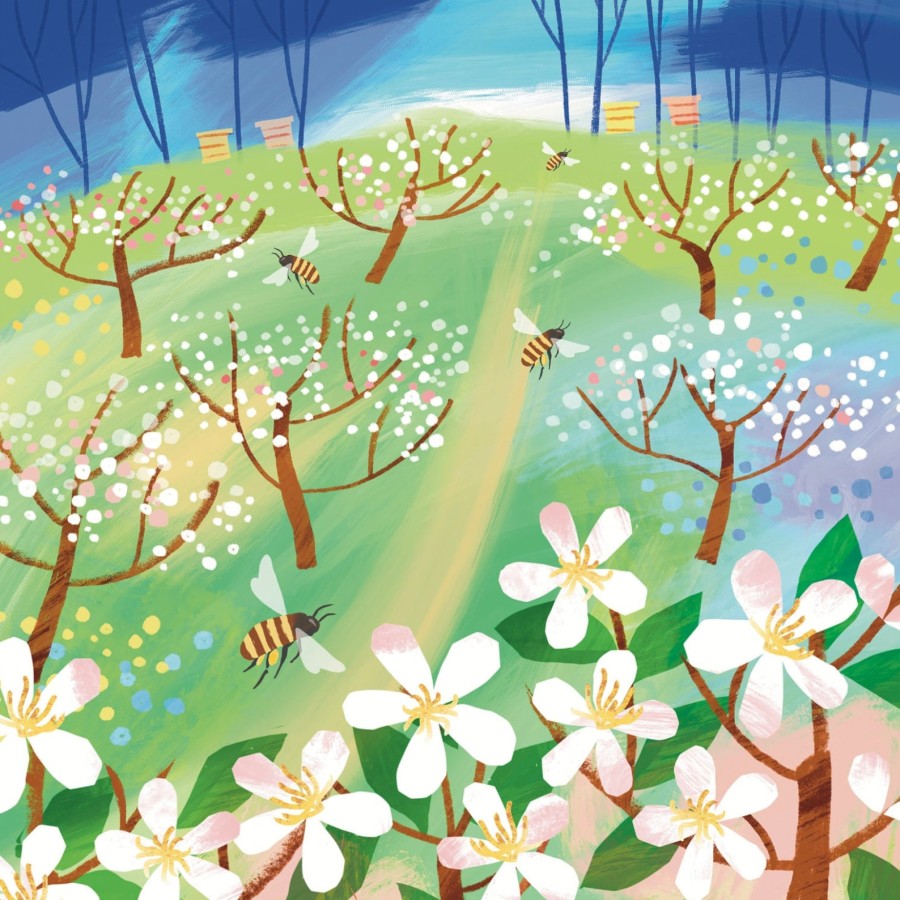
If you want fresh organic apples and pears (or apple and pear juice) and you live in Kent, you’re in the right place! Along with Herefordshire, the county of Kent is home to more orchards than anywhere. Apples, pears, plums, cherries – or anything fruity!
So when out shopping, try to look out for artisan brands in farm shops and at the markets. This helps to support organic farmers who are keeping the tradition of growing fruit orchards alive. And this of course also helps to give shelter and free food for birds and other wildlife.
Better than buying from supermarkets, which import 70% of England’s sold apples (most covered in shellac – dead insects – to make them waxy). Read more on how to protect our heritage orchards.
Apple chunks are choking hazards for babies and swallowing difficulties. Keep apple pips/seeds/cores away from pets due to natural cyanide.
Ask permission before feeding to equines, as too many cause colic. If given permission, feed cut up from a flat palm, to prevent choking).
The History of Fruit Orchards in Kent
Kent has one of England’s mildest climates. So combined with fertile soil, it’s an apple tree grower’s match made in heaven. Fruit tends to need warmer weather to grow well, so this is about as warm as you get on the southeast coast.
And the Kent Downs and Weald of Kent offers rolling hills full of well-draining fertile soil. You can’t grow good food without good soil, so again this combined with the weather, makes for the best orchard fruits.
Today, Kent grows more fruits than any other county, so we should support it, rather than buying imported fruits from supermarkets. Why buy from abroad, when Kent grows 90% of England’s cherries, and 50% of its plums? Do we hear a fruit crumble recipe coming on, anyone?
Not just fruits, Kent is also known for its beers (as seen by the lovely oast houses used for drying hops, dotted across the landscape.
The other ‘county crop’ is Kentish cobnuts, a kind of hazelnut. They have a distinct sweet flavour and are very nutritious. Unlike most nuts (that are sold dried) these are sold fresh, in season from late August to October. Some say they taste like a cross between a coconut and a citrus fruit!
Unique English Islands (just off the Kent coast)

You’ve likely heard of the Isle of Sheppey (just off the North Kent coast) which has seaside towns, a harbour and two nature reserves (home to oystercatchers, redshanks, lapwings and marsh harriers. It’s separated from Kent by the Swale (a narrow part of sea). Originally called ‘Sheep Island’ in Saxon times, this is the birthplace of aviation (good or bad, you decide).
Ian Crofton’s book on English islands has an extensive history of this island, which suffered heavy bombing during World War 2, resulting in unexploded bombs being left on the shoreline. The Elmley National Nature Reserve draws birdwatchers with its rare waders and sweeping views. The wild open skies and grazing cattle create a peaceful escape.
But there are other smaller islands off Kent’s coast, with very interesting and sometimes dramatic histories:
Burntwick Island lies in the Medway Estuary, close to the mainland but cut off by muddy creeks and tidal water. Unlike Sheppey, there’s no access by road. You can still see remains of a shepherd’s house (long left with his sheep, due to flooding) and still littered with Victorian glass and pottery.
The island is part of a protected nature reserve, so it sees few visitors. The saltmarsh is home to countless birds, including curlews and redshanks. Seals often haul out on its muddy banks.
Burntwick has a strange history. In the 18th and 19th centuries, it was a hideout for smugglers running contraband up the Medway. Locals tell stories of secret meetings, hidden goods, and daring escapes.
Later, the island became more sinister, as it was used as a quarantine site during outbreaks of plague and cholera. Old gravestones are hidden in the grass, a reminder of those lost to disease long ago. Today, Burntwick’s wild landscape feels timeless, shaped by tides and history.
Deadman’s Island is named, due to the sad remains of 200 men and boys being found, likely dying on ‘floating prisons’ around 200 years ago. Storms and tides have uncovered human bones and wooden coffins, bringing new attention to its grim story. Archaeologists have found remains of children as well as adults.
Some say the island is haunted, and the bleak, windswept setting only adds to its reputation. Because it’s part of a protected wetland, only researchers may set foot there now. Deadman’s Island stands as a stark reminder of Kent’s sometimes-forgotten stories.
A County of Many, Many Castles!
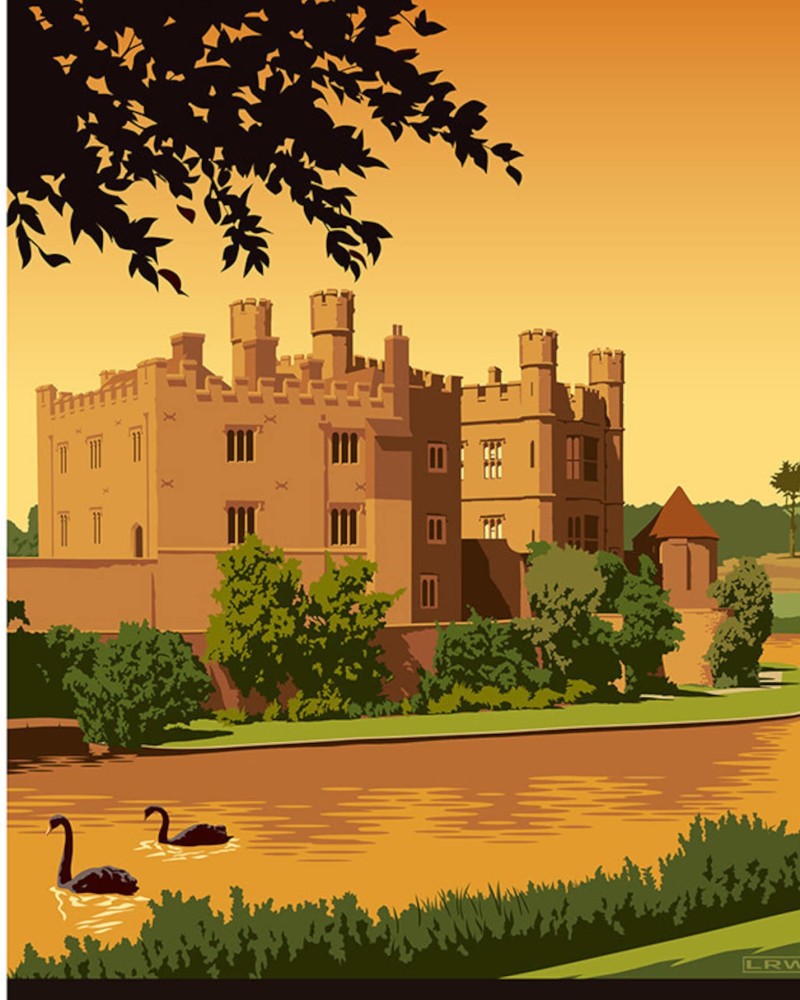
Who knows why, but the county of Kent is full of regal castles! Some believe it’s due to its location on the coast, as castles were of course originally designed to protect from invasion. The Norman Conquest in 1066 (the Battle of Hastings) meant that many new (now ancient!) castles were built. Later on, castles were displayed as symbols of wealth and power.
Leeds Castle is confusingly nowhere near Yorkshire, and called one of the finest buildings in England. Some say it’s the most beautiful castle in the world! It sits on an island, between two lakes.
Dover Castle sits above the iconic white cliffs, and was built for defending invasion from Europe, during times of war.
Hever Castle (near Edenbridge) is more noted for its beautiful gardens (which include rose gardens, a manmade lake and a chess topiary). The castle was the childhood home of Anne Boleyn, who was beheaded on the instructions of her husband Henry VIII.
Deal Castle was built by Henry VIII (not a very nice man, he destroyed lots of Catholic monasteries and convents to replace the Pope with himself as head of the church).

Tonbridge Castle is a nice little historic castle, on the outskirts of a beautiful town (not to be confused with Royal Tunbridge Wells).