Simple Ideas to Help Our Exhausted Carers
Sustainable Tableware for Carers and Patients
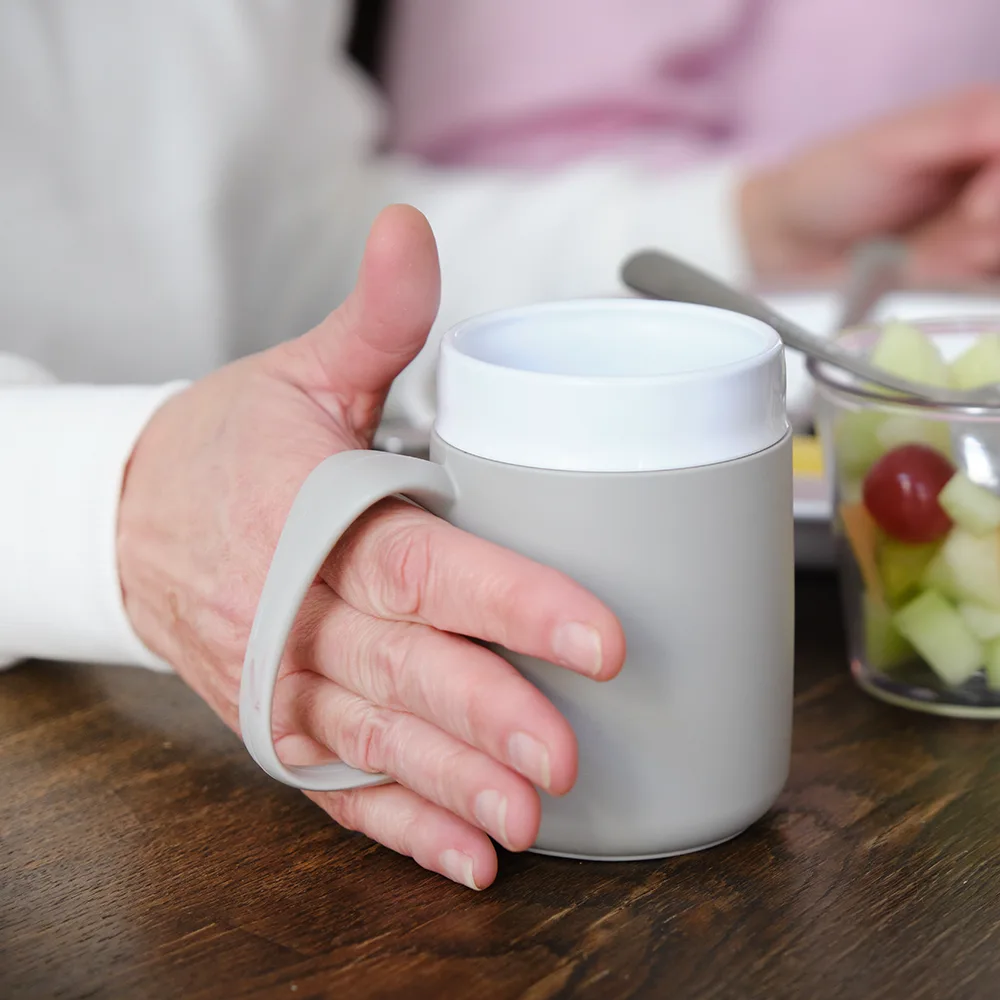
Patients with reduced mobility or dementia, along with their carers, need thoughtful solutions that don’t harm the world around them. From the material you choose to the bright colours on the table, the right tableware can make everyday dining safer, healthier, and more enjoyable for everyone involved.
Ornamin is a very interesting company in Germany. It offers well-designed crockery and cutlery for disabled and elderly people (which also makes life easier for carers). But this is also a climate-neutral company that is not just a case of cheap alternatives to conventional tableware.
Finding suitable tableware for people who are older, ill or have motor disabilities is very important, both to prevent spills and protect dignity. Nobody wants to eat and have half their dinner fall on the table or their lap. But this company strives to design the products so well, that they also ‘look conventional’. So no massive big sippy cups etc, but they work as well as such items.
Many patients can’t eat certain foods, due to swallowing difficulties. Read our post on food safety for people and pets. Find more ways to help our carers.
Ensure disabled people and their carers claim benefits. This can not only increase your income, but often gives access to grants to widen doors, install ramps and grab rails, or install heating/lighting controls. There are also Family Fund grants available for children.
This climate-neutral company specialises in good inventions like reusable cups and bowls, along with cups featuring internal cones, to make it easier for disabled people to drink, but more safely and without spills. The plates also have sloped bases, to help keep food on the plate!
Most items are made from bisphenol A-free plastic and designed to last years, being food-safe, dishwasher-safe and (if used) microwave safe. The innovative range (which would also be ideal for hospitals and nursing homes) includes:
- A keep-warm plate, where the sides can be filled with hot water, to avoid having to keep putting food back in the oven or microwave.
- A non-slip board to safely slice fruits, vegetables and bread, with one hand.
- A ‘dementia’ crockery set, designed to promote slow eating. It’s also bright red, to stimulate appetite, also easily seen by people with not-perfect vision.
- A stainless steel cutlery set, easily gripped with a circular spoon to eat from all sides. And a knife designed for safer cutting and heating.
- The mugs enable people with shoulder and neck problems or disabilities to drink, without having to lean their head back. one hand.
You can also choose tableware, based on medical conditions:
- Parkinson’s disease – items are designed to handle hand tremors and muscle stiffness. Along with other issues like swallowing difficulties.
- MS – designed to handle swallowing difficulties, visual disturbances and numbness in the arms and legs.
- Dementia – everything is red to be easily seen and stimulate appetite, using dignified design to encourage good eating and drinking.
- Stroke – items are designed to adapt to the special needs for people, after they have a stroke. Like movement and visual disturbances.
This company goes beyond just providing shatterproof plastic bowls, with each condition having specially-thought out features. Just imagine if the NHS and others invested in such products. It would ensure good nutrition and hydration for patients, and give them far more dignity. And also help exhausted carers too.
Eat Well (invented by the granddaughter of a dementia patient) offers cups with rubber bases (and trays to clip on aprons, to catch dropped food and prevent clothing stains).
Kitchen Aids for Patients & Carers
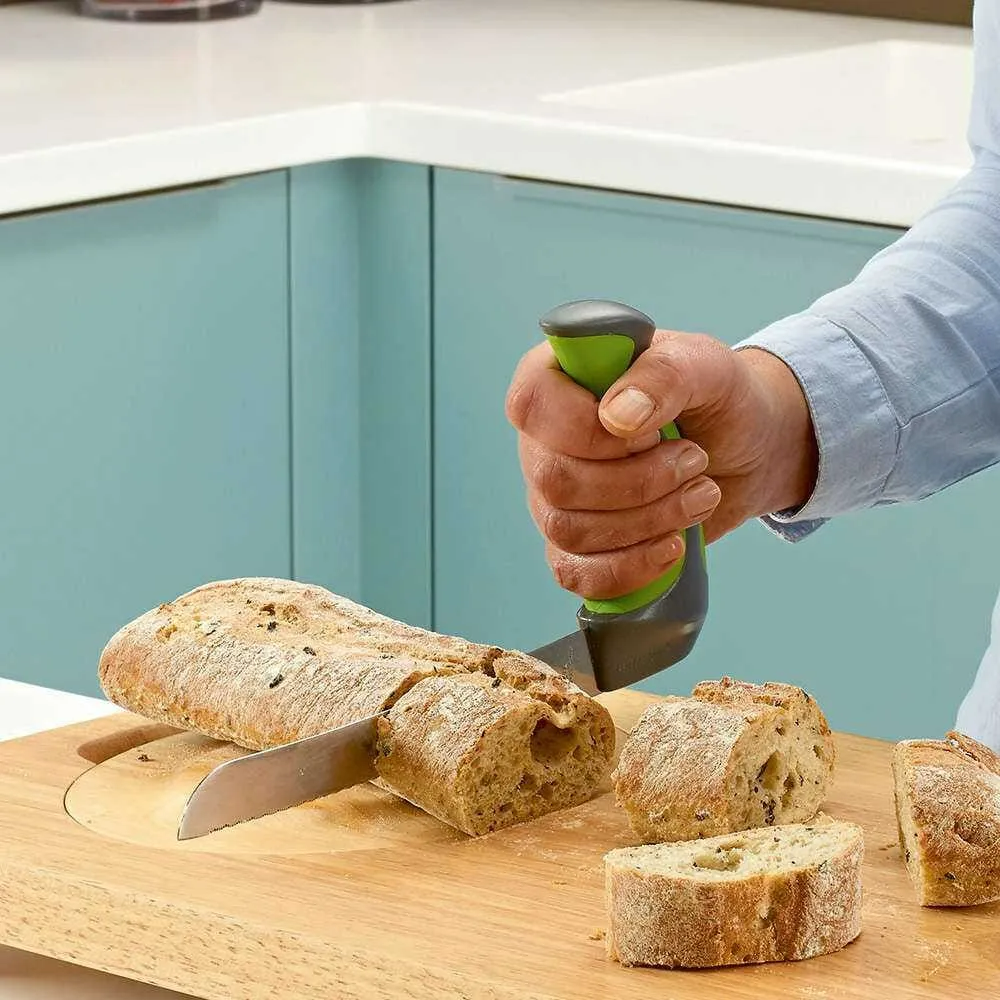
Easi-Grip knives have stainless steel blades and bright ‘soft feel’ grips that are non-slip, so you don’t have to use your hand as much. The angled handles prevent wrist discomfort, and the knives are less likely to twist, in wet or greasy conditions.
Preventing Dehydration (Dementia)
Many people with dementia forget to drink (and some are even scared of running tap water). To avoid added issues of dehydration, Droplet is an invention used on the NHS and can also be used at home.
This lightweight mug monitors fluid levels with measuring lines, and relatives can record personal messages. The cup then offers an audible reminder (with flashing lights) if someone is not drinking enough.
Ensure kettles have ‘tippers’ to let water pour safely. Built-in water taps are good, but too expensive for most people (around £500).
Why Sustainable Tableware Matters
Traditional plastic plates and cutlery are everywhere, but their single-use nature can lead to higher risk of germs. Each time you grab a fresh plastic fork, there’s another step for someone to handle, unwrap, and toss it after use. This extra movement raises the odds of picking up unwanted bugs or cross-contamination.
Reusable sustainable tableware, made from stainless steel, bamboo, or high-quality washable plastic, goes through a thorough cleaning between uses. There’s less chance for food particles or fingerprints to linger unseen. Fewer hands, less plastic, and less waste means a cleaner, safer mealtime.
Eating should feel comfortable, not like a daily struggle. Many sustainable tableware brands design their dishes with care in mind. Big handles, non-slip bases, and stable sides make a huge difference, especially for those with shaky hands or weak grip.
For someone living with arthritis, tremors, or injury, a wobbly cup or slippery plate is more than an annoyance. It might mean missed meals, spills, or even lost dignity if accidents happen in front of others. Ergonomic utensils – like forks with chunkier handles or cups with fitted lids – make eating easier and safer.
Look for these friendly features:
- Non-slip bottoms
- Chunky, easy-grip handles
- Lightweight but sturdy materials
- Bowls with high sides to help scoop food
Long-term cost savings
It’s tempting to grab a pack of cheap plastic cutlery when time is short, but the bills add up fast. Every disposable cup or plate heads straight to the bin, costing you money over and over. Sustainable tableware is an upfront buy but pays off in the months ahead.
Boosts morale for carers and patients
There’s something special about sitting down to a meal that feels cared for. Eco-friendly tableware often looks and feels better than cheap, flimsy options. When plates are colourful, sturdy, and safe, both patients and carers feel prouder and happier at mealtimes.
Safe cleaning and sanitising routines
Keeping tableware clean can feel like a chore, but a regular routine helps everything stay safe for use. Most sustainable tableware needs careful dish-washing, but you don’t need lots of fancy products or steps.
Avoid scents for pregnancy/nursing and baby/pet food bowls.
For dishwasher-safe items:
- Rinse dishes straight after meals to avoid stuck-on food.
- Group utensils by type in the cutlery basket; point sharp ends down.
- Load plates and bowls with space between them for the water jets to reach all surfaces.
- Use the eco setting where possible to save energy and water.
- Dry using the lowest heat setting to avoid warping items with plastic or silicone parts.
For hand-washing:
- Use warm soapy water with a soft sponge or brush.
- Focus on corners, handles, and any textured areas where crumbs hang about.
- Rinse dishes under running water, checking for soap scum or leftover food.
- Dry fully with a clean towel or let air dry on a rack to avoid damp smells.
Quick care tips:
- Do not leave bamboo or wood soaking in water. Dry after each wash.
- Use a separate sponge for patients’ tableware if illness is a concern.
- Check for chips or cracks during each wash and remove any damaged items.
Smart storage to prevent breakage
- Use bins or baskets to hold matching sets (all cups in one, plates in another).
- Install a dish rack near the sink for air drying and storing lightweight items.
- Put heavy dishes on low shelves to stop accidents if something slips out of your hands.
- Stack bowls inside each other with soft liners or kitchen paper to avoid scratches.
- Set up labelled shelves or drawers using large, clear tags (“Clean Utensils”, “Reusable Plates”, etc).
Sample labelling zones:
- “Daily Use” (for items in constant rotation)
- “Patient-Safe” (for those with non-slip bases or easy-grip handles)
- “Special Meals” (for pureed foods, dietary needs, or festive dishes)
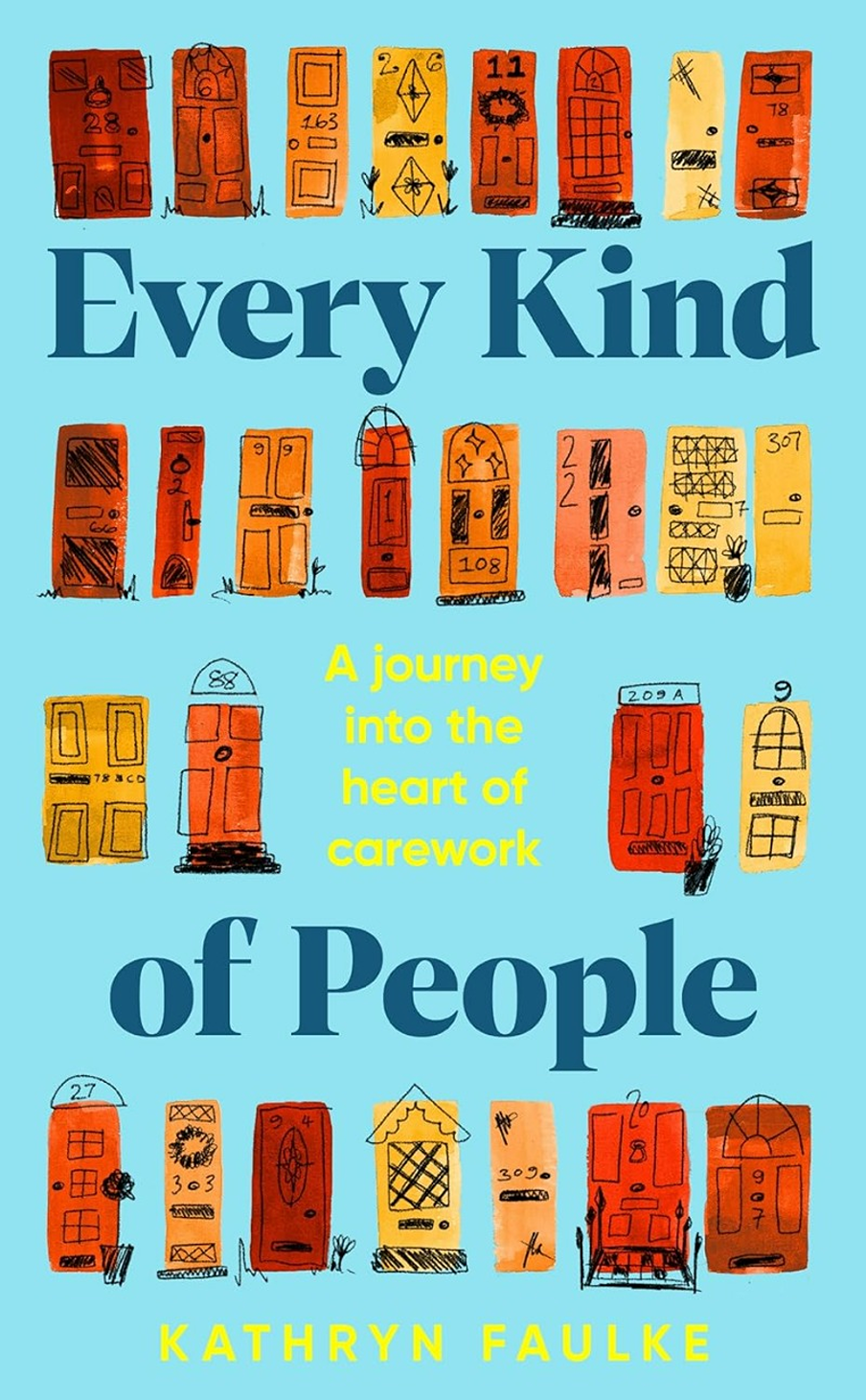
Every Kind of People is a unique book that looks behind the scenes at the millions of people who care for others, either due to family or friendship, or as a career.
This is an uplifting and deeply moving memoir by a care worker, told through her funny, heart-breaking and sometimes frustrating encounters with the often overlooked and isolated people she cares for.
For more information on caring by disease, finding volunteer dog walkers and getting all your benefits, see the help our carers tag.
Being as close as this to someone is a uniquely precious place to be. It is a place where secrets are revealed and fears are shared and outrageous jokes are made, that could not be told to anyone else.
Kate never expected to become a home care worker. But when she left her senior role in the NHS (burnt-out and disheartened) she thought caring for people in their own homes, would be a simpler job.
Despite being determined not to become too involved with her ‘customers’, she soon found herself developing firm friendships, forging deep connections and bearing witness to the extraordinary dramas to be found in everyday lives.
With energy, compassion and clarity, her memoirs gives an astonishing insight into this unsung (and often maligned) profession, where people are often poorly-treated and poorly-paid.
From Beryl (who screams like a banshee whenever Kate tries to wash her – but collapses in giggles when her toes are tickled) to bawdy Mr Radbert who ‘promises to give me his car, when he can remember where he left it’.
This is a book that is clear-eyed about the challenges facing the NHS and the care system. But above all it’s a celebration of humanity and the life-changing impact of caring – on those who offer it, and those who receive it.
An extraordinary account of what it is to care for others, both beautiful and painful to read. Dr Gwen Adshead
The Help Available for Carers
The government website lists the benefits and help available for carers, do ensure that you claim if you qualify.
This includes:
- Carer’s Allowance
- Universal Credit
- Pension Credit
- Carer’s Credit
- Attendance Allowance (for patients)
These then have knock-on effects to other benefits (for instance, qualifying for Pension Credit would restore a winter fuel allowance).
You may then get other benefits like Blue Badge cards, Radar keys for accessible toilets, free TV licenses and help with landline phones.
Understanding the Daily Lives of Carers
Each day, millions of unpaid carers complete a long list of tasks, in addition to providing emotional support to their loved ones. Mornings can start before dawn (helping with personal care and medication and preparing meals), then often it’s a case of organising trips to the doctor.
Carers must respond quickly to new challenges, and in the case of patients with dementia, often they cannot leave the side of the patient. Work is not just ‘simple chores’. It’s being on constant-alert and having never-ending patience.
Helping someone to dress (when often not a trained nurse) and keeping homes tidy (often with bathroom accidents), there is huge emotional support, and as a result carers wear many hats: nurse, cook, advocate, friend, driver and sometimes dog-walkers.
Emotional and Physical Burdens
Caring for someone else can drain both body and mind, and most carers are older themselves, so it’s difficult to life people and bathe people, leaving little energy at the end of the day.
The emotional burden can also weigh heavy, with feelings of exhaustion, overwhelm and guilt, at not being able to do enough. Then there are financial worries on top, which can lead to insomnia, and everything begins again the next day.
Yet the sacrifices of carers often go unnoticed. Many carers are isolated, and have long-term stress and exhaustion, which can lead to depression. And many have bad backs and other physical conditions, from doing tasks better suited to trained carers and nurses.
Yet despite that, most carers carry on out of love and a sense of duty. Many carers have deep bonds and a sense of purpose that outweighs the hardship.
The Power of Community and Support Networks
No one can care alone forever. Look up local care support groups, most have one and can sometimes offer volunteer respite care, someone to chat to, and volunteer dog walkers.
Age UK has a wonderful phone helpline where experts can help you with finding help and sorting out financial issues, plus just enter your postcode to find local volunteers who can help to take some of the burden off, with local help.
This can range from social activities to help for handyman jobs, to help for dementia patients and volunteer transport services.
Carers UK also has a local directory of services that can offer help and support.
KAPI (a system of eldercare in sunny Greece)

In Greece, there are far less residential and nursing homes (they do exist, but as a rule, families look after ageing or disabled relatives rather than the state). And Greece’s recent economic woes, means that there is not enough funding to build, staff or pay for such homes in many areas.
Obviously the lifestyle is quite different. In Greece, nearly everyone lives on natural food (fresh fruits and vegetables) and as one of the world’s sunniest countries (and home to 6000 islands), many people enjoy fresh countryside or seaside air, until their dying days.
The strong family units means that most older people don’t feel lonely or abandoned, and it’s a source of pride in Greece, to be chosen as the relative to care for a parent (or parents) in later life.
The Eastern Orthodox church is also very popular here, and again a deep focus on faith in daily lifestyle, means commitments to older relatives are taken seriously, with far more importance than say a focus on one’s own freedom and ambitions.
As in many southern European countries, if older relatives don’t live with their younger relatives, many still live next door in the same apartment block, sharing meals, shopping errands and looking out for each other.
Around 40% of older people in Greece live with their family, a share higher than most other European countries.
As a result, there are less cases of loneliness (and sometimes dementia if it’s caused by isolation), due to companionship, conversation, and purpose. Older people in Greece are respected as wide elders, loving grandparents and sources of history and ancestry.
KAPI (Open Protection Centres of the Elderly) is a service provided by the state, for all older people (not based on income). These centres offer medical check-ups, health education and recreational activities, along with extra help if needed like home care or specialised care. These centres can also be used for respite, to give exhausted carers a break.
Due to the much lower ratio of care homes (families still take on most caring responsibilities), this culture frees up money in order to provide these services to the general public, at low cost.
Anyone over 60 in the community can benefit from daily prevention (blood pressure checks) to occupational therapy and physiotherapy, which helps to prevent minor conditions becoming more serious, which obviously then cost the state more money in medical costs.
If we compare this with England, mostly it’s just a case of GPs doling out medicines, and older people only ending up in the care of the NHS once they get seriously ill, or when entering a residential or nursing home.
Age UK (a similar suite of services in England)
In fact, the charity Age UK (nothing to do with government), offers a service on a par with what Greece offers, funded by donations from the public. This organisation provides a suite of wonderful services :
- A phone helpline (some people on very low incomes have had income rise by over £100 a week, after one phone call).
- A free Silver Line helpline where lonely older people can receive calls from chatty volunteers (including ‘conference calls’ which involve other elders, to make new friends).
- An in-person volunteer befriending service.
- Affordable handypersons to do odd jobs
- Nationwide cafes, to chat over tea and cake
- Over 80 trained workers, to offer in-home footcare
- Social activities and IT training
Proof that often it’s private charities and organisations, that do the work better than governments and councils can. If you know anyone who could use their help, do mention Age UK if they could benefit.
This also has a knock-on effect on reducing NHS costs. Because older people who are eating well in warm homes, who have friendships and access to local support, tend to be healthier both physically and mentally. And results in less stays in hospitals, and long-term stays in residential and nursing homes.