Grow Indoor Houseplants and Kitchen Gardens
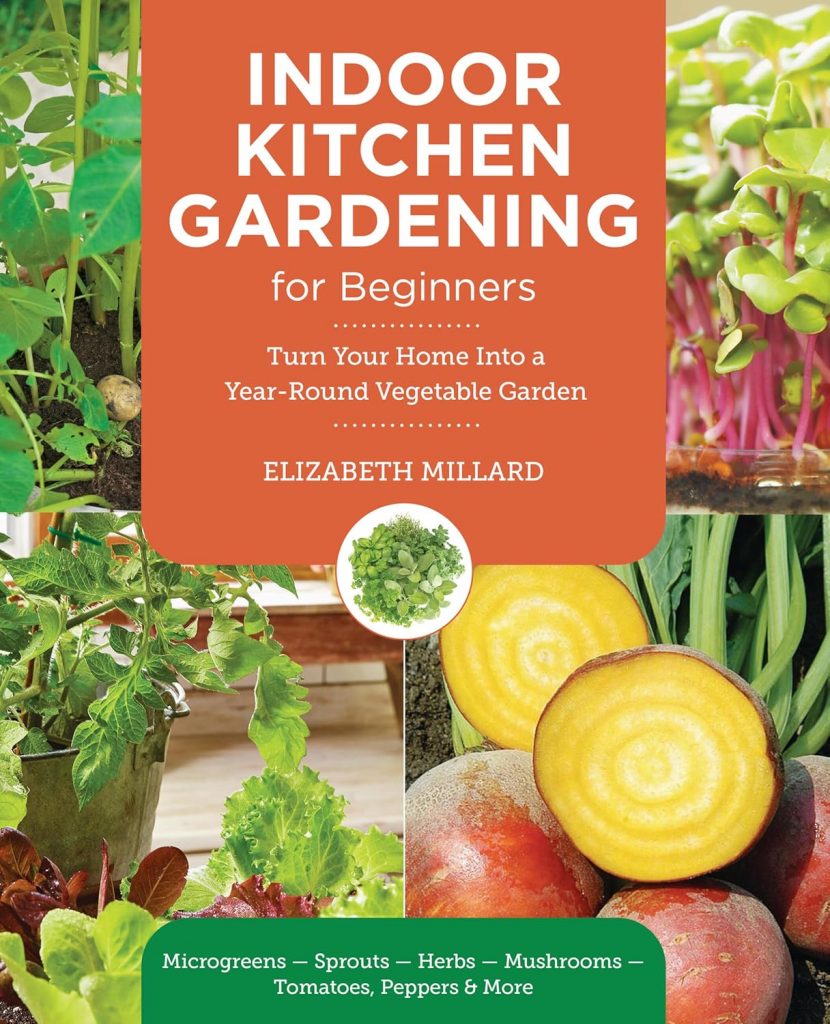
Indoor Kitchen Gardening is a beautifully-written guide to growing a bounty of organic vegetables in your own kitchen. Find simple friendly instructions to grow your own food indoors, for just a few pounds, and quick results.
Learn how to create pet-friendly gardens and wildlife-friendly gardens (use fruit protection bags over netting).
You’ll find information on choosing a space, finding suitable containers and soil, and using grow lights (not near windows to prevent bird strike) to overcome potential challenges.
Crops to grow include:
- Microgreens
- Lettuce
- Radishes
- Carrots
- Kale & Chard
- Spinach
- Peppers
- Potatoes
- Tomatoes
Author Elizabeth Millard and her partner run a 100-member community-supported-agriculture farm in Minnesota, USA, where they provide seasonal produce to members and area restaurants, to build a strong sustainable local food systems. She also leads workshops on growing vegetables and herbs.
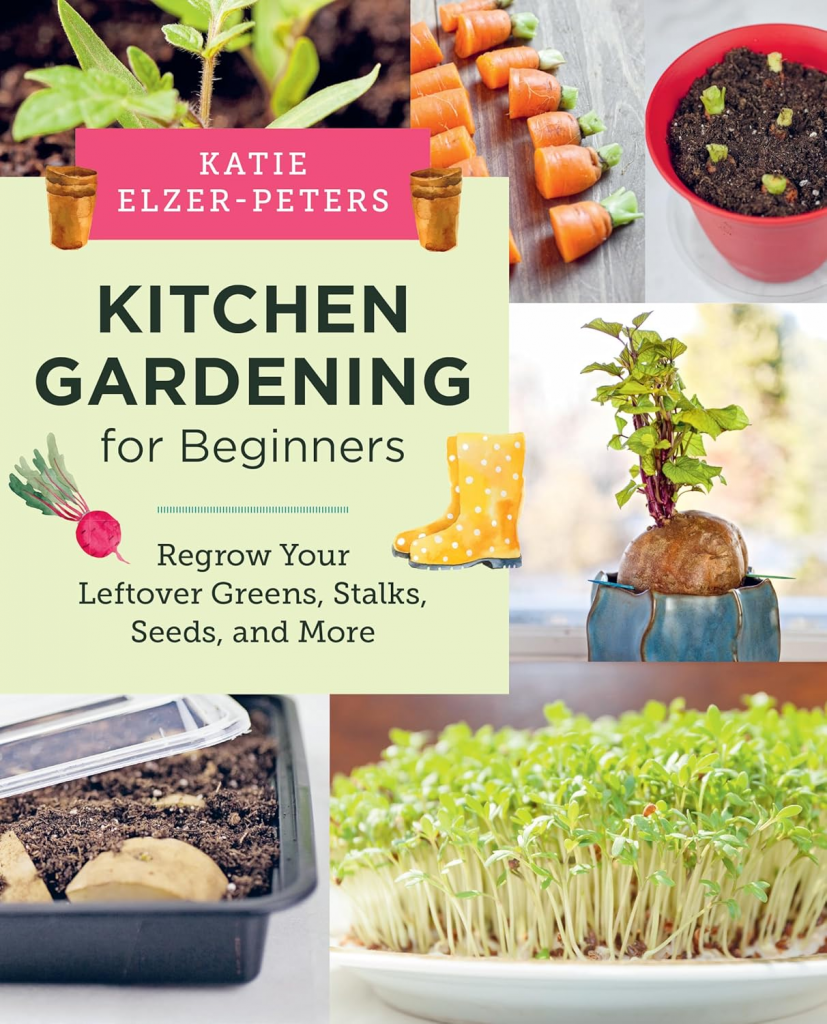
Kitchen Gardening for Beginners shows how to easily regrow vegetable discards and scraps, to turn them into edible plants to harvest, even if you have no gardening experience.
Stop tossing your carrot tops, leafless herb sprigs, beet greens and lettuce or celery stumps in the bin. Instead, cut back on food waste and cultivate your own homegrown veggies, with easy advice from an expert.
You can grow these plants indoors, using the instructions and photos – showing what the root section, seed, leaf, stem or other plant part should look like, when you replant it. And what it should look like, when ready for harvest. Many of the featured vegetables can be regrown in water or soil.
The book features large and small edible (some quick to grow, others take a little longer). A few of the many plants featured include:
- Celery
- Carrots
- Ginger
- Green Onions
- Herbs
- Potatoes
- Tomatoes
The author has a Bachelor and Master of Science in Horticulture and has managed botanical gardens in the USA.
How to Grow Food & Flowers (in bags!)

Grow Bag Gardening shows how to grow vegetables, fruits and herbs with no heavy lifting or digging, just use eco-friendly fabric planter bags that grow easily, with minimal space and care (then just fold them up when not in use).
Ideal for rooftops, balconies and patios, these frost-proof bags are easily moved to maximise sunlight. This no-weed and no-mess method of garden is a game-changer with no root circling.
The Self-Care Planter (keeps plants watered for weeks)

The Self-Care Planter is an amazing little invention for forgetful gardeners! Or if you were going on holiday etc. It’s a ceramic foot-spa, that basically happily keeps your plants watered for weeks at a time. Perfect for plants and potted herbs, just fill with water, the dip the pot’s little feet into the water.
His cotton legs slowly draw up the perfect amount of water, keeping the soil from drying out! The pot is sold in a plastic-free box with instructions.
Some indoor plants (including lilies and sago palm) are unsafe near animals (read more on pet-friendly gardens. Avoid facing indoor foliage to outdoor gardens, to stop birds flying into windows.


Ecotribo (plant pots made from fishing waste)

Ecotribo is a fab brand of eco-friendly plant pots, made from recycling fishing waste. And even made with solar power, in lovely colours and patterns. Made in the hip green city of Bristol.
Many indoor plants (including lilies and sago palm) are unsafe near pets (read more on pet-friendly gardens. Avoid facing indoor foliage to outdoor gardens, to help stop birds flying into windows.
Don’t leave full watering cans around, as small creatures could drown. Rain Can (made from recycled plastic) includes a little ladder for creatures to escape!
Each pot includes a scannable QR code, so you can learn the journey of how your plastic pot came to be, while saving marine creatures from Cornish and Scottish fishing waste.
Ghost fishing gear makes up 10% of ocean waste, killing hundreds of thousands of marine creatures. Volunteer to help remove ghost fishing waste.
This brand was founded by a surfer (they tend to be a pretty eco-friendly lot), this case he is from South Africa.
Tips for Happy Houseplants!
- Happy Houseplants offer pet-safe houseplants, along with a pet-friendly houseplant box. Each plant is also designed to be easy to care for. Note some pets may still be allergic.
- Hungry Plants organic houseplant feed contains the perfect NPK formula (nitrogen, phosphorus and potassium) from sustainably-harvested Irish seaweed, in a slow-release formula. 1 bottle makes 20 litres.
Recycled Fishing Waste Plastic Benches!

If you’re in the market for a park bench or pub seating area, check out their lovely benches, naturally coloured from recycled fishing waste.
POTR Plant Pots (that water themselves!)
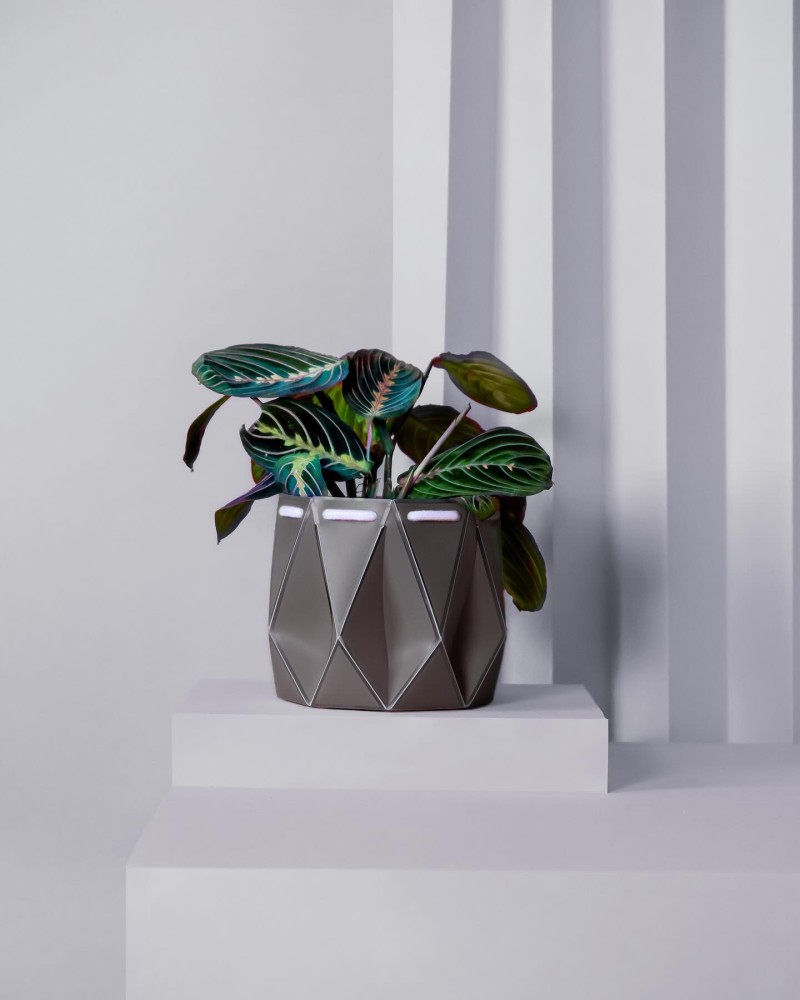
POTR is a range of pots born out of playing around with origami (the Japanese art of paper folding). It ended up as a company making plant pots and vases that water themselves!
Many indoor plants (including lilies and sago palm) are unsafe near pets (read more on pet-friendly gardens. Avoid facing indoor foliage to outdoor gardens, to help stop birds flying into windows.
Don’t leave full watering cans around, as small creatures could drown. Rain Can (made from recycled plastic) includes a little ladder for creatures to escape!
Unlike concrete or ceramic plant pots and vases, these won’t break if you knock or drop them. They also can be folded to post through the letterbox, so are far easier to buy and send. And better yet, they are made from recycled materials, including ghost fishing waste.
Because they are super-clever! The self-watering system basically self-regulates its own water intake. Ideal if you are away for a couple of days, or very forgetful.
Once you have assembled the pot, just add water, insert the wicking straw into the soil, and watch your plants thrive! The wicking cord can keep plants hydrated for up to 3 weeks, if needed.
The POTR vase is sent through the letterbox, then springs into life, as soon as you open it. It contains a little silicone and is tall and stable enough to hold a litre of water to support a full bouquet of flowers. The soft silicone rim is kind to flower stems.
Many of the pots are now also made from recycled fishing waste, to keep our seas cleaner for fish and marine creatures.
A cotton wick lets the plant draw up water when it needs it, keeping the soil from getting soaked or bone dry. This helps prevent root rot and makes it nearly impossible to overwater. It’s perfect for beginners or anyone who wants to save time.
Tips for Happy Houseplants!
- Happy Houseplants offer pet-safe houseplants, along with a pet-friendly houseplant box. Each plant is also designed to be easy to care for. Note some pets may still be allergic.
- Hungry Plants organic houseplant feed contains the perfect NPK formula (nitrogen, phosphorus and potassium) from sustainably-harvested Irish seaweed, in a slow-release formula. 1 bottle makes 20 litres.
POSIpot (plastic-free ‘take plants home’ pots!)
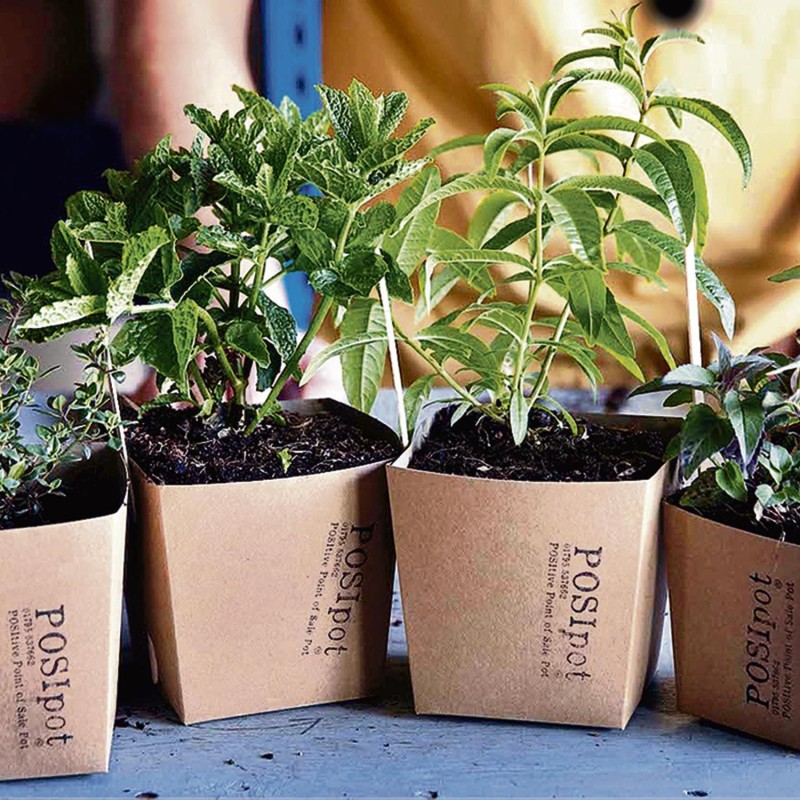
POSIpot is not a pot to grow plants in, but more a transportation sleeve, to replace plastic pots that are sold in garden centres (90% of plastic pots sold in garden centres are used only to transport pots home, then binned within hours). This leads to waste of 500 million plastic pots in circulation each year.
These eco pots instead are made from recycled cardboard. They are flat-packed and assembled to use to make round or square pots, and are designed to slow water absorption, so plants can sit outside for around a week. The fine roots then rapidly break down, when planted.