The Best Brands of Sustainable Vegan Socks

There are two brands offering 100% natural cotton socks (but only in a few styles). If you choose other brands, nearly all will contain a little elastane, so launder in a microfibre filter, to stop microplastics releasing from washing machines and going out to sea).
Babies should not wear socks in warmer temperatures (including in cars), to help reduce risk of SIDS (same with hats). Read more at The Lullaby Trust.
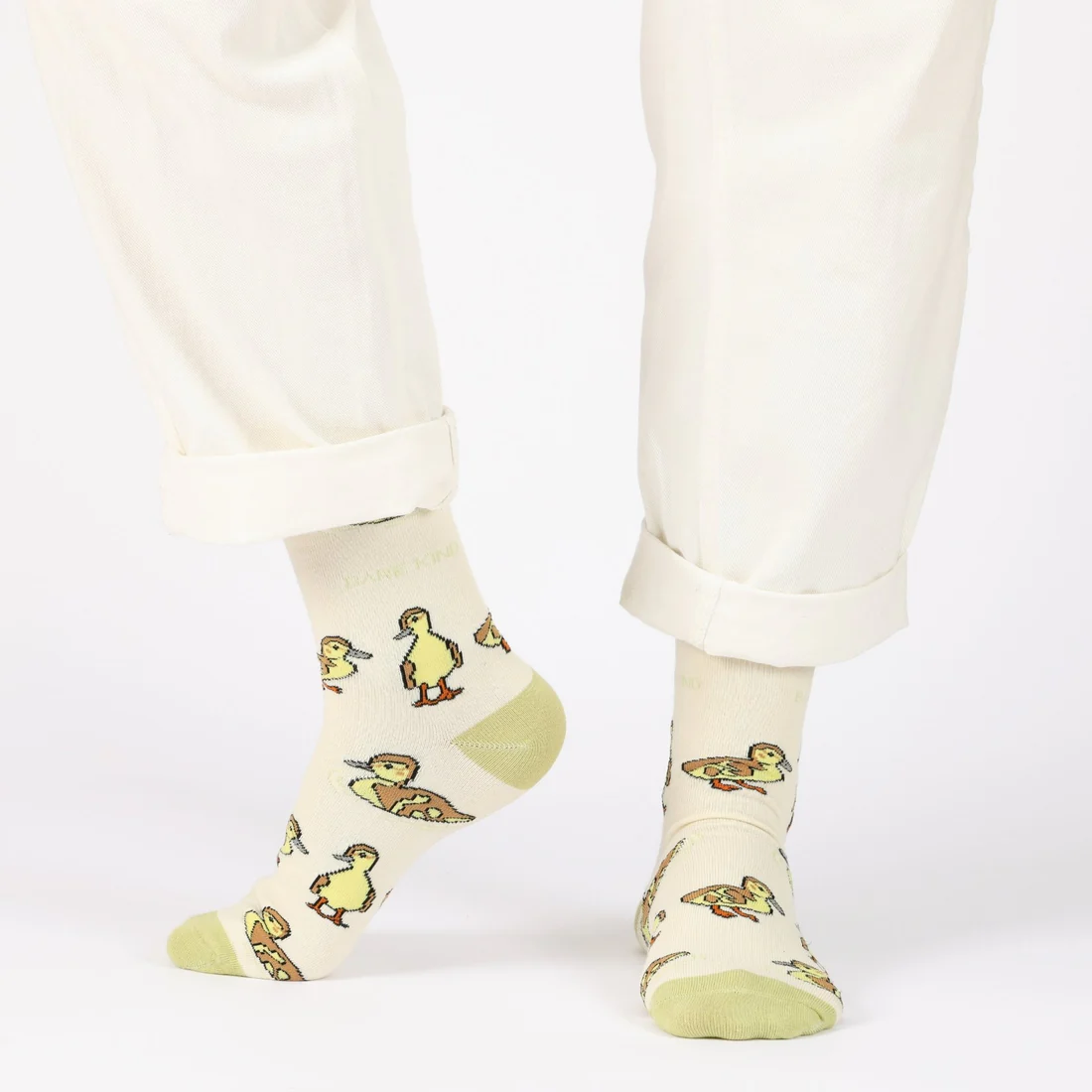
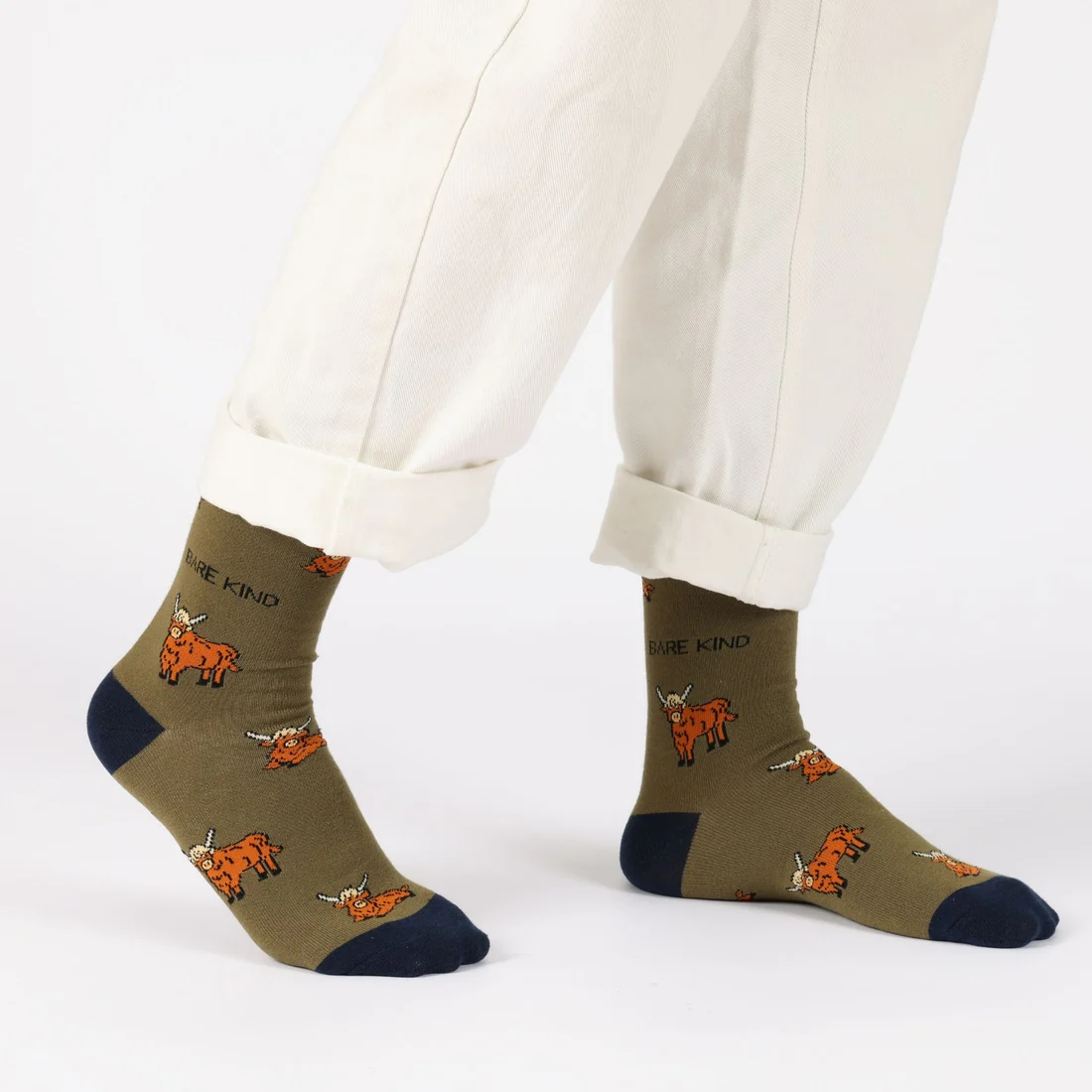
Bare Kind offers a range of illustrated bamboo socks for adults and children. And 10% of profits from each pair, go to protect the animals (from barnyard friends to endangered species) on your socks.
Keep socks away from pets. They smell lovely to animal friends, but could cause constipation, choking or intestinal blockage. Signs of sock ingestion are lethargy, vomiting, loss of appetite, a tender abdomen and difficulty pooping.
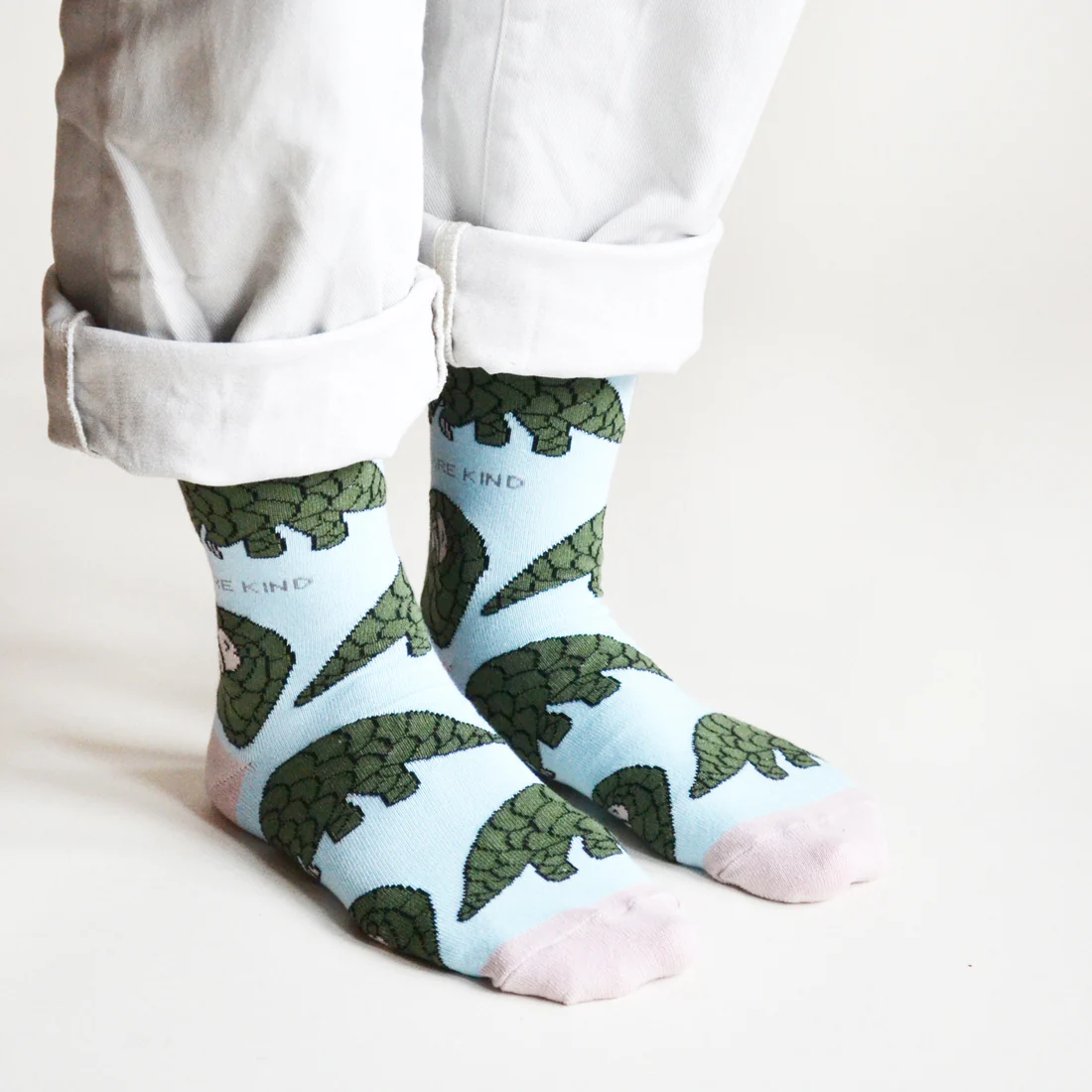
There are colourful socks to save hedgehogs to ducks, Highland cows to pangolins. Everything is also sent in plastic-free packaging.
Bamboo is the world’s fastest-growing grass. It’s not locally-grown, but it’s very sustainable as it grows so fast. Industrial bamboo is not the same as fresh shoots, eaten by pandas.
Bamboo is the world’s fastest-growing grass. It’s not locally-grown, but it’s very sustainable as it grows so fast. Industrial bamboo is not the same as fresh shoots, eaten by pandas.
How to Make Your Socks Last Longer
- Keep your toenails trimmed!
- Store socks flat (don’t ‘cuff into one another’).
- Launder with gentle unscented detergent. Never use fabric conditioner or bleach, nor tumble-dry. Unless higher temperatures needed for immunity (babies, medical issues), wash in cold or lukewarm water.
- Wear with well-fitted quality vegan shoes or sneakers. Visit a shoe shop before buying, to get your feet measured, as too-tight shoes will end up destroying your socks!
You can recycle natural fibre socks at textile banks. For others containing elastane, collectively (community, school, office) invest in a TerraCycle Fabric & Clothing Box. Fill with socks, fabrics, textiles and hosiery, then send off using the prepaid label, to be made into other things.
100% Natural Cotton Socks (for adults or children)
It’s difficult to find 100% natural socks (most brands contain a little elastane, so launder in a microfibre filter, to stop microplastics releasing from washing machines and going out to sea). So far, we have only found two brands (not in many styles) but hopefully others will follow suit.
Babies should not wear socks in warmer temperatures (including in cars), to help reduce risk of SIDS (same with hats). Read more at The Lullaby Trust.
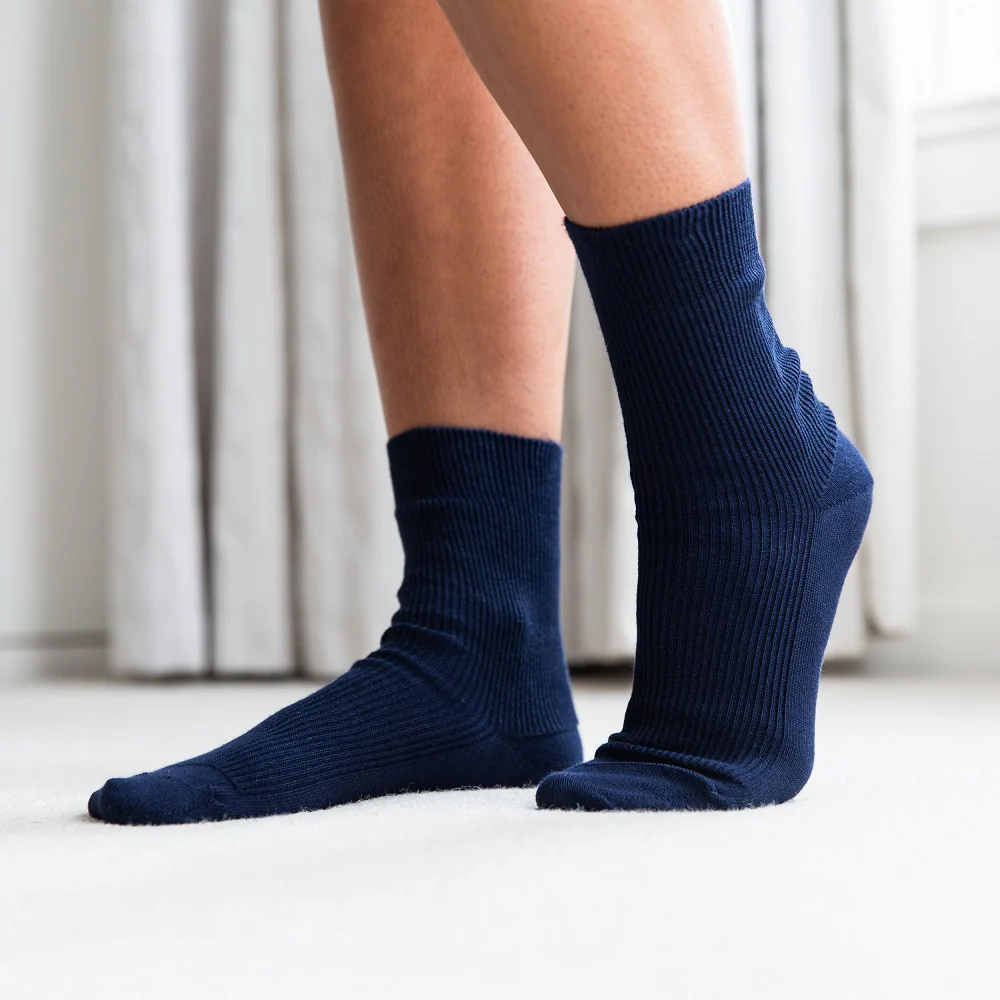
EcoOutfitters is a company that makes organic school uniforms, but it also offers 100% organic cotton socks for children and adults. These offer a pressure-free fit that won’t dig in or leave marks around your ankles, as they are free from elastic (so no elastane).
Keep socks away from pets. They smell lovely to animal friends, but could cause constipation, choking or intestinal blockage. Signs of sock ingestion are lethargy, vomiting, loss of appetite, a tender abdomen and difficulty pooping.
The sock sizes are even marked on the soles, for easy sorting after laundering. Made ethically in Portugal, these are made from GOTS-certified organic cotton, with soft fine rib and flat seams, for extra comfort.
Eczema Clothing makes a small range of 100% organic cotton socks (also for men). These have soft ribs for relief from itchy skin (note a few of their socks do contain a little elastane).
Socko (recycled yarn socks from Leicestershire)
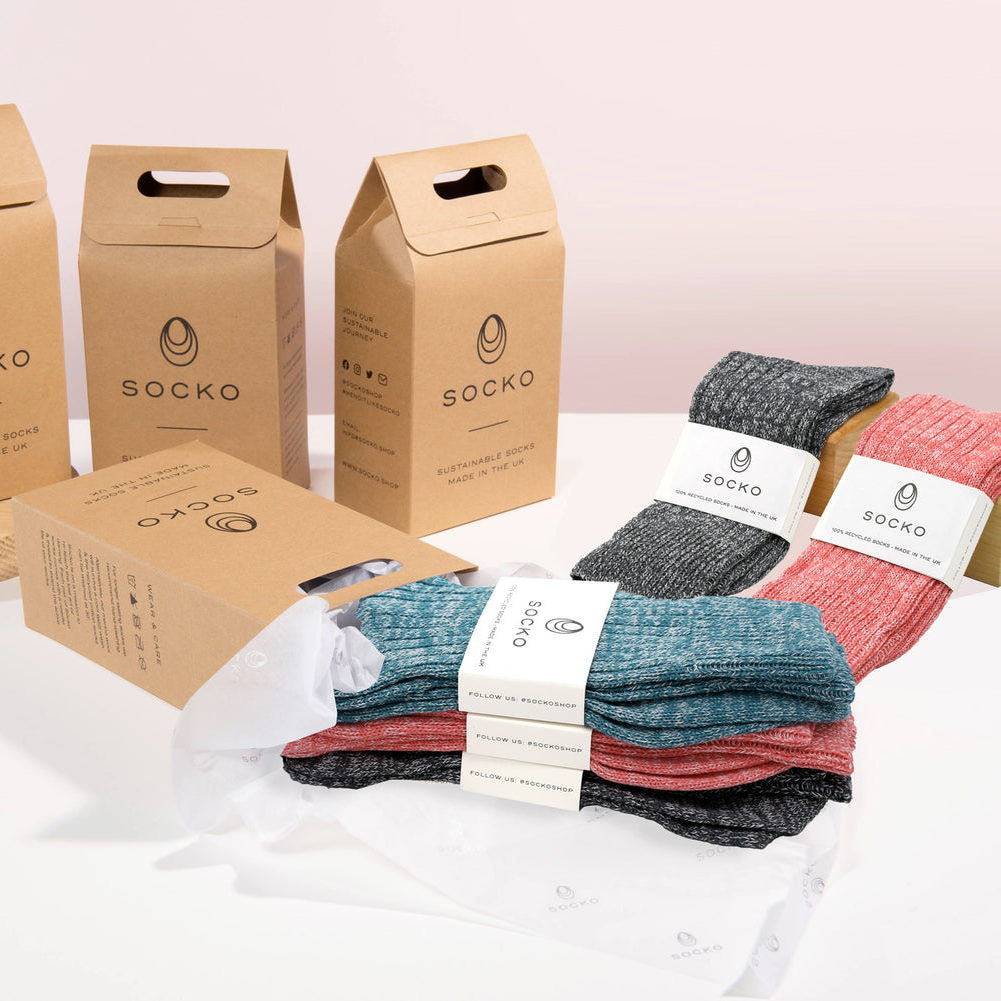
Socko is a Leicestershire brand of socks that blends recycled cotton with a few synthetics (from recycled plastic bottles and recycled fishing waste).
Unlike 100% natural cotton socks (only in neutral colours), most other sock brands contain a little elastane. So launder in a microfibre filter, to stop microplastics releasing from washing machines.
Sock Safety Tips
The Lullaby Trust says that babies should not wear socks in warm temperatures (including in cars, to help reduce risk of SIDS (same with hats).
Keep socks away from pets (they smell nice to animals, but could cause choking or blockage). Signs of sock ingestion are lethargy, vomiting, loss of appetite, tender tummy and constipation.
What Makes Socko Different?
These socks are hand-finished and inspected for quality, sold in cardboard packaging. Choose from teal, coral or graphite (or mixed sets) or stripey or two-tone socks.
Each pair includes instructions (with colour-matched yarn) on how to darn socks in 10 minutes, to help stop the thousands of pairs of socks thrown away.
Socko socks are sold in three unisex sizes:
- Small (shoe size 4 to 6)
- Medium (shoe size 7 to 9)
- Large (shoe size 10 to 12)
If you are in between sizes, the founder recommends choosing the smaller size.
Sometimes you may find a bit of thread hanging out the top, this is typical in traditional sock production. Don’t pull it – just snip it off.
This brand sometimes uses reclaimed wool. But all listings are ethy verified (which gives simple visual coloured symbols, to easily recognise which socks are vegan-friendly).
Earth Wardrobe (mostly) organic affordable socks
There are two brands offering 100% natural cotton socks (but only in a few styles). If you choose other brands, nearly all will contain a little elastane, so launder in a microfibre filter, to stop microplastics releasing from washing machines and going out to sea).
Babies should not wear socks in warmer temperatures (including in cars), to help reduce risk of SIDS (same with hats). Read more at The Lullaby Trust.
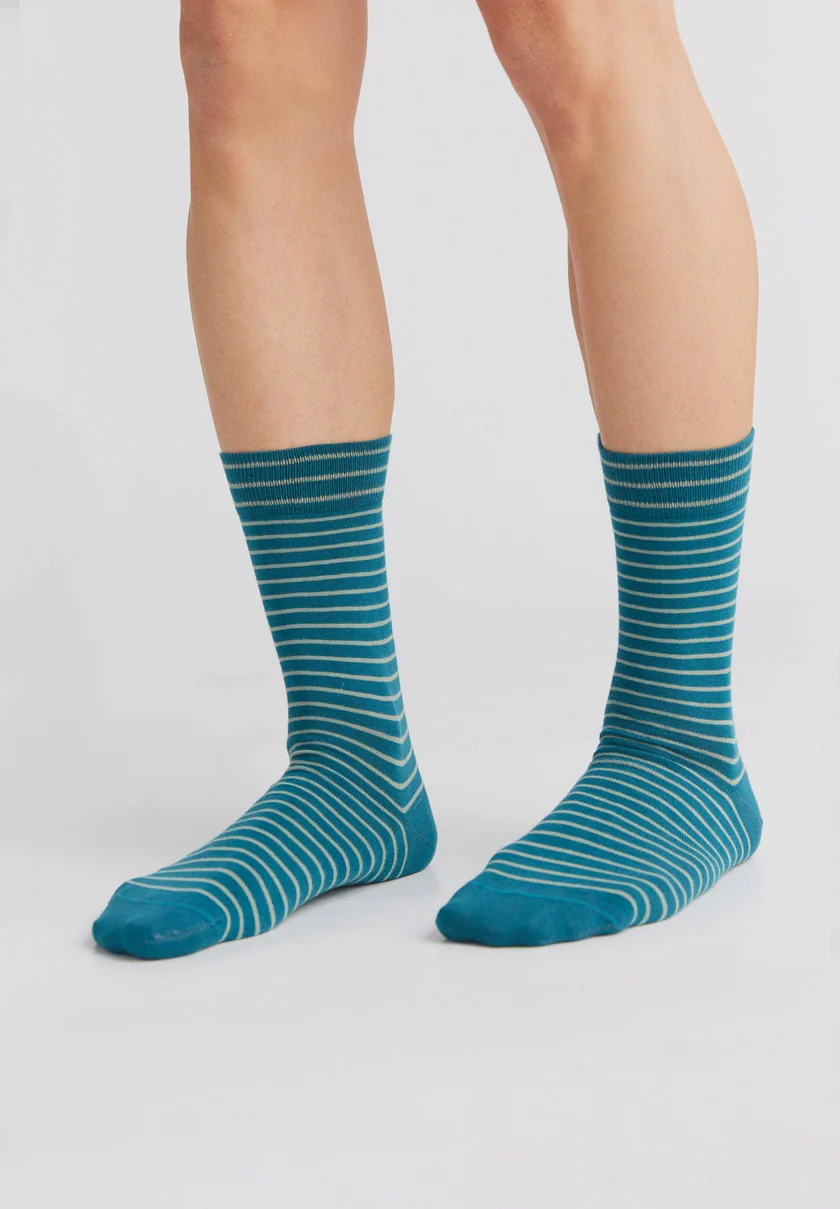
Earth Wardrobe (a Scottish brand that specialises in affordable organic clothing basics like t-shirts) offers a line of socks. Mostly made with organic cotton (a few are wool, so not vegan-friendly).
Keep socks away from pets. They smell lovely to animal friends, but could cause constipation, choking or intestinal blockage. Signs of sock ingestion are lethargy, vomiting, loss of appetite, a tender abdomen and difficulty pooping.
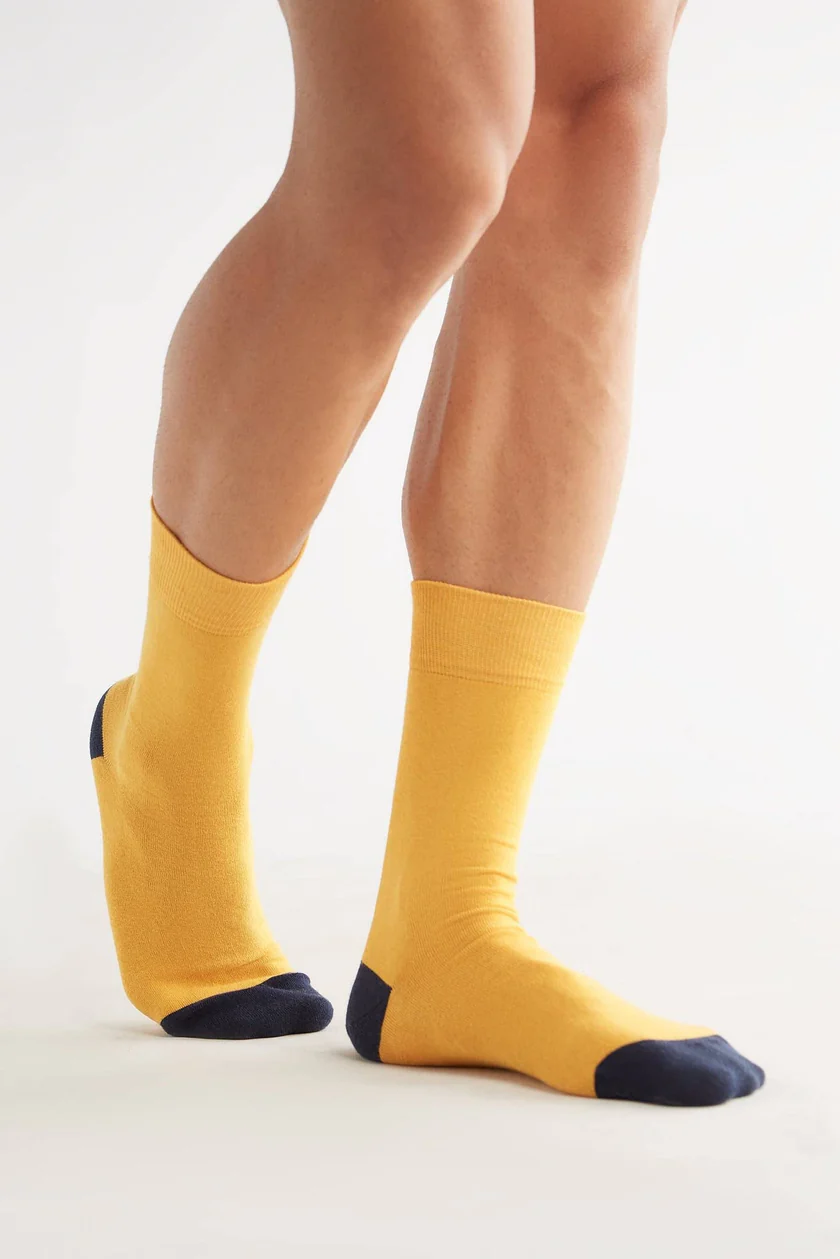
The range is extensive. There are socks for normal wear, plus trainer socks, sock liners and even socks for work boots.
A Comfy Alternative to Wearing Socks!

There are two brands offering 100% natural cotton socks (but only in a few styles). If you choose other brands, nearly all will contain a little elastane, so launder in a microfibre filter, to stop microplastics releasing from washing machines and going out to sea.
Babies should not wear socks in warmer temperatures (including in cars), to help reduce risk of SIDS (same with hats). Read more at The Lullaby Trust.
Dr Scholl’s Go Sockless are cushioning insoles, to wear inside your shoes. They are not ‘natural’ (made from synthetic terry cloth), but are replaced every six months (rather than laundered) so at least it stops microplastics leaching from machines.
Keep socks away from pets. They smell lovely to animal friends, but could cause constipation, choking or intestinal blockage. Signs of sock ingestion are lethargy, vomiting, loss of appetite, a tender abdomen and difficulty pooping.

Sold in a pack of 3, you just peel them apart and place inside shoes to absorb moisture, the cooling vents help to keep feet dry, and the thin profile is designed to not crowd toes, in shoes. Trim to size.