Fun Books to Teach Children About Nature
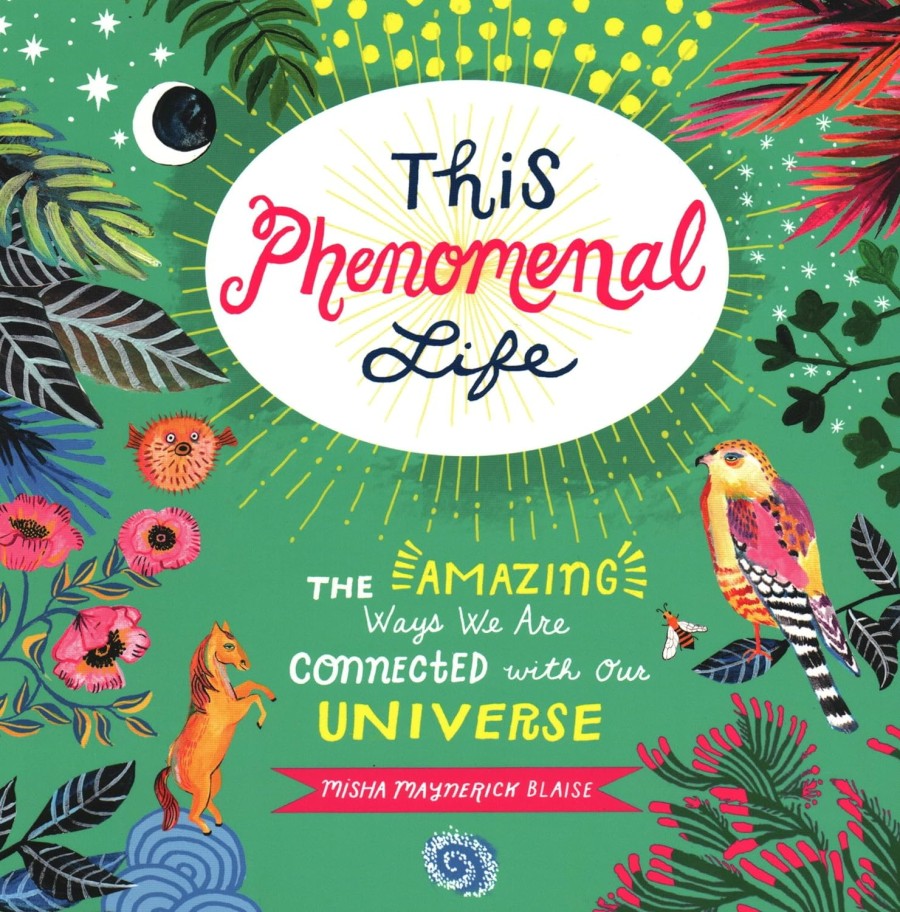
This Phenomenal Life is one of our favourite books! It’s packed with science facts on how the world works, yet colourful and entertaining and funny at the same time. This books the story of the wondrous ways that humans are at one with our surrounding world.
From the vast galaxies above to the miniature microbes within, humans are organically connected to nature.
Every single atom of our body is made of remnants of stars, and massive explosions in the galaxy. And we share the same biochemical basis of life with all living beings (from a single-celled amoeba to a giant blue whale).
In this book, you’ll learn how we are related to mushrooms, and share the way that birds communicate. Beautiful art will inspire you to look at the world in a whole new way.
I have a new favourite book in the universe. It explodes with the wonders of creation, and the beauty of being alive. Rainn Wilson
Covering everything from the Big Bang to plant neurotransmitters, this book is a sweet-spirited reminder that all humans are more alike than different, and the entire cosmos is connected. Publishers Weekly
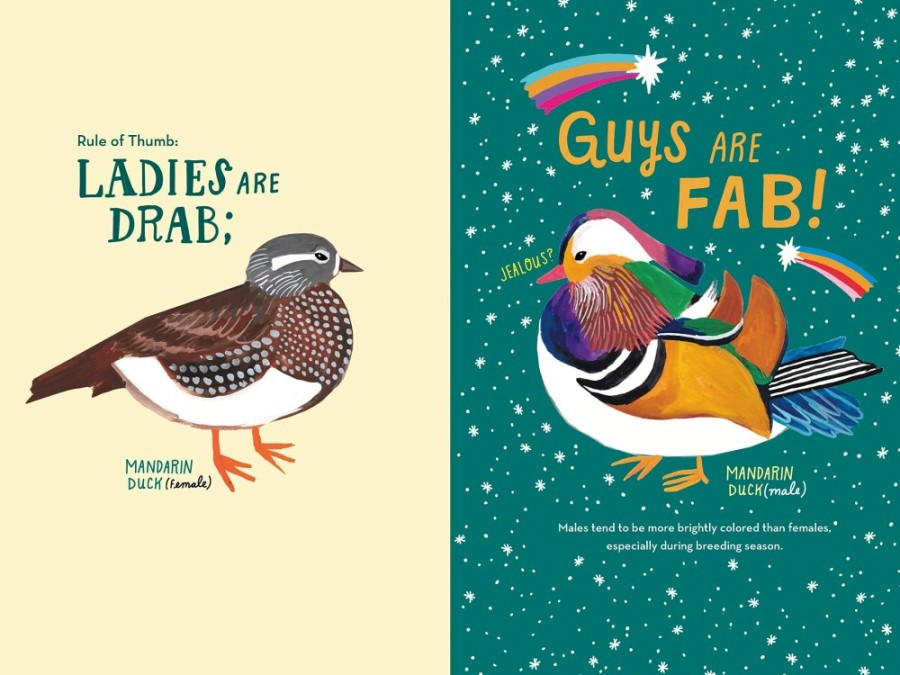

Misha Maynerick Blaise is a writer and artist, who runs a green building company with her husband in Texas, USA.
The Species That Shaped Earth’s Ecosystems

Wildlife in the Balance is a beautifully illustrated book that teaches us about 12 of the world’s keystone species, which means that their existence is paramount to life on earth.
An obvious example in England is the beaver, the world’s second-largest rodent, which although previously hunted almost to extinction for its fur in the past, is now being successfully ‘rewilded’ to help prevent floods, due to its dam-building skills.
After learning exactly what a keystone species is (and benefits to our environment and food chains), you’ll learn about various keystone species around the world, grouped by area:
- Australia (fish that shape the reefs)
- Europe (beavers and Mediterranean rabbits)
- South America (pollinators of Patagonia)
- Antarctica (krill that powers the Atlantic)
- North America – apex predators
- Asia – China’s little pika
Plus you’ll learn the importance of keystone areas like the African Savannah, and how to protect keystone species around the world.
The book also focuses on exactly what an ecosystem is. We hear the word, but what does it mean? In short, it means somewhere that supports a wide range of life, a community of living things on land or sea, that interact to support each other.
From a small pond to an Amazon rainforest. The main ecosystems on earth are:
- Deserts on dry land, which receive little rainfall
- Temperate rainforests that drop leaves in winter
- Open oceans away from coastlines
- Temperature grasslands with little trees and little rain
- Coral reefs, made up of thousands of coral
- Savannah grasslands, maintained by grazing animals
- Tropical forests (warm and humid, near the Equator
- Tundra (cold windy areas with few trees)
Sharon Wismer is a marine biologist, mother and children’s book author, who loves to share her passion for wildlife.
Currently funded by the Swiss National Science Foundation, she leads a project that focuses on impacts of mass coral bleaching on the Great Barrier Reef, and how it affects fish.
Stories from the Wild: A Celebration of Nature
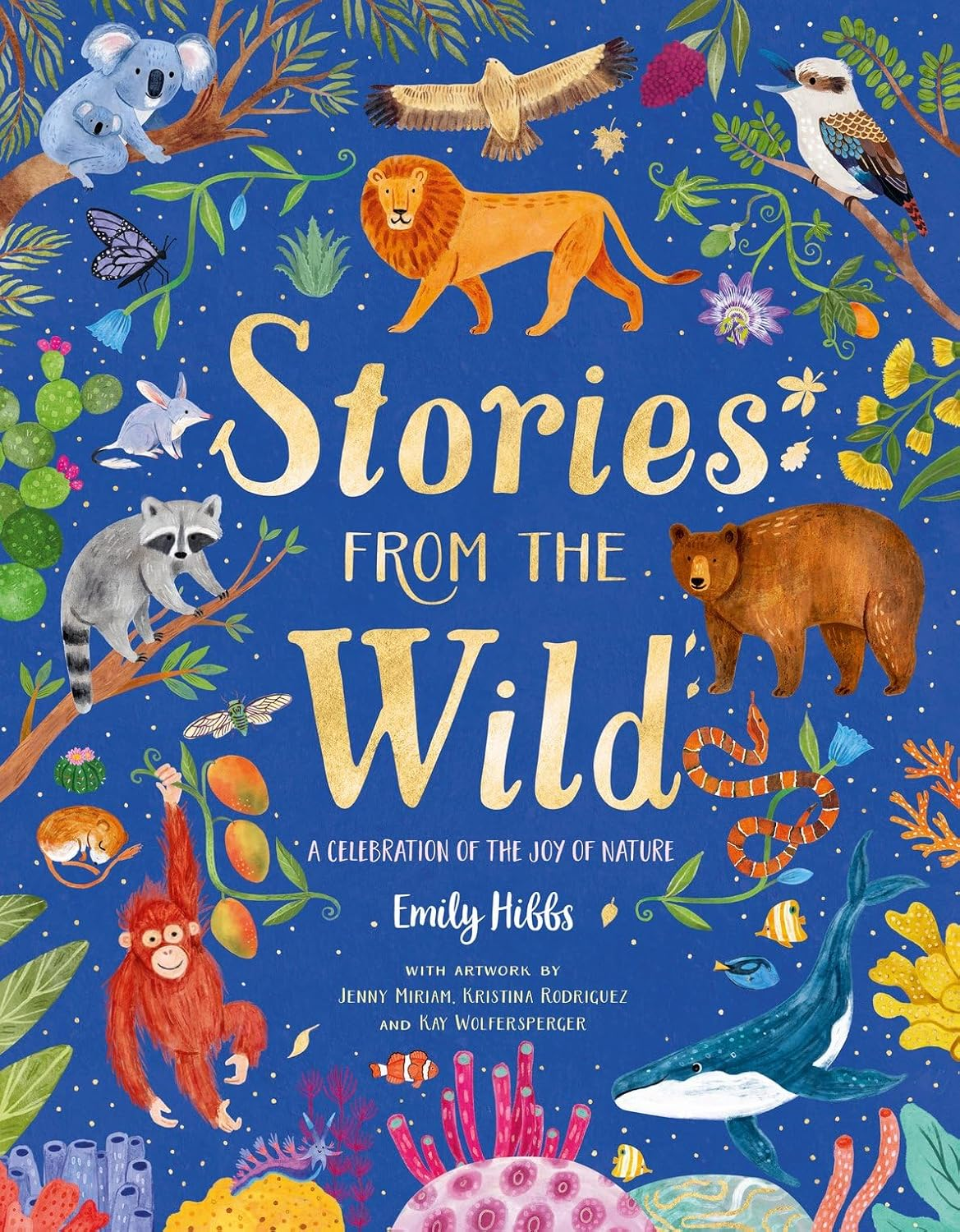
Stories from the Wild is a stunning illustrated compendium of stories, to instil in young people a love of nature and all the creatures. Get whisked away on an unforgettable journey, through the wild places of our world.
From the deepest oceans to tropical rainforests to snowy mountain peaks and mighty desert plains, discover awe-inspiring wildlife moments that are taking place, right now in different habitats across the world.
With lyrical stories, fascinating facts and gorgeous illustrations, children will:
- See colourful reefs of the Great Barrier Reef
- Meet a koala joey on his first climb, outside his mother’s pouch
- Fly high with golden eagles, above Himalayan mountains
Emily Hibbs grew up in the West Midlands, and studied English Literature with Creative Writing, before working for children’s book publishers. She now lives in the countryside near the River Thames, where she writes book on nature and the amazing creatures within it.
An Absorbing Nature Story for Children

The Green Kingdom is an enchanting story for children age 10 and over, about a summer transformed, when Caspia discovers a bundle of letters, which contain ten plant-based riddles.
Age 12, Caspia knew it was exciting to be a new place, in her case the city of New York.
Initially not thrilled by the news that her parents are taking her to Brooklyn, she soon cheers up when she meets the Brooklyn-Caspia dandelion, her natural namesake.
Then after discovering a bundle of letters (written years ago by a blind girl) in a chest of drawers, she discovers that each letter contains a ‘green riddle’, with clues leading to a different plant.
So Caspia sets out to solve each riddle. And as she does, she meets friends that she would never have imagined meeting. And to surprise, finds that you can put down roots, where you least expect.
A wonderfully fantastic yet realistic story. Castrillón’s delicate illustrations provide atmosphere, as well as highlighting various plant species. Kirkus Reviews
Cornelia Funke has been published in 53 languages (this book is translated from its original German). She lives in Tuscany (Italy).
Tammy Hartung has over 40 years experience working with plants, and her published four other books, using her botanical expertise.
A Book About Plants (by a professor of Botany!)
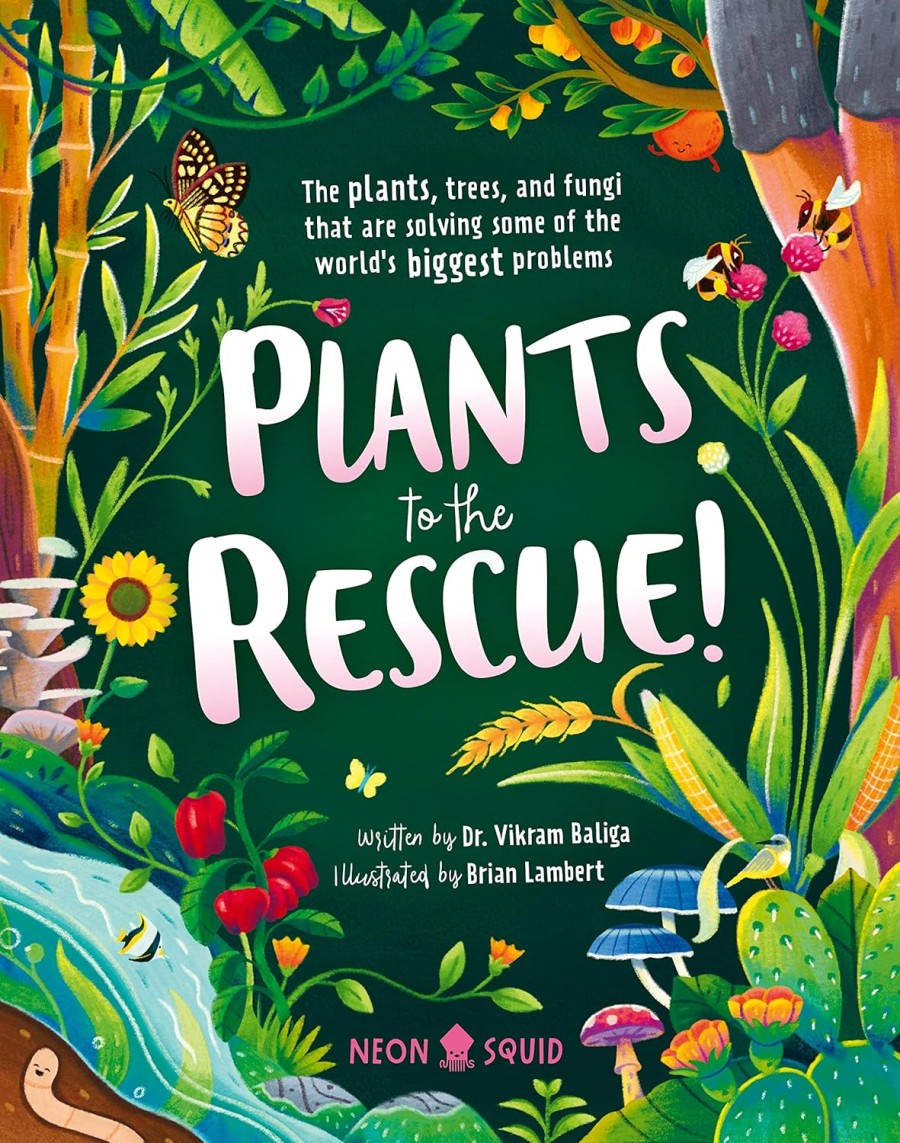
Plants to the Rescue! is a fabulous illustrated book for future botanists, looking at how plants, trees and fungi are being used to save the planet and reverse climate change.
If you live with animal friends, know that some plants, trees and fungi are unsafe. Read our post on pet-friendly gardens.
We all know that plants are pretty cool and that trees give us oxygen and food. But it turns out plants can do a whole lot more! Get ready to drop your jaw on the floor when you learn of:
- Spinach that can detect landmines and send emails
- Fig trees used to create living bridges
- Glow-in-the-dark plants that could light your home
- Prickly cactus that makes eco-friendly bags
- Fungi that likes to feed on oil spills
Dr Vikram Baliga is a horticulture lecturer in Texas (USA), and host of the podcast Planthropology, where he interviews amazing people from the world of botany.
The illustrations are by artist Brian Lambert, who lives in northwest USA.