A Guide to the County of Gloucestershire, Naturally
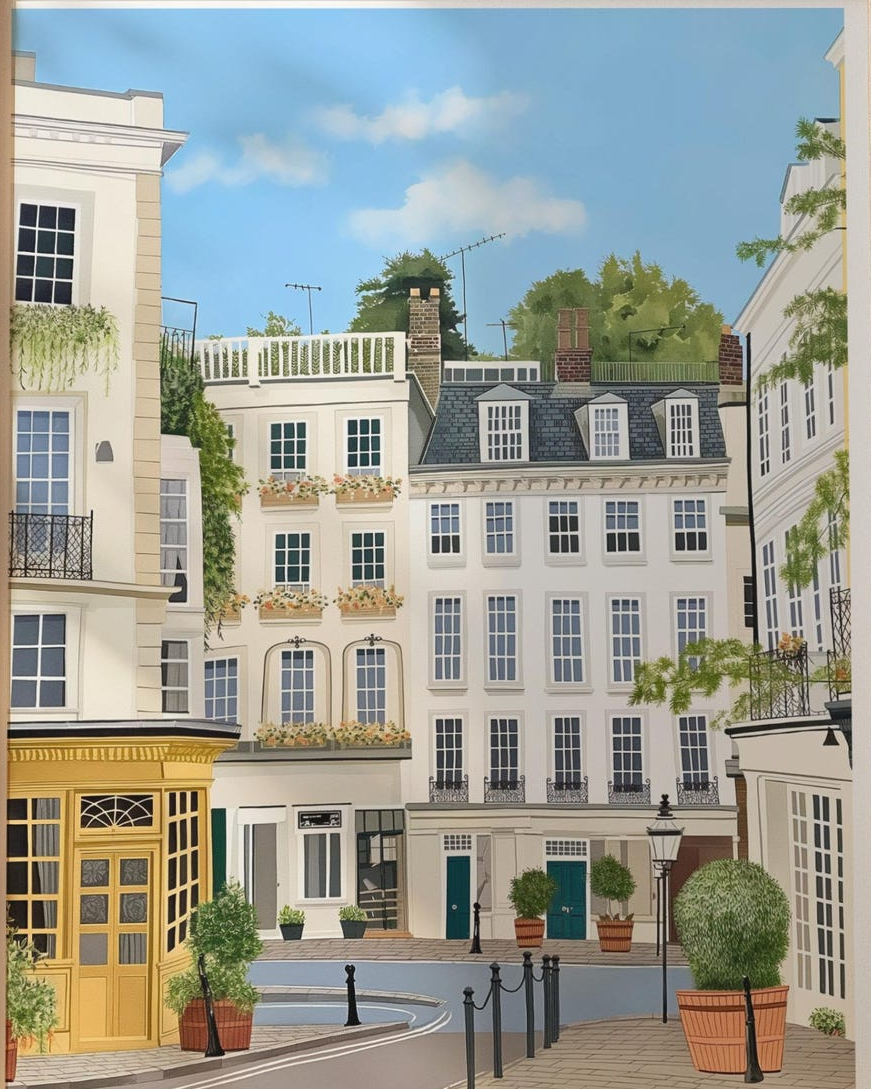
Cheltenham is an affluent town, known for its Regency architecture and historic spa roots, blending elegance with a warm welcome. The buildings are often painted in soft shades, and decked with wrought iron balconies. This is town architecture at its best.
If planning floral cities, plant pet-safe public gardens.
Many of the buildings date back over 200 years, with the Montpellier and Pittville areas showing off the finest examples. The stunning Neptune Fountain on the Promenade adds a touch of classic style.
Pittville Park stands out with its boating lake, adventure playground, and sprawling lawns. The Pump Room, a beautiful historic building, sits on the edge of the park.
Historic Gloucester (fine medieval buildings)
Gloucester is a city stretching back over 1000 years. It’s not as pretty as Cheltenham, but its cathedral is one of England’s finest medieval buildings, with stunning stained glass, a 15th-century tower, and fan-vaulted cloisters. The city’s historic docks hold old warehouses that are now museums, shops or cafés by the water.
Issues with Disrespectful ‘Dark Tourism’
Alas in the modern age, this has become a thing: people visiting places of death and tragedy (like Grenfell Tower and in this case, 25 Cromwell Street) to take selfies outside the house where Fred and Rose West murdered so many innocent women, including some of their own children.
The media has a part to play here too, not sensationalising such tragedies. Media is a powerful form. If you have never visited Gloucester, what is the first thing you think of? Likely this pair of serial killers.
In fact, Gloucester is a historic riverside city of ancient buildings, wonderful people and beautiful surrounding Cotswolds countryside. More focus should be on this.
Birth of the Sunday School Movement
In the late 1700s, life in Gloucester looked very different. Most working-class children spent their days in factories or workshops, with little or no chance to learn to read or write. Robert Raikes (a newspaper owner whose granddaughter married the composer Edward Elgar) noticed the struggles of young people growing up in poverty.
Wanting to help, he started what seemed at first like a small idea: teach children to read and write on Sundays, their one day off work.
Although there had been a few Sunday schools before (in High Wycombe and Nottingham), this movement really began to take off in Gloucester. Robert opened his first Sunday school in 1780, close to the city’s centre.
Forest of Dean: One of England’s Oldest Woodlands
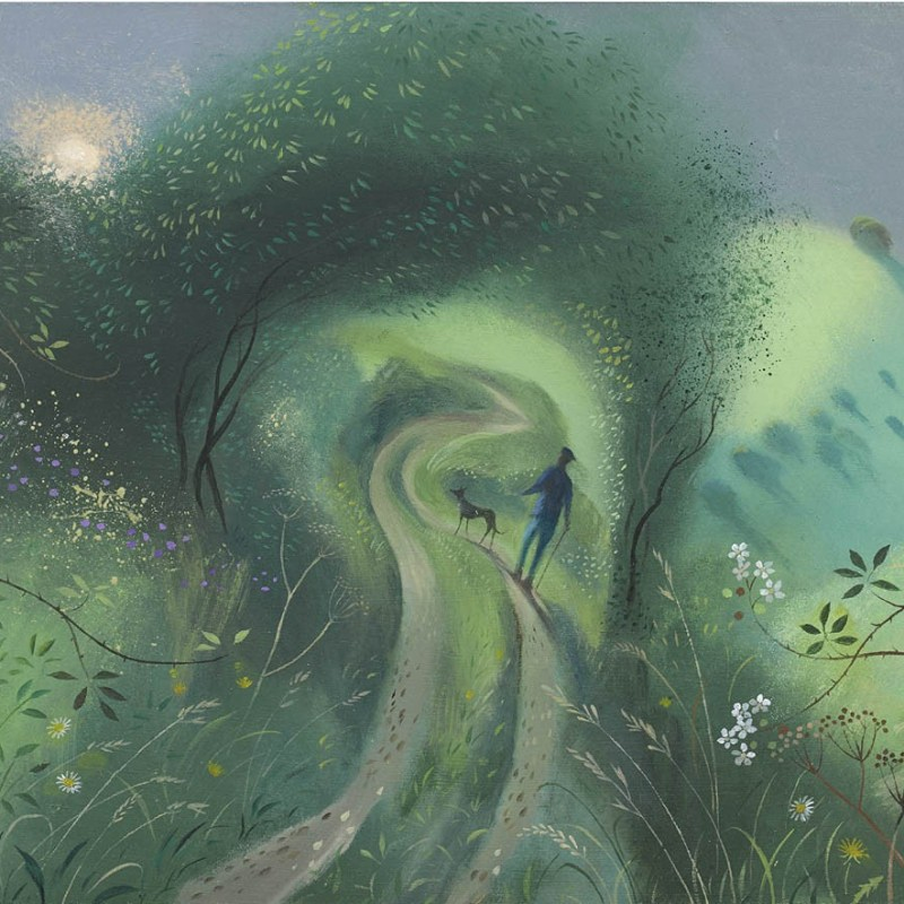
The Forest of Dean sits on the border of Gloucestershire and Monmouthshire and stretches across more than 42 square miles.
This ancient woodland is packed with ancient trees (oak, beech and pine) with birds calling above, shy fallow deer grazing at the edge, and woodpeckers, foxes and smaller creatures all making this place home.
Far from bright city lights, the Forest of Dean offers dark skies perfect for stargazing. Listen for owls, spot bats darting overhead, and feel the calm of a place where time seems to slow down.
When out walking, always follow the Countryside Code, to keep all creatures safe.
The Cotswolds: England’s Largest National Landscape
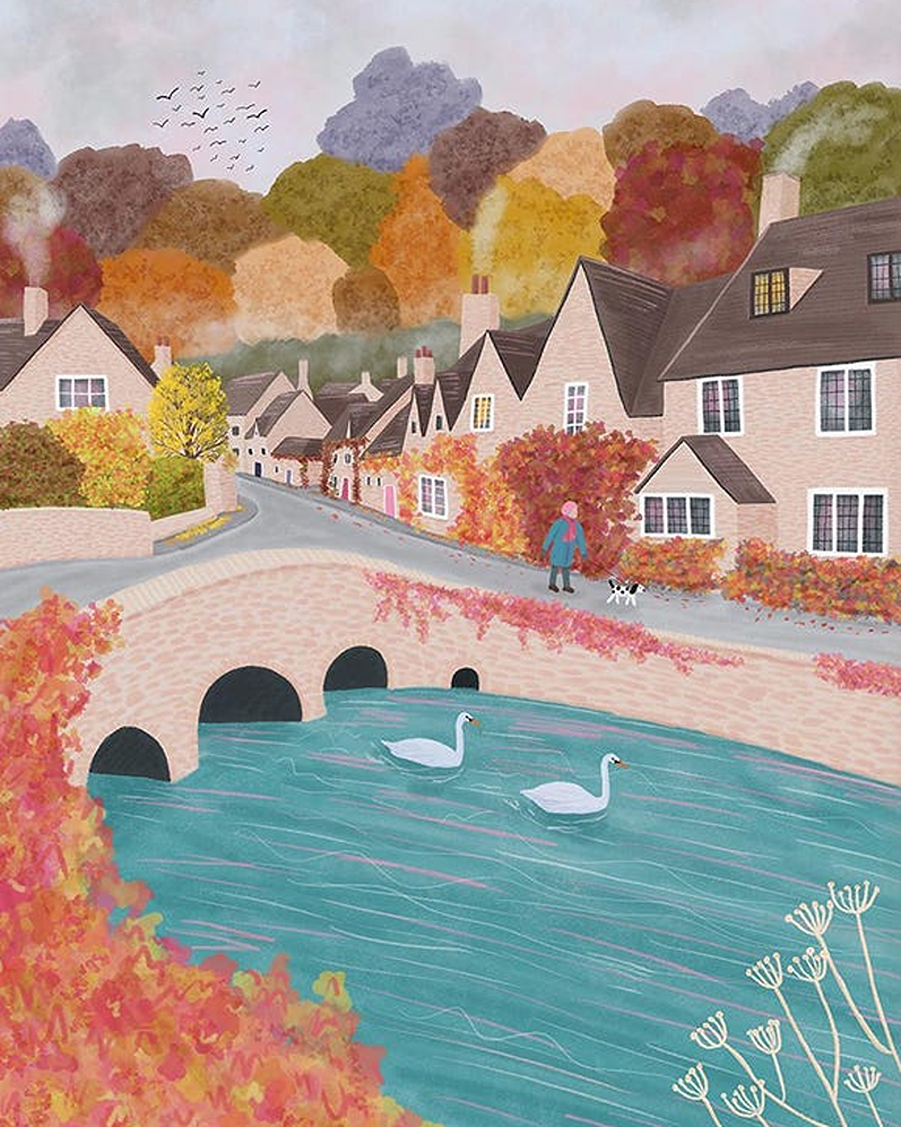
The Cotswolds stretch across much of Gloucestershire, rolling hills dotted with villages where time stand still. Stow-on-the-Wold, Bourton-on-the-Water, and Bibury—each a postcard scene. Castle Combe in Wiltshire is one of England’s prettiest villages.
When out walking, always follow the Countryside Code, to keep all creatures safe.
Covering 800 square miles, the name is a blend of Cot (sheep enclosure – ie. dry stone walls) and Wold (a hill). So the name literally means ‘sheep enclosure on a hill’.
England’s largest National Landscape also covers parts of Oxfordshire, Warwickshire, Wiltshire and Worcestershire – which has Broadway Tower, from where you can view for 60 miles across 16 counties!
The Cotswold Way National Trail stretches over 100 miles, giving stunning views of the countryside from Chipping Campden to Bath. Walkers love gentle strolls between villages, while those after a challenge can try the hillier parts above Broadway Tower.

If you love a proper English village, Castle Combe is about as good as it gets. Hidden in Wiltshire and hugged by the Cotswolds, walk along the main street to see honey-coloured cottages, all built from Cotswold stone. These houses date back centuries, with thick stone walls and steep roofs. Window boxes spill with flowers.
Cotswolds Issues with Over-Tourism
Although tourism is good to bring in local income and provide jobs, things are getting out of hand in many destinations (the Lake District, the city of Bath and Stratford-upon-Avon – due to the Shakespeare connection).
The Cotswolds village of Bourton-on-the-Water now has residents concerned over ‘TikTok visitors’ who descend to take selfies with beautiful backdrops. But leave litter behind, having no appreciation of local nature and heritage.
The same is happening abroad. Many popular tourist cities (Venice, Rome, Paris) are all taking action, fed up of tourists descending on their homes to buy junk. Then taking tours operated by outside companies, so not even supporting local jobs.
In Barcelona, locals have taken to the streets to ‘tell tourists to go home’. This beautiful coastal city now literally can have 35,000 people descend from cruise ships all at once onto one main street. To purchase tacky souvenirs, then off they go to their next destination.