A Fun Illustrated Guide to Animal Classification
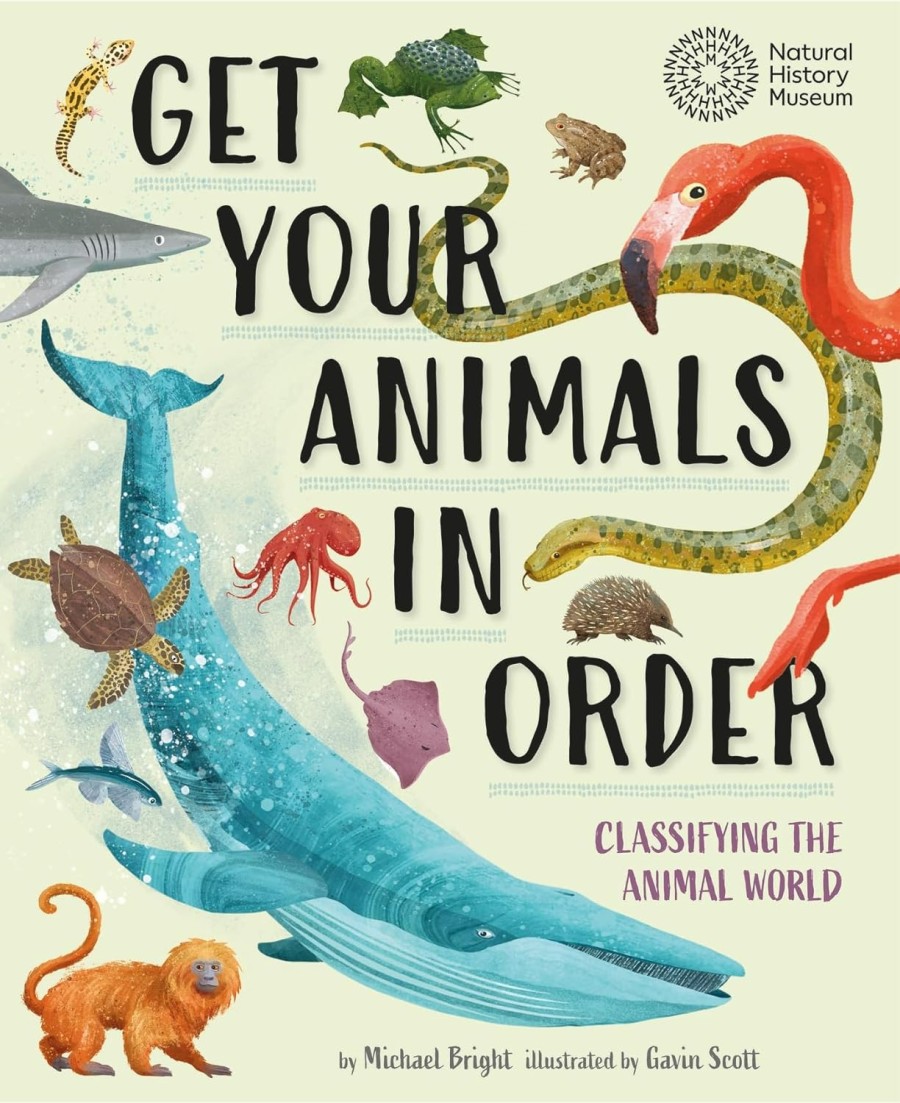
Get Your Animals In Order shows the similarities, differences and connections between animal groups, and how scientists are helping to conserve animals and their habitats, from whales to worms, and from snakes to stinkbugs.
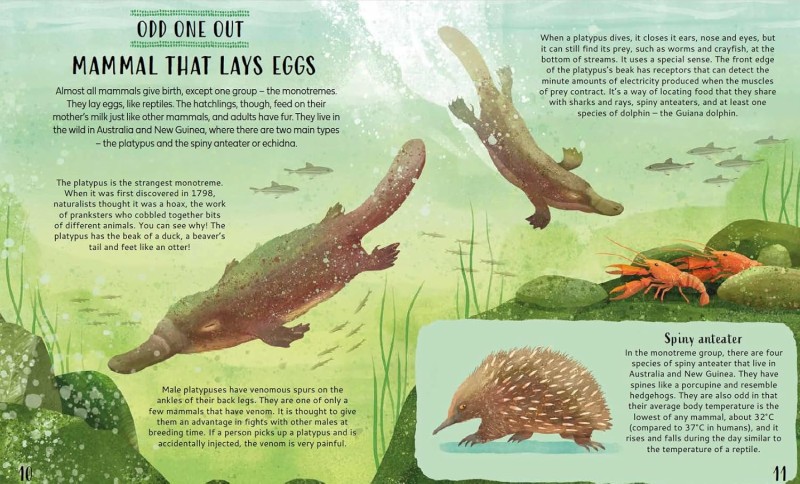
There are just two main groups of animals: vertebrates with backbones (animals, fish) and invertebrates without backbones (crustaceans, insects and spiders). Vertebrates are divided into five species:
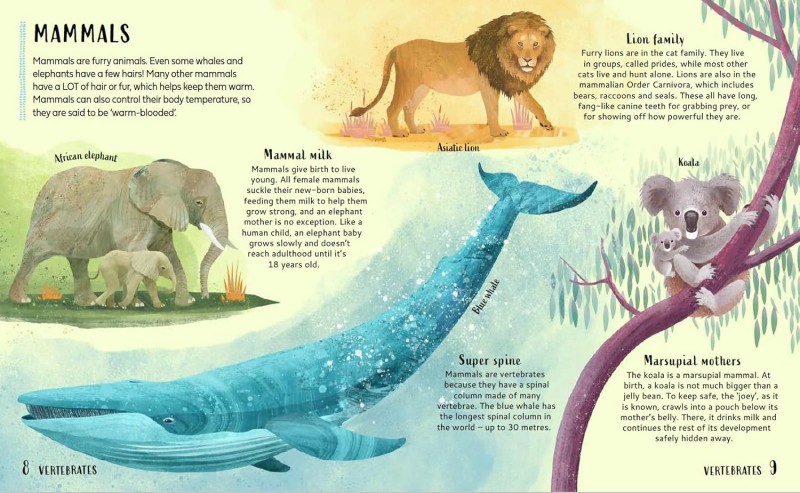
- Mammals (including us)
- Birds
- Amphibians
- Reptiles
- Fish
However, nearly all the world’s creatures are invertebrates including insects (this includes bees, butterflies and beetles), earthworms, spiders, slugs, snails and spiders.
Scientists also classify plants into two types: ones that make seeds (trees and flowering plants) and those that don’t (like moss or fern). Then we have bacteria and fungi (which includes mushrooms and viruses).
About the Author
Michael Bright has worked as an executive producer with BBC Natural History Unit in Bristol and is a member of the Royal Society of Biology, who has worked with Sir David Attenborough.
Illustrator Gavin Scott spent much of his childhood drawing and painting animals and birds, and studied for a BA Natural History Illustration at Bournemouth Arts University. He loves rock-climbing in Dorset, and riding his old Triumph motorbike.