Good Reasons Why Pigeons Deserve Love!
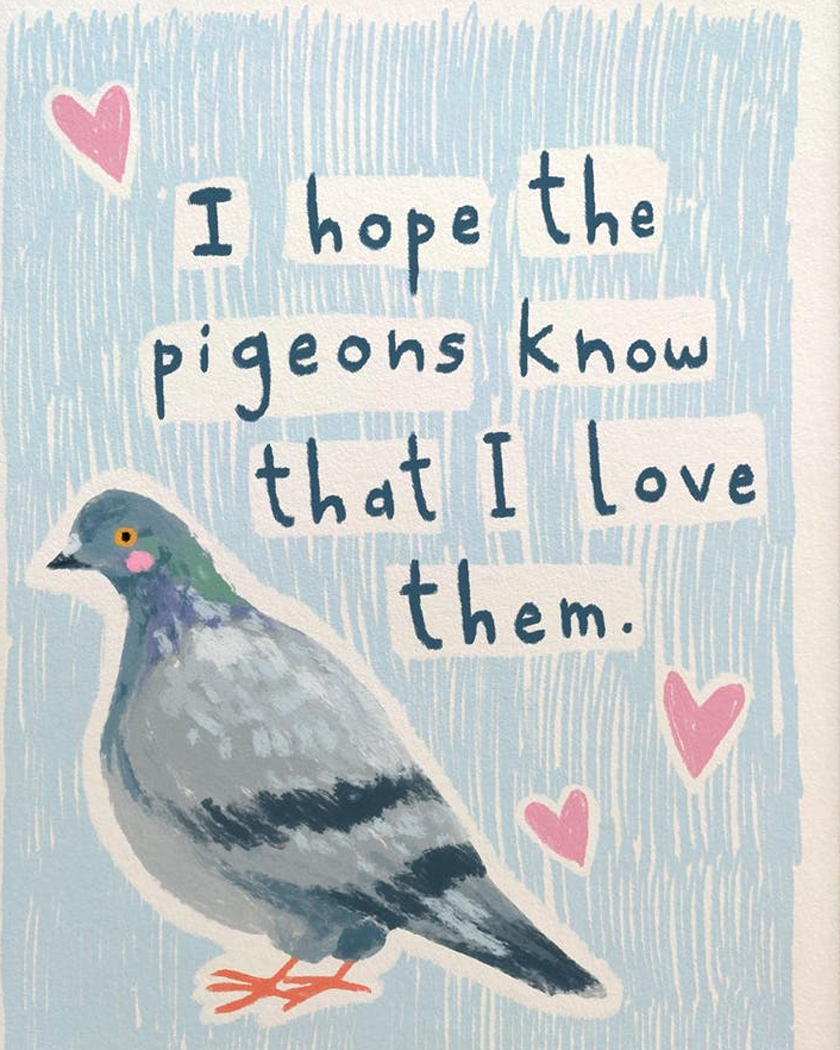
Pigeons are not ‘rats with wings’, they are beautiful feral doves, and only found on pavements due to lack of natural habitats, and people dropping food on the street (they really should be living in woods and eating berries and other natural foods: fruits, berries, plants, seeds, insects and spiders.
They also like grains (corn, peas, millet, sunflower seeds and wheat), and occasionally eat earthworms and snails.
Don’t feed stale/mouldy/crusty bread or crackers to pigeons (or any birds) as it can choke, nor salty foods or fat (from buttered sandwiches) as it can smear on feathers, affecting waterproofing and insulation.
It’s best to let birds find natural food, to avoid them relying on you if you moved, became ill or died (gradually reduce feeding in summer, when there is plenty of food around).
Read our post on safe havens for garden birds and how to stop birds flying into windows.
Pigeons are a protected species under the Wildlife and Countryside Act. Report concerns (including disturbing eggs, nests or chicks) to Crimestoppers Wildlife Crime Unit (anonymous).
One of nature’s most intelligent birds, pigeons live in flocks and mate for life (interestingly, fathers provide ‘breast milk’, so baby pigeons are fed by both parents in the nest. You never see ‘baby pigeons’, because once they leave the nest, they look like adults.

England has a few species of pigeons:
- Woodpigeons are known for their cooing call, found in parks, gardens, farms and woodland. They have white necks and pink breast feathers, some migrate from Europe.
- Rock Doves are found near cliffs and coastal areas. Their ancestors feral pigeons are the ones you find in urban areas, and smaller than wood pigeons. Rarer stock doves look similar, but don’t have white necks or wing patches.
- Collared Doves are often seen in gardens and parks, also with a pleasant ‘cooing’ call. They have ‘black collar’ markings on their necks.
- Turtle Doves are rare (due to hunting them on migration from Africa), pretty small pigeons with orange/black feathers). The ban on hunting them has been lifted by the EU, which could send these beautiful birds extinct.
- White doves are bred for ‘release’ from lofts at weddings etc. You don’t need to breed and release birds to celebrate events. A few years back, the Pope released two doves from the Vatican, which were killed by other birds in seconds, and in Seoul, released doves flew into the Olympic flame.
How to Humanely Deter Pigeons

Pigeons only breed according to how much food is around. So avoiding excessive feeding and dropping litter will naturally reduce numbers, without lethal control. This is why pigeon culls don’t work (it means more food for remaining pigeons, who then breed more).
If we did not leave food litter around, pigeons would return to breeding at natural levels, and likely return to living in the woods.
In Switzerland, the government culled 100,000 pigeons over 24 years, and it had no effect. So instead, people were educated on how pigeons breed and eat. After people no longer fed them in parks, populations halved. Sheffield City Council now sends leaflets to residents, to do the same.
Pigeons do not carry dangerous disease, this is a myth perpetuated by pest control companies. Even the UK’s Chief Veterinary Officer told the House of Lords that they don’t pose a risk to human health.
The whole ‘rats with wings’ thing is just emotive nonsense. There is no evidence that pigeons spread disease. Mike Everett, RSPB
There is probably a greater risk to human health from eating intensively farmed supermarket chicken and eggs, than having contact with contact with pigeons. PiCAS International
In 50 professional work as a veterinary surgeon, I cannot recall one case of a zoonosis in a human that was related to pigeons. David Taylor (vet)
Hawks used to ‘deter’ can often tear birds to pieces, in front of children and other people.
How to Deter Pigeons on Roofs
Pigeons and doves often nest on roofs, due to lack of woodland habitats (where you often hear wood pigeons flapping about in trees). It’s illegal to disturb them, so avoid building work, tree-feeling or hedge-cutting near nets, which can lead to heavy fines and a prison sentence.
You can only remove unhatched eggs from an unused nest from 1 September to 31 January (and must not keep them). To check an unhatched egg is not alive, shine a bright light through it in the dark (to ensure there are no veins or movements).
Anti-perching spikes (which just make it uncomfortable to land) are good to deter, but must be quality brands that are installed correctly, and regularly inspected. Defender Bird Spikes are made in Devon, and sold worldwide. The site has installation details and recommends its own silicone adhesive for firm placement and years of use (conventional glue is not safe or effective).
The ends are blunted, so as not to injure birds (there are also seagull spikes for longer legs, and smaller spikes for smaller birds). Regular clearing of moss and other plants from roofs, can also deter nesting.
Bird netting and mesh is not good, as it can trap birds and other wildlife. Most netting on sale has holes way larger than recommended by wildlife experts.
Pigeons like all wildlife, suffer from littered food and other items. Common hazards include:
- Plastic bags and can holders (cut loops before recycling)
- Disposable plastic face masks (snip strips before binning)
- Balloons (avoid or snip the knot with scissors, deflate & bin).
- Sky lanterns (avoid use)
- Cans (remove lids or pop ring-pulls back over holes before recycling)
- Elastic bands (cut open before binning)
- Anglers can use Monomaster to store fishing gear, until you find a fishing line recycling station.
- Cigarette waste (use a personal ashtray). All shops that sell vapes have to by law take old ones back for recycling (1.3 million disposables are binned daily).
How to Help London’s Feral Pigeons
Trafalgar Square was also home to thousands of feral pigeons, until people were banned from feeding them. Although it’s good to let wildlife find their own food, sudden stops could cause dependent birds to starve.
So councils should have worked with pigeon experts, rather than send in haws that sometimes ripe birds apart, in front of terrified children.
London Pigeon Rescue is a volunteer organisation that people can contact, if they find pigeons with limps, missing toes or mangled feet, due to human hair, strands of cotton or materials getting caught and wrapped around their feet, which cuts off circulation.
Londoners (and visitors) can help by picking up and binning clumps of hair, bits of string or other threads. If you contact them, include the location and time, and photos/videos of the pigeon and its feet.
Pigeon Recovery has info on how to help rescue injured pigeons (set up an account at easyfundraising then it earns funds from things you buy, at no cost to you as the company donates a portion of sales).
Finding Racing Pigeons in Gardens
If you see pigeons in gardens or parks with ringed legs, these are racing pigeons. They are fairly tame, so cover with a towel and gently lift the wing to find the ID number and phone number, to know how to contact.
Most racing pigeons are simply resting, after travelling long distances. Organisations suggest feeding water in an empty margarine pot (or deep bowl) and crushed cornflakes. After 24 hours, rested pigeons should fly home. If not, report stray racing pigeons (also report to National Pigeon Association).
How to Remove Pigeon Poop Off Cars!
Avoid parking under trees! Bird poop on car paint can burn and scratch paint (due to containing seeds or stones), so remove immediately. Mix 4 tablespoons of baking soda in a litre of warm water, shake to mix, then spray from a bottle, leave to soak for 10 minutes, and rinse off with a wet cloth or hose. One survey found that birds hardly ever poop on green cars?
How to Help Injured or Orphaned Pigeons
- If you accidentally disturb a half-built nest, put nesting material in a basket or plant pot, and securely attach it to the nearest tree. Some birds will rebuild, or if not stable, build another one.
- Return baby birds (with no feathers) to the nest. Fledglings (baby birds with feathers) are almost ready to fly, and will have parents nearby, still feeding them. So observe to see if they take flight, or if in danger, place in a sheltered pot nearby.
- Help Wildlife has a post on how to help baby pigeons (knowing which ones need help and don’t). If birds are on the ground with no nest nearby or dead parents (or if bitten by cats), take to a vet or local wildlife rescue.
- Report people using netting to deter birds at wildlife@rspca.org.uk (or via online chat) and they will contact owners to educate. Report dead wildlife to Garden Wildlife Health Project.
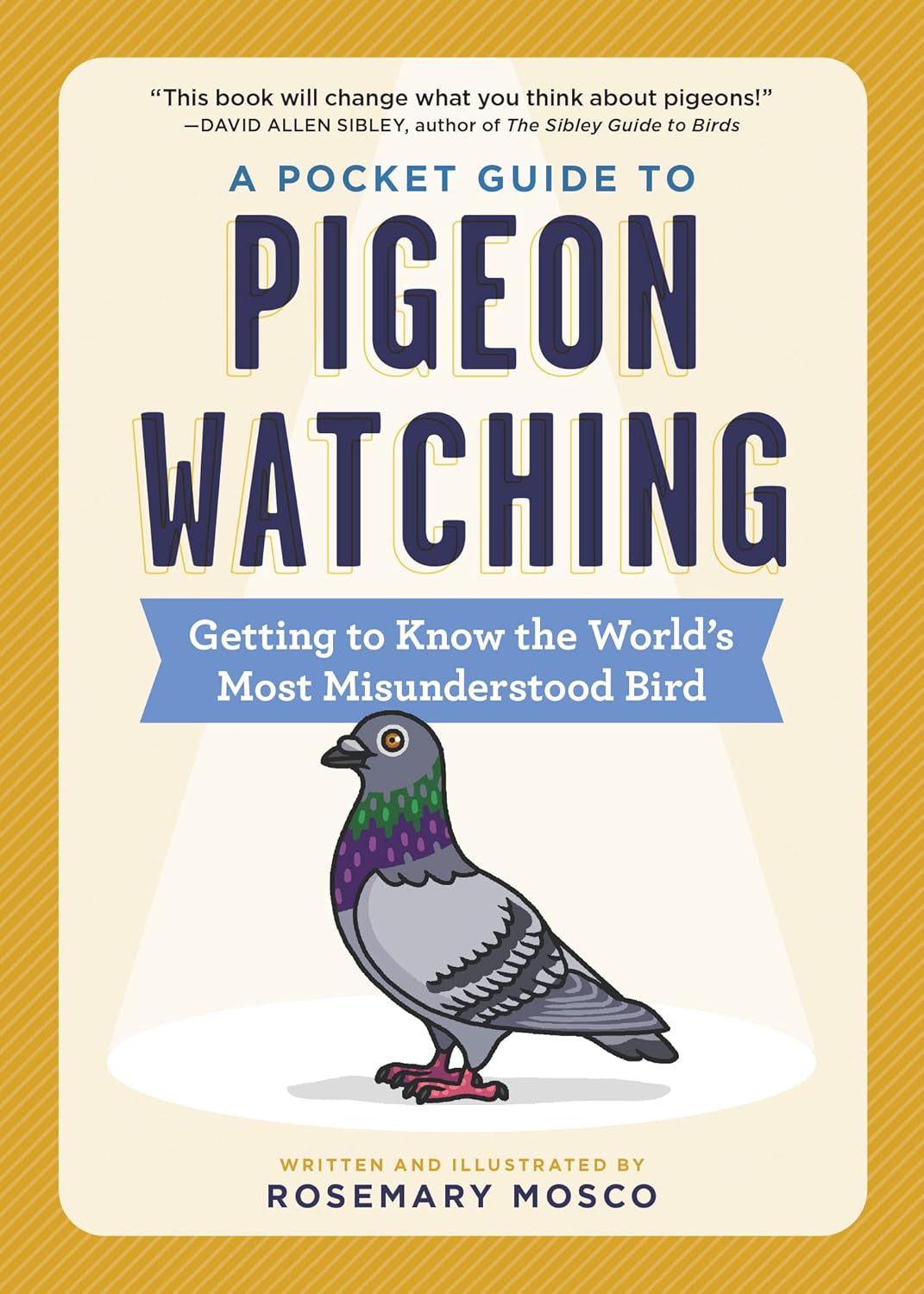
A New Zealand species of pigeon likes to eat certain fruits that sometimes ferment and turn to alcohol. It can get so intoxicated that it passes out and falls from its perch. Wildlife care centres often get inundated with inebriated birds, brought in by concerned citizens. The Pocket Guide to Pigeon-Watching.