An Illustrated Language and History of Herbs

The Complete Language of Herbs is a beautifully illustrated compendium of over 500 herbs and spices, in a pocket edition for easy references. Along with visual depiction, each entry includes scientific and common names, historic meanings and powers, even some herb poetry!
In the Victorian era, floriographies (dictionaries of flower meanings) were an amusing pastime and a way to subtly communicate unspoken emotions.
S Theresa Dietz has scoured historic sources to find the powers of hundreds of common and forgotten herbs and spices from around the world. The book includes 2 indexes, and is a must-have for gardeners, chefs and foodies.
Many herbs (borage, parsley, Pennyroyal mint etc) are unsafe near animals.
Before growing your own herbs, read our post on pet-friendly gardens. Also never face indoor plants to outdoor gardens, to help stop birds flying into windows).
Tips for Organic Herb Gardens
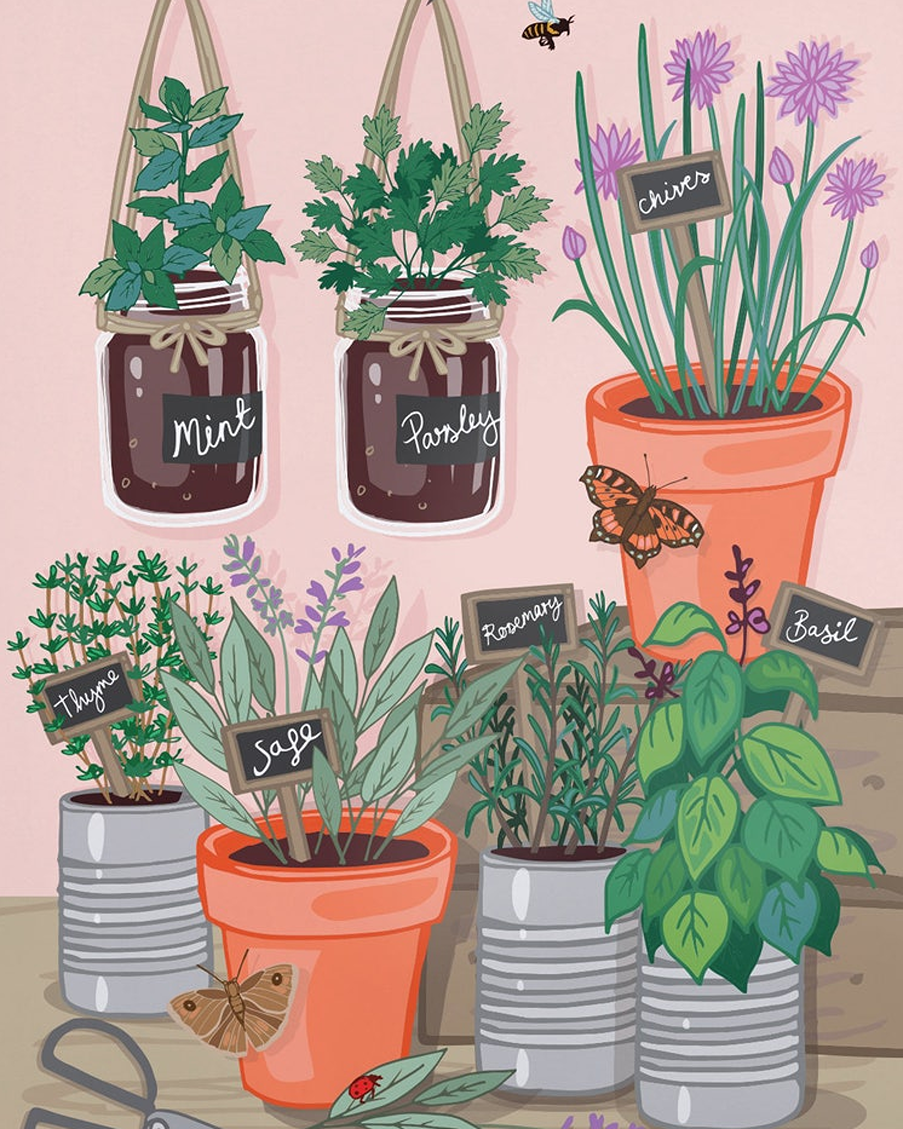
Most herbs need 6 to 8 hours of sun a day, although parsley prefers a little shade. Good soil is also important. But avoid standing water. If you get pools of water after rain, raise the beds or improve your soul.
Good starter herbs are basil, parsley and mint. Basil needs replanting each year, but perennials like thyme survive the next year. Some herbs are good with other plants (basil loves tomatoes)
Regular pruning encourages more robust herbs, so pinch the tips off regularly. Aphids love herbs, so encourage ladybirds to your garden (they eat them).