Where are England’s Most Haunted Places?
Do you believe in spooks? If you do, there are plenty of places in England that claim to be haunted.
England’s castles and forts are more than just stone and history. Many of them hold chilling secrets that date back centuries. Here a few places where the past never seems to rest:
Chillingham Castle, Northumberland
This sits in the wilds of Northumberland, and has many stories including the Lady in White, a ghost who is said to drift through the corridors, who died waiting for her lost love. Visitors report icy chills and sudden headaches in the ancient dungeons.
Berry Pomeroy Castle, Devon
Tucked in the countryside, this fairy tale castle has a Blue Lady ghost, the daughter of one of the Pomerey lords, who was trapped and left to suffer. Cold spots are reported near the crumbling walls, even on hot afternoons.
Pendle Hill, Lancashire
This is a well-known site, due to the Pendle Witch trials in 1612. Walkers say they have spotted shadowy figures through the trees and on the open moors.
The Pilchard Inn, Burgh Island
This inn on a tiny Devon island (where Agatha Christie used to write) has been drawing visitors for over 700 years. The local ghost Tom Crocker is often spotted at dusk or in stormy weather. Some say they hear heavy footsteps and the faint scent of pipe smoke.
Ancient Ram Inn, Gloucestershire
This is one of the most haunted homes in England, and dates back to 1145, when it was a priest’s house and later a hospice. It’s said that a family was murdered here, and visitors report shadowy shapes in dark hallways, with slamming doors and icy cold rooms.
The Old Bell (a Norwich pub)
Dating back to the 13th century, this pub is built over an even older cellar, and the former landlord has often been seen wandering below at closing time, rattling keys in his hand. Others hear clinking glasses and drinks nudged across tables. Friendly ghosts apparently!
The Most Haunted Island on Earth?

Isle of Wight residents claim to live alongside around 160,000 ghosts of various sorts, there are even walking tours.
The old Royal National Hospital (where patients with TB were treated) was demolished in 1969, and looked over cliffs above Ventnor, and is said to have strong ley lines beneath.
People report figures in nurse uniforms moving along empty corridors, and soft footsteps on the old tiles. Others say they see phantom nurses, caring for soldiers they never wanted to abandon.
This post (in teeny tiny writing almost too small to read) gives a haunting view of patient records. Louis Etienne Lafor (just 20 years old) makes for sad reading:
04.11.1869
Diagnosis: Consumption both lungs for 7 months. Cavity right lung 3rd stage.
Prognosis: Rather unfavourable. Benefit hardly likely to be permanent.
08.11 Confection of Rose (rosehip syrup), fire in room if required.
22.11 Treatment tonic: iron and quinine, a dessert spoon occasionally.
25.11 Continue treatment.
28.11 Died at 02.45am
Whitby Abbey, North Yorkshire
Whitby Abbey sits over the North Sesa, and one ghost is a sea captain who lost everything in a shipwreck. He returned to look for his lost crew and a rescue that never came. He is said to climb the 199 steps, his long coat flapping in the wind.
Hastings – The Sea Captain’s Ghost
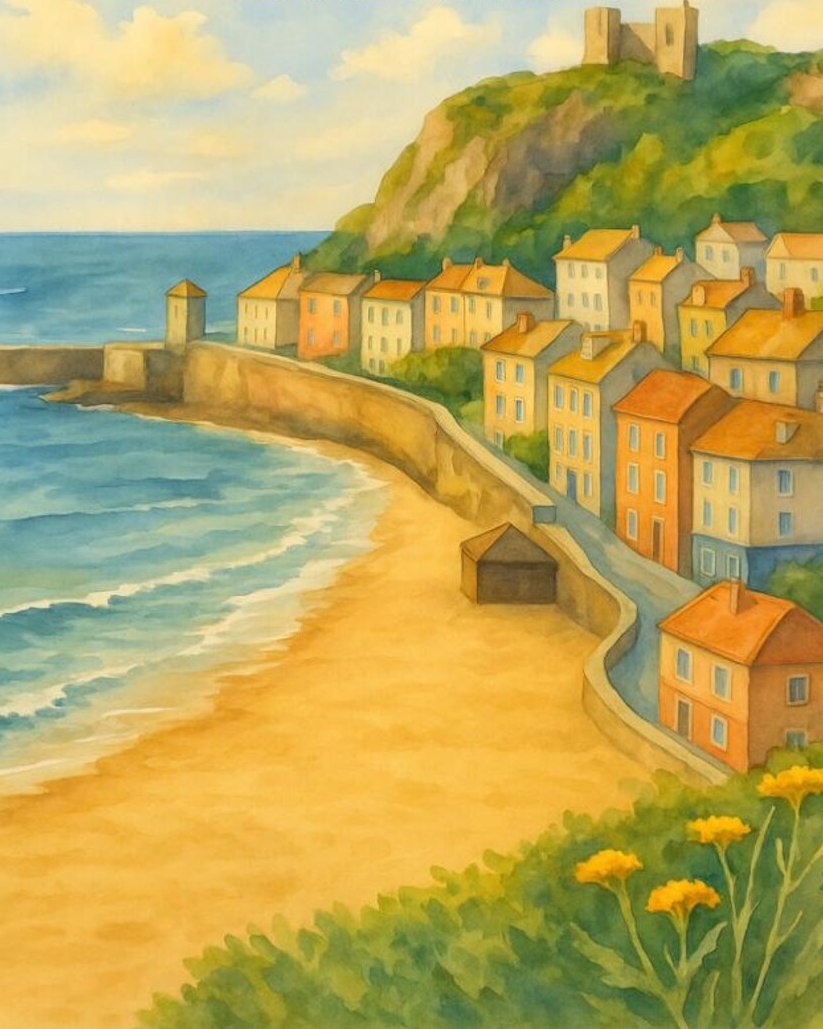
The old harbour of Hastings has a smuggling history, and there is also talk of a drowned sea captain who roams the harbour, often spotted on foggy nights near the shingle beach. Some say he is looking for his lost ship, others that he guards the harbour from storms.
Pluckley, Kent: England’s Most Haunted Village
Pluckley often earns the title of England’s most haunted village. With over a dozen reported ghosts, the best-known spirits are a highwayman (stabbed during a failed robbery) and a white lady who wanders the churchyard, sometimes gliding through locked church doors.
Blickling Hall, Norfolk
This stately home with a Tudor past apparently has the ghost of Anne Boleyn, who was born here and is said to appear in the gardens each year, on the anniversary of her death. Dressed in white, she often holds her head under her arm?
What’s the Science Behind Haunted Houses?
Experts say that ‘ghosts’ are usually simply souls that have not moved on, hence why so many are those that have died suddenly (murder, hanging etc). Perhaps ask your local priest to perform a service, to send their souls to happier places!
Sceptics say that ghosts are hallucinations from people in sleep paralysis, and one civil engineer says there’s a strong link between mould and ‘haunted houses’, which could cause shortness of breath and inflammation of the optic nerve, giving rise to things that ‘float’ in front of people’s eyes.
One vicar says it’s rare to be possessed by something demonic (he deals with around four cases a year). He says though that whatever your faith, it’s best to avoid ouija bourds and seances, along with psychic evenings. He says there are bad spirits – but you can only really ‘catch them’, if you invite them in