Simple Ideas to Massively Reduce Food Waste

Too Good to Go is a worldwide app that helps to stop good food, from going to waste. This organisation that started out on a small social mission, is now one of the world’s biggest sharers of surplus food.
You can enjoy good food for half the price, and even enjoy ‘surprise bags’ from local shops, restaurant and hotels (that help stop food being thrown away, and give them extra profits too).
Don’t give stale, crusty or mouldy bread to garden birds or wildfowl, as it could choke. Also fat on buttered bread smears on feathers, affecting waterproofing and insulation.
Read up on food safety for people and pets. Bin allium scraps (onion, leeks, garlic, shallots, chives) and tomato/citrus/rhubarb scraps (acids may harm compost creatures).
Fully remove tinned lids (or pop ring-pulls back over holes) before recycling, to avoid wildlife getting trapped.
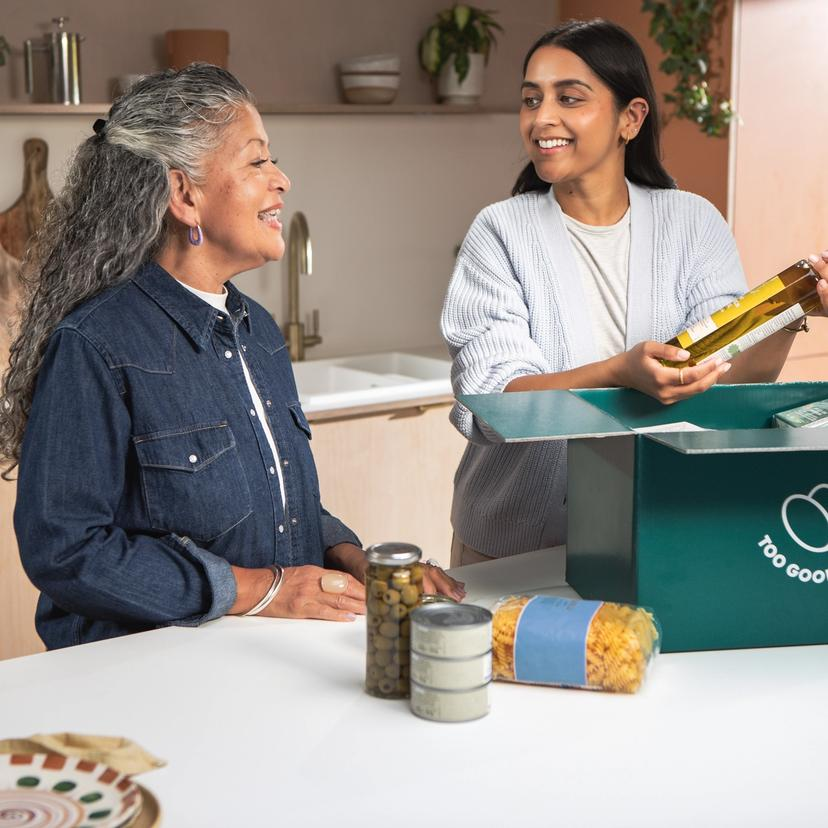
You can now even order Too Good to Go Parcels, bundles of surplus food from manufacturers, that are send to them, to deliver to your door.
This organisation was founded around 10 years ago in Denmark, by entrepreneurs who wanted to do something about food waste, and knew that giving people cheap good food (and helping businesses to sell food that was still okay to eat) made good business (as well as environmental sense).
Today the company has over 100 million registered users and 175,000 business partners across 19 countries, which has saved over 400 million meals from being trashed for no reason.
As an example, say you run a bakery. At the end of the day, your leftover bread may not be good for tomorrow. So you can sell it half-price to customers via the app, and they get half-priced good bread, and you can make a lot of added income.
Some larger stores that use apps like this, can sometimes earn up to £80K extra a year in profit.
The Look-Smell-Taste Label
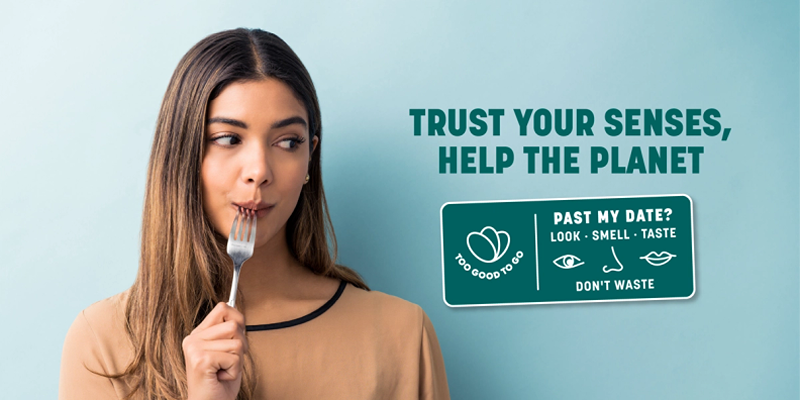
Too Good to Go’s Look-Smell-Taste label is the latest idea from this wonderful company. A lot of food is thrown away, due to all the confusion about best-before and ‘use-by dates’. This label can help remind people if a product is still good enough to eat:
The ‘use by date’ is for food safety (don’t eat after the date). The ‘best before date’ is simply about optimal food quality. In most cases, it can be safely consumed:
- Does the produce look okay?
- Is it free from mould?
- Is the packaging undamaged?
- Does the product smell okay?
- Does it taste good?.
Often this is due to supermarkets selling too big of items, for single or two-person households. For instance, they don’t sell things that would help like bags of apples (1 or 2), or tiny bread loaves (rather than big ones too much to use up, before going off).
But they are not going to change anytime soon. So here are a few good helpers, to reduce food waste, both for the planet and your pocket.
In England, people throw away a third of all food (mostly fresh produce, salads and bread). It’s estimated that UK supermarkets throw away around 190 million meals a year, which could feed hungry people.
Olio (an app to share food and most other things)
Olio began in London by two friends as a food-sharing app, but now is a worldwide organisation that encourages people to share most things they don’t want or use, in an effort to build community, save money and save the planet! It has over 8 million users, and growing.
The Lullaby Trust does not recommend donating (or buying) second-hand baby items like mattresses or car seats (and never use cot bumpers).
Its site has more info on helping to prevent crib death (including safe sleeping advice, and how to stop over-heating). Also avoid sharing unsafe items like old toys.
How does Olio work?
You basically download the app, take a photo of whatever you’re sharing, then set a pick-up location – whether that’s from your home (safe if you live within a close-knit neighbourhood), in a public location or in a hidden safe place.
The food-sharing app began to help use up food that would otherwise go to waste. It started as a way to use up food say in the fridge if someone was going on holiday or visiting hospital. But soon local groceries and bakeries were getting involved, even allotment holders with excess produce.
Today Olio users share safe items of all kinds – from books and kitchen ware (obviously it’s best to buy new or PAT-tested electrical appliances – you can recycle broken appliances at kerbside or at stores that sell you new ones – it’s the law they have to take back your old ones). Or even furniture.
French Food Waste Rules are Tougher (illegal!)

Although England has recently brought in more stringent laws for shops and businesses to sort and recycle food waste, these are nowhere near as stringent in France, where food waste is totally illegal.
There is enough food thrown out each year, to feed every hungry person on earth.
Since 2016, it has been illegal for larger supermarkets to throw away edible food. The law pushes retailers to donate unsold items to charities rather than send them to the bin. It is practical, targeted, and sends a message that food has value far beyond its price tag.
Supermarkets in the UK have committed to a paltry ‘pledge to halve food waste by 2030’, despite throwing out around 100,000 tons of edible food each year.
Everyday Tips Inspired by French Practices
- Plan before you buy: Write short lists, shop with meals in mind, and stick to them.
- Know your dates: Use-by is about safety. Best-before is about quality. Trust your senses with best-before foods.
- First in, first out: Put new items at the back of the fridge and cupboard.
- Portion smart: Cook the amount you need, and freeze spare portions the same day.
- Store food well: Keep bread in a bread bin, not the fridge. Put herbs in a glass of water. Use airtight tubs for leftovers.
- Share and swap: If you overbought, offer neighbours some before it spoils.
- Love leftovers: Turn roast veg into soup, stale bread into croutons, and soft fruit into compote.
The Abundance Network (legally scrump windfalls!)

Many landowners have large gardens with apple trees, but perhaps not the good health, time or tools to harvest them. So they fall to the ground as windfalls. Some get eaten by wildlife, but the rest just rot away.
Apple chunks are choking hazards for babies and swallowing difficulties. Keep apple pips/seeds/cores away from pets due to natural cyanide.
Ask permission before feeding to equines, as too many cause colic. If given permission, feed cut up from a flat palm, to prevent choking).
Sheffield’s Abundance Network has a fantastic free handbook to download, to cover all you need to know for safe and legal scrumping!
It’s best not to take dogs with you, as fruit pips and seeds contain natural cyanide, and can even cause alcohol poisoning.
- Scrumping networks get a few fit volunteers together with ladders and tarpaulins, then they climb the trees to harvest the apples (or other fruits) and the surplus is shared.
- Usually the landowner receives a third, the pickers receive a third – and any extra or mushy fruits go to the community, like making jam and juice to sell at bake sales.
- Abundance Network says for it’s good to choose gardens with side gates, so you are not walking through people’s homes to get to their fruit. It’s also good to only pick fruit a few days before it’s going to be used, to ensure it doesn’t spoil.
- Also invest in a bit of good equipment like telescopic poles and baskets to drop the ‘shaken apples’. You’ll likely also need liability insurance. You’ll also want comfy bags to carry harvested fruit.
And if making juice, invest in a pasteuriser, to make it safe for people to consume (unless sterilising all the containers yourself:
Heat your oven to 160°C, gas mark 3. Then place jars and lids (which have been washed, rinsed and drained in hot soapy water) in the oven for 15 minutes (remove rubber seals and simmer in water for 10 minutes).
Turn off the heat and then use the jars, while still warm.
Just Meals (affordable dinners from food waste)

Just Meals (Sheffield) is an interesting idea. These guys use quality surplus and locally-grown ingredients, to make up ‘ready-meals’ made from food waste. You just buy one-offs or on subscription, then keep them in the freezer. The meals are frozen on site to preserve taste and quality, and sold in biodegradable and compostable packaging.
Recycle packaging at kerbside or supermarket bag bins.
In the UK alone, millions of tons of food is wasted each year, and there is enough food thrown away worldwide, to feed every hungry person on earth.
The largest sources of food waste are fresh produce (fruits, vegetables, herbs), bread, dairy and leftover cooked meals. Households are one factor, but supermarkets and the hospitality sector (hotels, restaurants etc) also account for over 1 million tons of food waste each year).
OzHarvest (an Aussie idea to reduce food waste)

OzHarvest is a great idea from Australia, which we could do in England, to stop food waste and feed hungry people. Set up over 20 years ago, it’s the country’s leading food rescue organisation, which stops surplus food from going to landfill, and donates it to charities feeding hungry people.
Why Feed Food Waste to Hungry People?
The media and political treatment of hungry people in England is appalling. Many MPs and political pundits have even suggested that people who use food banks should learn to budget their books, or simply buy cheap own-brand foods like beans and noodles.
In fact, most food banks have strict rules (you can’t just turn up and help yourself to food, although a few do have an honesty policy). Food campaigner Jack Monroe (who once lived on £10 a week to feed herself and her young daughter) said one old man told her that he was eating a little toothpaste at night, to fool himself that he had eaten dinner:
The square root of f*ck all is ALWAYS going to be f*ck all, no matter how creatively you’re told to dice it. Jack Monroe
Stop quoting pasta prices. Snigdha Nag
Media Diversified has an excellent post going into detail on why people patronisingly telling people to ‘buy potatoes and shop at ALDI’ don’t address the real issues. Yes, pasta, potatoes and ALDI are all cheap.
But you need pans to cook with, energy bills to pay, oil to fry up your base ingredients, a peeler to make potato dishes – and most importantly, usually a car to travel to cheap out-of-town supermarkets.
Many people in poverty don’t have fridges to store leftovers. And many people with arthritis can’t peel potatoes, so need to buy ready-made.
Seasonal foods are much cheaper, yet supermarkets mostly sell over-inflated priced food from abroad (80% of apples sold in England are not local).
Again, Jack Monroe notes that the price of apples and rice etc has gone up with inflation – yet supermarkets have kept the prices of luxury foods like champagne the same.
The patronising remarks are beyond belief. One former cabinet minister suggested that people in poverty should find things get better if they go for own-brand value basics (ALDI beans rather than Heinz, presumably).
How stupid do these people think that poor people are? Is it not feasible they would have realised this themselves?
Many people live in so-called ‘food deserts. You recognise these, if you have ever lived on or passed by a poverty-stricken council estate. The only ‘local shop’ is a NISA or some other small supermarket, selling not much more than frozen pizza and chips.
But as the only shop, it’s the only ‘local and expensive food’, especially if there are no bus services to follow the ‘why don’t they shop at ALDI?’ advice.
And millions of people have no access to the Internet, so they can’t shop online – especially when it’s a minimum shop of £50 or so to qualify for free delivery.
Ronnie’s Vision (far more positive and empowering)

Ronnie Kahn is a South African entrepreneur who has revolutionised the way people think of food banks and hungry people, in her adopted country of Australia. We have food banks, but this is on a different scale.
She has used her business skills to turn the food waste problem on its head, using innovative ideas (and even passing a law with the help of pro-bono lawyers to let businesses give surplus food to charities, without fear of liability).
These are just some of the wonderful ways that OzHarvest helps. Be inspired to do something similar here:
Volunteers deliver over 250 tonnes of donated food from local businesses each week, to local food bank charities. Drivers are trained to spot unsafe foods (like cooked rice and foods past their use-by date). Most foods are collected (but not alcohol, so they can’t accept leftover Christmas puddings!)
The food truck caters to events, using food waste ingredients (as does its in-house catering company).
Cooking for a Cause is just one of their projects that teaches local people to cook healthy tasty food with rescued ingredients (they also teach children and young adults with similar programs).

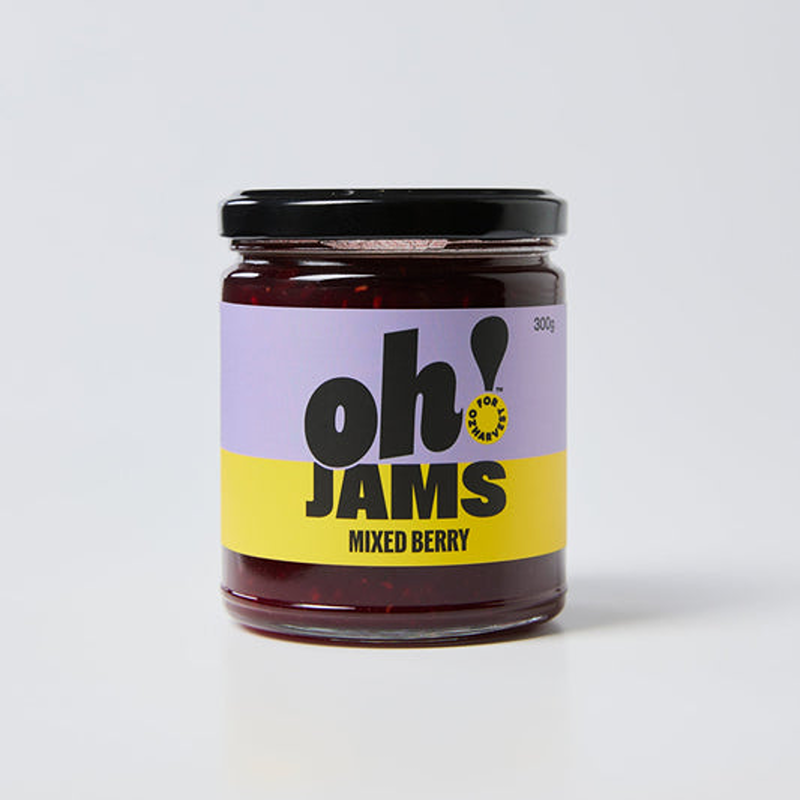
The shop sells food items made from food waste. These include a sparkling non-alcohol alternative (made from rescued blueberries), a lemonade (made from rescued lemons, strawberry and ginger), an upcycled tomato chilli sauce and jams made from upcycled berries and rhubarb.