How to Save Our Remaining Independent Shops

totally locally

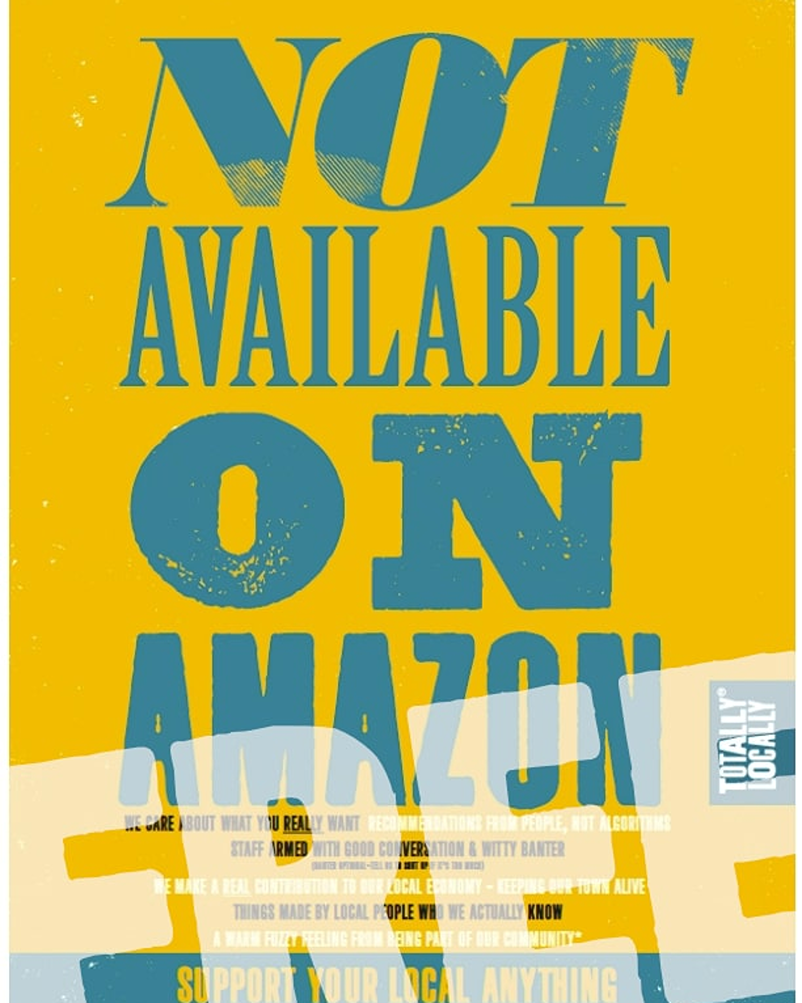
Totally Locally

You know the feeling. You push open the door of a small bookshop and a bell gives a soft, familiar ping. The owner looks up, remembers what you like, and points you towards a new title. Or you pop into the butcher and get proper advice, not just a packet and a price.

These places aren’t just “nice to have”. Independent shops keep money local, create jobs, and make a town feel like itself. When they go, we lose choice, and the high street starts to look the same everywhere.

The good news is this isn’t only down to big forces we can’t touch. There are practical things you can do this week, even on a tight budget. Councils and landlords also have a role, and it’s often simpler than it sounds.

In a country of 60 million people with an ageing population, it’s likely never going to be the case again that you pop to the village baker, deli, greengrocer and indie health store (most sell pills over food).

But there are ways to support indie shops, if only for a weekly loaf of bread or a basket of organic veggies. If we all did that, they would survive. Every little helps!

Run an indie shop? Many seeds, flowers, plants (and plantable cards) are toxic to pets, so learn what not to sell to households with pets. 

Totally Locally (the campaign to save our independent shops)

Totally Locally began as a ‘shop local’ campaign in northern England, and is now a worldwide movement. Volunteers use the Town Kit to make their communities more resilient from big supermarkets and chain stores, to support local economies.

Around 80p spent in local shops, stays in local communities. With big chain shops and supermarkets, it’s closer to 20p to 30p (or almost nothing, with big online retailers).

The Totally Locally Town Kit includes all you need to help reinvigorate your high street. You’ll learn how to put your first meeting together, develop posters and logos and print templates. This kit is a legal agreement, so you can’t change the logos or colours. 

Anyone can download free posters (translated in many languages). You can also order organisation’s first book The Economics of Being Nice, which explains what the movement is all about, and its many benefits.

Small indie shops are not just nice for communities to avoid ‘clone towns’ (where all towns look and feel the same), but they tend to have staff who are treated better and paid more. And importantly, small indie shops stick around when things get tough.

You can usually take dogs inside, ‘borrow a bag’, put a few groceries on a tab for older children to collect and often small shops will also order in goods that you request, rather than you have to write an ignored letter to Head Office, if you really want that artisan vegan cheese brand in store.

The main reason to support independent shops is that you usually can get there by foot or bicycle. Many indie shops are in old buildings so can’t adapt for wheelchairs etc. So it pays to have a sign (or website) saying you can deliver locally for free.

Supporting indie shops also means you get to keep money within your community. A small shop owner may well bank with a local credit union, likely employs local people, has no shareholders, employs a local signwriter, and likely also eats his lunch at the local pub!

Shop Local Whenever Possible
totally locally

When you shop local, you keep money in your community and help create jobs. Think about it: each time you decide to buy from a small shop, you’re investing in your neighbours and fostering local diversity.

  • Create a List: Before you shop, make a list of what you need. This way, you can plan visits to local shops that might have what you need.
  • Explore New Places: Dedicate time each week or month to visit shops you haven’t been to before. You might discover hidden gems.
  • Consider Gift Giving: When special occasions arise, look for gifts in local shops. They often have unique items that reflect your community’s character.
  • Pedddle is a site connecting shoppers with independent market stall holders.

Why Support Indie Shops?

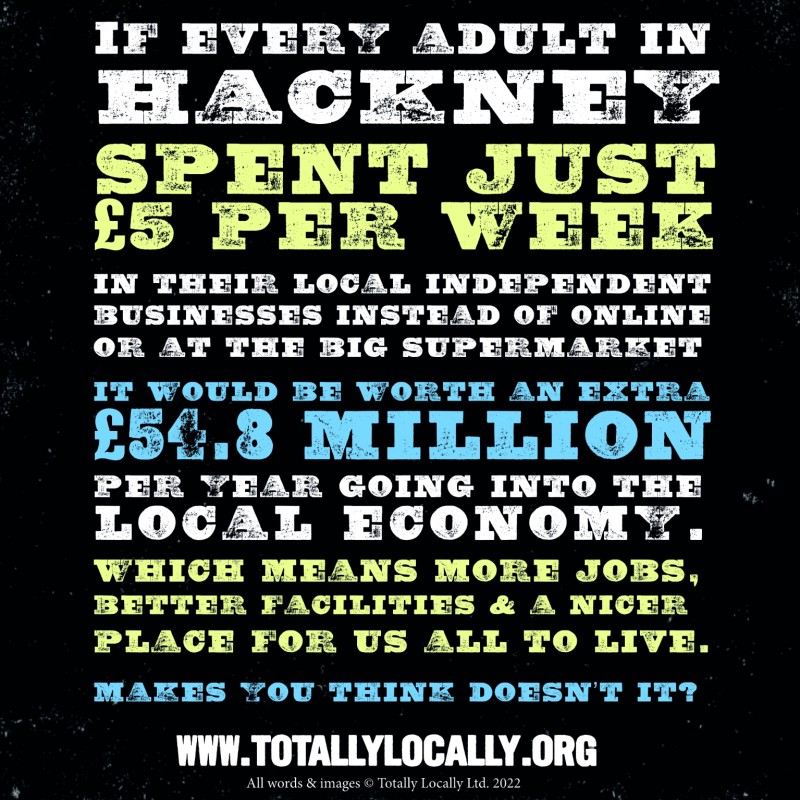
For a start, to help them, instead of chain stores and supermarkets. For every £5 or £10 you spend each week at an independent shop, this brings collectively billions back into the local economy over a year.

This is because local businesses use local suppliers, pay local taxes, use local signwriters, and tend to eat and drink locally too. Plus ‘top profits’ go the retail shop owner, rather out-of-county to shareholders and companies abroad.

Fiver Fest and Magic Tenners!
totally locally

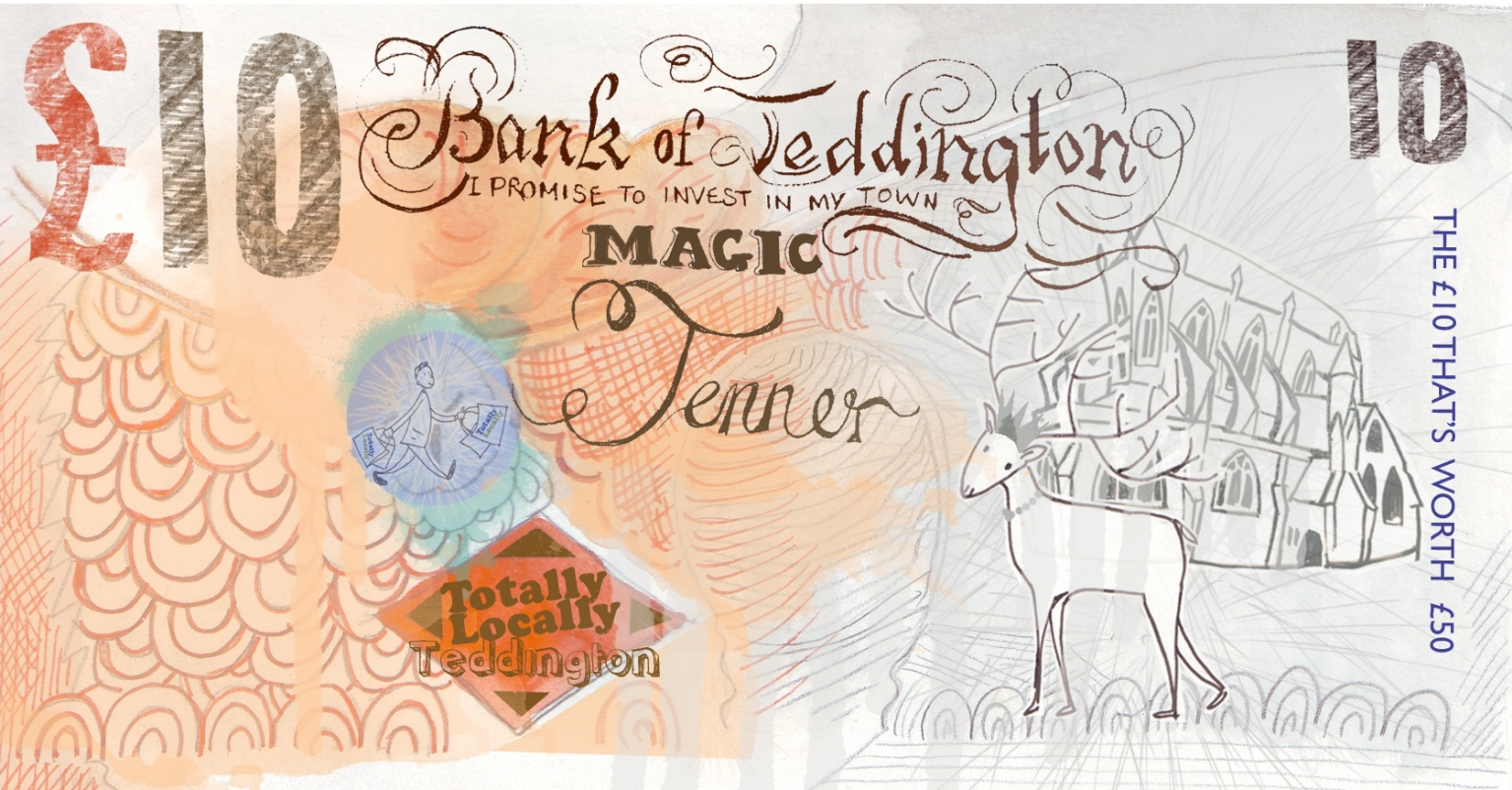
These two campaigns encourage people to spend £5 or £10 a week in independent stores in their town, to bring a collective massive amount of income to local economies.

If every adult in the UK spent just £5 per week with local shops and businesses, this would generate £13.5 billion of money to go back to your town. This is because local independent shops tend to buy food and drink at local sandwich shops and pubs, and use local signwriters, and source from local producers.

Just imagine if your own town had over £13 billion extra? What would you do with all this extra money? It’s likely that most issues (from lack of litter bins, public parks and pot holes) could all be solved. With lots of money leftover!

You can customise the bank note posters (like above) to make your own town. Penzance is holding a campaign here, asking people to spend just £5 a week in local shops, to bring and extra £4.1 million into the town.

Here’s another example from the website:

If you buy a local pie from a local shop, a big part of your money is passed to the pie maker. The shop employs a local accountant or decorator. He buys ingredients from a local farmer, who spends  money at the local garage, who then buys something from someone else who is local…

As a contrast:

If you buy a pie from a big supermarket, it’s likely made with factory-farmed ingredients and palm oil, sold in plastic packaging. The supermarket has its finances done by a big accountancy firm hundreds of miles away, and all stores are decorated the same (so no local signwriter used).

The ingredients for the food sold are hardly ever local (palm oil is from Indonesia) and all delivery vans are branded, not bought from a local garage. And if one breaks down, it’s unlikely going to be the local mechanic who fixes it.

Many Totally Locally communities ask local shops to get involved, by creating special £10 offers (from gift bundles to meal deals and unique local experiences). This encourages residents and visitors to ‘spend a tenner’ in local shops, find new favourites, and return to back independent unique businesses.

Local Buyers Club is a unique discount card, for people who live and work in the city of London. Just click the borough of choice, and find local shops (often zero waste and artisan-based) that offer discounts. The £15 or so membership fee pays for itself in no time.

Independent Oxford: Championing Local Businesses

bookshop Dolceloca

DolceLoca

Independent Oxford is a local organisation that champions independent shops and businesses, via online listings and an app for those who prefer to shop at them.  The directory shows that there is nearly always an independent alternative to choose, over big chains and supermarkets.

Local independent shops can apply for membership. This costs around £20 per month (plus a £50 set-up fee) and includes a directly listing to reach 20,000 monthly readers, unlimited event listings, invitations to attend regular meet-ups and a members-only newsletter to hear the latest community news.

Indie Cambridge (empowering local businesses)

bookshop Cambridge Purple

Cambridge Purple

Indie Cambridge is a membership organisation designed to connect and support independent businesses and shops across the beautiful county of Cambridgeshire in East Anglia. It brings together businesses and customers, by reaching hundreds of local customers via the app.

Membership (at around £45 a month) has many benefits. Your business will be listed on the app (far less than paying for an add) to targeted customers who like supporting indie customers, so of course you can also use this opportunity to offer special deals and new offers. Or even promote your own discount card.

You also appear on the website and may be mentioned in the popular monthly e-newsletter that is sent to 1000s of people. You also get to connect with other indie businesses, for mutual support.

There are also regular get-togethers with others, to network (so you don’t feel like an island, in a sea of chain stores and supermarkets).

You’ll even on membership be introduced to everyone they know, and be featured in the 36-page colour magazine, which is distributed free (over 5000 copies) in local shops twice yearly.

Indie Cambridge can even arrange an interview (for a fee) with a local journalist to write your unique store, and take a professional photo-shoot to use for your marketing.

And if you’re not ready to sign up just yet, you can still sign up, for a free basic listing.

Why Support Indie Shops in Cambridgeshire?

For a start, to help shops in Cambridge, which is one of the most cloned towns in England (more chain stores and less independent shops). For every £5 or £10 you spend each week at an independent shop, this brings collectively billions back into the local economy over a year.

This is because local businesses use local suppliers, pay local taxes, use local signwriters, and tend to eat and drink locally too. Plus ‘top profits’ go the retail shop owner, rather out-of-county to shareholders and companies abroad.

Why independent shops are struggling right now (in plain English)

Independent retailers aren’t failing because people stopped caring. Most people still like a lively high street. The problem is that pressures stack up, one on top of the next, until there’s no room left to breathe.

Rising costs, squeezed margins, and less footfall

Rent is the obvious one, but it’s not the only one. Energy bills rose, then stayed high. Stock costs increased, so the shop pays more before a single sale. Card fees nibble away at every tap and swipe. Staffing costs climb too, even when the owner does most shifts.

Big chains can spread these costs across hundreds of shops. A single shop can’t. It has one set of bills and one doorway.

A simple example shows how tight it gets. Imagine a £3 item on the counter, maybe a snack, a small card, a basic household bit. Take off VAT where it applies, then the wholesale cost, then the card fee, then a share of rent and wages. The “profit” can end up closer to pennies than pounds. If the shop sells ten of those in an hour, it still might not cover the lights.

Footfall has also changed. Remote and hybrid working means fewer people drift past at lunch. Some town centres feel busy on Saturdays, then quiet midweek. For a small shop, that uneven pattern is hard to plan around, because the bills arrive every month, on time, whether customers do or not.

Online convenience, uneven competition, and empty units that drag a street down

Online shopping trained us to expect speed, choice, and easy returns. That’s handy, and it’s not going away. Still, it shifts habits. If you can order at 10 pm and get it tomorrow, you might skip a high street trip, even if you’d prefer to browse.

Competition can feel uneven too. Independent shops often face business rates, higher delivery costs, tricky loading, and parking rules that make quick visits harder. Some customers do a “showroom visit” to check an item, then buy it elsewhere for less.

Empty units make all of this worse. One boarded-up shop reduces the reason to visit. Two or three create a run of blank windows that people hurry past. That’s the vacancy spiral: fewer shops, fewer visitors, fewer sales, then more closures.

The result isn’t one single cause. It’s a pile-up. So the fix needs layers as well.

Make your everyday spending count, even small swaps add up

Start with one regular purchase. Not a big treat, just something you already buy.

A few realistic swaps that tend to work in UK towns and cities:

  • One weekly staple: bread, coffee beans, a sandwich, greeting cards, pet food.
  • Click and collect: you still buy local, and you save delivery time.
  • Pre-order: tell the shop what you want, then collect on your next trip.
  • Gift cards: they’re low-risk for you, and they help cashflow now.
  • A quick review: a couple of lines on Google can bring in the next customer.

Reviews matter because most people check opening times and ratings before they travel. A shop can be brilliant and still look “quiet” online. A short, honest review fixes that.

Social media helps too, even if you don’t post. Following a shop, liking a product photo, or sharing an event gives it reach without costing you anything. It sounds small because it is small, but small actions stack up, just like the pressures do.

If you want a simple rule, support the shops you’d miss first, not the ones you remember last.

Choose habits that bring footfall back to the high street

  • Independent shops need sales, but they also need people around them. Footfall is the background music of a healthy street. When it fades, everything feels harder.
  • Try building one “high street hour” into your week. Keep it light. Grab a coffee, pick up a couple of bits, then leave. That one trip can replace three separate errands, and it makes the town centre feel busier.
  • Walking, cycling, or public transport helps if it’s practical, because it removes the stress of parking. If you do drive, aim for short-stay spots and plan your route so you don’t circle.
  • Markets are another easy win. They bring energy and variety, and they often lead people into nearby shops. Late-night openings, workshops, and small events help too, because they turn shopping into something closer to a visit.
  • Patience plays a role as well. An independent café might have one person making drinks. A small shop might need a minute to find stock. Those slower moments can feel like friction, yet they’re also where the human bits happen. If you ask for what you want, many shops will order it in, and they’ll remember next time.

Create a ‘sticky’ high street people want to spend time in

  • People stay longer when the street feels easy. Clean pavements, safe crossings, decent lighting, and visible bins sound dull, yet they shape decisions. If the centre feels scruffy or stressful, people rush in and out, or they don’t come at all.
  • Toilets matter more than many planners admit. Seating matters too, because not everyone can stand for long. Cycle parking helps, because it turns a “big outing” into a quick stop.
  • Wayfinding helps visitors, especially in towns where the best independents sit just off the main drag. Clear signs and maps make side streets feel less hidden.
  • Mixed-use centres also help. Homes above shops mean customers nearby at different times of day. Pop-ups in empty units can break the blank-window effect quickly, even if the long-term tenant takes time.
  • Parking sits in the middle of this. The goal isn’t “free for all”. It’s clarity, fair pricing, and sensible short-stay options, plus better loading for deliveries so small shops can actually receive stock without a drama.

Lower the risk for small traders with fair terms and targeted support

  1. Landlords can make survival more likely with a few practical changes. Stepped rents help new tenants grow into a space. Turnover-linked rent can share risk, which suits uncertain times. Shorter leases with clear renewal terms also help, because a five-year commitment can scare off good traders. Some landlords even offer fitting-out support, which can be the difference between “nearly” and “open”.
  2. Councils can reduce friction too. Simplifying licences for signage, outdoor seating, or market stalls makes it easier to trade. Local procurement can support independents as well, for example when schools and offices buy catering, stationery, or gifts locally.
  3. Small business advice matters most when it’s plain and local. That includes signposting business rates relief, helping with online listings, and teaching simple local search basics so shops show up when people look for “near me”. Delivery partnerships can also help, because not every shop can run its own system.

Saving independent shops isn’t about guilt, and it isn’t about pretending online shopping will disappear. It’s about building a high street where footfall, fair costs, and community habits support the people behind the counters.

If you want a simple start, keep it small and do it this week:

  1. Buy one thing locally that you’d normally buy elsewhere.
  2. Leave one helpful review for a shop you trust.
  3. Invite one person to meet you on the high street, not at home.

Do that, and the bell on the bookshop door keeps ringing. More importantly, the character of our towns stays real, and stays ours, for the next generation.

Similar Posts