Therapeutic Massage (why is it not on the NHS?)
If therapeutic massage can ease pain, calm stress, and loosen tight muscles, why isn’t it a normal NHS service? It sounds like a fair question, and plenty of people ask it.
The short answer is that the NHS usually doesn’t fund therapeutic massage as a stand-alone treatment. Some people still get massage-like hands-on care through physiotherapy, musculoskeletal clinics, or specialist pain services. But routine massage, on its own, rarely makes the cut.
Massage is known to do all kinds of wonderful things. It can relieve aching joints and get blood circulation flowing again. But truth be told, most people can’t afford to visit a qualified massage therapist on a regular basis, and it’s not usually offered on the NHS (though physiotherapy is).
And some people don’t have the benefit of having someone to give them a massage. So the answer is to give yourself a therapeutic massage instead!
Ask your GP before massage (it can have contraindications for medical conditions). Avoid essential oils for pregnancy/nursing or affected medical conditions, and keep aromatherapy away from children and pets.
Don’t pour neat essential oils down toilets or drowns (bin securely, as undiluted they can still harm aquatic life).
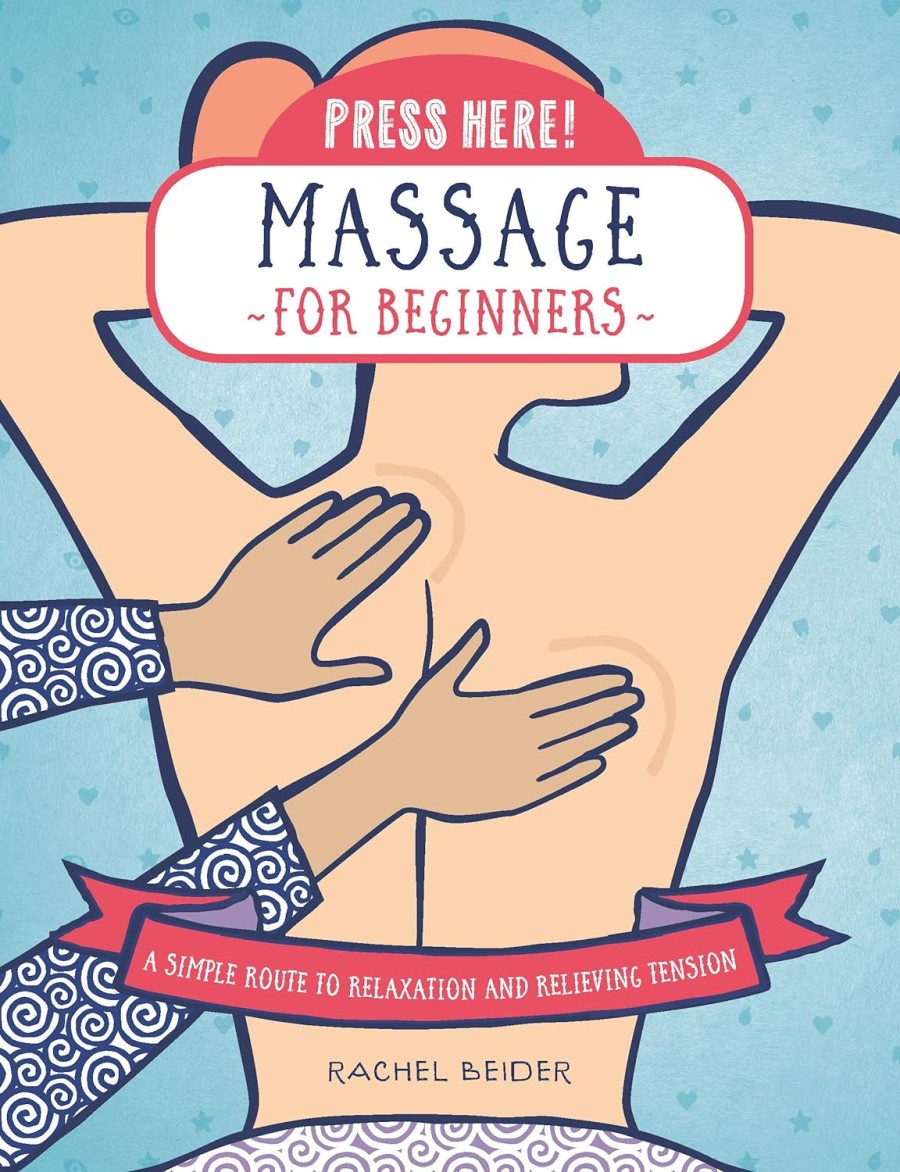
Press Here! Massage for Beginners is a beautifully illustrated guide, and the book includes tips for self-massage. All written by a licensed massage therapist, the book uses fun and modern illustrations to help you relieve pain, alleviate tension and recover from sport.
The book includes massage techniques for the shoulders, back, neck, arms, hands, legs, feet, head, scalp and face (plus massage for relaxation). There are also treatment plans to help:
- Headaches
- Sinus congestion
- Constipation
- Menstrual cramps
- Pain relief
- Insomnia
- Inflammation
- Arthritis
Why Isn’t Massage Available On the NHS?
Massage is only available as osteopathy for certain conditions. One massage therapist has put up a petition at 38 Degrees, asking for massage by qualified therapists to be free on the NHS.
Massage can help with many medical conditions and disabilities, and could not only benefit patients, but save the NHS a fortune on preventive medicine, so less drugs were needed. Qualified lymphatic drainage masseurs have absolutely amazing results.
NHS England spends up to £10 billion a year treating musco-skeletal conditions (with 7.5 million days lost due to ill-health and up to 60% of patients on long-term incapacity benefits, 10% of which suffer depression).
30% of GP appointments are related to such conditions, and yet these are the kinds of conditions that massage therapists can treat (yet most patients can’t afford the £50 or so treatment cost).
Having them available would also free up time for doctors and nurses to treat patients with other conditions.
What therapeutic massage is, and what it can realistically help with
Therapeutic massage is hands-on treatment aimed at soft tissue, mainly muscles and the tissue around them. In simple terms, it’s used to reduce tension, ease stiffness, and help people feel more comfortable in their bodies.
That makes it different from a spa massage, which is often about relaxation first. It also differs from medical treatment for a diagnosed illness or injury. Sometimes the lines blur a bit, but the aim matters.
In practice, people often use therapeutic massage as symptom relief. It may help someone move more freely, sleep better, or feel less wound up. That’s useful. It’s just not the same as curing the cause.
The kinds of symptoms people often seek help for
Most people seek massage for everyday but wearing problems. Back pain is common. So are neck and shoulder tension, sports soreness, headaches linked to tight muscles, and general stress.
For some, it works like pressing a reset button. The body softens, breathing slows, and pain drops for a while. That short-term change can matter a lot, especially when someone feels stuck.
Still, results vary. One person may feel looser after a single session. Another may notice only mild relief, or none at all. Long-standing pain is often more complex than tight muscles alone.
Where the evidence is helpful, and where it is still limited
Research suggests massage may help some people with short-term pain relief and general wellbeing. That’s the promising part. For example, some studies point to benefits for back pain, anxiety, and muscle tension.
However, the evidence is mixed once you ask bigger questions. Does it help for months rather than days? Does it beat other treatments? Does it work well for large groups with different conditions? Often, the answer is less clear.
That matters because the NHS usually looks for strong proof. A treatment has to work safely, consistently, and at scale. If the evidence is patchy, or the gains are modest, routine funding becomes harder to justify.
Why therapeutic massage is not usually funded by the NHS
This is the heart of it. The NHS has limited money, limited staff, and a very long list of needs. So it has to rank treatments, not just by whether they help, but by how much they help and for whom.
A treatment can be useful and still not become a standard NHS offer. That sounds blunt, but it’s how a tax-funded system works. The NHS has to think across whole populations, not only individual stories.
The NHS has to prioritise treatments with the strongest evidence
The NHS tends to back treatments with the clearest proof of benefit. In broad terms, that means looking at clinical evidence, safety, and value for money. It’s the same kind of thinking used in evidence-based commissioning and NICE guidance.
So even if massage helps some people, that doesn’t settle the matter. Decision-makers ask harder questions. Is the benefit reliable? Is it better than exercise advice, physiotherapy, talking therapy, or self-management support? Is it worth funding across the country?
Often, therapeutic massage falls into a grey area. It may help symptoms, but the long-term evidence is not always strong enough. In contrast, services such as physiotherapy often have broader evidence behind them, especially when paired with exercise and education.
The NHS doesn’t usually reject massage because it has no value. It leaves it out because other treatments have stronger proof and wider reach.
Cost, workforce, and demand also shape what gets offered
Evidence is only part of the picture. The practical side matters just as much. A national massage service would need trained staff, clinic rooms, appointment time, admin support, and steady budgets year after year.
That is a big ask in a service already under strain. GPs are stretched. Physio teams are busy. Hospital waiting lists remain high in many areas. So when managers choose where money goes, they tend to favour services seen as more essential or more clearly effective for large numbers.
There’s also the issue of repeat care. Massage often works best as a course of sessions, not a one-off appointment. That raises costs quickly. Meanwhile, cheaper options, such as group exercise support or guided self-care, may help more people for the same spend.
None of this means massage is pointless. It means the NHS works by triage on a system level. Urgent care, cancer treatment, surgery, mental health crises, long-term disease management, and proven rehab services usually come first. In that queue, therapeutic massage sits lower down.
NHS options that may include hands-on care
A good first step is your GP, or self-referral physiotherapy if your area offers it. Many regions also have musculoskeletal services for joint, back, and muscle problems. Those teams often look at movement, strength, posture, pain triggers, and day-to-day habits.
Sometimes hands-on treatment is part of that. A physiotherapist may use manual therapy, soft tissue work, or guided stretching. Still, it may not feel like a classic massage session. The NHS tends to pair hands-on care with exercise and advice, because that mix often has better evidence.
If stress is a big driver, mental health support may help more than massage alone. Pain clinics, pacing support, sleep advice, and simple exercise plans can also make a real difference.
How to decide if private therapeutic massage is worth trying
Private massage can be worth trying if your aim is modest and clear. Maybe you want temporary pain relief, less tension, or help unwinding. Those are reasonable goals.
It helps to check the therapist’s training and experience. Also ask what they think they can help with, how many sessions they suggest, and what it will cost. If the promises sound too big, step back.
Most of all, treat it as one tool, not a cure-all. It may ease symptoms, but it won’t fix every cause of pain. And if you have severe pain, numbness, weakness, fever, recent injury, swelling, or unexplained symptoms, seek medical advice first.