England’s Monarchy (exploring different opinions)
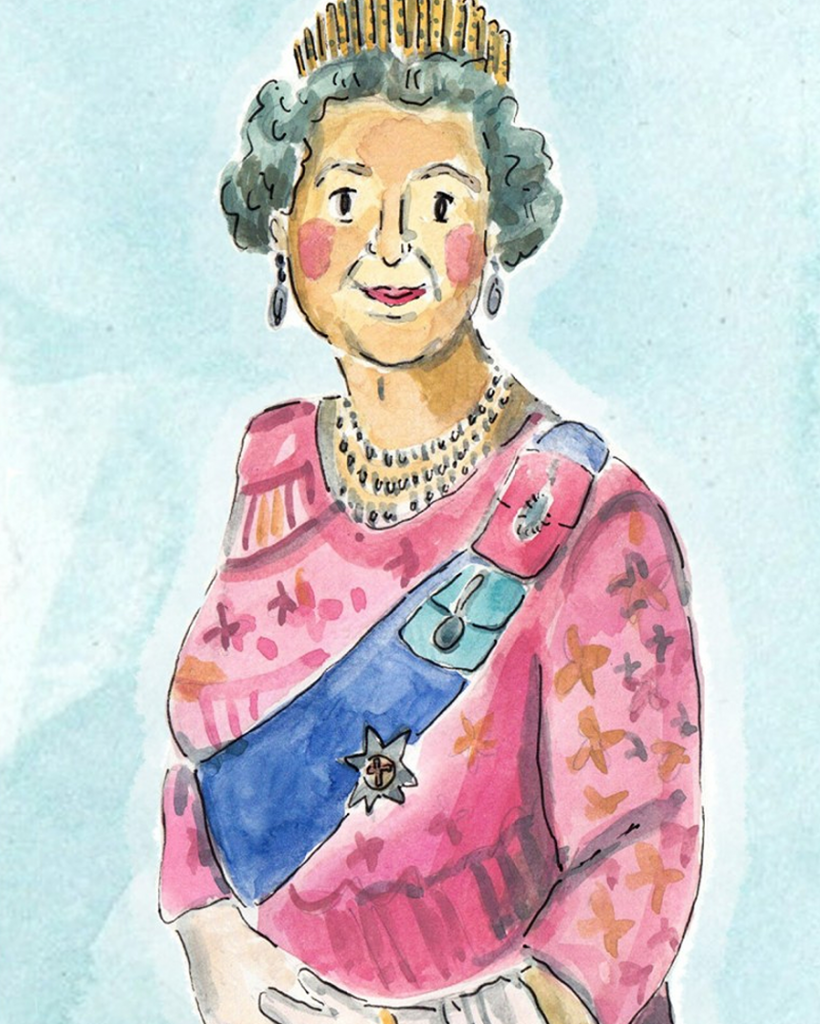
The Monarchy is no doubt an institution in England and the rest of the UK (and sometimes abroad in Commonwealth countries). Many people adore it, saying that it’s part of our cultural makeup and brings in huge tourism income (and the alternative of a President would be unthinkable).
Also read our post on reasons to ban real bearskins for palace guards.
Others believe that to be ruled over someone, just because of them being born ‘with a silver spoon’ in their mouth (and run by the head of a Church that sometimes has less morals than the rest of us) is no way to run a country.
The financial argument is also often pooh-poohed, as the combined incomes from the Duchy of Lancaster and Cornwall, outweighs the oft-used argument that the tourism income is more (if you factor in these two tax-free incomes which are huge and sometimes take rent from the NHS), in fact we lose income.
How many people support the monarchy?
If you watch the news or read newspapers, you would be forgiven for thinking that nearly everyone supports the Monarchy. In fact, it’s pretty equal. Around 50% either way, with way more young people not supporting a monarchy at all.
Recent scandals (Andrew Mountbatten-Windsor, rewilding issues on Dartmoor, litter mountains in Wigan) have resulted in a sharp drop in support, with some polls now as low as 51% for support (very much by age – young people are against, older people are for).
But support has now hit historic lows. One reason appears to be that despite issues (only voluntarily paying tax and possibly paying a son millions to avoid justice) was that the Queen was seen as ‘the nation’s granny’. She didn’t air her laundry in public, and was one of the last examples of an age where she provided a stability, no matter what happened in life.
You may remember when Princess Diana died, she was criticised for not coming out to talk to the media (while people who never met the young princess wailed in the streets). The Queen just remained quiet (despite the media going for her).
And it later turned out she was simply taking the time to comfort her young grandsons, rather than be bulled by media into doing what they wanted.
The recent furore with Meghan and Harry is not so much to do with whether they are royal or not. But more than after first ‘eloping’ to live in a life of peace in Canada with their young son (everyone sympathised), they then have spent years selling their stories to the highest bidder. Now most people have lost sympathy.
Why do people criticise the monarchy?
Obviously everyone can see that most members of the Royal Family are decent people (the Duchess of Kent who had suffered depression, would give out the Wimbledon trophies then go off to her volunteer work as a Samaritan).
But the institution itself has attracted criticism. At a time when many people can’t afford heating and eating, watching taxpayer money be used to fund incredible wealth and property sticks.
And as mentioned above, the combined incomes from the Duchies of Lancaster and Cornwall means that the Royal Family receive huge untaxed income on top.
Although King Charles would never take advantage of his powers, he still has some powers that are quite scary.
He could pardon serial killers (and himself of any crime), and dissolve Parliament if he didn’t like it. After a whole country had elected someone of their choice. He could also drive over the speed limit without a license, and not get fined.
What is the future of the monarchy?
Who knows? Prince William has suggested a mass slimming-down, but still won’t give over more land he owns on Dartmoor for rewilding, with some campaigners say that offered is ‘small potatoes’ considering his wealth.
In Wigan, a huge litter mountain has not been cleared, with one woman having to adopt out a child with health problems, as King Charles won’t pay for the clearance, as although the private landowner, he’s exempt from litter abatement orders. His lawyers are trying to give the land back to the council, so locals have to pay for the clean-up, when he could easily afford it.
Situations like these are now becoming very serious, as we saw with Harry and Meghan, it’s very easy for the public to turn against some people in the monarchy, if they are found to be greedy.
At a time when so many people struggle, flaunting immense wealth in billions (while still not paying corporation or inheritance tax – and only paying voluntary income tax) is becoming an increasing source of contention, even for some supporters of the monarchy.
Recently in Spain, the Royal family were pelted with mud by members of the public, who had lost their relatives (including children and dogs) in the tragic floods. Some say it was because they were accompanied by politicians, who they feel had not given them fair warning.
Our frequent floods are made worse by flattening peat bogs (for grouse shoots – pheasants also cause road accidents and eat endangered sand lizards, due to being over-bred). Yet King Charles, Prince William and Princess Kate all attend grouse hunts, seemingly unaware of the issues.
The history of England’s monarchy
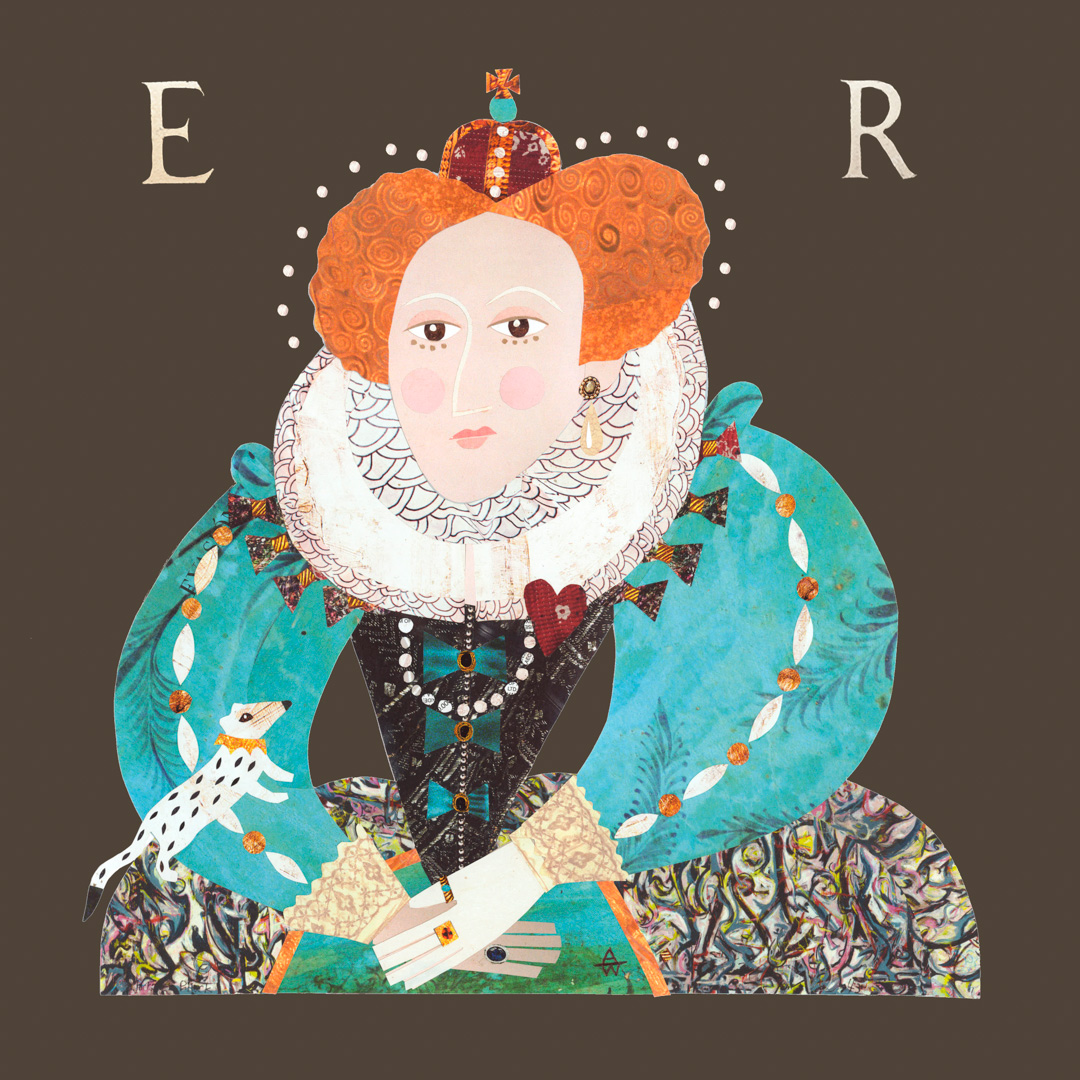
Our royal family started hundreds of years ago, and up until the reign of Henry VIII, was staunchly Roman Catholic. However, when he wanted a divorce, he banned the Catholic church (many monks and nuns were killed) and replaced the Pope with himself.
His daughter Elizabeth I ended up creating what is now the Church of England.
Today the monarch still is ‘defender of the faith’ yet still practices some antiquated practices (Catholics can marry into the monarchy but would have to abdicate if they switched over).
And family still runs along ‘bloodlines’ (it’s unlikely children would be adopted, it’s all about ancestry). While the rest of society has moved on, and treats adopted children as of much worth as any others.
How much does England’s monarchy cost?
Our monarchy costs around 10 times more than similar (smaller) monarchies in Europe (the 20-year Netherlands heir princess recently turned down a hefty income as she did not feel comfortable accepting it).
In England, the monarchy costs around £90 to £120 million each year, the royal family also receives more (non-taxed) income from two inherited estates (Duchies of Cornwall and Lancaster), owned by Prince William and King Charles respectively.
The royal family owns around 250,000 acres (outside 600,000 acres of crown estate) with environmentalist Guy Shrubsole saying if this was the same for everyone, England would be owned by just 250 people.
Many people want parts of the Crown Estate (often used for golf courses) to be given over to provide free outdoor space like public parks in inner cities. This could reduce NHS costs due to better mental health, walkable communities and fresh air.
Graham Smith (who works for Republic) writes that if you compare the income given with tourism income, it’s good value. But when you add on the huge (untaxed) income from duchy estates, figures change considerably.
Knowing that most people still want a monarchy, it advocates a fixed annual budget (with an annual salary for the King) and income from both Duchies to be subject to corporation tax (and for the royal family to pay inheritance tax, like anyone else).
On his mother’s death, King Charles inherited £650 million which could have raised £200 million inheritance tax – enough to build, fund and staff a brand new hospital.
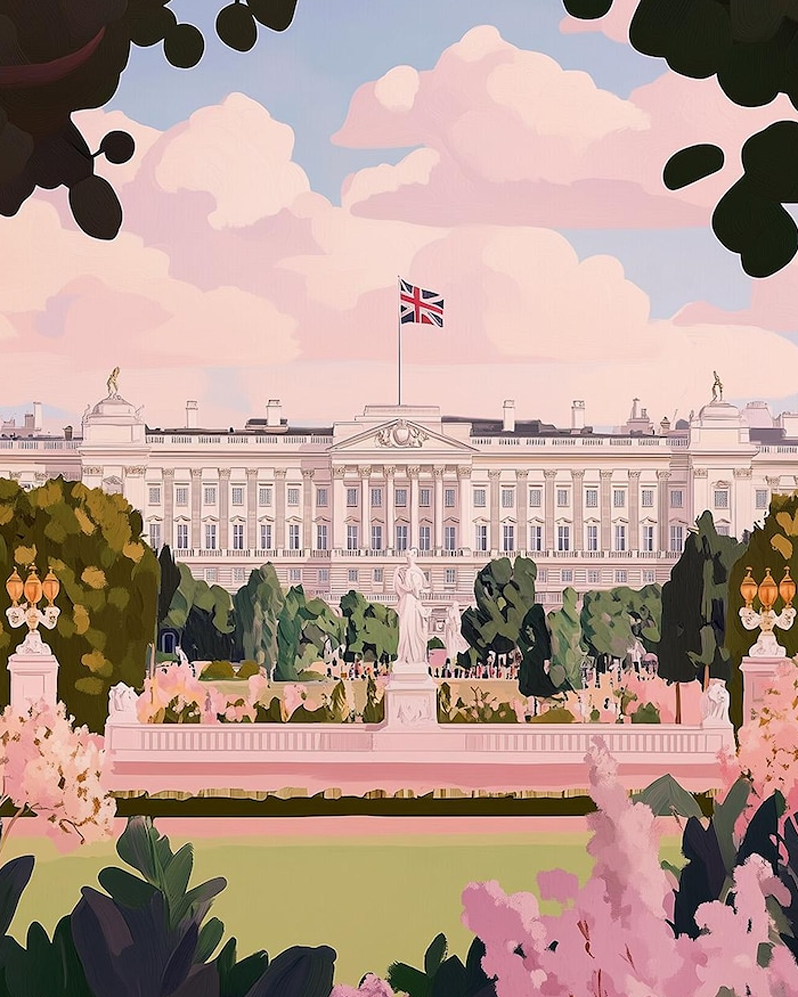
Buckingham Palace (owned by the Crown) has huge expenses (when homeless people live within walking distance). Originally a townhouse built for the Duke of Buckingham in 1703, the palace has:
- 188 staff bedrooms
- 92 offices
- 73 bathrooms
- 52 private bedrooms
- 19 state rooms
- A swimming pool
- A doctor surgery
- A cinema
- A jeweller’s workshop
- A 42-acre Garden
- Lakes and a tennis court
- A landing pad for helicopters
- Royal Mews (that house cars and carriage horses)
The palace was bombed 9 times during the Second World War, which destroyed the chapel. In modern times, some rooms are open to the public to raise funds (after a claim to heat the palace from public community energy funds was rejected). Due to fears on public opinion, when many people can’t afford to heat their homes.