Northumberland (sandy beaches, pine forests, Farne Islands)
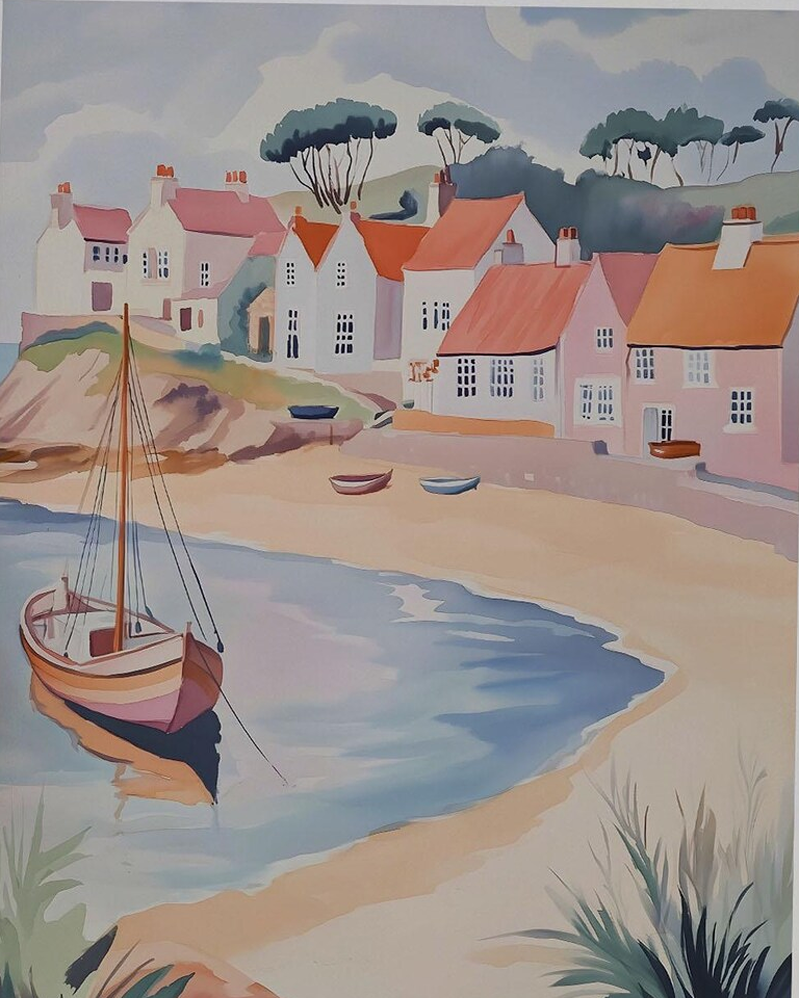
Beadnell, Pastel Pine
Northumberland (the whole county is a national park) has one of England’s lowest populations. And has a huge forest and beautiful coastline – home to many birds (including puffins) and marine creatures. With little light pollution.
Interestingly, it has one of England’s largest populations of endangered red squirrels. This is because it houses pine forests (red squirrels need natural habitats for good immunity against Squirrelpox – read more on how to help both red and grey squirrels)
As the park with the lowest population, this is also England’s quietest National Park, the highest point being The Cheviot Hills. It also has five of the cleanest of England’s rivers (over 6000 of them), presumably as there are less people to drop litter and other pollutants in them.
Alongside the river, you’ll find ancient oak, birch and alder trees, providing a glimpse into the historic landscape. Keep conkers away from dogs (oak trees are unsafe near horses and livestock).
If out walking, follow the Countryside Code to keep all creatures safe. Keep dogs on leads near steep banks (and away from toxic spring bulbs). If at the coast, read how to keep dogs safe by the seaside (check for beach bans, before travel).
Don’t walk on sand dunes (to protect endangered natterjack toads) and keep you and dogs away from coastal birds and flowers (some are toxic) and seals. Join the campaign to ban flying rings, to help local seals.
Northumberland has more sheep than people!
Pregnant sheep (and sometimes due to wool waterlogged from rain) can sometimes roll over onto their backs, and can’t get back upright, due to having four stomach chambers (so will die if not turned back upright).
If you see a sheep on its back, just firmly right it back, then stay with it, until rain has drained off. Then inform your local farmer.
Big skies, empty beaches, pine woods
The beaches are broad and often quiet, even in warmer months. The forests, especially the pine woods in the wider area, feel cool and still. Add scenic walks, shifting light, and plenty of room, and it suits people who want quiet UK breaks without much fuss.
That means you can keep the pace loose. Walk in the morning, watch birds or red squirrels if you’re lucky, then spend the afternoon on the sand. For couples, families, and solo travellers, that balance is hard to beat.
Kielder Forest (tall pines and lakeside views)
Kielder Forest is one of the strongest reasons to head inland first. It sits in the wider Northumberland National Park area, close to the park’s western side, and it gives you scale straight away. The pines seem to run on for miles. Meanwhile, Kielder Water opens things out with calm views and a sense of space.
There are walking trails for different energy levels, from short lakeside loops to longer woodland routes. Because the paths are varied, you can keep things gentle or stretch the legs a bit more.
Wide, wide sandy beaches!s
For sandy beaches, the coast is where Northumberland becomes very easy to love.
- Bamburgh is the obvious classic, and for good reason. The beach is huge, the sand is clean, and the castle gives the whole place a strong outline. It can feel cinematic, but never fussy. Even a short walk here sticks with you.
- Embleton Bay is quieter in mood. There is still plenty of space, yet it feels softer and less dramatic. The dunes, the open sweep of sand, and the sea light all work together. If you like walking without needing a plan, this is a good fit.
- Then there’s Druridge Bay, which offers one of the easiest long beach walks in the county. It stretches on and on, so you can walk for ages without feeling hemmed in. For families, casual walkers, and anyone who just wants sea air and room, it’s a very safe choice.
Quieter paths, better light, comfortable walks
Spring is a strong choice because the paths are quieter and the air is often clear. The light can be lovely then too, especially in the woods and along the dunes. Early autumn works in much the same way, with softer crowds and comfortable walking weather.
Summer brings the best odds of a beach day, of course, but school holidays make popular spots busier. Even then, Northumberland usually feels calmer than many seaside areas. Still, weather changes fast here. A bright start can turn cool and windy by mid-afternoon, so it’s smart to stay flexible.
The Farne Islands (Northumberland’s wildlife haven)

The Farne Islands are home to many of England’s marine wildlife, including over 40,000 pairs of puffins during breeding season, large breeding colonies of Atlantic grey seals, and over 200,000 breeding pairs of other birds (Arctic terns, guillemots, razorbills, and eider ducks).
Dogs (including assistance dogs) are not allowed on the Farne Islands, due to wildlife. A few ferry owners may let dogs stay with them (or enjoy local dog-friendly beaches (check seasonal restrictions).
There are three lighthouses on the Farne Islands. Longstone Lighthouse is linked to the rescue by Grace Darling and her father Robert in 1838 (rowing out to save shipwreck survivors, in rough seas).
Less well-known is nearby Staple Island, a small rocky skerry on Outer Farne, also an important wildlife haven (not visited by humans, due to Gun Reef – a dangerous ridge of rocks).
Coquet Island, is a haven for rare birds like roseate terns, sandwich terns, puffins and eiders. Again this is a nature reserve to keep birds safe, so no humans are allowed to visit.