How to Choose a (slightly) Greener Pair of Socks
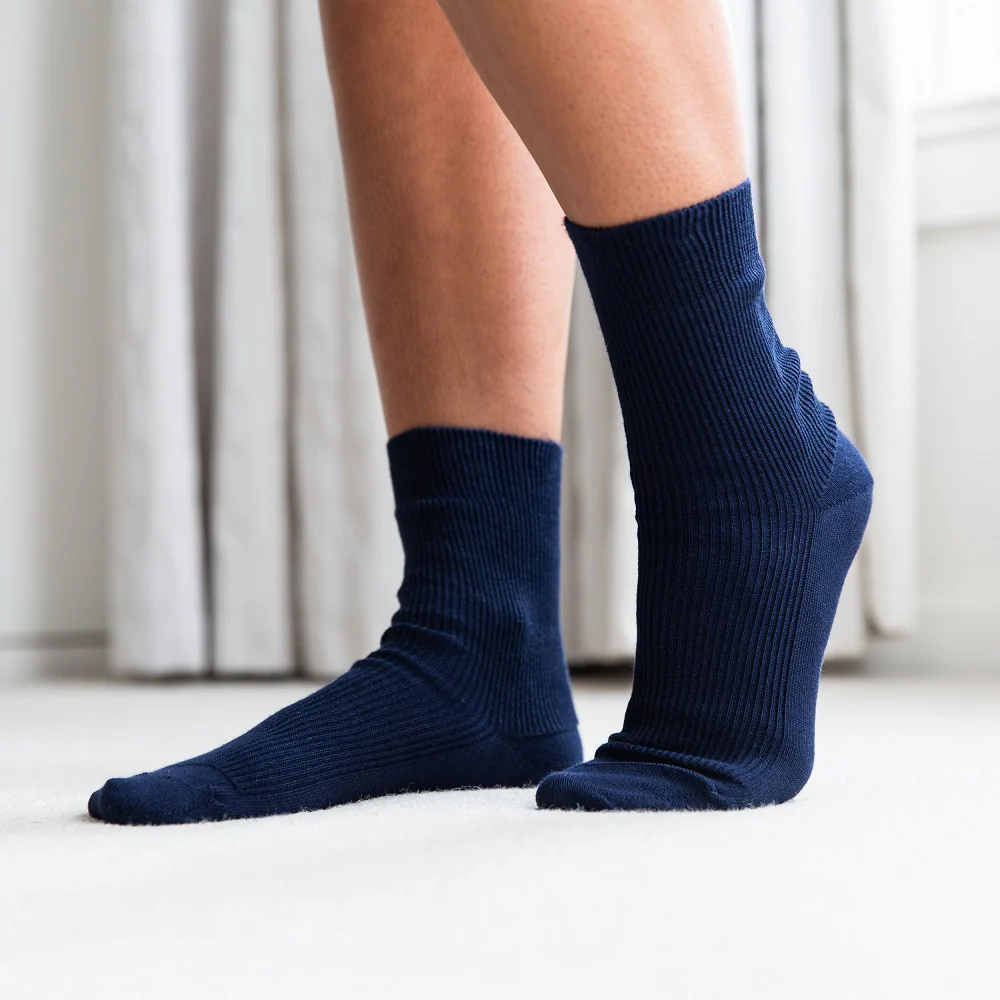
Eczema Clothing makes a small range of 100% organic cotton socks for men and women (also for children). These have soft ribs for relief from itchy skin (a few of their socks do contain a little elastane).
EcoOutfitters (which makes organic cotton school uniforms) also offers 100% organic cotton socks (also in adult sizes) with pressure-free fits that won’t dig in, or leave marks around your ankles. Made ethically in Portugal.
Unless you go barefoot, you likely wear socks most of the year. But most contain synthetic fibres (organic cotton ones to have 5% elastane for stretch).
Launder socks with elastane in a microfiber filter (this helps to stop microplastics leaching out of washing machines, and into the sea).
Synthetic fibres (nylon, polyester) are also made from oil. So we don’t want to be supporting the oil industry, more than is necessary. But sometimes it’s almost impossible, so do what you can. Like choosing brands in plastic-free packaging.
You can place damaged/worn socks in textile banks. These are then shredded to upcycle into insulation and carpet underlay etc.
To make socks last longer, store them flat (don’t ‘cuff’ into each other). Launder with unscented biodegradable laundry detergent and avoid fabric softener and tumble driers. Keep toenails trimmed and wear shoes that fit, to avoid them rubbing holes in your socks!
Babies should not wear socks in warmer temperatures (including in cars), to help reduce risk of SIDS (same with hats). Read more at The Lullaby Trust.
Keep socks away from pets. They smell lovely to animals but could cause constipation, choking or intestinal blockage. Signs of ingestion are lethargy, vomiting, loss of appetite, a tender abdomen and difficulty pooping (it’s a medical emergency, so call the vet).
Thought (colourful organic cotton socks)
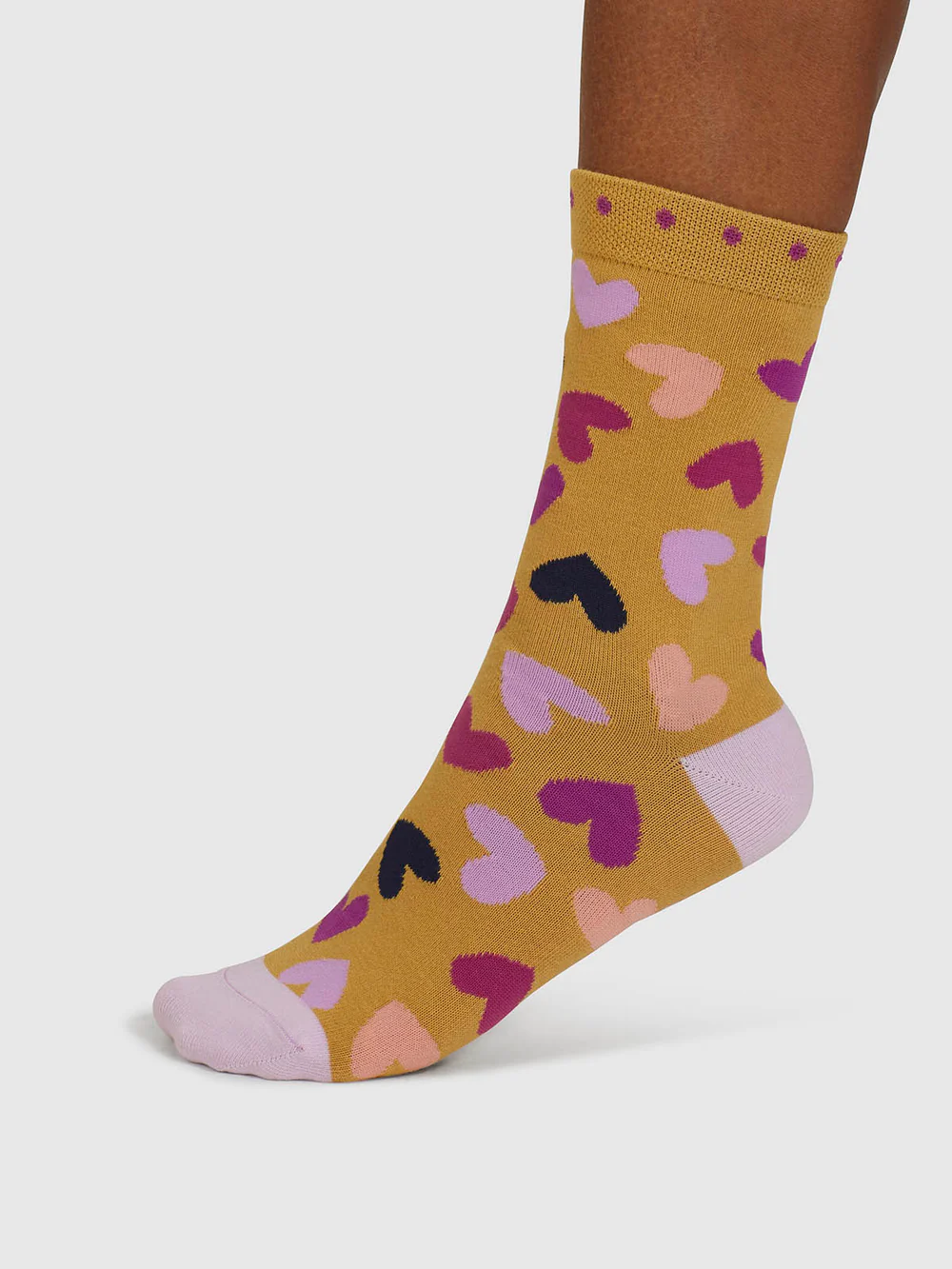
Thought socks are made with organic cotton and bamboo (to wick moisture away from sweaty feet), which uses up to 91% less water, than conventional cotton.
Unless you go barefoot, you likely wear socks most of the year. But most contain synthetic fibres (organic cotton ones to have 5% elastane for stretch).
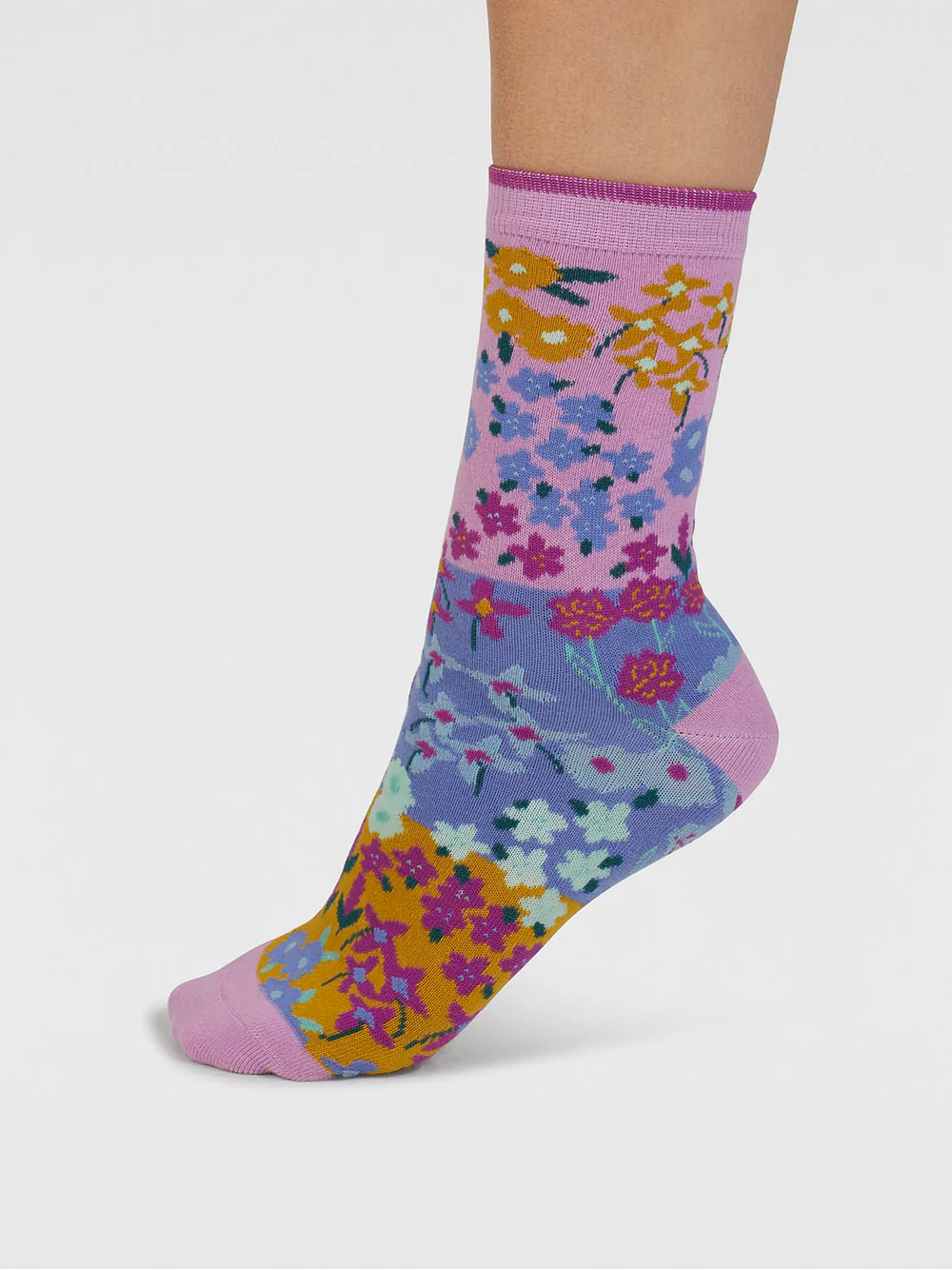
In styles for men and women, they are sold in zero waste packaging.
Earth Wardrobe (mostly organic cotton) socks
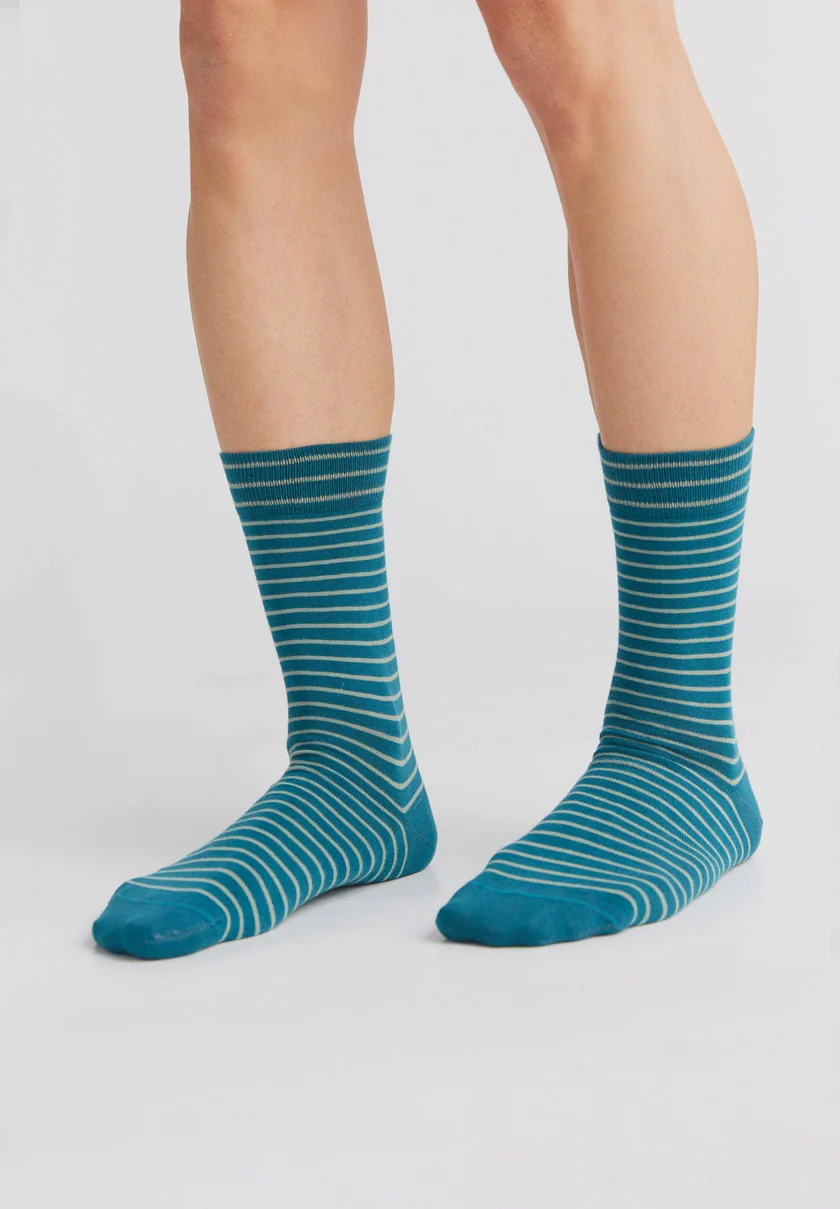
Earth Wardrobe (Scotland) offers socks to go along with its affordable t-shirts. There are normal socks, trainer socks, sock liners and even socks for work boots. Mostly are made with organic cotton (a few are wool, so not vegan-friendly).
Bare Kind (socks that help endangered species)
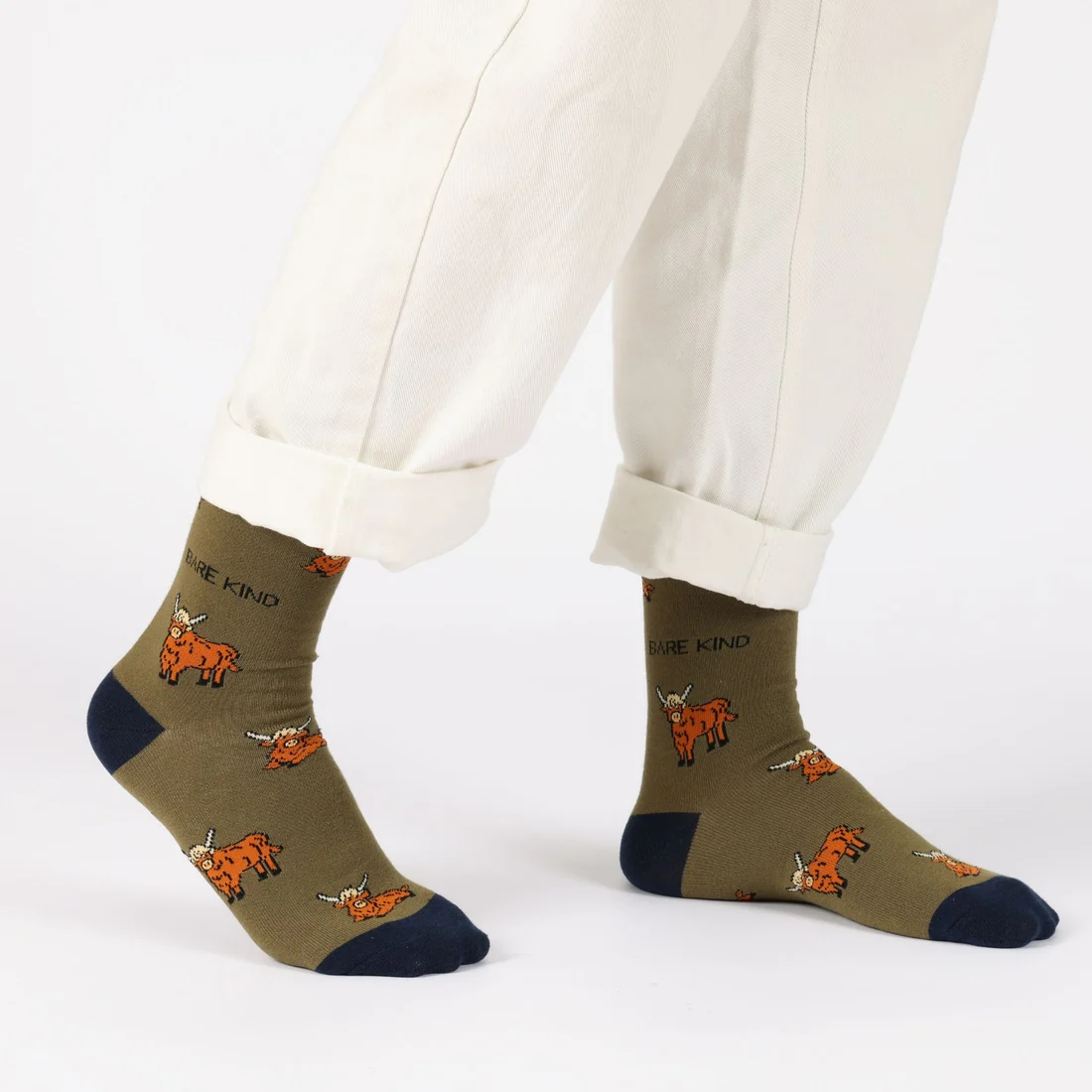
Bare Kind offers bamboo socks for adults and children, in cute designs from hedgehogs to Highland cows, and from ducks to pangolins. Everything is sent in plastic-free packaging. What makes this brand nice, is that 10% of profits from each pair, go to protect the creatures featured on the socks.
Note that industrial bamboo (the world’s fastest-growing grass) is not the same as fresh bamboo eaten by pandas. It’s not local, but far more sustainable than conventional cotton (organic cotton is also good).
Socko (recycled yarn socks with darning thread)
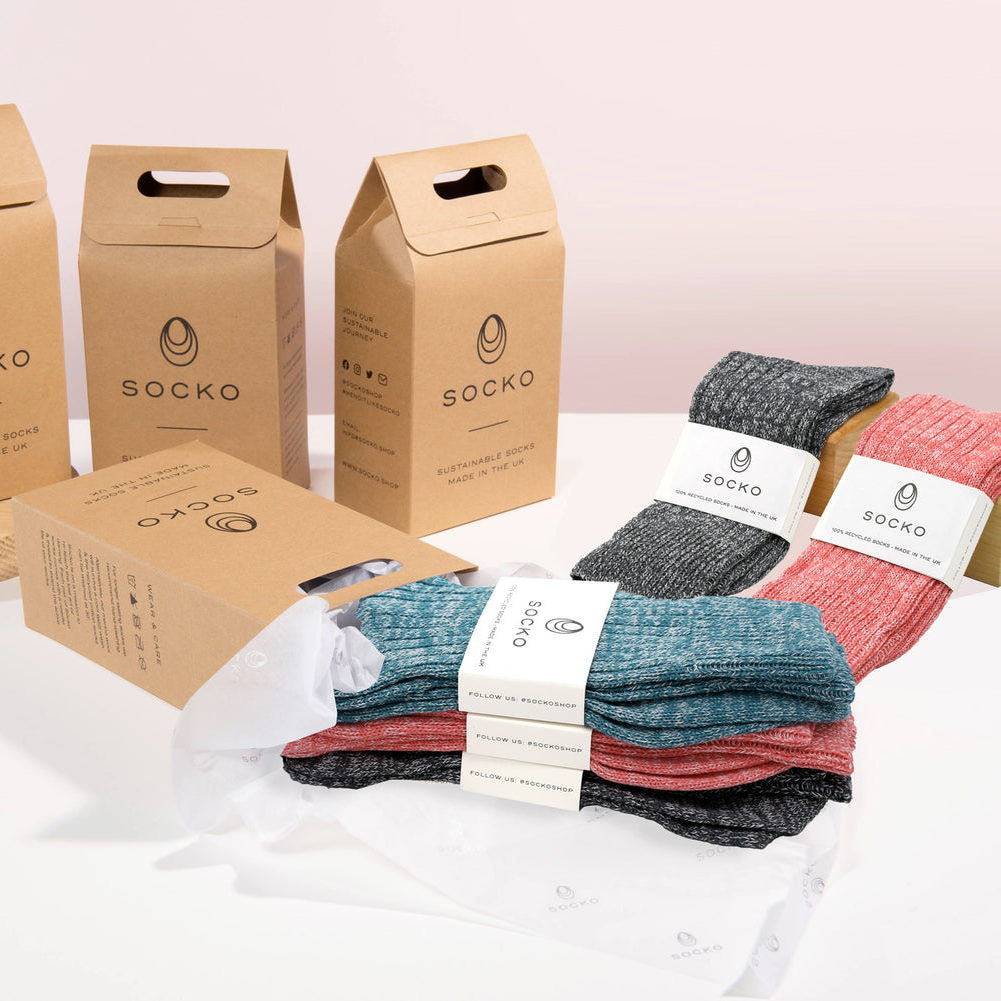
Socko (Leicestershire) offers socks that are made from recycled cotton, blended with a few synthetics (fishing waste and plastic bottles). These are hand-finished and sold in cardboard packs. Choose from teal, coral or graphite (or mixed sets) or stripey or two-tone socks.
Each pair includes instructions (with colour-matched yarn) on how to darn socks in 10 minutes, to prevent them being thrown away, if they get a snag. Sold in three unisex sizes (by shoe size).
If you find a little threat hanging out the top, the founder says just snip it off (don’t pull it). This brand also sometimes uses reclaimed wool, but there visual symbols to easily avoid, for vegans.