Do You Need a Water-saving Showerhead?
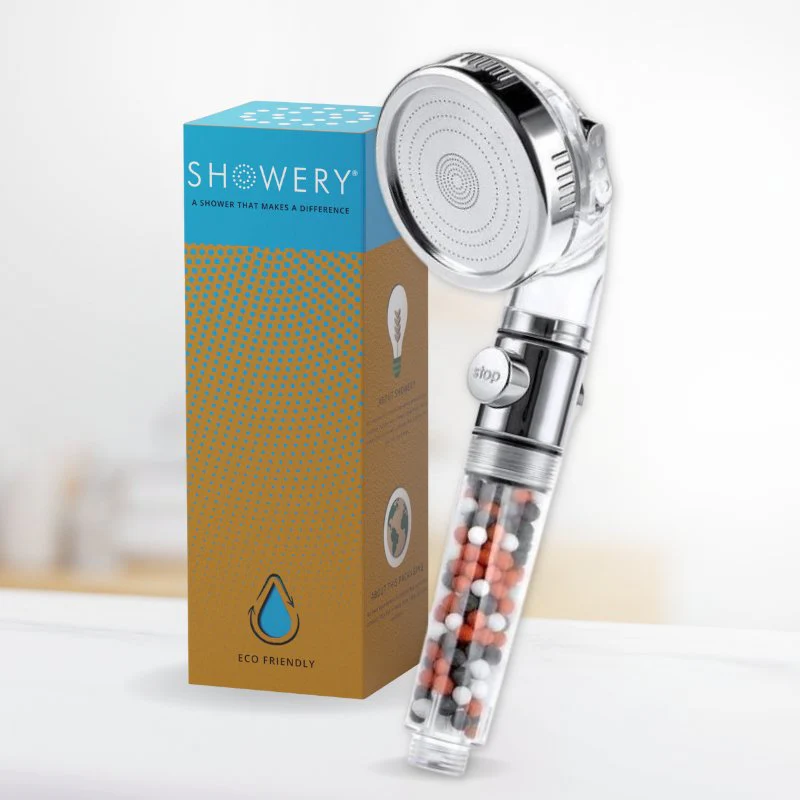
New showers should be find. Older showers may benefit from water-saving showerheads (which aerate so it’s like a rain shower but saves money). To check if you need one:
Place a 2-litre container on the shower floor. If it takes less than 12 seconds to fill when shower is running on full, you could benefit from a low-flow shower, which is easily replaced.
If you need one, your water board may offer one for free. Always use a qualified electrician to fit one. Always check as some are not suitable for certain showers or gravity-fed systems.
If your showerhead is clogged with limescale, Mira has a post on how to fix (and prevent) using cleaning vinegar (instructions are different for fixed showerheads). Learn how to fix a dripping showerhead.
The biggest win (use less hot water)
If you do only one thing for more sustainable showers, focus on hot water time. Heating water usually costs more, and creates more emissions, than the water itself. So a shorter, slightly cooler shower can beat a cupboard full of “eco” products.
The simplest version is also the most effective: less time under hot water.
- Set a 4 to 5-minute timer: Put it across the room, so you can’t snooze it.
- Use one song: Choose a track you know well, and aim to finish before it ends.
- Fix the order: Hair first, then face, then body, then rinse.
Swap the shower head and fix the drips
- A water-saving shower head reduces flow without making the shower feel weak. Many use “aeration”, which simply means mixing air into the water stream. You still get good coverage, just less water per minute.
- When you shop, ignore vague claims and look for a clear litres per minute figure. That number tells you what you’re getting.
- Fitting one is usually renter-friendly, because you can keep the old head and swap it back later. Most are a straightforward screw-on job. First, check the fitting size (many are standard). Next, wrap a little plumber’s tape on the thread to help prevent leaks. Then tighten by hand, and only use a wrench gently if needed.
- Hard water slows everything down in the bathroom, so clean the head now and then. A limescale soak (often with vinegar and water) can bring the spray back.
- Also, fix the small stuff. A slow drip from the head, valve, or hose can waste more than you think. Run your hand along the hose and check the connection points. If it’s damp when it shouldn’t be, sort it sooner rather than later.
Small habits that save energy every day
- While the water warms up, catch it in a bucket or bowl. Use it for mopping, or flushing the loo. It’s not a huge saving each time, but it’s almost effortless.
- If you’re on a time-of-use tariff, shifting showers to off-peak can reduce cost. Even without that, it can spread demand in the household.
- Finally, keep the room a bit warmer. A draught excluder, a closed door, and a decent bath mat can make you less tempted to “crank it up”. Ventilate after showering too, because less damp means less mould, and less scrubbing later.