Wainwright’s Coast-to-Coast Walk (St Bees to Robin Hood’s Bay)
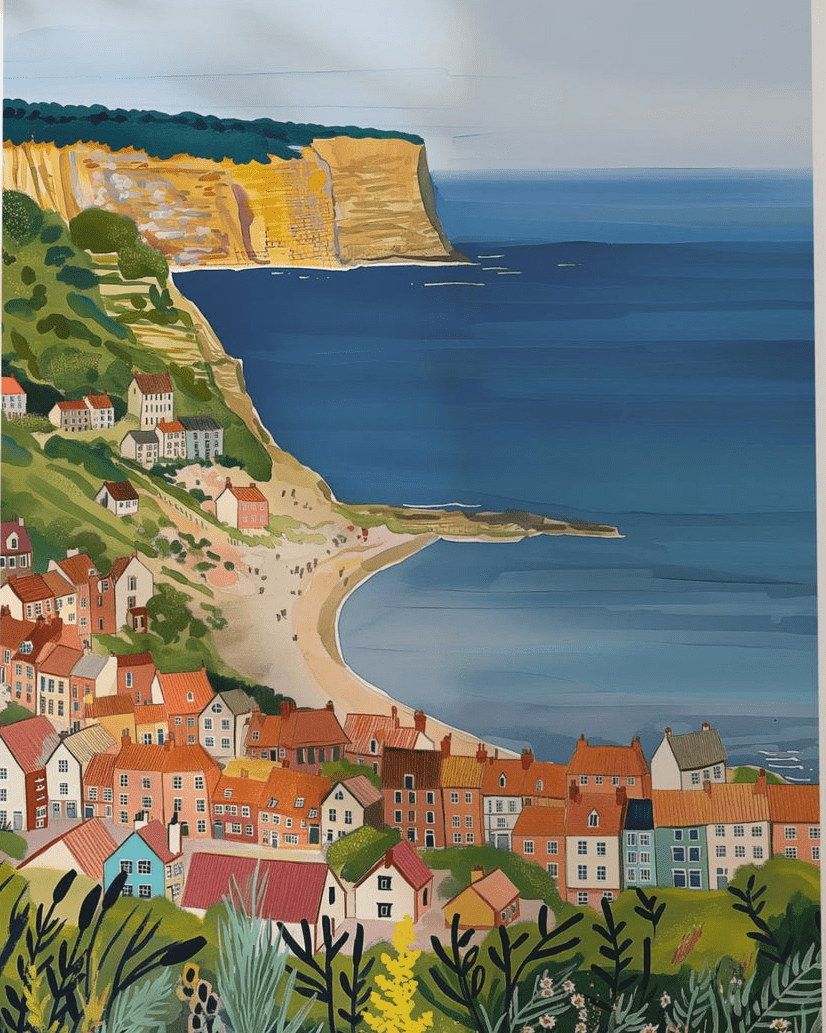
Alfred Wainwright’s Coast-to-Coast Walk lets you cross northern England from St Bees (on the Irish Sea in northwest England) to end when you paddle your toes in the village of Robin Hood’s Bay, on the North Sea in East Yorkshire.
The Cumbrian part is more hilly, giving way to rolling hills of the east, or of course you can do it the other way around. Herdwick sheep of the lakes soon give way to the curly-horned Swaledales as you move on.
You can walk a portion of the walk, or stay in guest houses for a walk that will take a few weeks. There is a train stop at St Bees (Robin Hood’s Bay is a short bus or taxi ride from Whitby).
Always follow the Countryside Code to keep all creatures safe. Keep dogs away from steep banks, mushrooms (and toxic plants/trees) and on leads near birds, barnyard friends and wild ponies.
If at the nearby coast, keep away from nesting birds and never walk on sand dunes. Learn how to keep dogs safe by the seaside (check beach bans before travel).
How to upright an overturned sheep
Pregnant sheep (and sometimes due to wool waterlogged from rain) can sometimes roll over onto their backs, and can’t get back upright, due to having four stomach chambers (so will die if not turned back upright).
If you see a sheep on its back, just firmly right it back, then stay with it, until rain has drained off, so it won’t happen again. Then inform your local farmer.
St Bees (Cumbria)
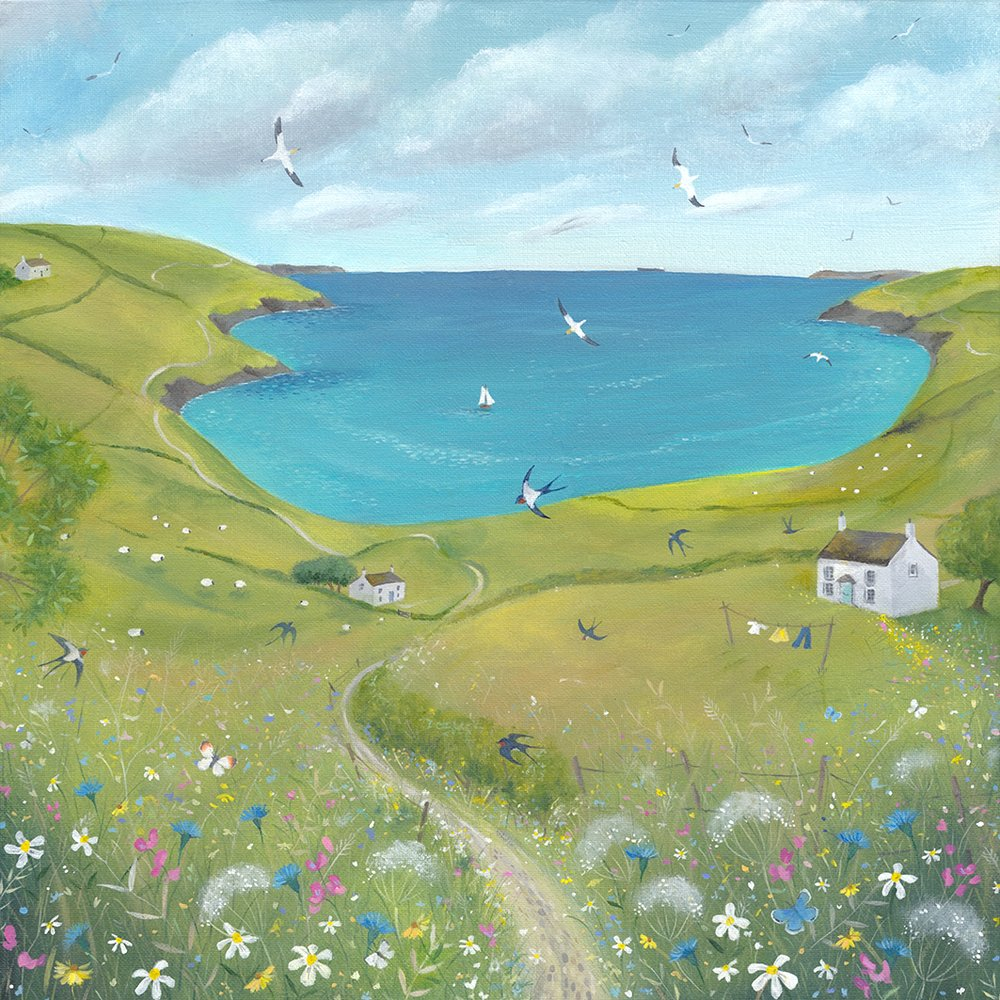
St Bees is the start of the coast-to-coast walk, a coastal village in Cumbria that faces the Irish Sea. Named after 7th century Irish nun Bega (who was shipwrecked here), the village still maintains a 12th century priory. Home to many seabirds (kittiwakes, fulmars and razorbills), it’s now an RSPB reserve, to protect them.
The village has an independent school, one former pupil was comedian Rowan Atkinson (aka Mr Bean).
Robin Hood’s Bay (East Yorkshire)
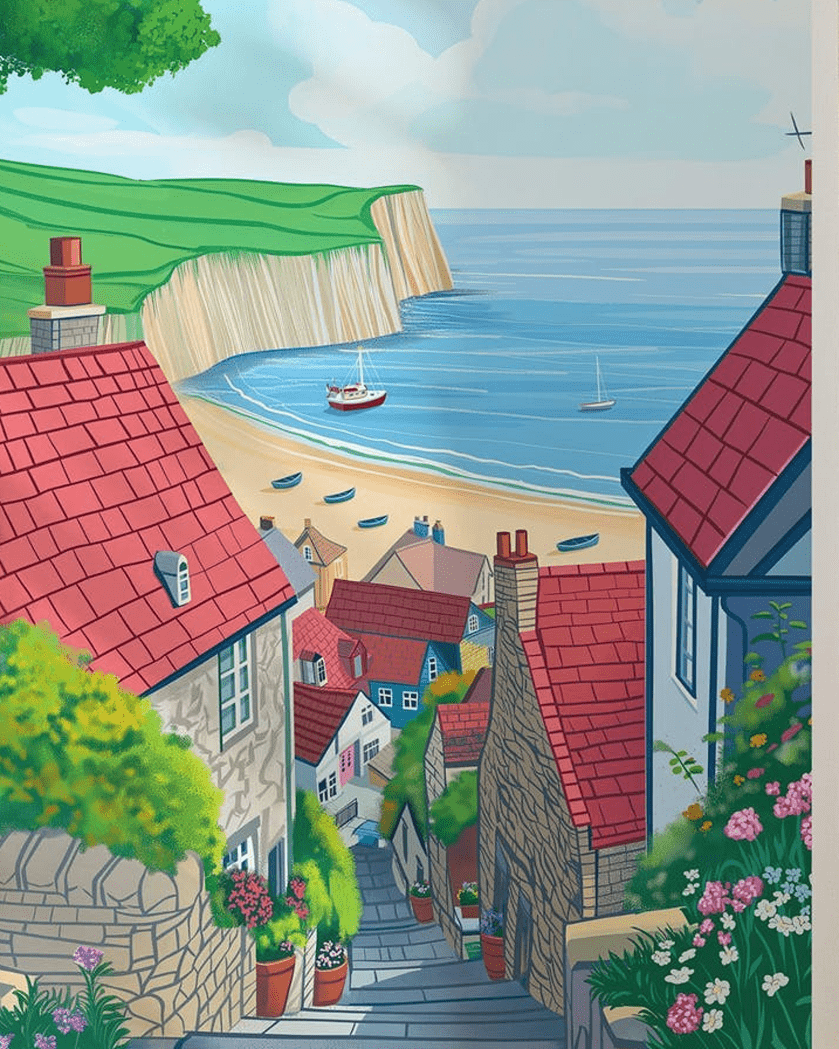
Robin Hood’s Bay is a tiny little place on the East Yorkshire coast. But it has gone down in history, thanks to being where you paddle your toes, to mark the end (or beginning, depending on which way you walk) of the coast-to-coast walk.
This steep village used to be a smuggling hub in the 18th century, where tea was moved through secret channels. It was said you could smuggle more or less anything from the bay to the top of the cliff, without ever seeing daylight! It was also said that the narrow streets and passageways, were built to confuse customs officers!
And despite then name, there appears to be no significance to Robin Hood and his merry men. Others say that he did meet French pirates in the bay, defeated them and returned the looted goods to villagers.
Poet Simon Armitage is a fan, he recently presented a delightful Winter Walk for the BBC in a wonderful series (including Selina Scott who walked the Wharfe river).
This is however an area prone to coastal erosions, with up to 22 metres have already been lost to the sea, since 1895. Read more on how to prevent coastal erosion.
Who Was Alfred Wainwright?
Alfred was a fell guide writer, who took a pay drop to move the Lake District. After an unhappy first marriage, he married the love of his life (on condition that she walked several paces behind him, and didn’t talk on their walks!)
It seemed to work, as they remained blissfully happy until he died of natural causes, at a ripe old age.
Contours has accommodation (look for the pawprint icons – you can book just part of the walk). Mickledore offers part-of-the-walk holidays, not everywhere is dog-friendly.
Official guidebooks feature details on places to stay and camp, plus local pubs. Or go for the older but more interesting guide by Alfred himself, with pictures (updated regularly).
You can report damaged paths or overgrown hedgerows. Alfred was extremely fond of nature and wildlife, and donated profits from his books to animal charities. A local animal shelter is even named after him.
A one-woman journey on the coast path
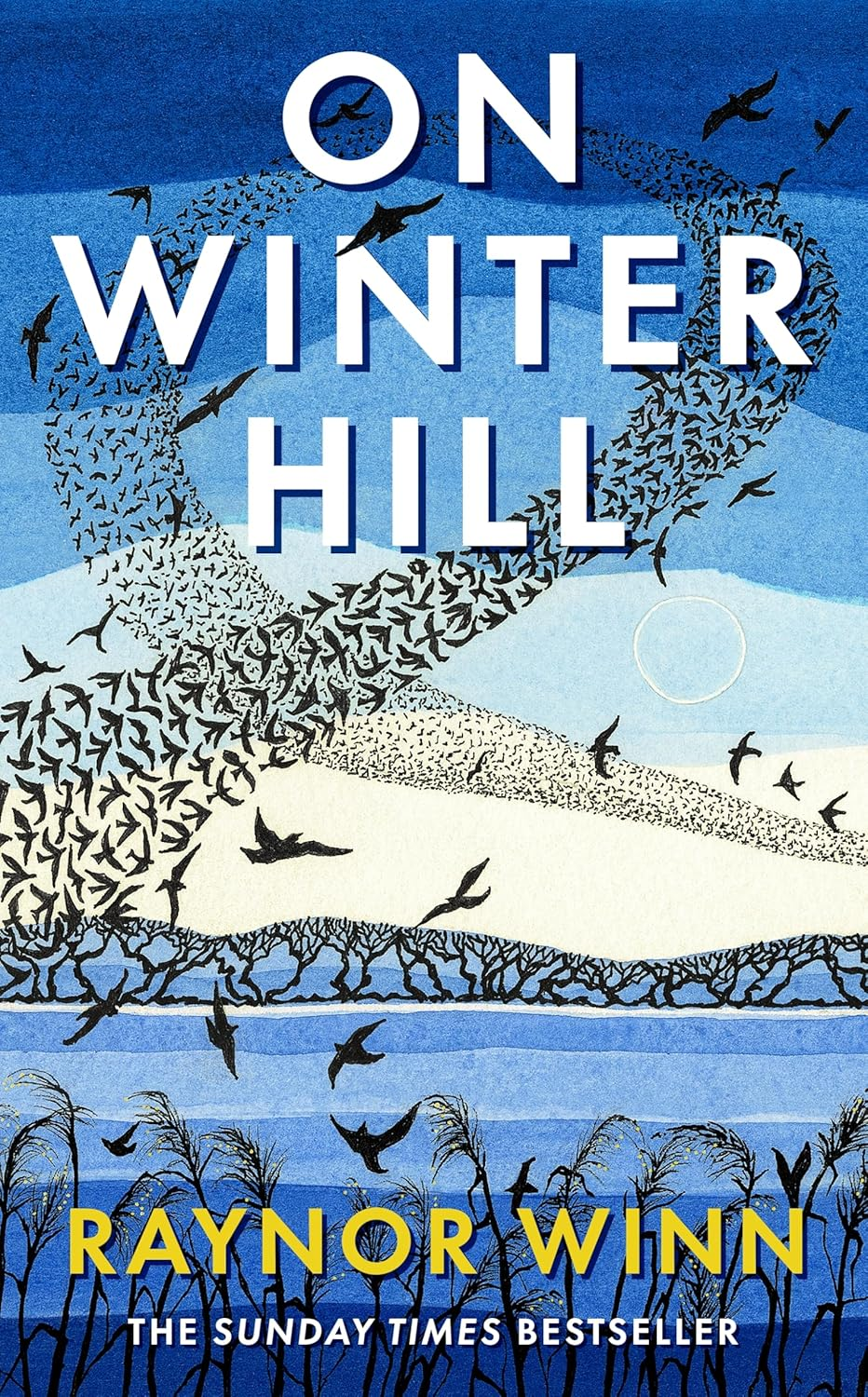
On Winter Hill is the fourth book by award-winning nature writer, whose book about the south west coast walk of her and her seriously husband was recently made into the film The Salt Path.
Now as Raynor laces up her walking boots once more, to complete the Coast to Coast Walk. But after 45 years of walking hand-in-hand, a setback in her husband’s health means this time she is walking alone.
As she makes her way across boggy moorland and snowy fells, she replays in her mind the events that led on on this parth, like a migratory bird on a journey for survival.
Faced with turbulent weather, impassable routes and her own inner turmoil, Raynor looks to nature for the strength to grapple with Moth’s absence, and to calm her overwhelming anxiety about the future. Can she find the renewed peace and hope that previous journeys have yielded? And will Moth find the strength, to walk beside her once again?