Skin Tags (what they are and how to remove them)

Skin tags are little (usually non-cancerous) growths that appear on the skin. And although there is no medical concern, they can catch on things like jewellery, and some people prefer to remove them.
They can appear with age or sun damage, and a common cause is when people put on weight, so clothes rub against the skin (say bras that cause them on underarms, due to friction).
The bad news is that most GPs won’t remove them for free, as they are classed as ‘cosmetic’. Although a few may, as it’s a pretty simple procedure for them to freeze them off. A good idea is to focus on the fact that they catch on things, then maybe he or she will oblige!
If not, then how do you remove them? This is simple if you have money to visit a dermatologist or specialist beauty salon. But what about home-suggested options? How they work and more importantly, do they? Let’s find out!
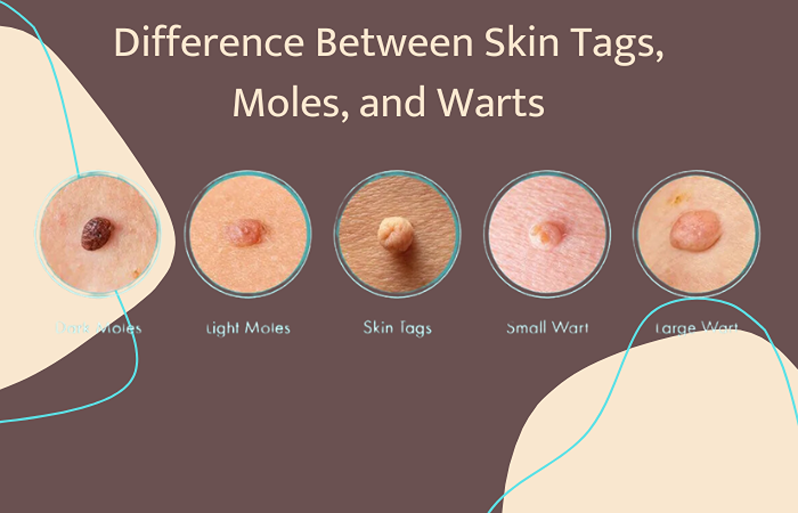
Skin tags are not the same as skin growths. So never try to use these methods to remove moles, birthmarks, dark or hairy or unusual skin conditions. Talk to your GP. See this image to view the differences between a skin tag, wart and mole.
Cryotag (freeze them off)
Cryotag (sold in chemists) is clinically proven to remove skin tags in 2 weeks (most before). As the name suggests, it uses the same freezing technology used by doctors and dermatologists. With over 10,000 5 star reviews, you simply use it at targeted areas.
You must not use Cryotag if you are diabetic or have had any type of skin cancer. Other exclusions are poor blood circulation or blood/bleeding problems, irritated skin, people under 18 or on the eyes, eyelids, face, lips, inside the mouth, nose, anus, genitals or buttocks (see your GP).
You can watch a video online of a user. He applies it, it starts to go black as it dies, then falls off. ‘Cryo’ means ‘icy cold’ in Greek, and removes the skin tag without chemicals. This freezes the core to cause it to die, and fall away very quickly. Once applied, you use the supplied tweezers to grab the skin tag, so you can get to the stalk, to ensure liquid is applied here to make the product effective.
You can treat larger or stubborn skin tags for up to 4 times. Read the instruction leaflet for more info. Occasionally you may feel mild side effects like tingling or stinging or even blisters (don’t pop them), but these should not cause alarm. Keep the areas clean and you should be fine.
Like any aerosol, keep this product away from heat and sunlight. At end of use, you can recycle empty containers. Half-empty containers should be recycled at hazardous waste (your local tip). Never use in enclosed areas, as any kind of gas could contribute to carbon monoxide poisoning.
Cryotag is not tested on animals. It’s not really eco-friendly either. But it’s basically a home alternative to uber-expensive cosmetic treatment (around £250 per single skin tag!, if you have skin tags that you need to remove, and your GP can’t help. It costs around £20 per product.
Scholl Freeze Away Skin Tag Remover is basically a product that works just the same.
TagBand (for larger skin tags you can ‘grab’)
TagBand can treat up to 10 skin tags. You use this like an ear-piercing gun to ‘punch’ the skin tag, which leaves a tiny band around, as a modern alternative to wrapping dental floss or elastic bands (which also helps to reduce litter).
Not suitable for latex allergies.
Dispose of the tiny bands in a secure litter bin, once used.