Fountains Abbey, Yorkshire (England’s largest monastic ruin)
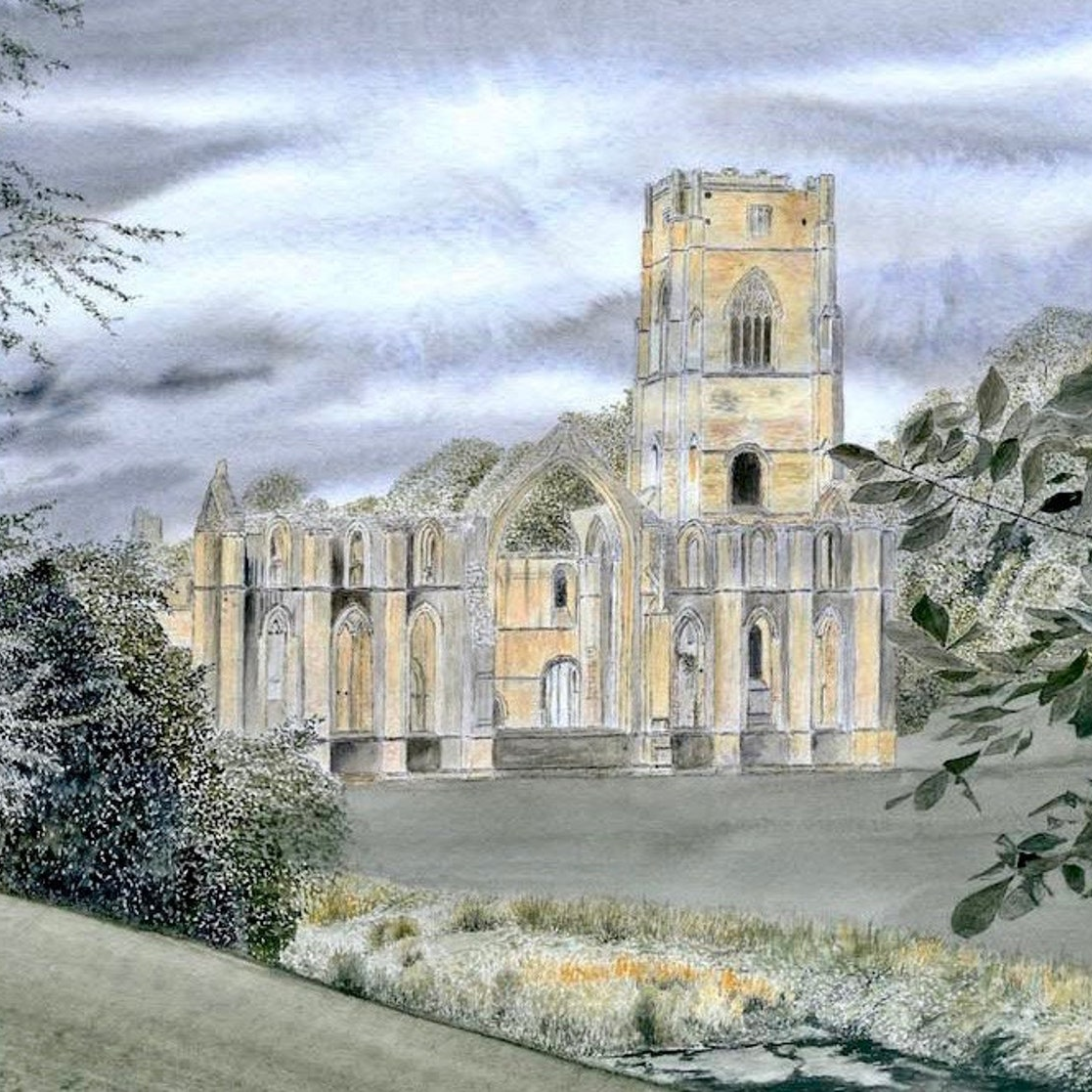
Fountains Abbey is England’s largest monastic ruin, a UNESCO World Heritage Site, which was founded in 1132 by 13 monks seeking a simpler life. It’s a bit ironic that it’s now a major tourist site, owned by the National Trust!
Once this was the richest Cistercian monastery in England. This is a Catholic order (there are many – Franciscans, Benedictines, Passionists, Jesuits). This blogger has a guide to the differences (his favourite order is the Dominicans, because ‘‘everyone needs a favourite, it’s like baseball!)’
Cistercians focused on very simple living (a bit like ‘the Quakers of the Catholics!’!) They dressed plainly and often built homes in secluded valleys, and spent their days doing manual labour and prayer. One kind of Cistercians you’ve likely heard of are ‘Trappist monks and nuns’. They often brew beer and sell it to maintain their monasteries.
This is why Fountains Abbey is far plainer than most abbeys in England.
However like so many of England’s ancient churches, it was raided when Henry VIII decided to replace the Pope with himself as head of the church, so he could divorce and remarry, in order to produce a son and heir. The abbey was stripped of lead, and later turned into a lavish landscape garden.
When the monks first arrived, the site was described as more suitable for ‘wild beasts than men’. But that suited them fine, and they were quite happy living there. The site still features the oldest surviving Cistercian watermill, from where they worked.
There also remains a cluster of yew trees along with ancient oaks, old pollard chestnuts and lime tree avenues. Which today offer important habitats for local birds and bats. The grounds are also home to around 300 wild deer (who graze in summer and are supplemented in winter with fodder beet in winter).
Keep dogs at least 50 feet away from wild deer (on short leads). Also keep them away from the trees, as yew, oak and chestnut are all toxic (as are many trees to livestock and horses). Read more on pet-friendly gardens.
National Trust allows dogs outside on leads (due to deer and cows). But not in Fountains Hall, Porters Lodge of Studley tea-room (or children’s play areas). So if taking your dog, ensure someone can look after them outside, never leave dogs in warm or hot cars.
Nearby Ripon (Yorkshire’s smallest city)
Just four miles away from Fountains Abbey is Ripon, the smallest city in Yorkshire. Located in North Yorkshire, it has a 7th century cathedral and stunning medieval architecture.
The city is known primarily for its nightly Hornblower ceremony, which has been around for over 1000 years. Each evening, the local Hornblower blows a horn at the four corners of the market obelisk at 9pm, to signal the setting of the watch.
With a population of around 17,000, it’s only really a city due to the cathedral, and more like a small town. Obviously back in the day there must have been a lot of scallywags, as the three museums are all based on law and order: the Prison and Police Museum, the Workhouse Museum and the Courthouse Museum!
Ripon sits on a bed of gypsum (soft bedrock) so is prone for areas collapsing into sinkholes, with serious events happening every few years. The city has to use 3D geological modelling and planning checks, to manage risk.
In 2016, fire crew had to visit a street with a sinkhole measuring 20m by 10m, and people were evacuated from their homes. Thankfully there were no injuries.
One resident said she went to the garden and realised there were no steps and the ground was moving. ‘I turned back ground, grabbed hold of a metal pole, and pulled myself up and back into the house’.