Tea Lab Company (sold in glass test tubes!)
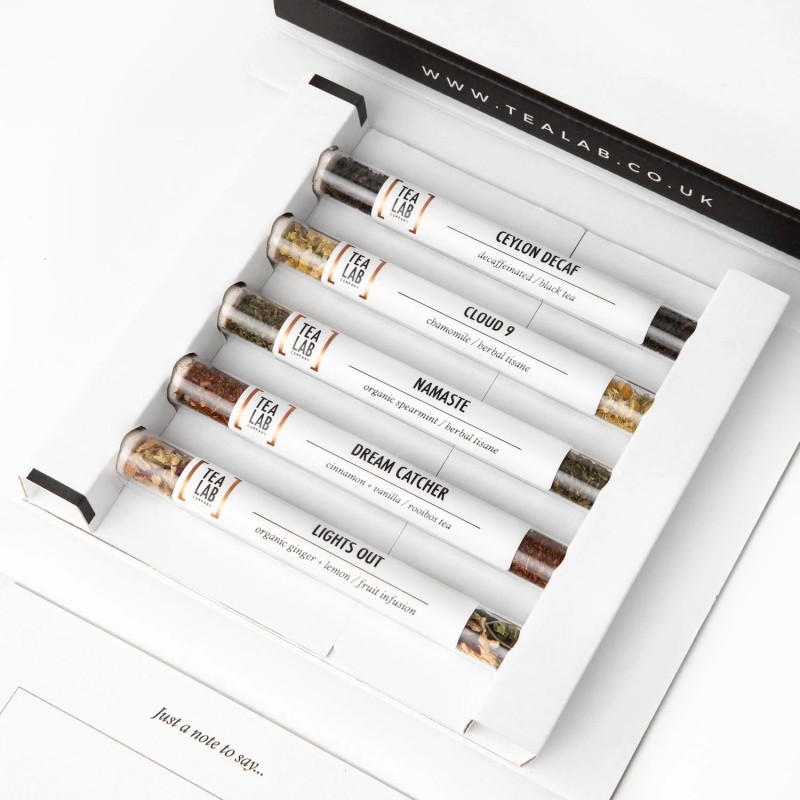
Tea Lab Company is a lovely brand, founded by identical twin sisters (and a scientist) who had the good fortune to be raised in Hawaii and Barbados (nice!) They not only pack their organic teas in glass jars and test tubes to be recycled, but a portion of profits help a wonderful charity that rescues orphaned elephants and rhinos. How good can this get?
You can find loose teas in all flavours from classic Assam to herbal to rooibos. The letterbox mailer teas are sent in glass test tubes with cork lids, including eco-fillable tea bags
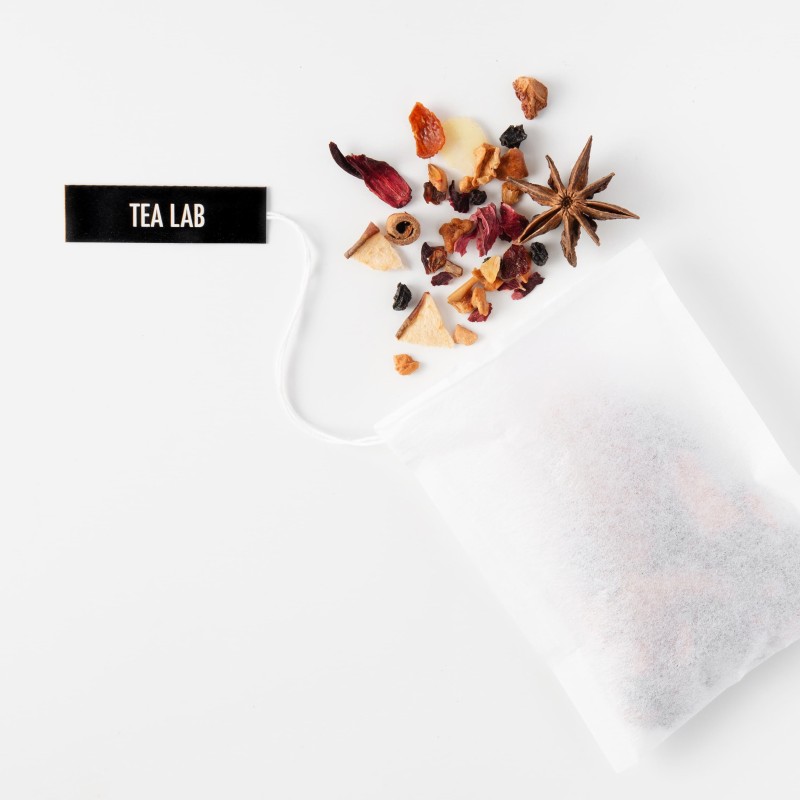
Everyone in England likes a nice cup of tea. Most teas are packed in plastic, which means that when you pour hot water over the tea bags, you’re literally drinking microplastics. Fair Trade tea is also important, as tea plantation workers often live in some of the poorest countries on earth.
And tea leaves are very absorbent, so choosing organic not only is good for you and the planet, but the tea plantation pickers (they don’t therefore have to wear protective clothing, in very hot climates).
Elephant-friendly tea plantations promise not to poison elephants, farm organically and avoid electric fencing, razor wire and deep narrow ditches (difficult to cross).
NHS says that it’s best to avoid caffeine for pregnancy/nursing (or no more than 2 cups of weak tea daily – or 1 cup of mild coffee or cola). Some teas (like hibiscus and liquorice) should be avoided for pregnancy/nursing.
Although tea leaves are natural, in excess their acids could harm compost creatures. So latest advice is to just bin them (or put them in food waste bins) to naturally break down. Use a sink protector mat to catch tea leaves, to avoid them clogging your sink. The same applies to coffee grounds (and acidic food scraps – alliums, tomato, citrus and rhubarb).
Beware (not all ‘plastic-free’ teas are true)
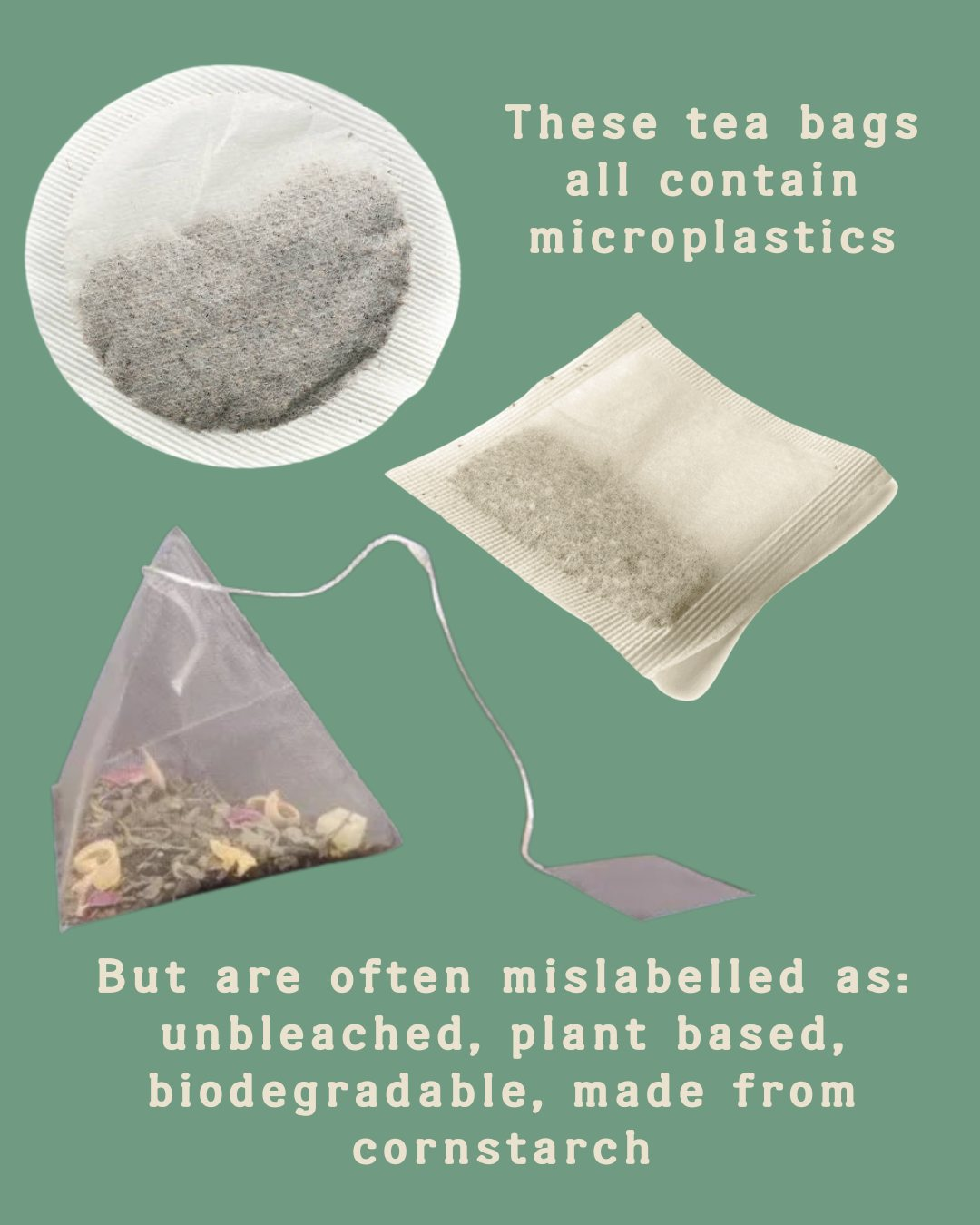
Years ago, all tea was sold loose. But now most contain plastic. Just one bag at 95 degrees C can release over 11 billion microplastics into your drink. So unless you use loose leaf tea, look for plastic-free tea brands.
Be careful, as some brands label their teas as ‘plastic-free’, when they actually use plant-based PLA (polylactic acid) that still is not truly plastic-free.