The Ancient Chalk Carvings of England
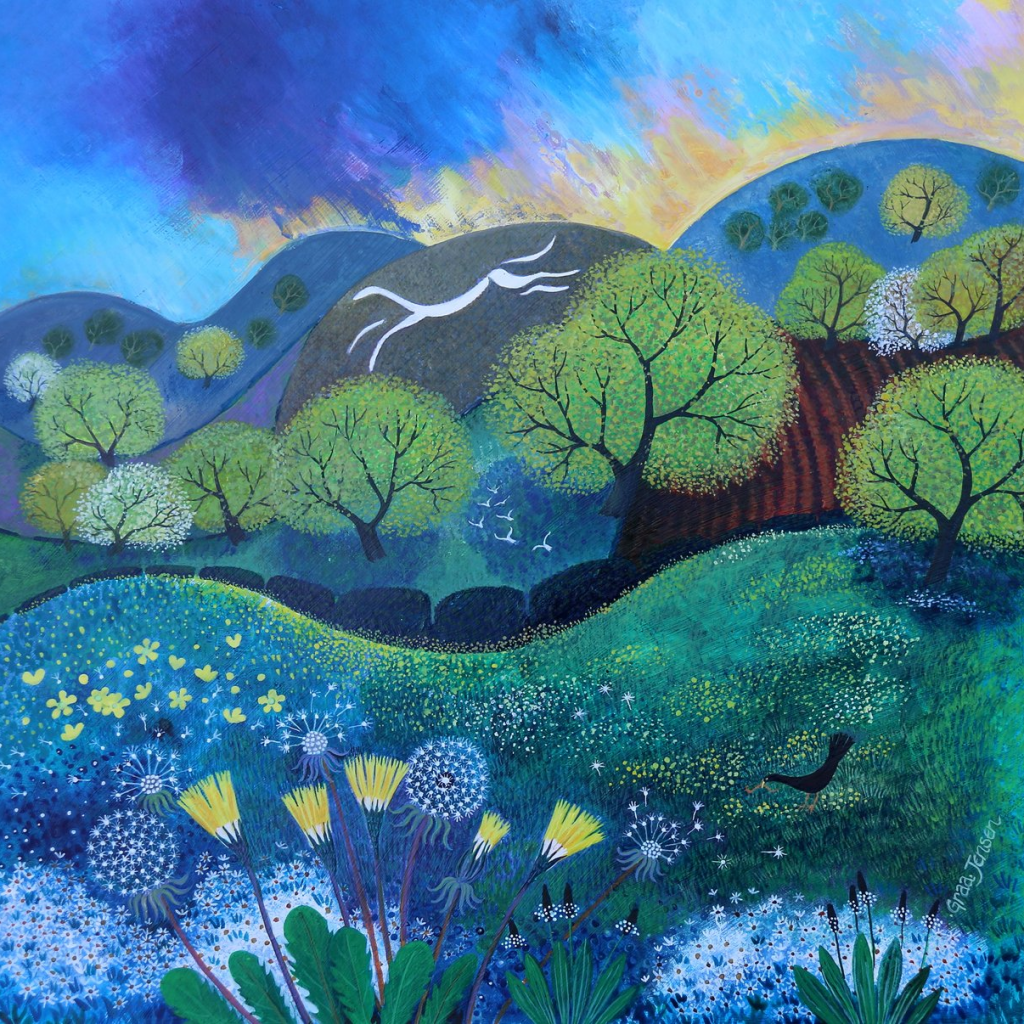
England’s chalk hills have many ancient figures, carved out by long-lost communities, hundreds of years ago. Most are in southern England (in Wiltshire especially).
Westbury White Horse at Bratton Camp dates from the late 1600s, surrounded by grassland that supports herbs and grasses, and gives habitat to the rare Adonis blue butterfly, and forester moth. Other well-known chalk figures are Oxfordshire’s Uffington Horse and Dorset’s Cerne Abbas Giant.
If out walking, follow the Countryside Code, to keep all creatures safe.
The Long Man of Wilmington (East Sussex)
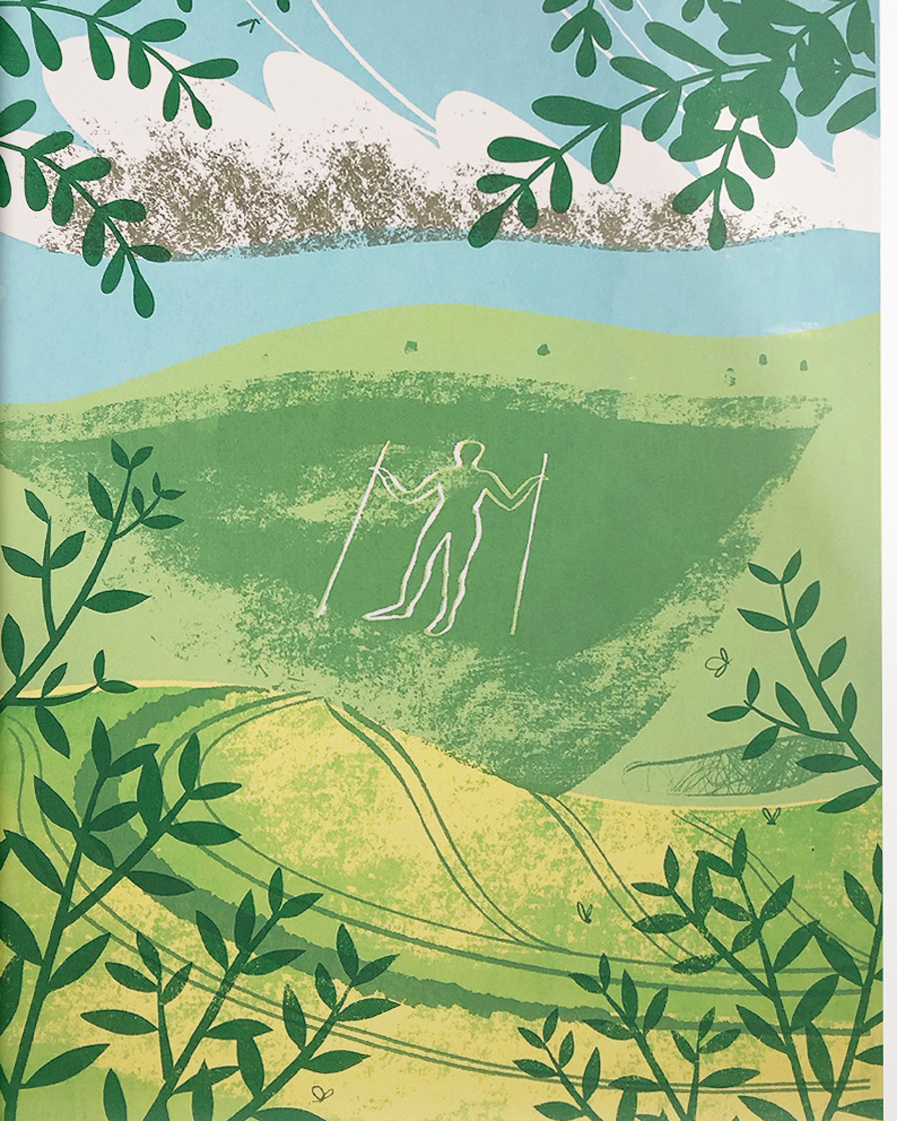
The Long Man of Wilmington is a 70ft giant man carved into the chalk hills of South Downs National Park near Alfriston (a pretty ancient Sussex village). His origin and reason for carving him have remained a mystery for generations.
We know he is over 300 years old (due to a sketch of him in 1710), and some believe he could have been carved as early as the Iron Age, or in Roman times.
In 1920, the chalk had faded, so locals and historians gave him a makeover with chisels and paint, and today there are surrounding concrete blocks, so he is easier to maintain!
The Long Man holds a stave in each hand, perhaps to symbolise his strength, to measure the land, or perhaps he was an astronomer? Or is watching over the fields? Nobody knows. One tale is that he marks the site of eternal rest, of two giant brothers who roamed the South Downs, and fell in battle.
If you wish to visit the Long Man without a big hike, it can be viewed from nearby Wilmington Priory. Nearby is the Litlington Chalk Horse, much smaller and carved into the hill in 1924.
The village of Litlington sits on the bank of the River Cuckmere, dating back to Domesday times. It’s home to one of the smallest churches in England, a charming architectural gem inspired by Gothic design, built in the 13 century. So is much older that its horse friend, by several hundred years!
Books to Learn More on England’s Chalk Carvings
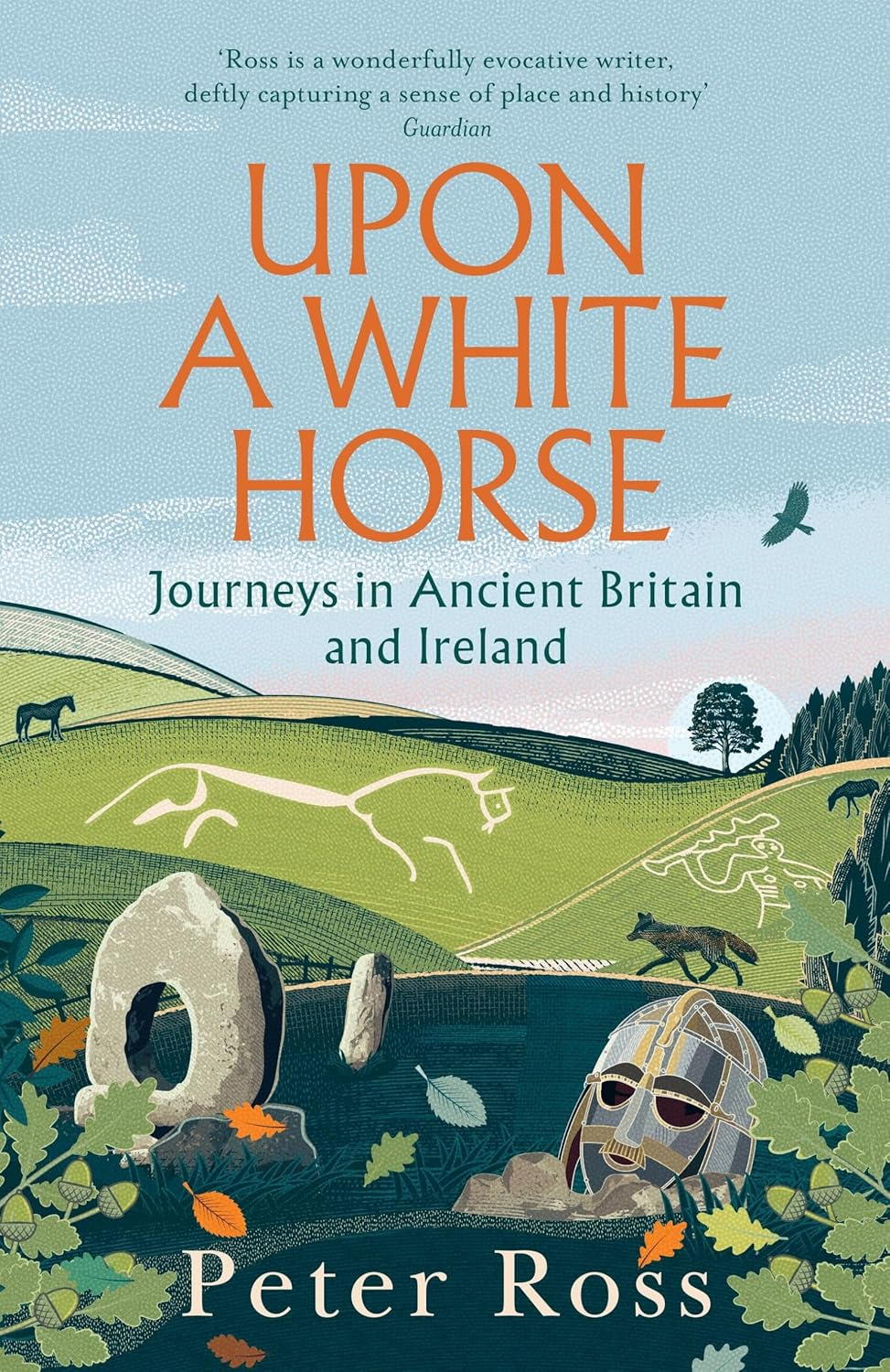
Once Upon a White Horse is an armchair journey around ancient sites in Britain and Ireland including chalk giants in Dorset (and learn what draws volunteers to care for the Uffington White (chalk) Horse).
The book also visits Stonehenge, Sycamore Gap, a wooden goddess in Edinburgh and even bog bodies in Dublin. Learn what it’s like to live within the great stone circle at Avebury, and how ancient places fill a hollow in our souls.
Author Peter Ross is an Orwell journalism fellow, who won the non-fiction prize at Scotland’s National Book Awards, and lives in Scotland.
Britain’s Landmarks & Legends is an illustrated guide to 50 iconic British landscapes including the Uffington White Horse, along with Cheddar Gorge, Sherwood Forest, the white cliffs of Dover, the standing stones of Avebury and Calanais, and the burial mounds of Sutton Hoo.
Many of these landmarks are open to the public, but a few are located on private land, with no public right of access. The author (writer in residence at Royal Scottish Geographical Society) advises you steer clear of Dunmail Raise, and it stands in the central reservation of a dual carriageway!
The Land of the White Horse tells the story of the iconic carving in Uffington, carved into the chalk of the North Wessex Downs. It has inspired artists, poets and writers including including Eric Ravilious, John Betjeman and J.R.R. Tolkien. Author David Miles is former director of Oxford Archaeological Unit and chief archaeologist at English Heritage.