Small Changes, Big Relief: Your Happy Gut Checklist
Our digestive systems are miracles of nature, yet millions of people in England spend each day popping pills to heal indigestion. Sometimes this is due to a gluten allergy. But often due to eating foods that are low in fibre and preventable conditions like constipation and IBS (irritable bowel syndrome).
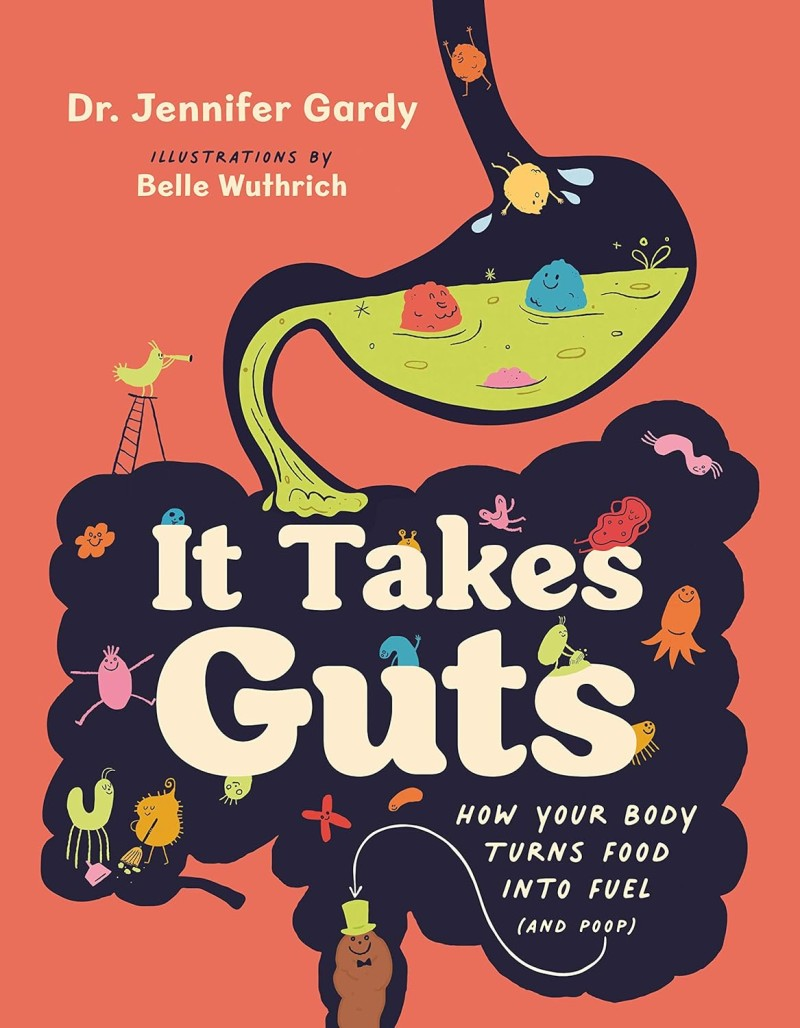
It Takes Guts is a fun book to explain in plain English how bodies turn food into fuel – and poo! Once you know how your body works, it’s empowering to know which foods to eat and avoid. You’ll also learn about helpful bacteria and how acids break down food, without burning holes in your stomach!
Vegums Wholefruit Gut Health Gummies
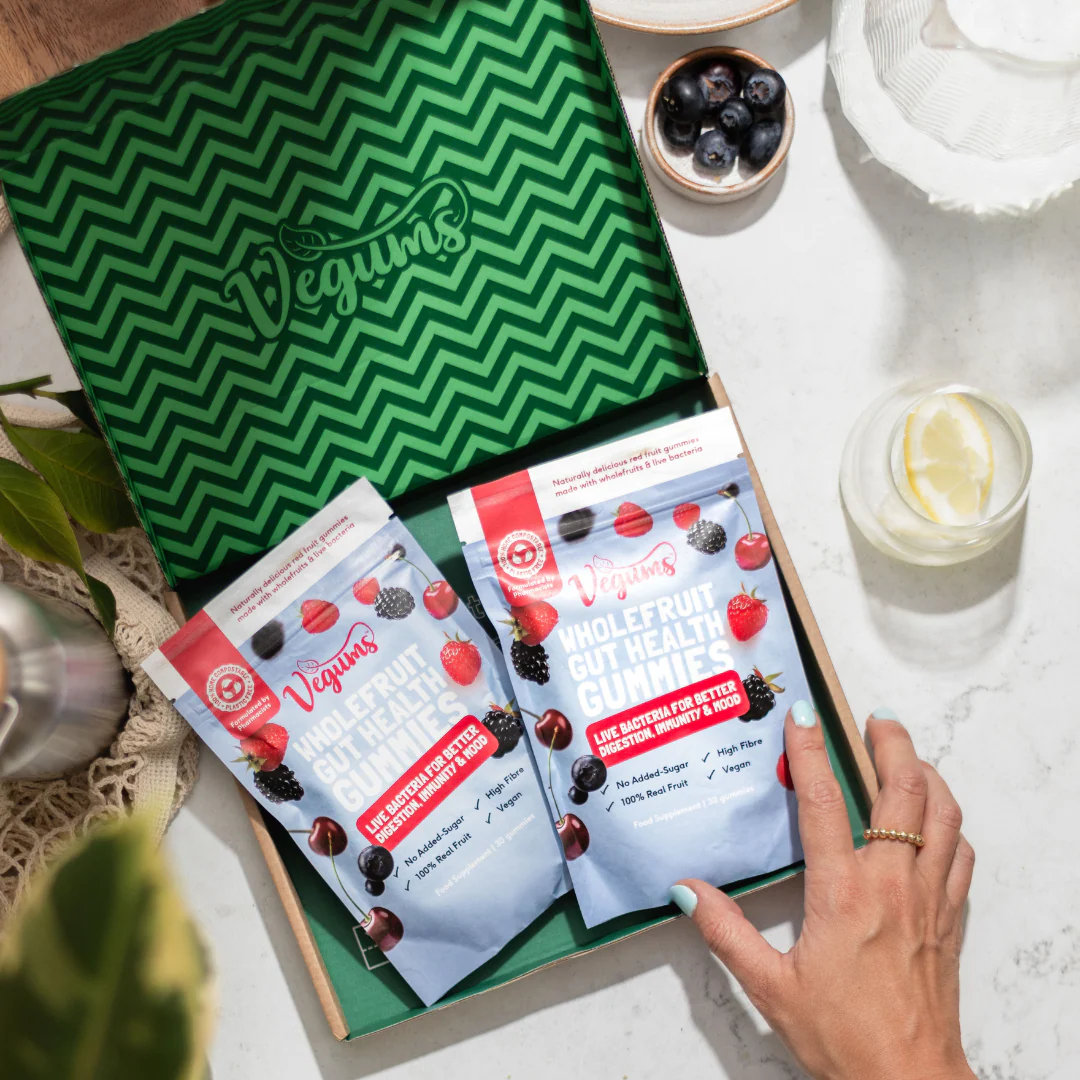
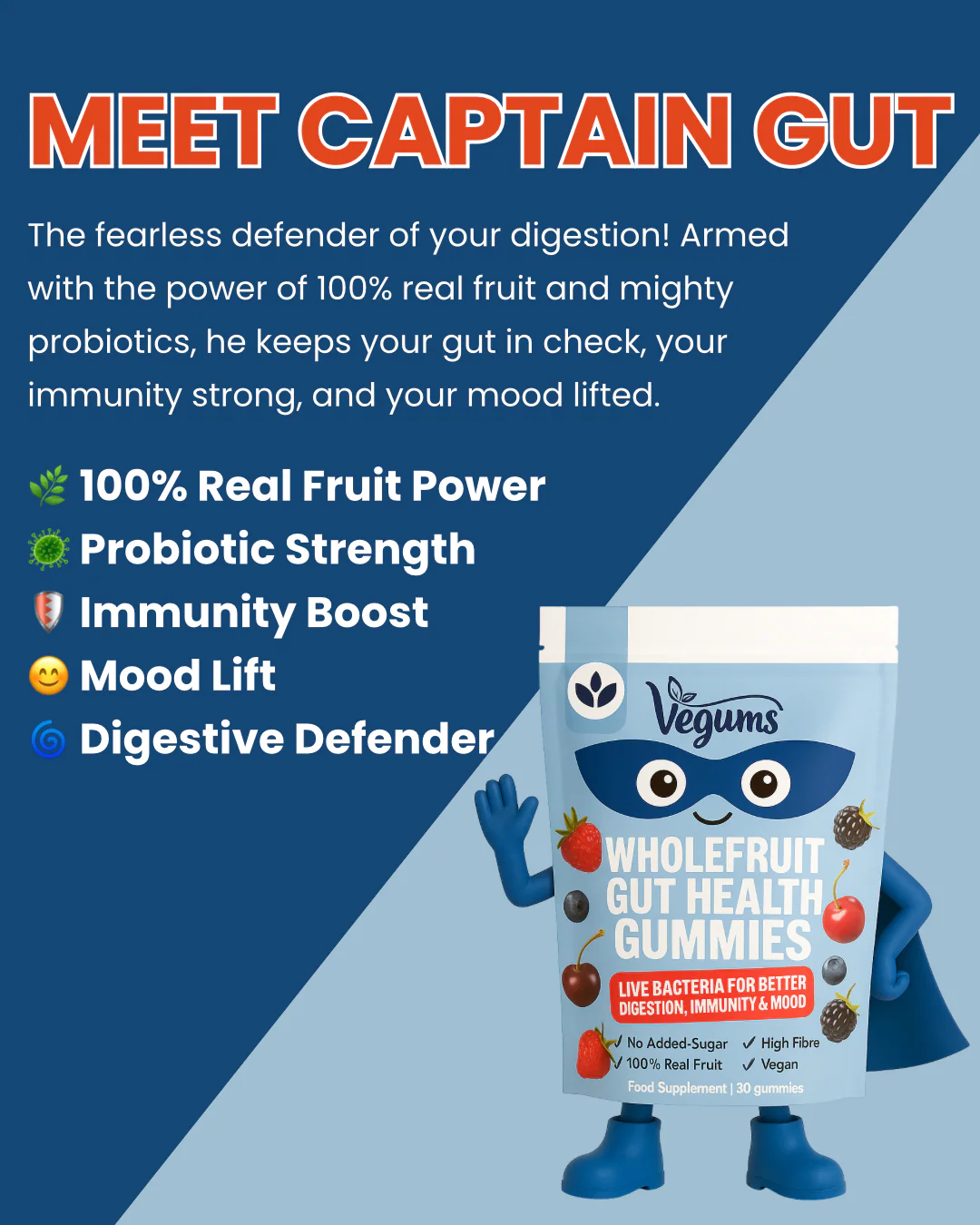
Vegums whole fruit gut health gummies are by a brand founded by two pharmacists, and sold as easy-to-chew flavoured gummy sweets, to get your nutrition. Also in a child’s version (for age 3 to 11 – after 12 take the adult version). They are sold in tins with compostable refill pouches.
Always check with GP if pregnant/nursing or taking any medication, before using supplements. Keep away from young children and pets, as they look and taste like sweets.
These contain 2 billion live CFU bacteria (or 1 billion for the child version) per serving, made from over 96% real fruit. Formulated by pharmacists, they are flavoured with blackberry, raspberry, strawberry and cherry. Most people find relief within a few weeks.
What are gut-healthy foods?
Fresh fruits and vegetables, pulses (beans, peas, lentils) and whole grains are all pretty gut-friendly. Fibre adds bulk to your stools, to help prevent constipation (as long as you also drink plain water and eat slowly, to help food absorb better).
A good way to see how your tummy is, is to look at your poo! Obviously see a GP for anything serious (and don’t worry if poo turns a bit pink or black if you eat beetroot or liquorice).
Sticky poo is due too much dairy/gluten, smelly poo is too little fibre and too much acid (give up meat). Greasy poo is due to fast food (Joy McCarthy writes that if you poo looks like ‘an oil spill in the toilet’, it’s your liver and gall bladder begging for love!) Alcohol can also cause havoc, as can dehydration (rabbit poo) and too much caffeine (race car poo!)
If any of the above apply, drink more plain water, eat more plants and fibre, and slow down your lifestyle. You should notice positive changes within days.
Read up on food safety for people and pets (don’t give vegan fried chicken to pets as it contains unsafe ingredients like onion, garlic, spices etc – raw or cooked chicken bones should never be fed to animal friends, due to choking hazards). Before recycling tins, rinse/remove lids (or pop ring-pulls over holes) then step on cans to ‘pinch’ inner rims together, to stop wildlife getting trapped.
Although it’s good to compost food scraps, unless you have a food waste bin (turned into biogas), just bin allium scraps (onion, leeks, garlic, shallot, chives), citrus/tomato/rhubarb scraps and tea/coffee grounds. To avoid too much acid/caffeine affecting compost creatures.
A Coconut Yoghurt (with gut health benefits!)
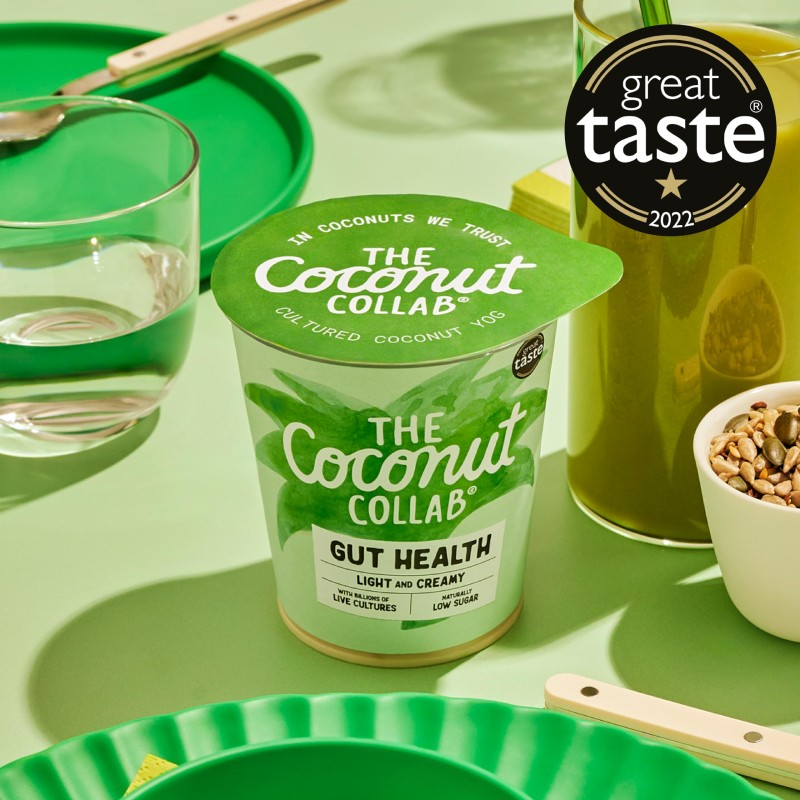
Got an icky tummy? You’ve likely heard that yoghurt is good for your gut, but you don’t have to eat dairy to get the benefits. Look in shops for The Coconut Collab gut-health yoghurt.
Made with fresh coconuts combined with coconut water, the mix is then fermented (just like dairy yoghurt) to produce millions of healthy bacteria for a healthy tummy.
The Coconut Collab never uses monkeys to harvest their coconuts, and never uses palm oil (this helps to protect orangutans and other endangered species from deforestation).
This brand makes lots of other tasty coconut yoghurts, this one is a little different in that it has billions of additional live cultures added. Like all their yoghurts, it’s fortified with vitamins (including B12, the one really important for vegans) and calcium.
Fermented foods, kefir and kombucha
Many fermented foods are unpasteurised (and may contain caffeine or alcohol) so avoid for pregnancy/nursing, weak immunity, children and some medical conditions (IBS, leaky gut, low-salt diets, histamine intolerance and awaiting transplants).
- Sojade organic plant-based yoghurts (find in health shops) contain the same ‘good bacteria’ as dairy, without the cholesterol.
- Fermented foods include sourdough bread, sauerkraut and kimchi (both from cabbage), tempeh (an Indonesian food to replace meat) and miso (a tasty Japanese condiment).
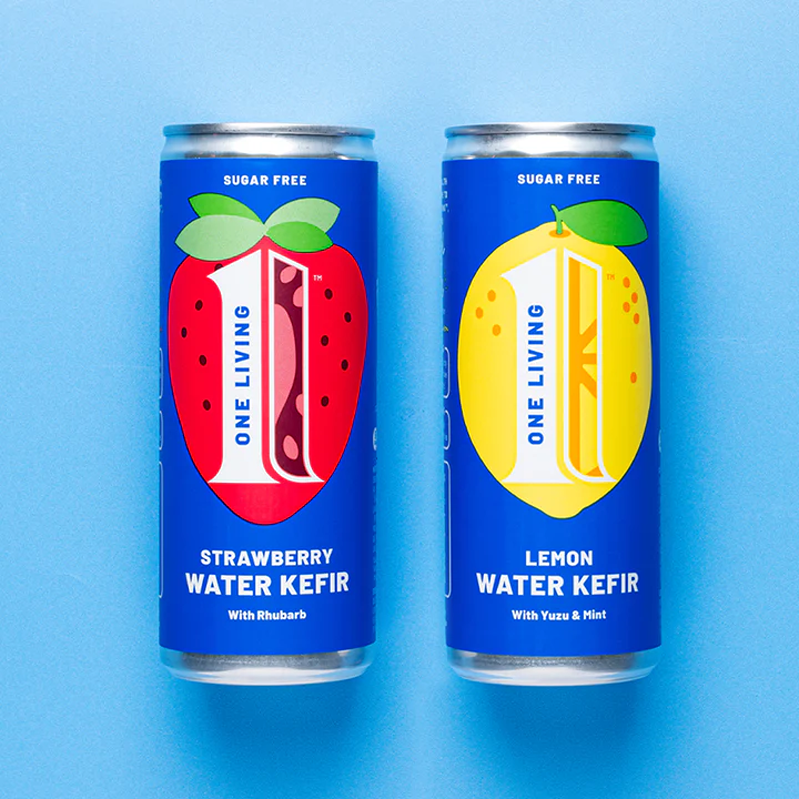
- Kombucha and kefir are usually in drinks (use store-bought versions for safety, to avoid bacteria). ONE Living (founded by rugby legend Jonny Wilkinson) also offers canned water kefirs. Choose from strawberry or lemon flavours.
Before recycling tins, rinse/remove lids (or pop ring-pulls over holes) then ‘pinch’ inner rims together, to stop wildlife getting trapped.
A Gut-healing Raspberry Smoothie Recipe
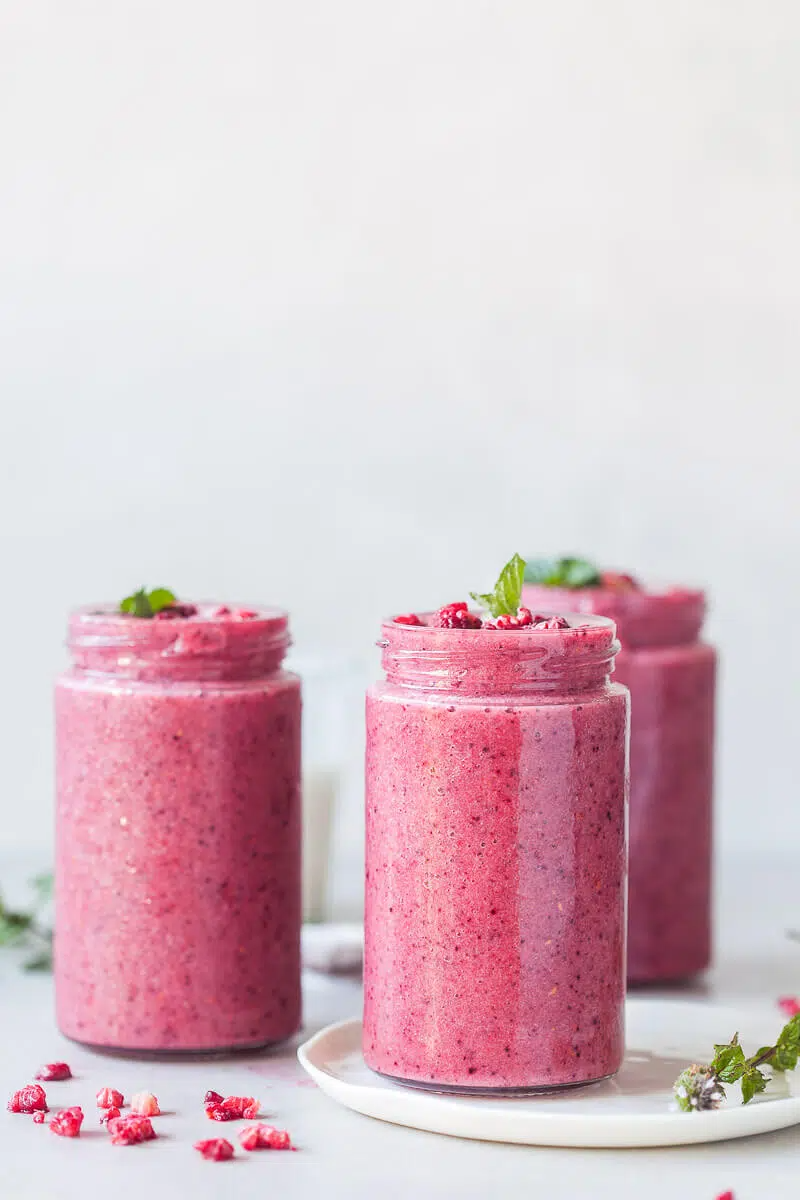
This gut-healing raspberry smoothie (Vibrant Plate) is made with coconut yoghurt, so does your tummy good, as well as your tastebuds! It also contains strawberries, blueberries and pear, so you get your five-a-day in one drink!
Dr.Vegan healthy digestion supplement
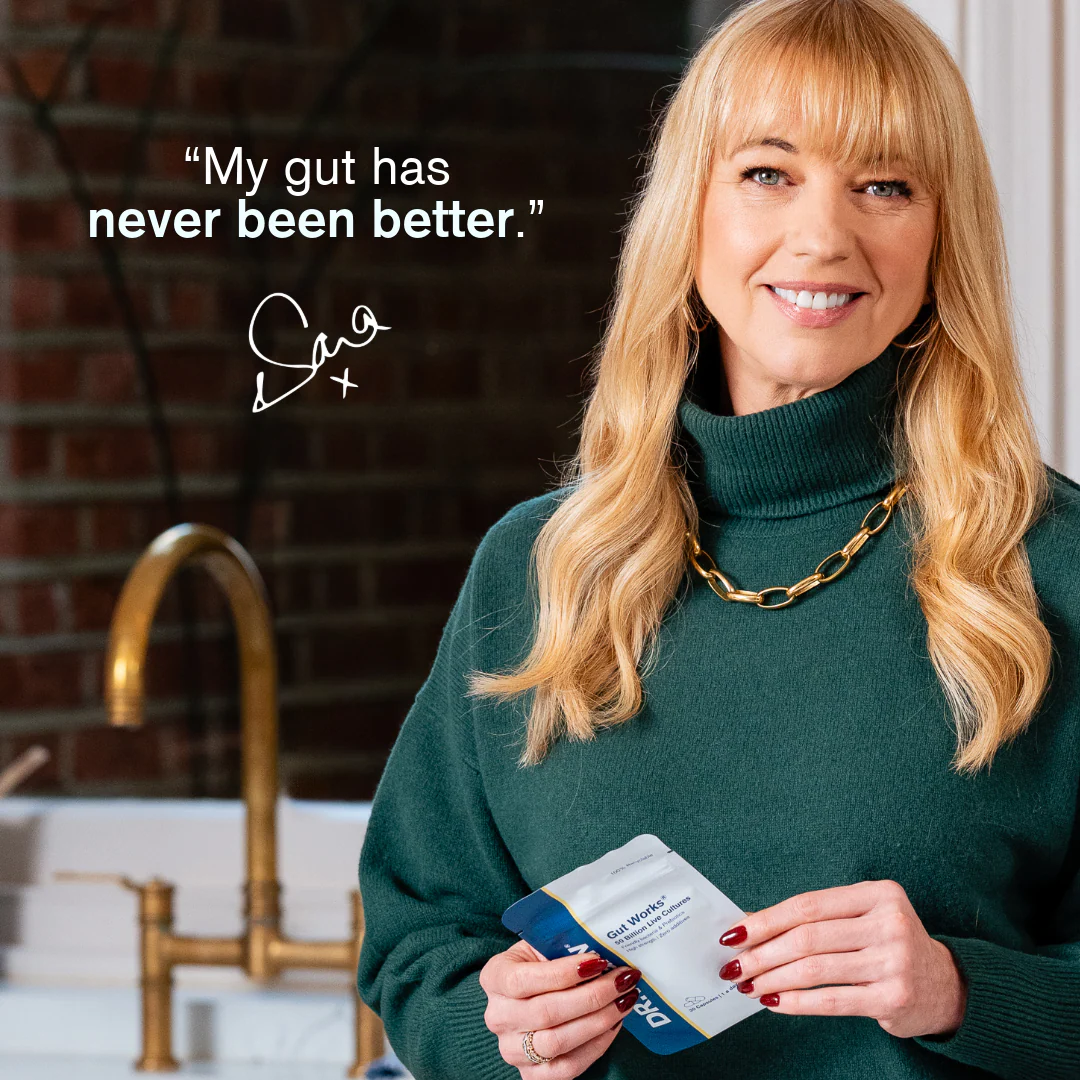
Dr.Vegan Gut Works is a quality supplement, the first order is sold in a refillable metal tin, then you just order refills in eco-pouches thereafter. You can buy once, or get a free pill tin, then subscribe for bigger savings.
It contains 6 scientifically studied strains of bacteria, with prebiotics and psyllium husk, to support a healthy gut and bowels (88% of people find it effective). Just take 1 capsule each day for at least 6 days (morning or evening, with or without food – take at least 20 minutes before or after hot food or drink).
These supplements are sensitive to heat, so keep pouches sealed, away from warm air and radiators.
Always check with your GP before taking supplements if on medication (also for women if pregnant or nursing). Keep them away from children and pets, and recycle unused supplements and medicines at pharmacies (never flush them down the loo).

- In 2 weeks (better gut health and good bacteria)
- In 1 months (healthier bowels, less digestive discomfort, bloating and gas)
- In 2 months (better absorbed nutrients & gut health)
Together Health Multibiotic has 36 fermented fruits and vegs, plus 16 addiction live bacteria strains to promote growth of good bacteria, and 13 billion CFU at time of manufacture
Feel Daily Biotic Supplement
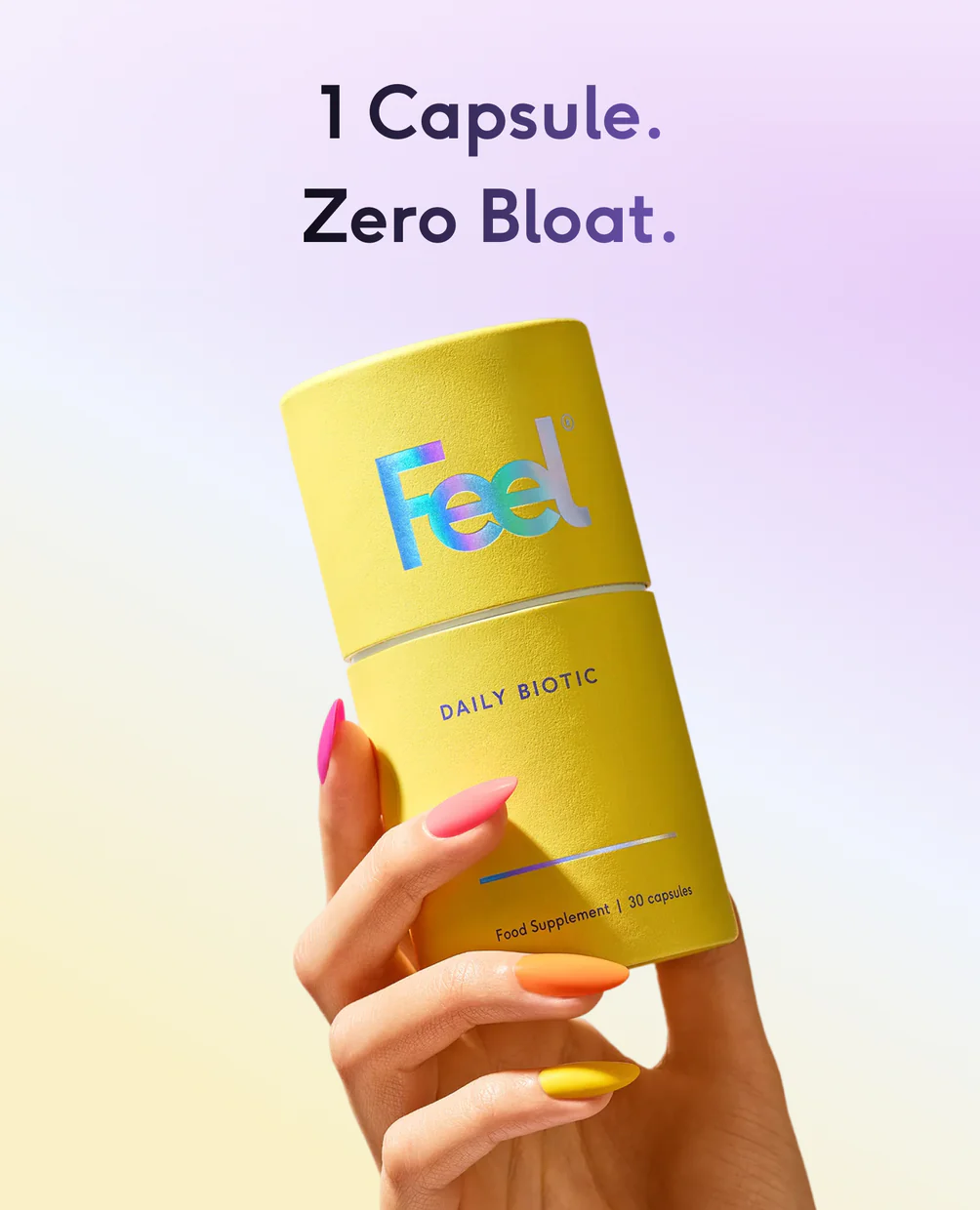
Feel Daily Biotic is a quality nutritional supplement formulated by experts, and sold in zero waste sustainable packaging. All their products are vegan and not tested on animals.
Teens and older children can use it, although those under 13 may be better served by a child-friendly probiotic. Use code partner20 for 20% discount (not bundles or subscriptions). If you subscribe, sign up for an account to earn discount rewards.
With results in 90 days, this supplement uses strains used in human clinical trials, to reduce bloating, constipation and abdominal comfort in just as few weeks. It contains 10 billion CFU of live bacteria to target mood and digestion (very much linked) and has more benefits for your skin and weight management.
You should find improvements within a few days, like less bloating and discomfort after meals, and may also notice improvements to bowel movement and constipation.
- 1 month (better gut health, skin and mood)
- 3 months (better bacteria should mean less inflammation in the body and better brain function), plus stronger immune system
- 1 year (long-term digestive health and better gut microbiota)
Vegums Probiotics (for adults or children)
Vegums probiotic supplements are quality supplements (created by pharmacists), of tasty fruit chewable supplements sold in cellulose (wood pulp) bags that you just cut and compost, after use (or bin to naturally break down in the bin, without harm).
Ideal for daily health and immunity, they are also gentle on the stomach. Save 20% when you subscribe online for monthly home delivery.
These supplements contain 1 billion CFU of bacillus subtilis to help a healthy gut and smoother digestive system. Ideal for:
- Gut health
- Good immunity
- Boosted mood
- Also in a Children’s version
NHS website has good (regularly updated) information for parents of vegan children.
Together Health Multibiotic Supplement (in eco packs)
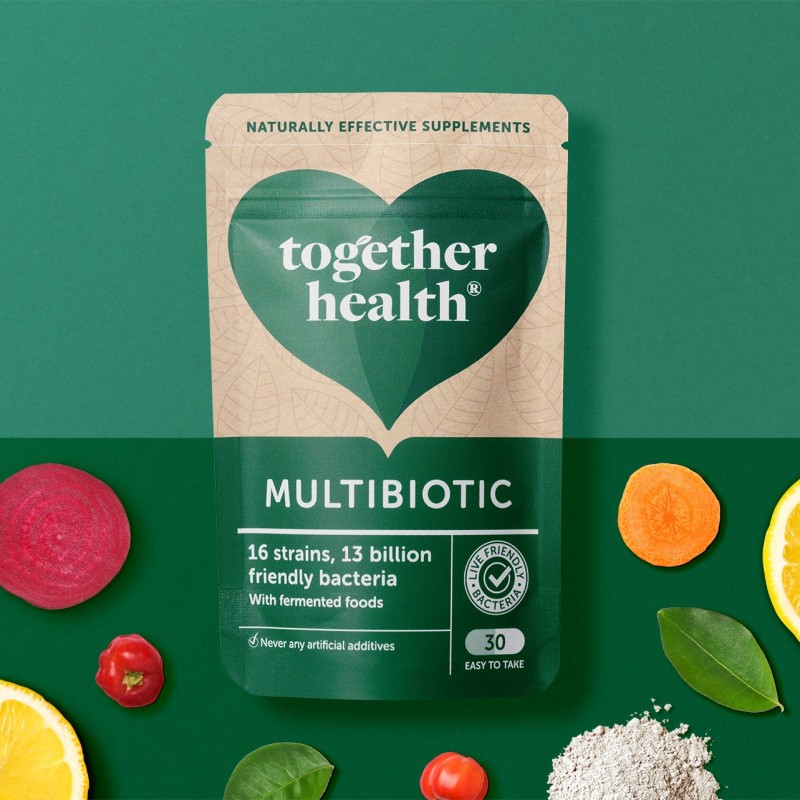
Together Health Multibiotic features 36 fermented fruits and veg (no pesticides or herbicides) and 16 fermentation and additional live bacteria strains. Together these boost the growth of human good bacteria, so good for people with digestive, bloating or tummy issues like IBS.
Always check with GP if pregnant/nursing or taking any medication, before using supplements.
The capsules are made from plant cellulose from the Pinus Elliottii tree, and can be separated and the contents mixed with food or drink if preferred.
The supplements are sold in easy to recycle pouches that are plastic-free and contain a protective film made from wood pulp. All layers are home compostible.
Subscribe online for big savings, and get double rewards cash on orders, you can pause or cancel anytime.
Why choose a multi-biotic supplement?
A healthy gut is also strongly linked to general wellbeing including brain health, healing from depression and sleep. And immunity. Listening to your gut really is that important!
This supplement contains acid-resistant strains to survive the stomach’s harsh conditions, to reach your gut alive! Ideal for optimal digestive health and wellbeing.
Feel Daily Biotic Supplement (for good digestion)
Feel Daily Biotic is a multi-strain synbiotic supplement that has 14 patented clinically proven biotic strains plus soluble prebiotic dietary fibre. It’s designed to restore gut microbiota balance, for reduced bloating, constipation and abdominal comfort, results in 2 to 4 weeks.
Use discount code WELCOME_20 for 20% off first subscription order (not for bundles nor combined with other discount codes).
Check with GP if pregnancy, nursing or taking other medication, before taking supplements.
Results to expect from Feel Daily Biotic

- Month 1 – Regular bowel movements within a few days, due to good bacteria in the gut. This can result in less bloating and discomfort after meals. And less constipation deu to dietary fibre.
- Month 2 – Improved digestion of nutrients fsrom food with overal better gut health, resulting in better clear skin (and possibly less depression, as gut health is linked to emotional wellbeing).
- Month 3 – Probiotic increase good bacteria and reduced body inflammation. Live cultures result in better digestion, brain function, mood and immunity.
- 1 year and after – Probiotics can be taken for life if needed, with live bacteria cultures and prebiotic fibre supporting long-term digestive health and efficient gut cleansing. And resulting better skin health, immunity, mood and brain function.
Feel Beauty Probiotic+ Supplement

Feel Beauty Probiotic+ is a combination of probiotics with ingestible hyraluronic acids and skin-hydrating antioxidants, due to the strong connection between gut and skin health. Reduce skin damage and find fewer fine lines and wrinkles through a supplement that makes you beautiful from the inside out! With results in 90 days.
Use discount code WELCOME_20 for 20% off first subscription order (not for bundles nor combined with other discount codes).
Do not take this supplement if pregnant/nursing due to vitamin C and other ingredients . Also check if you have any medical conditions, before using supplements. Pregnancy causes natural hair loss, it’s best to just wait for this to right itself, or check with a GP.
This supplement contains ashwagandha. Some people are concerned as it’s banned in Denmark due to concern over inducing early births and possible toxicity.
Critics have said that the ban came into force due to animal tests (never accurate) and giving excessively high doses. It also is not taking into account the difference between risky leaf extracts and safer root extracts (used in this supplement). But should be avoided for pregnancy/nursing and anyone on thyroid medication. Talk to your GP with any concerns.
Results to expect from Beauty Probiotic+

- Month 1 – Live bacteria supports digestive health to absorb more nutrients for better immunity and skin health.
- Month 2 – Botanicals and live cultures continue to help hair and skin, with gut health.
- 3 months – Skin should now be more clear and glowing, with better hydration.
- 1 year and after – Skin and hair should look better, plus better digestion and immunity
Be patient with this supplement
Hair grows in phases. So you may find that the ‘old weak hair’ falls first, and then you’ll have to wait a few weeks for stronger hair to grow in. So give it 3 months to work.
Fingernails can take up to 6 months to grow out entirely.
Dairy-Free and Deeply Green: Ultimate Yoghurt Guide
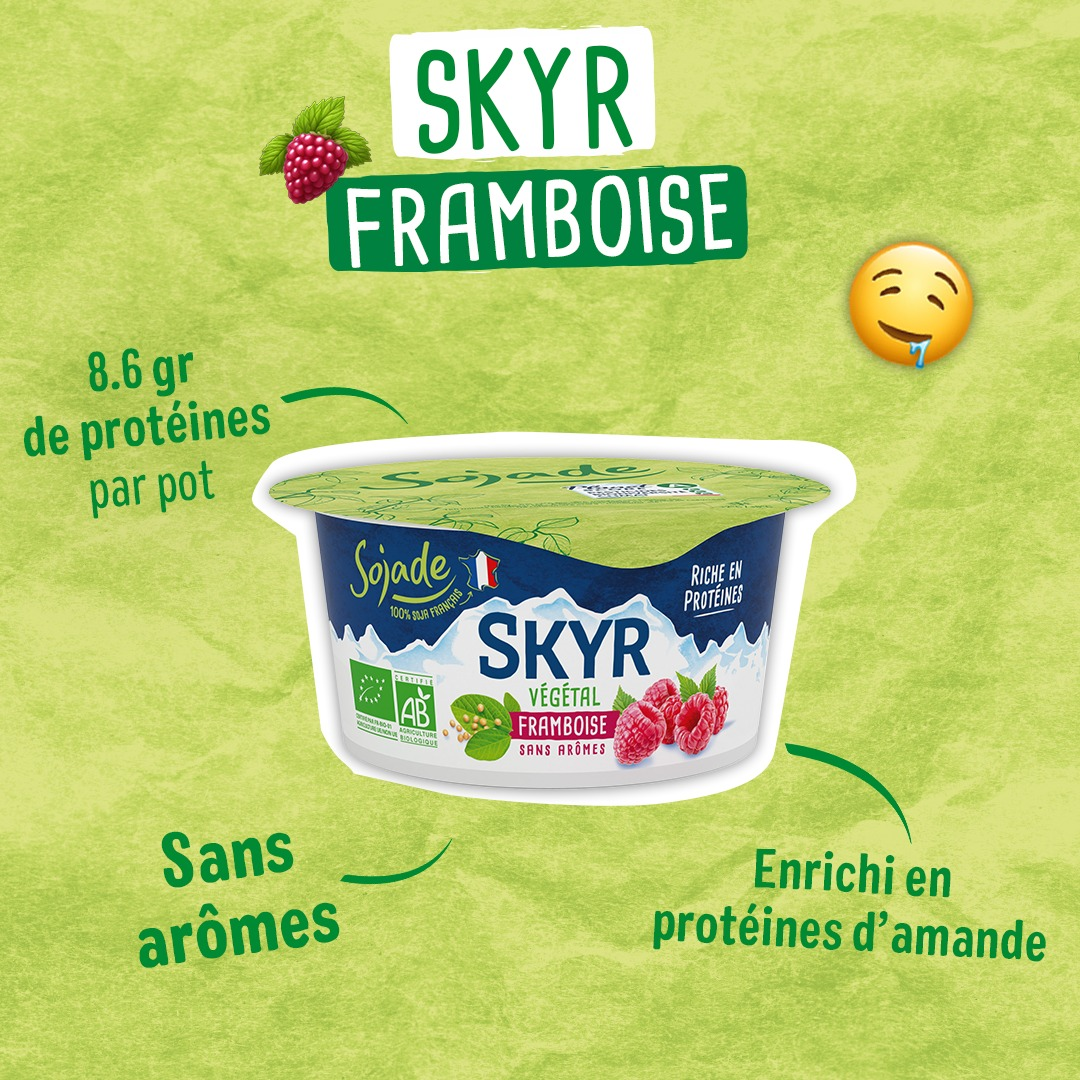
Sojade is a France yoghurt brand, made in a solar-powered factory, and only sold in health shops. They got rid of plastic lids years ago, and the flavours are more unique than the usual supermarket fodder.
The company buys beans that do not come from cleared rainforest land. This protects habitats and helps keep deforestation-linked emissions out of the supply chain.
Recycle packaging at supermarket bag bins, if your kerbside does not recycle.
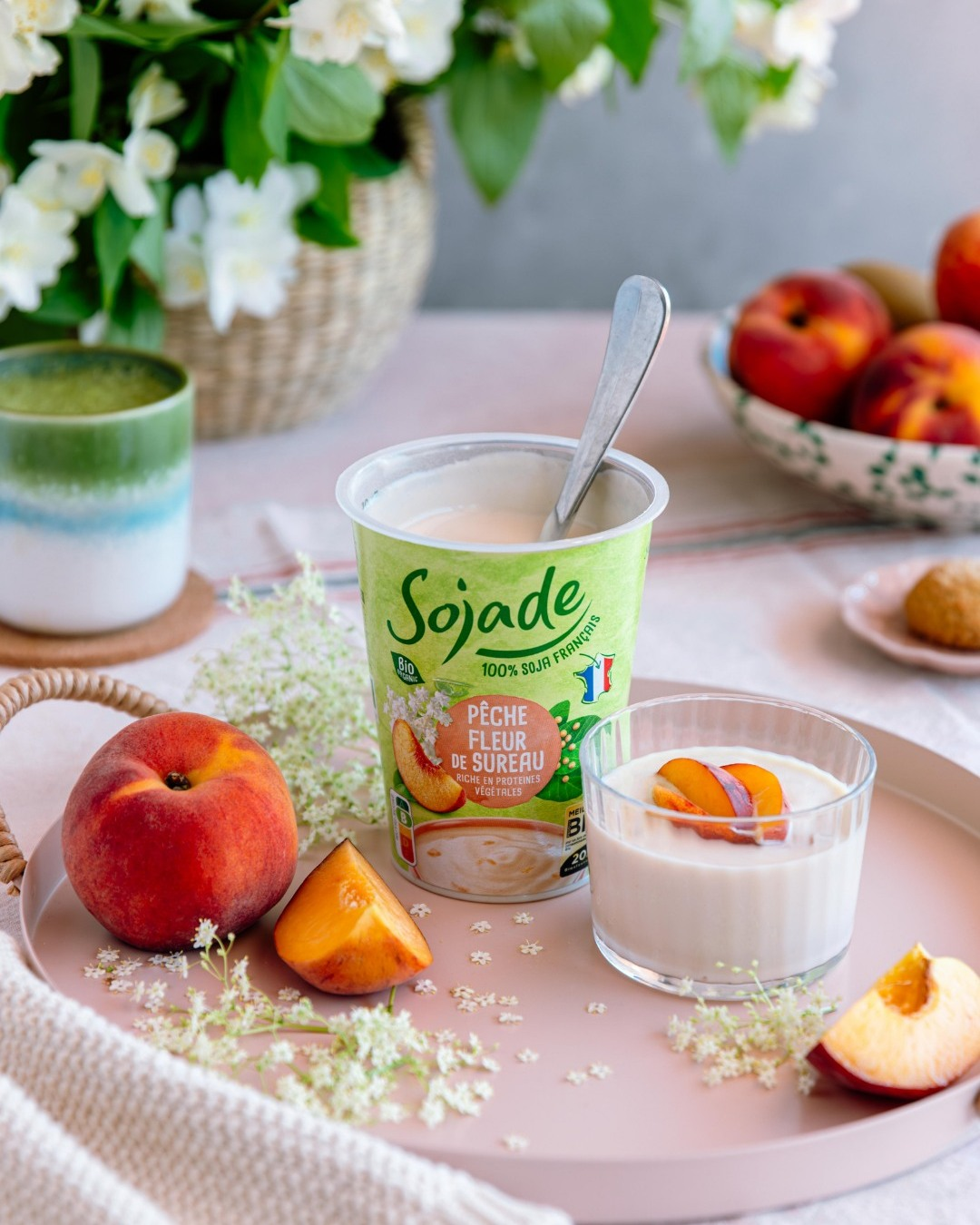
Choose from:
- Strawberry: Light and fresh, great for children and quick breakfasts. Try it with sliced banana or a sprinkle of oats.
- Blueberry: Known for antioxidants. Works well with toasted seeds or a swirl of almond butter.
- Raspberry: A vivid, tangy note that cuts through granola. Perfect in overnight oats or a simple parfait.
- Cherry: Deeper and richer, with a dessert-like feel. Lovely with dark chocolate shavings or crushed pistachios.
Serving ideas:
- Spoon over granola for crunch.
- Blend into smoothies with frozen fruit and spinach.
- Use as a dessert topper with stewed apples or poached pears.
- Stir into warm porridge for a silky finish.
Why are Sojade not sold more in England?

Sojade does have a policy of never selling in supermarkets. But most independent health stores sell the big brands, over this little gem.
These yoghurts really are superior. They have more unique flavours, and they also taste better. Ask your indie health shop to stock them, and they are likely to sell fast!
Cocos organic yoghurts from Kent!
Look in stores for this yoghurt, which also offers a plant-based goat-friendly Kefir alternative.
Coconut Collab (ethical coconut milk yoghurts)
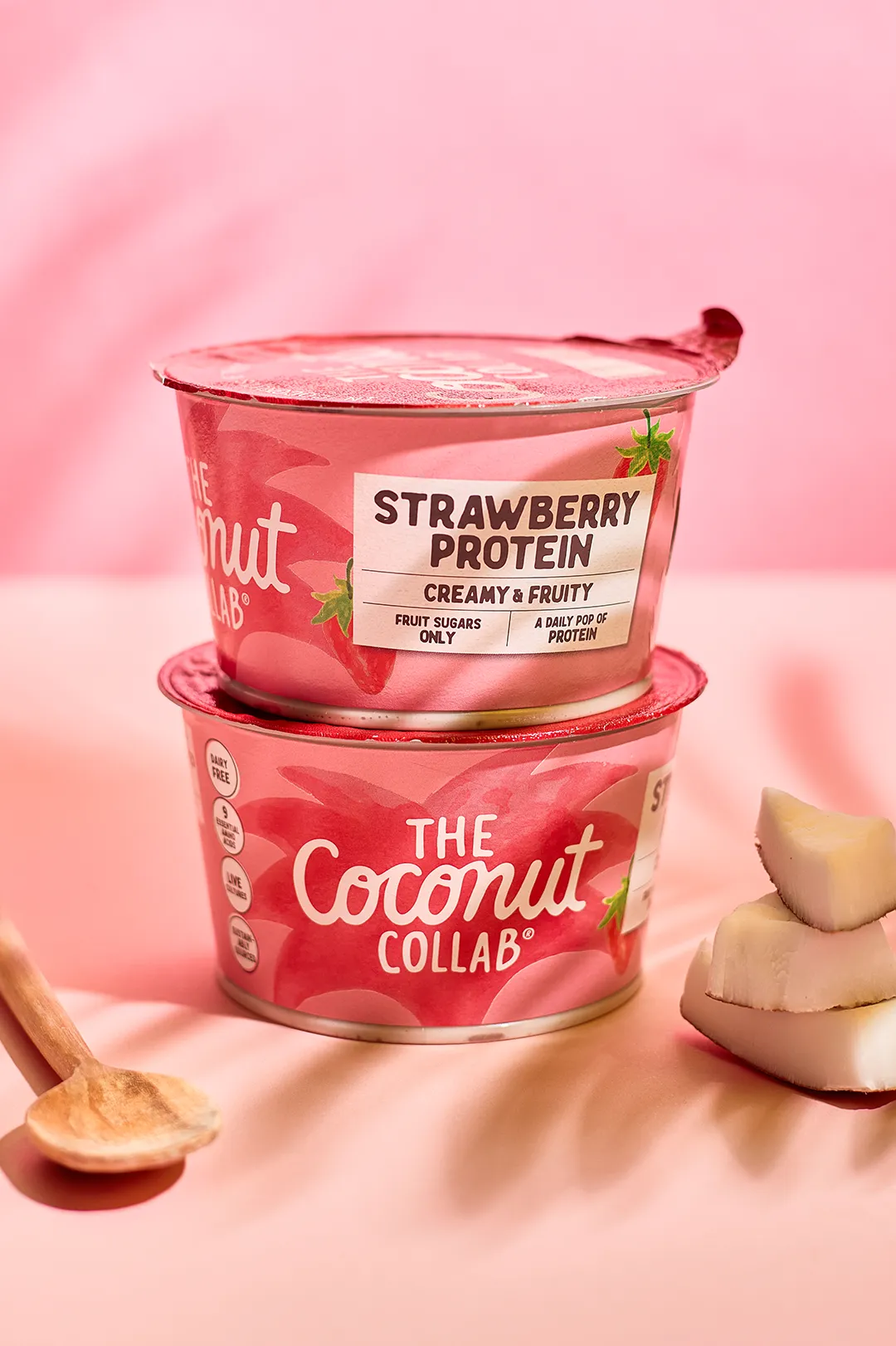
This brand not only offers a many yoghurt flavours, but a gut-friendly version especially for sensitive tummies.