Where to Buy Vegan Stout (local alternatives to Guinness)

Stout Brummie (also in a ‘sober version’) is Birmingham’s answer to Guinness. Profits stay within the West Midlands, unlike big brands that go off to shareholders who-knows-where. And a portion of profits from these stouts are donated to local charities (presently an air ambulance and Sober Brummie, which helps locals with alcohol addiction). It also sells other beers.
If you run a shop, off license, pub, restaurant or hotel, get in touch for trade order queries. The portal is simple to use with discount tiers set up, live stock counts, clear shipping info and costs, and the opportunity for online direct payments.
0.5% is the legal ‘no alcohol’ label, but know that even bread and fruit has a little. So it’s still best to avoid for pregnancy and nursing.
Before recycling, pop the ring-pulls back over the cans, to help avoid wildlife getting caught inside. Set up a can recycling program to raise money for your community!
Never buy beers wrapped in plastic rings, they harm wildlife (if you see any, rip the holes and dispose of in a secure (not open) bin.
Guinness Is Not Even Irish!
Guinness is now vegan (after a campaign) but still owned by a big multi-national. It’s not even Irish, as the brand was founded by an anti-Catholic entrepreneur, though to be fair, he did use profits to donate to peace organisations.
But when the newly-formed Irish government wanted to use the harp as its symbol, Mr Guinness wouldn’t let them (he held the copyright). So the government got creative, and used the harp anyway, just facing the other way! If you look closely, you’ll notice that the Irish government’s harp symbol and the Guinness harp, do indeed face different directions.
Belhaven stout is not vegan, as it’s filtered with isinglass (fish gelatine).
Other Good Vegan Artisan Stouts
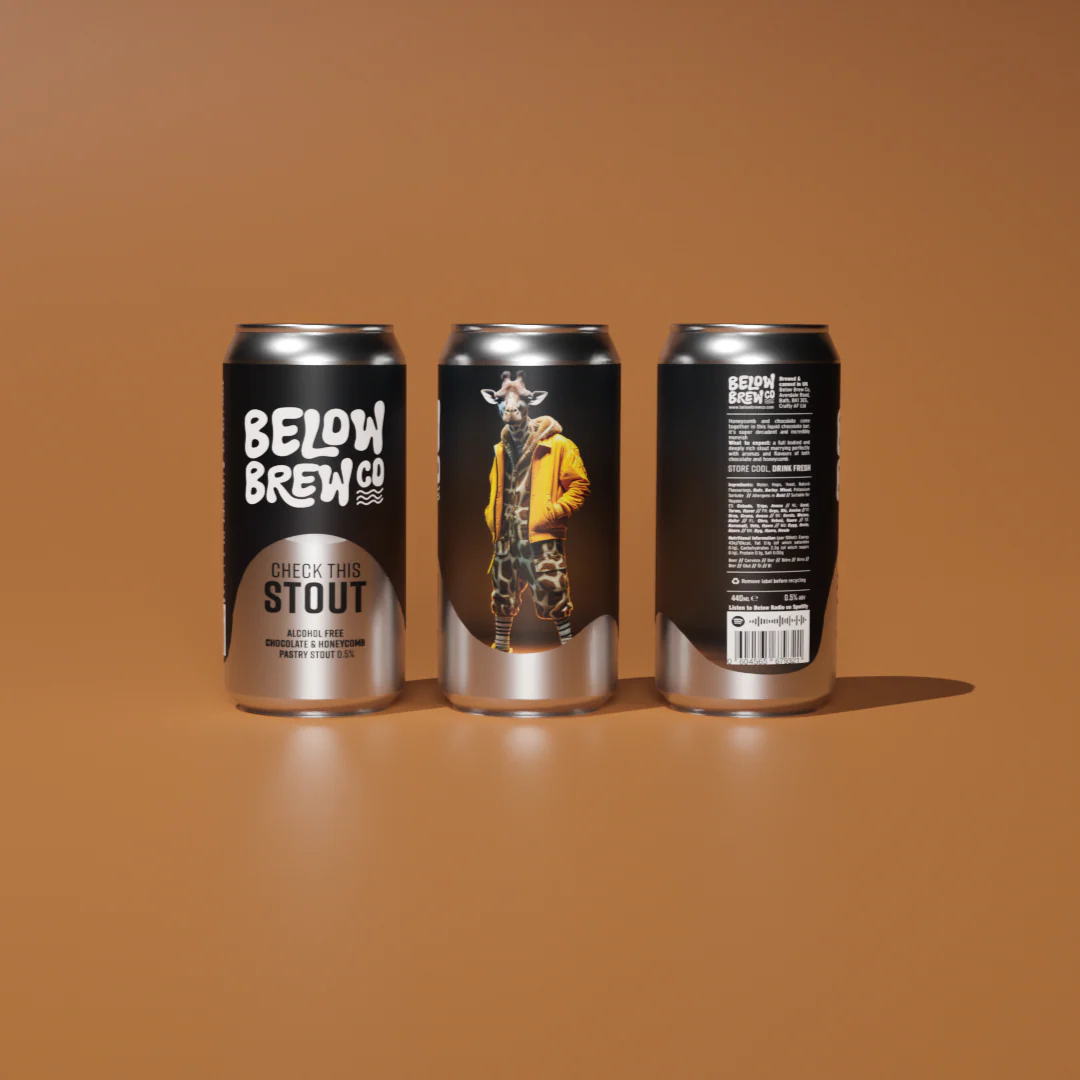
Below Brew Pastry Stout (low alcohol) is like ‘liquid chocolate’, with flavours of chocolate and honeycomb (sounds like a Crunchie bar!)
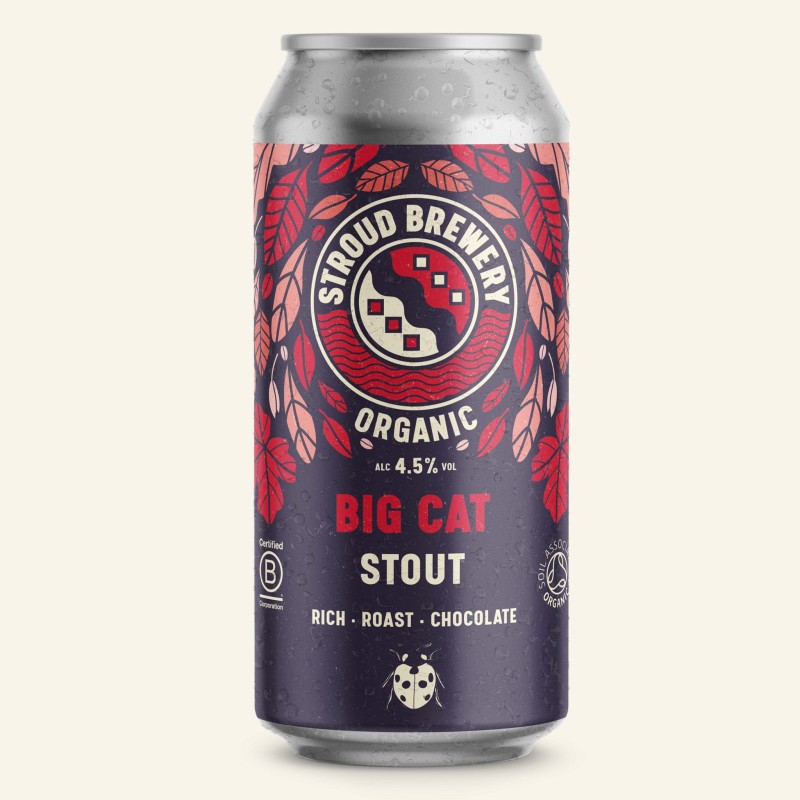
Stroud Brewery Big Cat Stout is (like all their beers) vegan-friendly. Brewed in a town that is known as ‘Notting Hill with wellies!’
Girls Who Grind Coffee also offer a no-alcohol vegan stout, an ideal alternative to Guinness.
What makes a stout vegan?
Added ingredients are easy to imagine. Some stouts are brewed to taste like dessert. Others aim for creamy sweetness. That can mean dairy, honey, or other animal products. Processing is the hidden part. Some breweries clear beer with finings that come from animals. The beer may still be labelled as just “beer”, because finings often don’t count as ingredients in the same way.
Ingredients to watch for on labels and menus
The clearest red flag is lactose. It’s milk sugar, and brewers use it because yeast can’t ferment it. That means it stays sweet and adds a creamy feel. You’ll often see it in milk stout, sweet stout, and many pastry stouts.
Honey is another common non-vegan addition. It can show up in “honey stout” or as a quiet extra on a seasonal release. Less common, but still worth watching for, are whey, cream, and milk-based chocolate. A can might say “chocolate”, yet the actual chocolate ingredient can include milk solids.
Also, watch for dessert additions after fermentation. Breweries sometimes add things like biscuit pieces, caramel, or “cookie” flavour. Those add-ins can contain butter or milk powder, even when the beer itself looks safe.
The hidden part, finings and filtering
Finings are used to help beer clear. They make particles clump together, so they drop out faster. One traditional fining is isinglass, which comes from fish. Some breweries also use gelatine (animal-based) in certain settings.
The tricky part is that finings aren’t always listed. Even careful label readers can miss them, because the can may only show allergens and basic beer info.
Plenty of breweries avoid animal finings. Some use vegan-friendly options (for example Irish moss in the kettle, or mineral and plant-based clarifiers). Others leave the beer unfiltered, or let time do the work. As a result, “hazy” isn’t a guarantee of vegan status, but it can be a clue.
When you’re unsure, go by these checks: ask the brewery, look for a vegan symbol on the label, or use a trusted vegan listing. Community databases such as Barnivore can help, although it’s still best to confirm if the recipe changes.
How to choose a great vegan artisan stout
- Dry stout has a roast coffee finish
- Oatmeal stout is smooth and gently roasted
- Imperial stout has rich dark fruits
- Pastry stout is thick like dessert
Best ways to enjoy vegan stout at home
Pour it with purpose. Tilt the glass, then straighten near the end to build a steady head. Give it a minute, because roast and chocolate notes show more as it warms slightly.
Food pairing is where vegan stout shines. The roasted bitterness loves salt and smoke, and it also plays well with sweetness. Think of it like pairing dark chocolate with sea salt.
Cooking with stout is also easy. It brings depth in the same way that slow-cooked onions do, dark, savoury, and slightly sweet. Just choose a beer you’d happily drink, because the flavour concentrates as it reduces.
Here are simple matches that feel natural, not forced:
- Vegan burgers: Char and umami echo the stout’s roast.
- Mushroom pie: Earthy flavours meet malty sweetness.
- Chilli: Roast notes soften heat and round out spice.
- Salted nuts: Salt sharpens the finish and keeps it moreish.
- Dairy-free dark chocolate: Bitter on bitter, with a smooth landing.
- Vegan sticky toffee pudding: Sweetness balances roast and coffee notes.
- Blue-style vegan cheese: Tang and funk stand up to stout’s weight.
- Roasted veg: Caramelised edges mirror the beer’s toast notes.
Easy vegan stout recipes
A stout float sounds odd until you try it. Pour a small glass of vegan stout, then add a scoop of vegan vanilla ice cream. It turns into a creamy, bitter-sweet treat, like an adult affogato.
For a quick sauce, simmer stout with a little brown sugar, tomato purée, and a pinch of smoked paprika. Reduce until sticky, then brush over tofu, tempeh, or grilled mushrooms.
For a no-fuss stew, soften onions, add mushrooms, carrots, and cooked beans, then pour in stout and veg stock. Simmer until thick, then finish with a spoon of mustard. Serve with mash, because it soaks up every drop.