Black + Blum Charcoal Water Filter
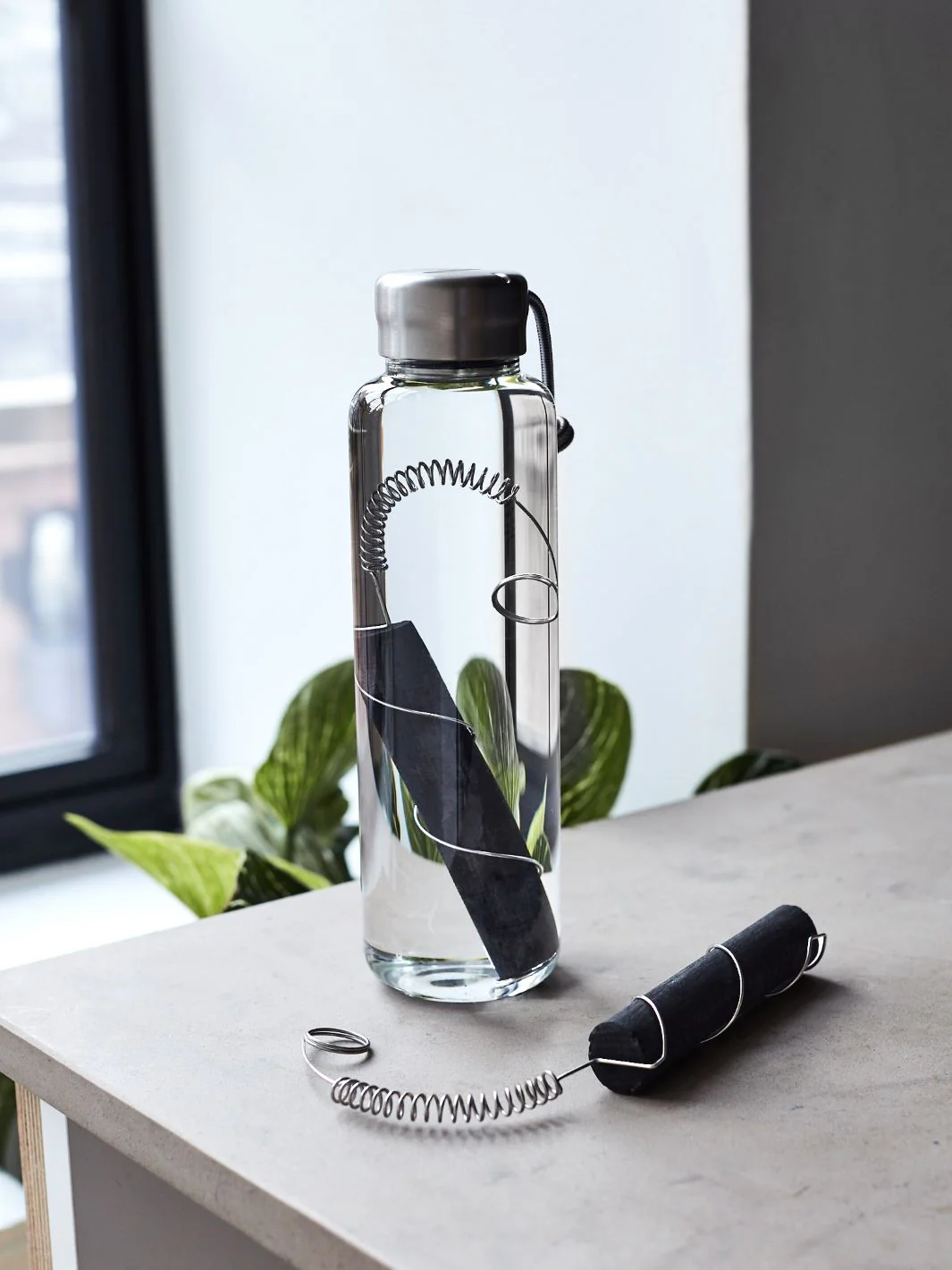
Upgrade your water bottle into a ‘filter bottle’ and enjoy great tasting tap water with Black _ Blum Charcoal Filter. Inspired by a method used in Japan, the filter filter removes chlorines and adds minerals, to make tap water taste great.
Made from quality stainless steel, one filter should last for six months, and is pre-washed and ready for us.
Charcoal filters do sometimes have sediment at the bottom, so it’s best to avoid for young children and pets.
Do You Need to Filter Water?
If you don’t like the taste of chlorine (and if your council chlorinates water, there’s nothing much you can do), just do what restaurants do. And air a jug of water for 30 minutes, for the taste to disappear.
Lead pipes are an issue, so check with your builder or council. And don’t drink tap water from bathrooms (some say it’s fine, but often it’s from different tanks). It’s also best not to drink water from warm/hot taps.
These days, we have all kinds of stuff in tap water, from chlorine to microplastics. This can lead to normal tap water tasting unpleasant, or at least not very nice. Filtering tap water basically makes it taste nice, but you don’t have to use plastic jugs.
Other Eco-Friendly Water Filters
Phox is a refillable water filter jug. Ceramic water filters use a porous shell to trap debris and bacteria, like a coffee strainer. These last for months or years, and are easily cleaned with a natural brush. Go for ones that have stainless steel or glass housings. Just fill the upper chamber with tap water, then gravity pulls the water through, and leaves clean water below.
Aarke is a stainless steel filter jug with refillable cartridge and granules, but it does cost around £100. You set a dial inside the lid to know when to change the cartridge, and if you remove the granules from the filter cartridge, you can put it in the dishwasher.
Hard Water & Limescale in England
Unless you live in northwest England, you likely have hard water (which makes it cloudy, due to a combination of chalk and limestone) and although it doesn’t taste as nice, it does no harm.
Most water boards add chlorine (to kill bacteria) and fluoride (Ireland has fluoridated tap water for decades with no good effects on dental health, but it’s added around 10% of England, though new schemes are rare). For old pipes, ask your water board to visit, to check there is no (harmful) lead in your tap water.
The other main issue in hard water areas is limescale, which does not taste nice and could build up calcium and magnesium carbonate, which can lead to bladder stones.
To descale a kettle, fill it three-quarters with equal parts of tap water and distilled white vinegar (also sold in supermarkets).
Boil and cool, then drain and rinse several times, until all flakes have gone. Then boil (full) and empty again, to remove vinegar taste. Adding a teaspoon of bicarbonate of soda can help shift stubborn limescale.
How Much Water Should We Drink?
We need water to keep cool, remove waste, and help our joints, brains and eyes (fresh water is also found in raw product like watermelons and bananas). The average person needs around 1.2 litres of water a day (more for athletes, hot weather, some medical conditions and after vomiting/diarrhoea).
So how much is 1.2 litres? Around 6 x 200ml glasses. So drink 2 glasses when you wake up, another 2 before lunch and dinner, and in a couple of weeks you’ll be hydrated. The caveat is that your body loses water with tea, coffee, cola and alcohol. So add an extra glass, for each one of those you drink. It’s easier to reduce caffeine and alcohol, so you are not guzzling water all day to compensate.
What Kind of Water Should Pets Drink?
Spring and filtered water are fine, you may find health and fur improves. But vets say that (unless medically given) to avoid distilled water (removes minerals and electrolytes). Never give fizzy water to pets, as it could cause bloat.
Don’t let pets drink from puddles. It may taste nice to them, but could contain remnants of bacteria, oil or antifreeze.