Somerset’s Cheddar Man (England’s oldest skeleton)
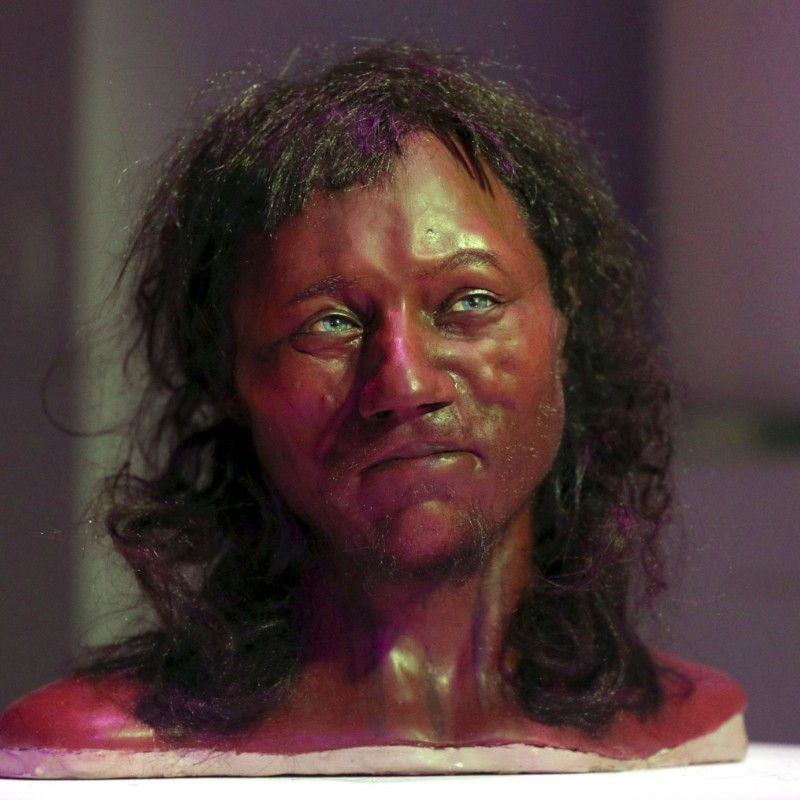
Cheddar Man was discovered by archaeologists in the county of Somerset, listed as the oldest ever living skeleton in England. His body was found in a cave, and what was discovered revealed a whole new history of early Britain, and also gave the racists, something to think about!
He was found in Gough’s Cave (Cheddar Gorge)
Cheddar Man was found in Cheddar Gorge (nothing to do with cheese!) that sees a 450-foot cliff tower over a winding road, creating a dramatic gateway to the Mendip Hills. Formed by floods during the Ice Age, it’s home to around 100 endangered cave-dwelling Lesser Horseshoe bats.
This area is buzzing with life from soaring skylarks overhead to the quirky black oil beetle (its protruding tummy being described as looking like ‘someone whose waistcoat won’t button up!)
The find dates to 1903 (it wasn’t a planned dig)
Cheddar Man turned up in 1903, during work in the cave rather than in a neat research project. It’s strange that this date has not been much reported, as it’s been known then for over 120 years the information that was discovered.
Cheddar Man was black (with blue eyes!)

What surprised most was that Cheddar Man had black skin and blue eyes (a bit like CSI actor Gary Dourdan). So it does indeed suggest that we have African ancestry. DNA ties him to western European ancestry, likely hunter-gatherers after the Ice Age.
So Somerset becomes one point on a much larger map. Britain wasn’t cut off, even when sea levels and land bridges changed. People moved, groups met, and families formed across wide areas.
He lived around 10,000 years ago
Cheddar Man lived roughly 10,000 years ago, during the Mesolithic period. This is after the last Ice Age, when woodland returned and people lived by hunting, gathering, fishing, and seasonal movement.
So the world around Cheddar wasn’t the patchwork of farms and roads we know now. It was wetter in places, thick with trees, and full of shifting edges, between river, marsh, and forest.
His bones survived because caves protect
A cave can hold a stable temperature, steady damp, and less disturbance than a shallow grave outdoors. That doesn’t guarantee preservation, but it improves the odds.
Cheddar Gorge has a lot of cave systems, and those spaces create pockets of survival for bone, tool marks, and animal remains. As a result, the gorge doesn’t just give a dramatic view. It gives evidence.
Burial in a cave suggests meaning
A body placed in a cave can be many things, and it’s easy to over-state the certainty. Yet it rarely reads as careless. Even when details are unclear, the choice of location suggests attention.
So a cave burial can hint at how a group marked loss, memory, and place.
The village of Cheddar sits right beside
Cheddar isn’t a distant reference point. The village sits at the foot of the gorge, close enough that you can walk from cafés and shops up to the cliffs and caves.
Two other local boys with blue eyes (with blonde hair) from the village of Cheddar were Matt & Luke Goss (from 90s pop band Bros).
Conclusion
Cheddar Man’s story starts with a find in 1903, in Gough’s Cave, above the village of Cheddar. It then widens into Mesolithic Britain, into how people lived after the Ice Age, and into how bones and DNA can still speak across 10,000 years.
Cheddar Gorge holds that story in a very plain way. Stone, caves, a living habitat, even small sightings like the black oil beetle, all sitting in the same place. So when people search for “finding oldest skeleton Cheddar Man”, they’re really asking for a route into deep history, one that begins in Somerset.