Designing Your Own Path: Childfree Lifestyles

There’s this silly idea still by some (including the US vice-president) that there’s something wrong with people who choose childfree lifestyles. In fact, this is now becoming a very popular way of living, whether it’s due to worries about overpopulation, money worries or simply wishing to travel and live another kind of lifestyle.
Overpopulation is not so much the issue, more the fact that the average western child has a carbon footprint around 11 times of say one in Nigeria.
It does not mean that people who don’t have children, don’t like them! In fact, many people who are childfree work to help child welfare.
Plus of course many people have fertility issues, so don’t make remarks near such people, as it could upset them, if you don’t think that there are possibly other reasons for someone being childfree.
Others may have had a frightening trauma like a stillbirth or perhaps childhood abuse. You never know the reasons, so don’t judge. Some even go childfree, due to not wishing to pass on genetic risks.
Adoption of course is one avenue, to give loving homes to those who need them.
And even more relevant in this big bad world, many people now simply don’t want to bring children into a world run by idiots and narcissists who are destroying world peace and the planet. They simply find it too frightening. We now have leaders who literally are stopping people from giving birth, due to their terrifying actions.
Religious people should not tell others to have children
Often it’s organised religion and politicians that tend to ‘tell people’ that they should have children. Of course if someone feels that’s their life vocation, then have children. But never have them, simply because a vicar, priest or politician tells you to! It’s your business!
I have no regrets about not having my own children. It is my life. 400 years ago, I’d have been burned as a witch, for not wanting children. Or they’d have dunked me, like a big biscuit. Kathy Burke
Unfortunately politics and religion sometimes merges, when we start getting right-wing MPs saying that we should all have children ‘for the sake of society’.
It hasn’t worked so far, as most older people in England are shoved away in nursing homes when they get old and infirm. Unlike say in Indian cultures, where relatives go to live with the family, when they can no longer live independently.
Andrew Ridgley (who has a stepson) does not have biological children. On being asked in an interview recently which living person he most despised, he answers ‘too many to single out, but almost exclusively inhabiting the realms of politics and the clergy’.
Questions not to ask childfree women!
Journalist Emma Gannon writes how it’s good not to ask these questions to people who choose to be childfree, as you’re likely very off the mark on what their reasons are:
- You’ll probably change your mind.
- Who’s going to take care of you, when you’re old?
- How will you fill your time?
- So, you’re a career woman?
- Do you not like children?
- Are you going to freeze your eggs?
- Aren’t you worried you won’t have true love?
A few people who are proudly childfree
- Jennifer Aniston
- Miley Cyrus
- Dolly Parton
- Dame Helen Mirren
- Renee Zellwegger
- Debbie Harry
Sometimes I will meet kids who make me go ‘I want a kid’. And then sometimes I’ll meet children where I go ‘I hope that my sperm doesn’t do anything, because this person is a terror’. Trevor Noah
I’d worry sick about a baby. I have a cat. I check the door three times before I go out. I put food and water in every room in case the door closes, and he’s peckish for 20 minutes. Ricky Gervais
Natural Contraception (the best safe and natural choices)
England’s teen births rate is the highest in Europe, often due to a culture more concerned with celebrity and sex, over education and making a difference.
Abortion is not the answer (on any level), what we need is to be like Scandinavian countries and remove the stigma and organised religion around ‘awkward talks’. The Nordic countries not only have the lowest rates of teen pregnancies, but the highest happiness rates.
Many faiths (not just the Roman Catholic church) do not agree with abortion (and some contraception). So hopefully one or more of these methods will suit everyone of any belief.
No contraception is 100% effective against pregnancy or sexually-transmitted diseases (only abstinence).
Despite our sex-obsessed society, it’s quite a healthy alternative as there are lots of other interesting ways to enjoy life too!
We Need to Talk is an empowering book for girls and teens, for them to get to know their body. This is not some narcissistic book by a celebrity influencer, instead by a qualified doctor from Chicago, without media or religion (it covers same-sex relationships).
Stats show that actually those who ‘wait until the right person comes along’ tend to have happier relationships and less chance of divorce (and better sex lives) than those who don’t wait. And also don’t suffer the emotional consequences of feeling hurt or angry, when relationships don’t work out.
Women who abstain from sex until post-teen years also have less chance of sexually-transmitted diseases, that can lead to cervical cancer and infertility. Nuns have very low rates of cervical cancer.
It is very important to follow the methods correctly. Those who criticise say apps for becoming pregnant, is often due to simply not following the methods – court cases have proved this.
NHS has a suite of information on natural family planning, which should be done alongside a trained practitioner, for accuracy.
CycleBeads (used in Africa to respect beliefs)
CycleBeads were created by reproductive researchers at Georgetown University in Washington, USA. Available as beads or app-form, these tell you the days you are more likely to get pregnant. The beads are used in Africa, as they are cheap and respect religious beliefs.
Fertility awareness methods (FAM)
This is where you learn your body signals, which is a bit risky to do it yourself, but modern apps make it more accurate. They use a base of:
- Basal body temperature (BBT): your resting temperature shifts after ovulation.
- Cervical mucus: changes can signal rising fertility.
- Cycle tracking: recording days and patterns can help
Natural Cycles (created in Sweden) has over 3 million users and FDA approval, but some have criticised its subscription-based model. Like most apps, it measures basal temperature to determine ‘green and red days’ (abstain or use alternative methods when fertile). Read the FAQ for more info.
Not suitable for people already on hormonal contraception (it could affect results). A similar app is Daysy.
Lady-Comp is a German-invented fertility tracker, which again measures basal temperature. It may not work for some hormone-related medical conditions.
Period tracker apps are not ‘to prevent pregnancy’ but can help you get to know your cycle. Flo.Health is used by 77 million women, and has a team of over 100 doctors, scientists and medical experts who review all information. Clue is cleared by the FDA.
Lactational amenorrhoea method (LAM)
After birth, the body can pause ovulation when breastfeeding is frequent and consistent. LAM builds on that. It can be reliable, but only when strict conditions are met. The problem is that people hear “breastfeeding prevents pregnancy” and stop listening too early.
LAM is designed for a narrow window, and it rests on three conditions:
- Baby is under 6 months old
- Breastfeeding is exclusive or near-exclusive, including night feeds, with no long gaps
- Periods have not returned (any bleeding is a warning sign)
Once any of these changes, treat LAM as finished. A baby who sleeps longer, more formula feeds, a return to work, or a period coming back can all mean fertility is returning. Ovulation can happen before the first visible period, so waiting for bleeding can be a trap.
A hormone-free cervical cap alternative
FemCap is a reusable hormone-free alternative to the cervical cap. This has FDA approval and is available on prescription, with around 92% effectiveness.
If you need lubricants, YES! offers an organic brand free from usual nasties. Sorry if this is a bit rude, but it’s important to list the ethical alternative, to save marine creatures – yes!
We Need to Talk is an empowering book for girls and teens, for them to get to know their body. This is not some narcissistic book by a celebrity influencer, instead by a qualified doctor from Chicago, without media or religion (it covers same-sex relationships).
Eco-friendly vegan condoms
Never flush condoms down the loo, they are a common form of beach litter that also leads to blocked drains and garden floods.
Never leave condoms lying around near pets, as most contain pet-toxic zinc oxide. Also found in natural cosmetics and sunscreens (so wash off skin, before letting pets kiss you).
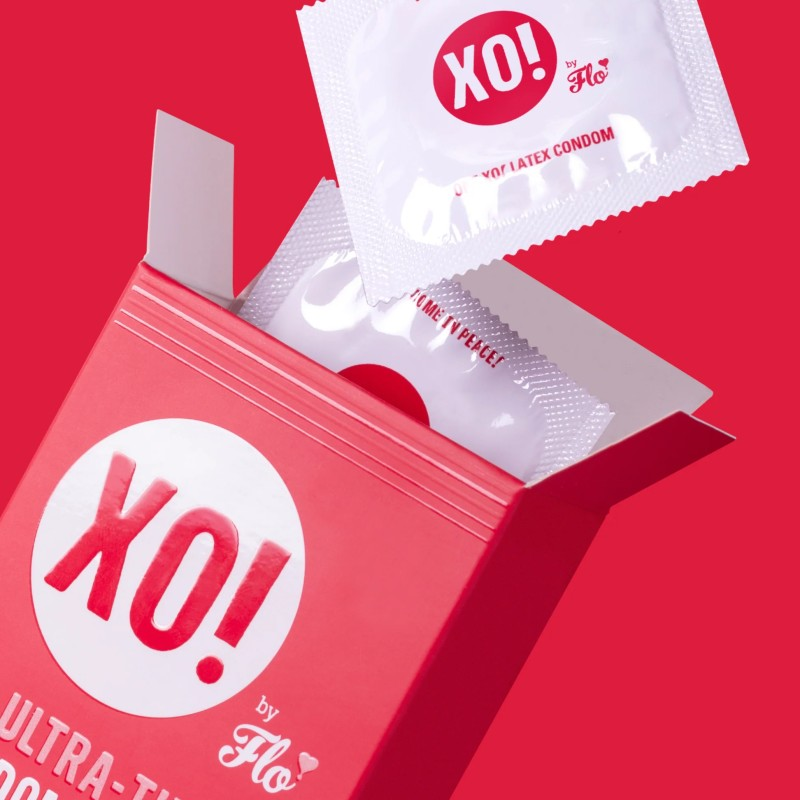
XO! is a vegan-friendly brand of condoms (most contain casein from milk) that are free from fragrance, and made from Regenerative Rubber Initiative, a co-operative of small agro-foresters). This brand was founded by two women of colour, who donate 5% of profits to people and planet.
Two other brands are Hanx (co-founded by a gynaecology doctor and investment banker – these are CE certified and sold in discreet letterbox friendly packaging) and Fair Squared.
Hoopsy (a plastic-free pregnancy test)
Hoopsy Pregnancy Test is a medically approved pregnancy test (99% accurate). But unlike most, this is made from 99% paper (over plastic). It can be used up to 5 days before your period is due, and is easy to write on, if you want to record the day you took the test. Contains 5 tests (also in a 10 pack and 3 pack).
The test gives results in 5 to 10 minutes (depending on how diluted urine is). And takes up less space in landfill than plastic tests, if it’s throw in the bin. So it doesn’t take decades to break down, like plastic pregnancy tests.
This test has been approved for sale in the UK and EU by the medical authorities (MHRA and CE). The test is easy to read (positive, negative or invalid – which may mean you didn’t follow the instructions).
To use, just open the test pouch and hold the end with the Hoopsy logo. Put the other end in your urine stream for 3 to 5 seconds, being careful not to pee over the MAX line! Put the test on a flat surface, with the printed side up.
Then wait 5 to 10 minutes, to read the result. Do not read the result after 10 minutes.